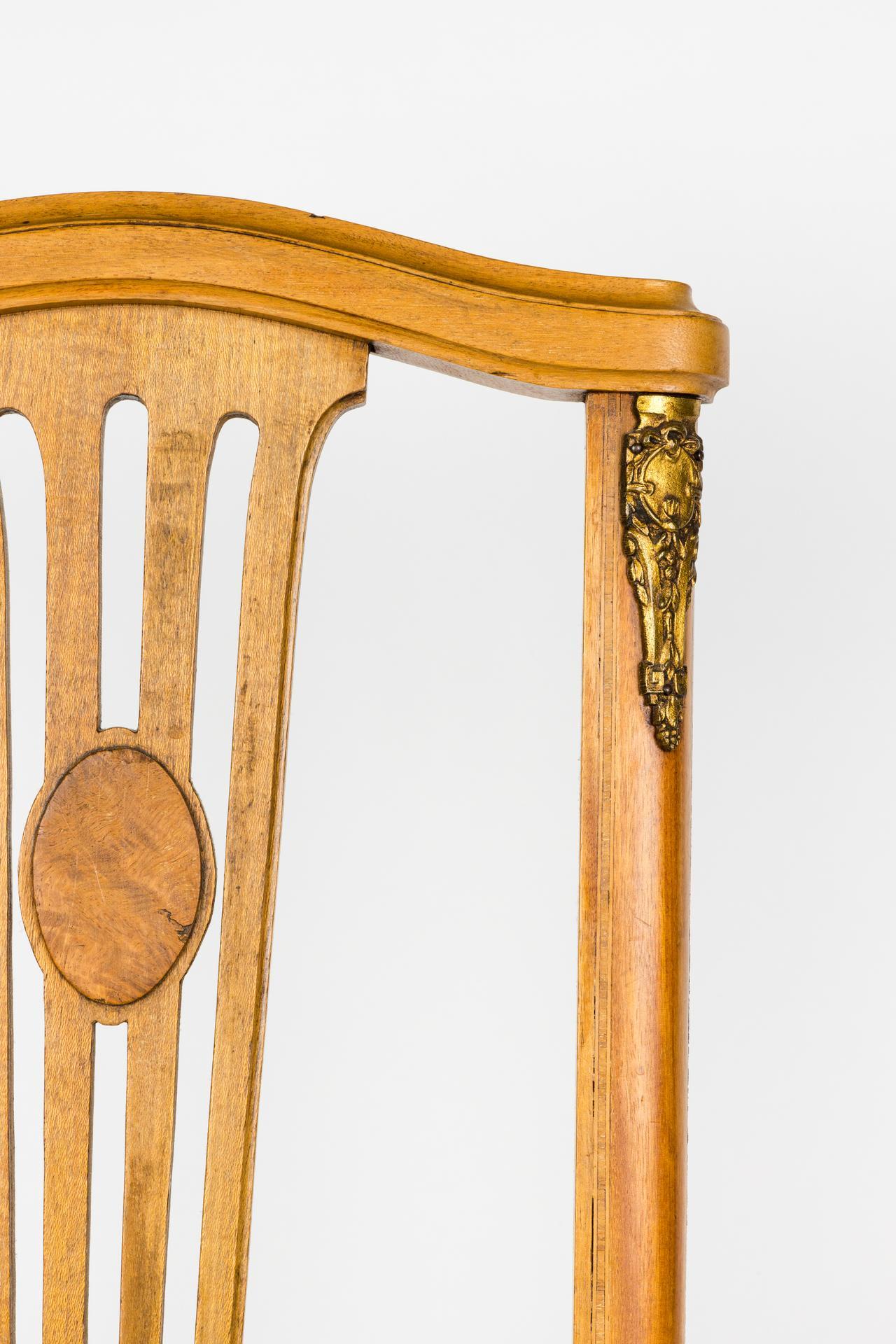
Table - Mahogany, Satinwood, Maple, Ebony - Sheraton early 1900s


04
days
16
hours
52
minutes
28
seconds

 | €125 |
|---|
Catawiki Buyer Protection
Your payment’s safe with us until you receive your object.View details
Trustpilot 4.4 | 145553 reviews
Rated Excellent on Trustpilot.
This Italian octagonal Sheraton-style table dates from 1910–1920 and is made of mahogany, satinwood, maple and ebony.
AI-assisted summary
Description from the seller
Splendid octagonal antique “Sheraton” coffee table, commonly dating from the Edwardian period, i.e. the early 1900s. It stands out for its refined craftsmanship in mahogany wood: specifically it shows the typical flame figure, a warm brown-reddish tone with golden reflections and a deep, iridescent grain, typical of high-quality mahogany, commonly known as “flame mahogany” (mahogany feather). The top features elegant inlays and decorations in light woods, as well as the geometric decorative band that runs along the edge which is a classic contrast inlay (called inlay or crossbanding), historically made by combining light and dark woods such as satinwood (boxwood), maple, and ebony. The table is supported by four slender needle-like legs connected by shaped stretchers that converge on a small circular lower shelf, also decorated and edged like the legs. A very valuable piece of furniture, with great elegance and charm, adaptable to any decor context, both classic and modern. Because of the slender, light, and very slim legs, therefore prone to breakage during transport, the table requires very careful and specific packaging, i.e. it must be placed in a custom-made wooden crate and adequately protected.
Splendid octagonal antique “Sheraton” coffee table, commonly dating from the Edwardian period, i.e. the early 1900s. It stands out for its refined craftsmanship in mahogany wood: specifically it shows the typical flame figure, a warm brown-reddish tone with golden reflections and a deep, iridescent grain, typical of high-quality mahogany, commonly known as “flame mahogany” (mahogany feather). The top features elegant inlays and decorations in light woods, as well as the geometric decorative band that runs along the edge which is a classic contrast inlay (called inlay or crossbanding), historically made by combining light and dark woods such as satinwood (boxwood), maple, and ebony. The table is supported by four slender needle-like legs connected by shaped stretchers that converge on a small circular lower shelf, also decorated and edged like the legs. A very valuable piece of furniture, with great elegance and charm, adaptable to any decor context, both classic and modern. Because of the slender, light, and very slim legs, therefore prone to breakage during transport, the table requires very careful and specific packaging, i.e. it must be placed in a custom-made wooden crate and adequately protected.
Details
Era
1900-2000
Weight
3400 g
Style subtype
Edwardian
Title additional information
Sheraton early 1900s
Number of objects
1
Country of origin
Italy
Material
Ebony, Mahogany, Maple, Satinwood
Style
Antique
Condition
Good condition - used with small signs of aging & blemishes
Height
71 cm
Width
51 cm
Depth
51 cm
Height of the underside of the table
65 cm
Estimated period
1910-1920