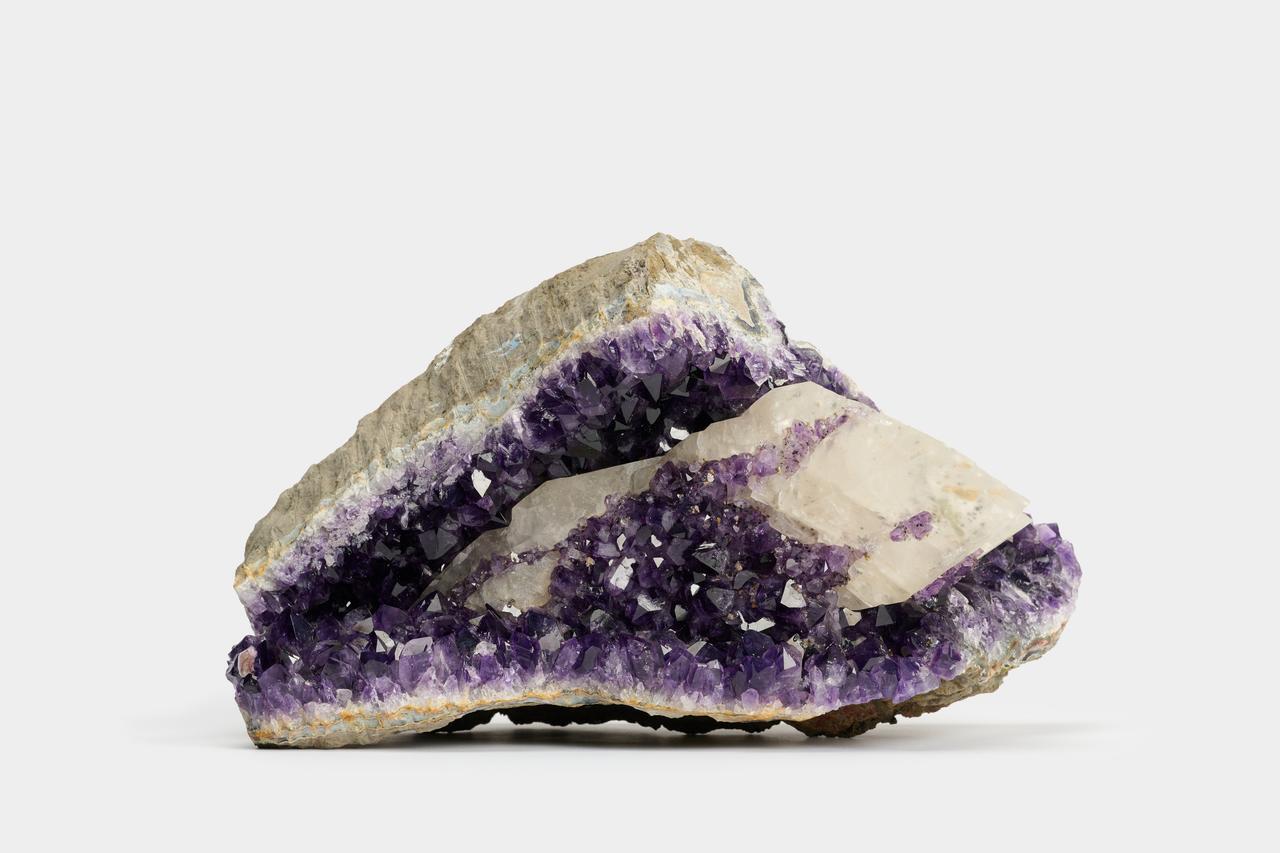
Unusual Twinned Orange Kyanite Mineral Collection - Height: 3 cm - Width: 2.2 cm- 6.5 g


01
day
13
hours
24
minutes
19
seconds

No bids placed
Catawiki Buyer Protection
Your payment’s safe with us until you receive your object.View details
Trustpilot 4.4 | 145662 reviews
Rated Excellent on Trustpilot.
A 6.5 g orange kyanite crystal specimen from Nani Hill, Loliondo, Ngorongoro District, Arusha Region, Tanzania, displaying a distinctive V-shaped twin.
AI-assisted summary
Description from the seller
This specimen consists of a notable single kyanite crystal (distena) with a vibrant natural orange coloration, sourced from the Loliondo area mines in Tanzania. Kyanite is typically blue and orange is rare due to trace manganese. The piece stands out exceptionally for its complex macle morphology, very uncommon for this mineral species.
The specimen forms a well-defined aggregate of two elongated prismatic crystals that interpenetrate, configuring a pronounced V shape. This twin-like structure is the dominant crystallographic feature and gives the piece a unique visual symmetry. It displays an intense, uniform orange-gold color throughout the crystal, with excellent translucence and a vitreous luster on the well-defined crystal faces. Small dark matrix deposits (probably biotite or associated skarn material) are integrated on the surface and between the interstices of the macle, adding paragenetic authenticity without interfering with the form. The crystal is matrix-free and well terminated, which highlights its scientific and aesthetic quality. This combination of extreme color, size significant for a free-standing crystal, and rare macle makes this specimen a highly coveted piece for advanced mineral collecting.
Details
Main mineral
Unusual Twinned Orange Kyanite
Mineral form
Mineral Collection
Weight
6.5 g
Origin (region/city)
Nani Hill, Loliondo, Ngorongoro district, Arusha Region
Country of origin
Tanzania
Height
3 cm
Width
2.2 cm
Depth
1.4 cm
Sold by