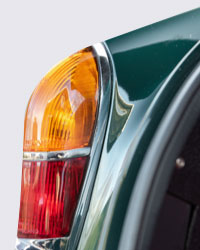
Porsche - 911T 2.2 Targa Sportomatic - Nut and Bolt restoration - 1971


11
days
18
hours
26
minutes
50
seconds
Current bid
€ 54,250
Reserve price not met

Expert
Selected by Franco Vigorito
Seasoned classic car expert with COO experience at Ferrari Hill Climb Racing Team.
Estimate € 125,000 - € 140,000
 | €54,250 | |
|---|---|---|
 | €52,250 | |
| €50,250 | |
Catawiki Buyer Protection
Your payment’s safe with us until you receive your object.View details
Trustpilot 4.4 | 145553 reviews
Rated Excellent on Trustpilot.
This 1971 Porsche 911T 2.2 Targa Sportomatic in Guards Red has matching numbers and underwent an extensive nut-and-bolt restoration between 2016 and 2025.
AI-assisted summary
Description from the seller
This 1971 Porsche 911 T Targa Sportomatic has undergone an exceptionally extensive nut-and-bolt restoration between 2016 and 2025, worth well over €100,000, with more than 1,250 hours of specialist work invested in the car. virtually every component was addressed: from bodywork, chassis and paint to the engine, carburetors, braking system, suspension, electrical installation, fuel and oil systems, interior and the distinctive Targa roof.
The result is a very thoroughly restored example of one of the most recognizable variants of the classic early Porsche 911 series. The combination of the 2.2-liter air-cooled six-cylinder boxer engine, the Targa bodywork and the special Sportomatic transmission makes this variant considerably less common than a conventional manual 911 T.
This example concerns a 1971 Porsche 911 T Targa Sportomatic, finished in Guards Red and equipped with a 2.2-liter air-cooled six-cylinder boxer engine. The engine delivers 125 DIN hp and uses two Zenith 40 TIN carburetors and dry-sump lubrication. It is, according to available information, a matching-numbers specimen.
A notable feature of this Porsche is the original Sportomatic transmission. Porsche developed Sportomatic as a combination of manual and automatic transmission. The four-speed transmission uses a torque converter and a vacuum-controlled clutch. The driver selects gears via the conventional H-pattern, but there is no clutch pedal. This created, for its time, a very forward-looking drivetrain while the driver still chose the gear.
The Targa body also plays an important role in the character of this 911. The car features the distinctive stainless steel Targa bar, a removable and foldable roof panel, and the fixed panoramic rear window. This combined the open character of a Cabriolet with a clearly recognizable body structure. The chrome window surrounds, door handles and other classic details are typical of the early 911 models.
The most important part of the history of this specific Porsche is, however, the exceptionally extensive restoration the car underwent. Between 2016 and 2025 a multi-year nut-and-bolt restoration was carried out. According to the available restoration documentation, more than 1,250 hours of specialist labor were invested.
The project explicitly went far beyond cosmetic work: the body, chassis, suspension, braking system, electrical installation, fuel and oil systems, engine, exhaust, glazing, interior and finishing were dismantled, restored, refurbished or renewed.
The scope of the project represents an investment of over €100,000. The invoices present document a substantial portion of the restoration, but according to the restoration documentation these do not cover all labor hours, locally sourced materials, paintwork, upholstery, transport, outsourced machining and final assembly.
Even the complete execution of a restoration of this magnitude by specialist Porsche restorers would today represent a six-figure investment, according to the documentation.
The restoration started with a very thorough approach to the bodywork. The Porsche was dismantled and damaged or affected parts of the body were removed. New sheet metal was manufactured or mounted, after which welding and structural repairs were carried out. Loose parts, suspension components and the body itself were sandblasted.
In addition, parts were powder-coated, re-galvanized, conserved or refinished. Among other things, new left and right rear fenders, a new green-tinted windshield and new door glass were sourced for the project.
Subsequently the body was completely rebuilt and repainted. The existing paint system was removed, after which the entire body was sanded, corrected and prepared. Repaired and renewed body parts were treated, seams and joints prepared and the car received a complete new paint finish. Not only the visible exterior, but also the storage area, door openings and other hidden areas were addressed where needed. This was thus a full restoration paint job and not a superficial repainting.
Another important part of the project was the complete overhaul of the engine. In 2020 the Porsche engine was fully rebuilt by a specialist. The cylinder heads were refurbished, new valves and valve guides were fitted and the complete carburetor set was rebuilt. Oil lines were renewed and seals and gaskets replaced.
After completion the engine was tested on a test bench, tuned and checked. This documented engine overhaul alone represented an invoice amount of €10,468.05 including VAT.
During these works an SSI stainless steel exhaust system was also installed. Various engine components were re-galvanized or repainted and specialized machine work was part of the revision. This ensured not only proper drivetrain function but also a correct and refined engine bay finish.
The braking system was also thoroughly tackled. New rigid and flexible brake lines, hoses, connecting pipes, mounting hardware and a new master brake cylinder were installed. Brake components were rebuilt or replaced and the handbrake system, including the cables, was rebuilt and adjusted. After assembly the hydraulic system was flushed, bled and put into operation.
The front and rear suspension were also dismantled and rebuilt. Control arm bushings and other suspension components were replaced or refurbished, shock absorbers and torsion-bar components were mounted and stabilizer parts and mounting materials were renewed. Where necessary, parts received a new protective anti-corrosion treatment. The steering, connections and control cables were also reassembled and adjusted.
The electrical installation was not overlooked during the restoration. Parts of the wiring harness were removed, checked, repaired and re-laid. Front and rear lighting, horns, luggage compartment lighting, interior lighting and grounding points were reassembled. The dashboard and the associated electrical components were reinstalled, after which the various electrical functions were tested and corrected where needed.
The fuel system was likewise extensively renewed. Among other things fuel hoses, tank ventilation, fuel level sensor and associated seals were addressed. New seals were fitted around the hood, front bumper, windshield, Targa bar and the Targa roof. These smaller components are particularly important in a complete restoration and illustrate how far the work on this Porsche has been carried out.
The interior was also fully restored. The original interior was removed and the underlying structure prepared and restored where needed. Sound insulation, floor coverings, door panels, side panels and seat coverings were replaced or refurbished. Both the front and rear seats were reupholstered.
Additionally, new safety belts were installed, dashboard and luggage space coverings renewed and window mechanisms, handles and interior components reassembled. The removable Targa roof was restored and reinstalled. The result is a truly rebuilt interior rather than a cleaned or locally repaired cabin.
At the final assembly stage emphasis was placed on details. New headlamp units, turn signals, trim strips, mounting clips, body seals, window guides, rubbers, emblems and many model-specific fasteners were used. Doors, hood and engine cover were mounted and aligned, while locks, cables, glass and window mechanisms were reassembled and adjusted.
Even in the final phase of the project new parts were still installed. In February 2025 the Porsche, for example, received a complete set of four new Vredestein 185/70 HR15 tires, fitting the classic character of the car. In addition, new horns, luggage compartment lighting and windshield wiper arms were acquired.
In summary, the restoration included, among other things, the complete body restoration, a full repaint from the bare body, extensive sheet-metal and welding work, a completely renewed interior, a complete engine overhaul, rebuilt carburetors, a stainless SSI exhaust system, a rebuilt braking system, restored suspension and steering, renewed fuel and oil systems, restoration of the electrical installation and lighting, renewed window mechanisms and seals and restoration of the Targa roof. For the final assembly, a very large quantity of new Porsche-specific parts was also used.
This clearly differentiates this Porsche from a classic that is merely cosmetically refreshed. The restoration spanned about nine years, covering virtually every component of the car, with more than 1,250 documented/reported man-hours and a restoration scope of over €100,000.
The combination of the early 911 bodywork, the removable Targa roof, the unique Sportomatic specification and the extent of the restoration carried out make this a very special specimen. It is a classic Porsche where not only much attention was paid to the visible finish, but also to the mechanical, structural and technical components located beneath the car.
Technical information:
Make: Porsche
Model: 911 T Targa Sportomatic 2.2L
Year of production: 1971
Color: Guards Red
Engine and power: 2.2L (2,195 cc) 6-cylinder boxer engine, 125 hp (matching numbers)
Fuel: Gasoline
Transmission: Sportomatic
Mileage: 60,131 miles
VAT margin: Yes
Registration: USA title and European import documents
VIN: 9111112262
EXTRA INFORMATION:
- For this Porsche, no COC document is required for registration within Europe (due to age)
- This car is offered with a USA Title but can, upon consultation and for a fee, be arranged with a Dutch license plate, meaning the car is immediately ready for use afterward
- Photos are part of the description.
- A walk-around video with running engine can be provided upon request.
- The seller can assist with worldwide transport.
The car can be viewed and collected in Schiedam, Netherlands. All technical inspections, test drives and viewings are possible before submitting a bid. For any questions you can contact the auctioneer.
Details
Brand
Porsche
Model type
911T 2.2 Targa Sportomatic - Nut and Bolt restoration
Year
1971
Located in
Netherlands
Mileage reading
60131 mi
Registration papers
with American registration
Transmission
Automatic
Fuel
Petrol
Colour
Guards Red
Horse power
125
Cubic capacity
2195
Matching numbers
Yes
Matching colours
Yes
Service book/history
Yes
Valid MOT
No
CoC (Certificate of Conformity) present
No
Chassis number
9111112262
Condition (Exterior)
Excellent: requiring no conventional body or paintwork
Condition (Interior)
Very Good: clean, showing minimal wear. May require replacement of minor missing or broken parts
Condition (Frame and Underbody)
Very Good: frame/structure is in a well preserved condition, minor signs of usage/wear
Condition (Mechanical)
Excellent: mechanically sound, no work to be done, no leaks, no service needed
Condition (Overall)
Excellent condition: excellent and original condition
Vehicle registration
We can help buyers register their vehicle through our trusted external partner. The process is straightforward and can be completed after purchase. Vehicle registration remains the buyer's responsibility.
Sold by
Disclaimer
Catawiki always aims to offer you the best possible buying experience. Our experts virtually review and select every vehicle in line with our submission guidelines and we require our sellers to provide the most accurate description of the vehicle. However, providing a fully detailed analysis of the vehicle is extremely difficult, and close to impossible. To guide you, we ask our sellers to provide information about the vehicle’s condition. Please consider that most vehicles for sale are classic vehicles and they often already have a whole life behind them, meaning that even a condition 1 or 2 vehicle might need maintenance to be ready for the road. It is advised to carefully read our submission guidelines that further describe details about the condition grades and types to manage your expectations. Cars are sold “as is”, meaning as described and in the condition they are in at the time of the sale and without any representation, warranty or assumption of liability of any kind as to the condition by Catawiki or by the seller. The condition of this item is the opinion of the seller and may differ from yours, your local garage, or the dealer’s opinion. This does not automatically mean the car does not conform to its description. Before bidding, please check your local legislation regarding vehicle registration. Neither the seller nor Catawiki is responsible for the registration of the vehicle in your country and will not accept a cancellation for your failure to register the vehicle. We also recommend that, if possible, you arrange a viewing with the seller before placing a bid.
Catawiki always aims to offer you the best possible buying experience. Our experts virtually review and select every vehicle in line with our submission guidelines and we require our sellers to provide the most accurate description of the vehicle. However, providing a fully detailed analysis of the vehicle is extremely difficult, and close to impossible. To guide you, we ask our sellers to provide information about the vehicle’s condition. Please consider that most vehicles for sale are classic vehicles and they often already have a whole life behind them, meaning that even a condition 1 or 2 vehicle might need maintenance to be ready for the road. It is advised to carefully read our submission guidelines that further describe details about the condition grades and types to manage your expectations. Cars are sold “as is”, meaning as described and in the condition they are in at the time of the sale and without any representation, warranty or assumption of liability of any kind as to the condition by Catawiki or by the seller. The condition of this item is the opinion of the seller and may differ from yours, your local garage, or the dealer’s opinion. This does not automatically mean the car does not conform to its description. Before bidding, please check your local legislation regarding vehicle registration. Neither the seller nor Catawiki is responsible for the registration of the vehicle in your country and will not accept a cancellation for your failure to register the vehicle. We also recommend that, if possible, you arrange a viewing with the seller before placing a bid.