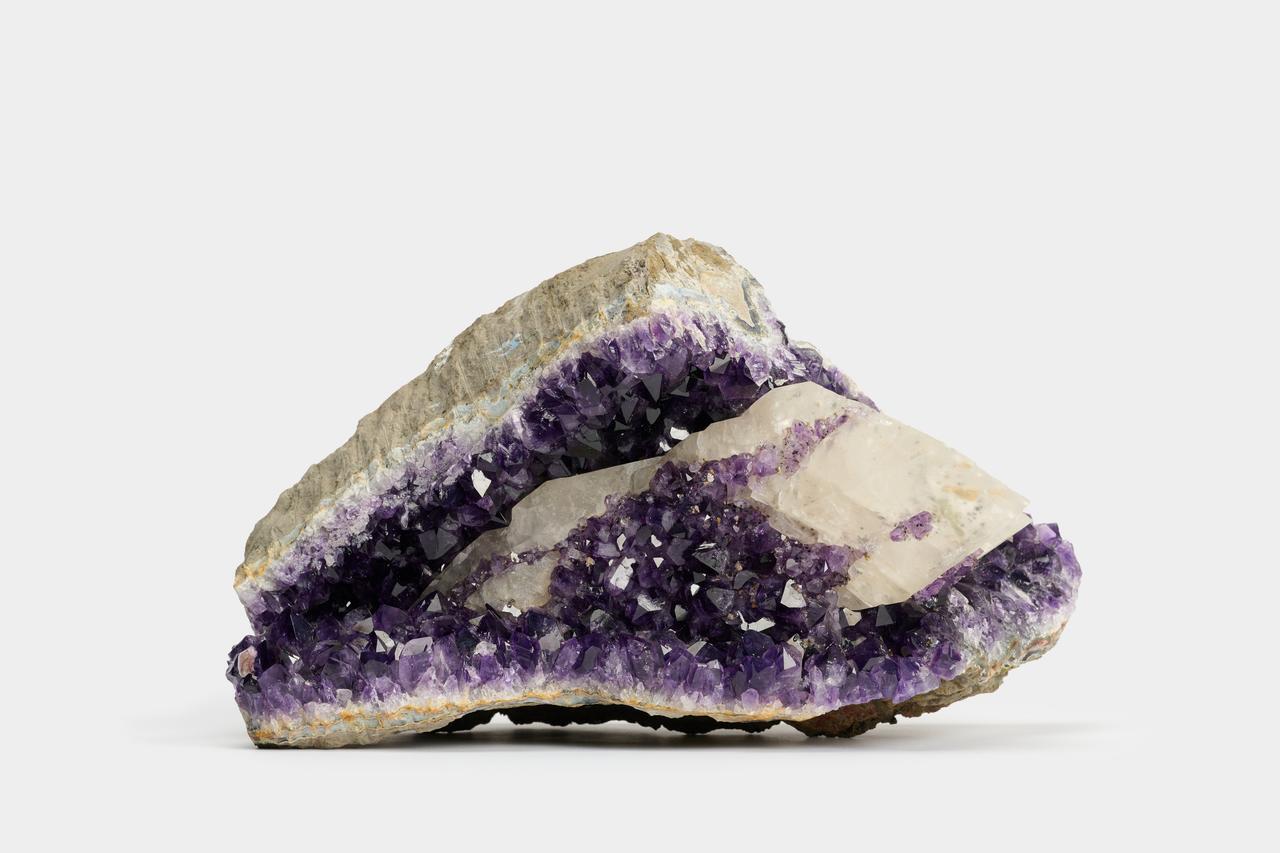
Gold , Gold nugget from French Guiana or Suriname 2.102 grams- 2.1 g - (1)


07
days
03
hours
58
minutes
26
seconds
Current bid
€ 4
Reserve price not met

Expert
Selected by Antonio Rapisarda
Holds a master’s in chemistry with 25 years’ experience in minerals consulting.
Estimate € 480 - € 530
 | €4 | |
|---|---|---|
 | €3 | |
| €2 | |
Catawiki Buyer Protection
Your payment’s safe with us until you receive your object.View details
Trustpilot 4.4 | 146014 reviews
Rated Excellent on Trustpilot.
A 2.102 g gold nugget from the Maroni River, French Guiana.
AI-assisted summary
Description from the seller
Discovery location
3°47’ North
54°04’ West
This gold nugget comes from French Guiana, a French territory in the Amazon, or possibly from Suriname, a former Dutch colony.
I collected it myself more than thirty years ago on the Maroni River (Marowijne River), which separates French Guiana from Suriname, in an area called Papaichton, half a day’s canoe journey from the town of Maripasoula.
At the time, I was a gold prospector in French Guiana, working mainly on the rivers: the Oyapock, which forms the border with Brazil, and the Maroni, which forms the border with Suriname.
My team and I used a floating dredge that pumped sediment from the riverbed.
The sediment was discharged onto a sluice whose bottom was covered with a mat.
The whole setup was installed on a floating barge, which also served as our living quarters, with a kitchen and sleeping area.
The nuggets and heavier sediment settled by gravity onto the mat, while the rest of the sediment flowed back into the river.
Nuggets visible on the surface of the mat were picked up by hand.
Heavy sediment containing gold flakes and powder became trapped in the mat.
From time to time, the mat was washed to recover this heavy sediment.
The sediment was then processed using a vibrating table or a gold pan to recover the gold dust.
The gold we recovered was then regularly sold in French Guiana or Brazil.
I kept the finest nuggets for my personal collection and am now putting a few of them up for sale.
Although located in the Amazon (South America), French Guiana is a French overseas department.
These nuggets are therefore French.
However, some are Surinamese (Dutch), when the barge was closer to the Surinamese bank than to the French Guianese bank.
Indeed, the border between the two countries is simply an imaginary line running down the middle of the river.
So are these French nuggets or Surinamese nuggets? It’s difficult to know for sure; it all depends on which side of this imaginary line the barge was on the day they were collected.
The gold from this region is quite pure; its purity is generally in the range of 950 to 980 parts per thousand, equivalent to 22.80 to 23.50 carats.
At the time, this type of small-scale artisanal gold mining was permitted. It is now prohibited, and gold mining is restricted to a few large industrial operations.
French Guiana is now best known for the Kourou spaceport, which launches satellites into space.
Of course, the photos show the exact nugget being sold, and I will send you the very nugget pictured.
All photos are taken in natural daylight.
I photographed this nugget as honestly and accurately as possible using daylight.
Please note that differences in screen settings and ambient lighting may cause variations in perceived color, saturation, and tones.
I ship quickly, securely, and discreetly in a tear-resistant C5 envelope (162 mm x 229 mm) by registered mail through the French postal service.
Details
Number of objects
1
Main mineral
Gold
Mineral form
, Gold nugget from French Guiana or Suriname 2.102 grams
Weight
2.1 g
Origin (region/city)
Maroni River, French Guiana, Suriname
Country of origin
French Guiana
Sold by