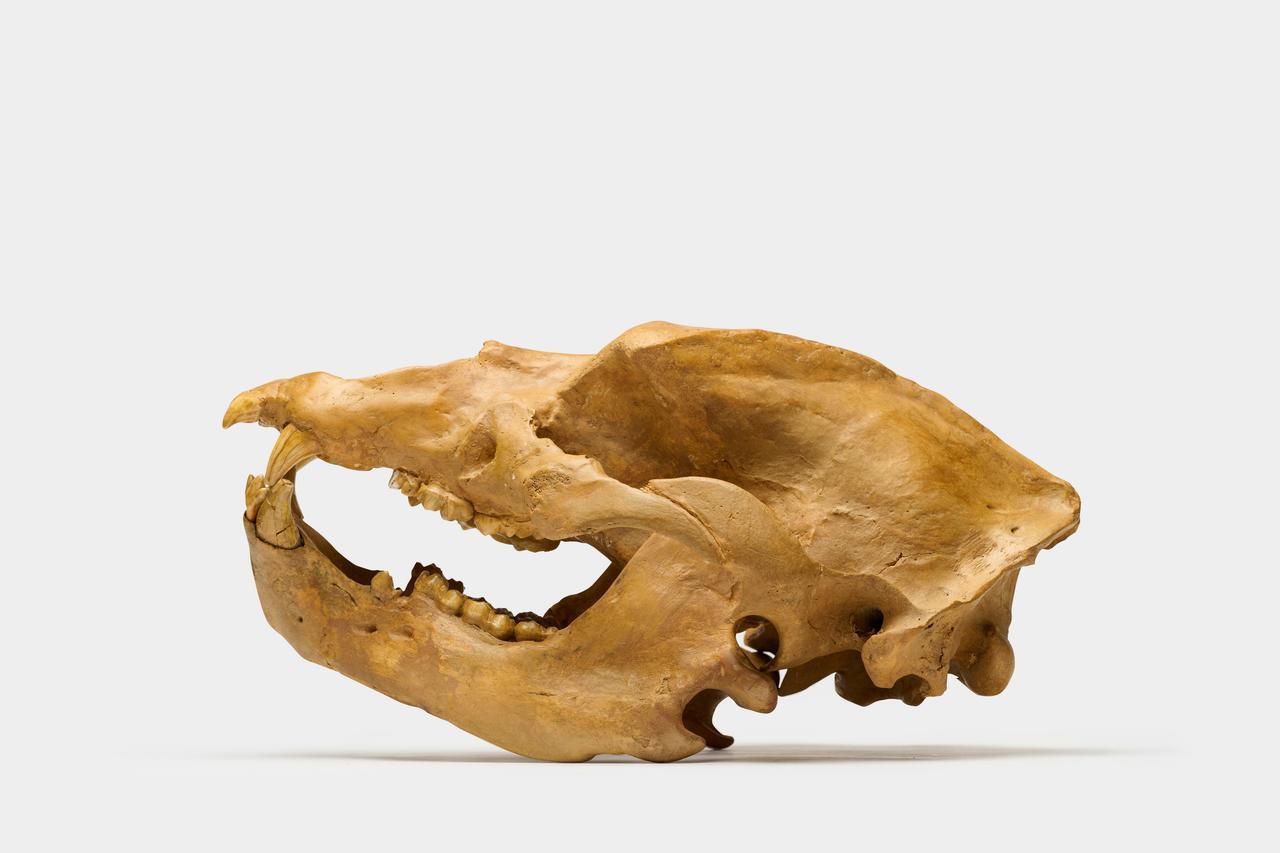
Steppe Bison - Fossil bone - Bisón Priscus - 29.5 cm (No reserve price)


02
days
03
hours
41
minutes
58
seconds

 | €15 | |
|---|---|---|
 | €10 | |
| €5 | |
Catawiki Buyer Protection
Your payment’s safe with us until you receive your object.View details
Trustpilot 4.4 | 146393 reviews
Rated Excellent on Trustpilot.
A natural fossil metatarsal of the steppe bison (Bisón Priscus), from the Pleistocene, found in Hungary.
AI-assisted summary
Description from the seller
In this lot, a large fossil bone (metatarsal) from a Steppe Bison is up for auction.
Perfectly preserved, with a beautiful brown color imparted by the minerals in the surrounding sediment.
A highly attractive piece that “makes an impression when you hold it in your hands.”
It comes from Pest County, Hungary, in the Ráckeve region.
Bison priscus, also known as the Steppe Bison (or steppe wisent), was one of the most characteristic and iconic species of the legendary megafauna, alongside the mammoth, woolly rhinoceros, giant deer, and others.
It lived during the Pleistocene in Eurasia and North America, beginning around 0.8 million years ago. It became extinct in Europe about 18,000 years ago, and finally disappeared 8,000–10,000 years ago in Siberia.
This particular specimen is approximately 50,000 years old.
This large animal is estimated to have measured around 3 meters in length and 2 meters in height, and weighed 1,100 kg.
Seller's Story
Passionate about paleontology since childhood, a 'conservative' collector.
For me, working with this material is a dream, treated with all the respect and love.
It is well known to all of us that the feeling of having a fossil in our hands is something very special.
Honestly, I really enjoy sharing with other enthusiasts this treasure that is fossils, a legacy of our planet's natural history.
Translated by Google TranslateIn this lot, a large fossil bone (metatarsal) from a Steppe Bison is up for auction.
Perfectly preserved, with a beautiful brown color imparted by the minerals in the surrounding sediment.
A highly attractive piece that “makes an impression when you hold it in your hands.”
It comes from Pest County, Hungary, in the Ráckeve region.
Bison priscus, also known as the Steppe Bison (or steppe wisent), was one of the most characteristic and iconic species of the legendary megafauna, alongside the mammoth, woolly rhinoceros, giant deer, and others.
It lived during the Pleistocene in Eurasia and North America, beginning around 0.8 million years ago. It became extinct in Europe about 18,000 years ago, and finally disappeared 8,000–10,000 years ago in Siberia.
This particular specimen is approximately 50,000 years old.
This large animal is estimated to have measured around 3 meters in length and 2 meters in height, and weighed 1,100 kg.
Seller's Story
Passionate about paleontology since childhood, a 'conservative' collector.
For me, working with this material is a dream, treated with all the respect and love.
It is well known to all of us that the feeling of having a fossil in our hands is something very special.
Honestly, I really enjoy sharing with other enthusiasts this treasure that is fossils, a legacy of our planet's natural history.
Translated by Google TranslateDetails
Number of objects
1
Specimen
Steppe Bison
Scientific name
Bisón Priscus
Country of origin
Hungary
Geological period
Quaternary, Pleistocene (2.58 - 0.0117 million years)
Condition
Natural
Height
29.5 cm
Authenticity
Original/official
Sold by