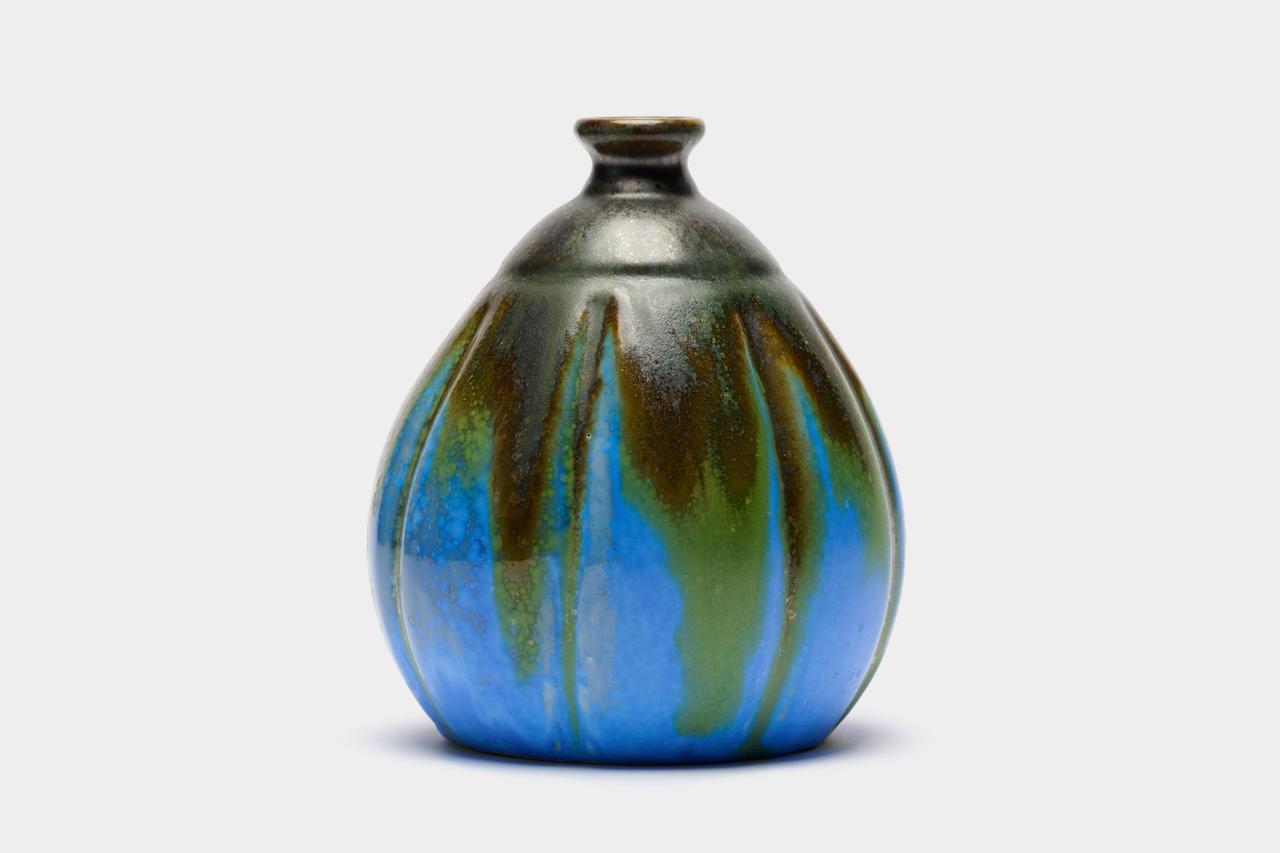
Beer mug - Majolica - Brussels faience, 19th century


02
days
21
hours
48
minutes
39
seconds
Current bid
€ 150
Reserve price met

Expert
Selected by Jeroen Zoetmulder
Has over 30 years of experience in archaeology and is an appraiser specialising in archaeological objects.
Estimate € 170 - € 200
 | €150 | |
|---|---|---|
| €100 | |
| €95 | |
Catawiki Buyer Protection
Your payment’s safe with us until you receive your object.View details
Trustpilot 4.4 | 146014 reviews
Rated Excellent on Trustpilot.
This heavily used 19th-century Brussels faience majolica jug is blue, measures 19 cm high and 9 cm wide, and may have small pieces missing.
AI-assisted summary
Description from the seller
This 19th-century Brussels tin-glazed faience mug, often characterized by a 'litron' designation (a unit of measure), represents a significant period in Belgian ceramic history.
The term faience de Bruxelles denotes the historic production of tin-glazed pottery and maiolica originating from Brussels, Belgium, flourishing particularly during the 18th and 19th centuries.
The origin of the general term faience (or faience) derives from the Italian city of Faenza, famous since the Renaissance for its ceramic art. The Brussels specification confines the product to manufactories active in the Belgian capital (including the first workshops documented at the beginning of the 18th century, such as Corneille Mombaers’s, up to the later manufactories of the 19th century, such as that of Héliodore Stevens).
This is tin-glazed earthenware, very popular in Europe during the 18th and 19th centuries. The intense cobalt blue glaze and the distinctive cartouche highlight the rustic yet refined craftsmanship of the era. It was used as a unit of measure for taverns or for the home. Very visible is the mounting point for a pewter lid—a feature common on beers from this region.
Dimensions and weight:
Height cm 19
Width cm 9
Width including handle cm 14.5
Base cm 10
Weight 750 g
Details
Era
1400-1900
Ceramics type
Majolica
Title additional information
Brussels faience, 19th century
Number of objects
1
Material
Pottery
Country of origin
Belgium
Colour
Blue
Condition
Fair condition - heavily used & with possibly minor parts missing
Height
19 cm
Width
9 cm
Estimated period
1750-1800, 1800-1850
Sold by