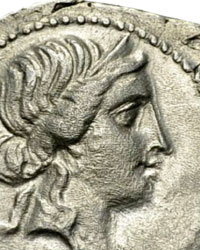
Caria, Kaunos Æ Ca. 350-250 BC (No reserve price)


04
days
18
hours
56
minutes
24
seconds

No bids placed
Catawiki Buyer Protection
Your payment’s safe with us until you receive your object.View details
Trustpilot 4.4 | 146014 reviews
Rated Excellent on Trustpilot.
This bronze coin from Kaunos in Caria, dating to around 350–250 BC, weighs 1.5 g and depicts a bull butting right and a seated sphinx.
AI-assisted summary
Description from the seller
Caria, Kaunos.
Ca. 350-250 BC.
Æ (Bronze, 14 mm, 1.5 g).
Obv: Bull butting right on a ground line.
Rev: Κ-Α. Sphinx seated right.
Reference: GCV 4821; SNG Tübingen 5, 3407; SNG Keckman, Karia, 70-74.
Kaunos, a Carian port on the Calbys river at the border with Lycia, claimed Cretan descent, although Herodotos considered its people native. It resisted the Persian general Harpagos, joined the Ionian Revolt and later the Delian League. Under the satrap Mausolos it was enlarged, walled and took on a more Greek character, the setting for its small civic bronzes. After Alexander it passed among his successors and the Ptolemies before Rhodes acquired it in the early 2nd century BC.
DISCOVER OUR CURRENT SELECTION
Visit and follow our seller profile to explore all items offered by Logos Numismatics & Antiquities across current auctions and stay informed of new listings.
IMPORTANT INFORMATION
I. All items are authentic and lawfully acquired through established European auction houses; provenance is documented in our records.
II. Every order includes one consolidated, signed certificate of authenticity and lawful provenance, recording each item's full attribution.
III. Combined shipping is available only for items won in the same auction and settled as one Catawiki order.
IV. For shipments outside the European Union, import licences, taxes, and related fees are the buyer’s responsibility. Customs delays are beyond our control.
Seller's Story
Drawing on more than 15 years of collecting experience, we offer ancient and medieval coins and artefacts that tell the stories of the lands and peoples of the eastern Mediterranean and the Near East.
Details
Era
Before 1400
Culture/region
Caria, Kaunos
Year/period and variation
Ca. 350-250 BC
Denomination
Æ
Metal
Æ
Condition
Ungraded
Weight
1.5 g