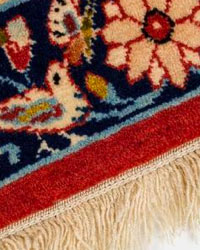
Caucasian Kazakh drawing – 1970s - Carpet - 300 cm - 125 cm


01
day
23
hours
49
minutes
00
seconds
Current bid
€ 110
No reserve price

Expert
Selected by Richard Ebbers
Certified appraiser at Federation TMV with 30 years' professional antiques experience.
Estimate € 450 - € 550
 | €110 | |
|---|---|---|
 | €100 | |
 | €54 | |
Catawiki Buyer Protection
Your payment’s safe with us until you receive your object.View details
Trustpilot 4.4 | 145967 reviews
Rated Excellent on Trustpilot.
This hand-knotted 1970s Kazak-style Caucasian rug from Azerbaijan measures 300 × 125 cm and has a wool pile on a cotton foundation.
AI-assisted summary
Description from the seller
Fascinating vintage hand-knotted carpet from the 1970s, stemming from Azerbaijan's textile tradition.
The decorative arrangement particularly recalls Kazak and Karabagh carpets from the Southern Caucasus, famous for large geometric compositions and the originality of tribal motifs.
On the deep midnight-blue field unfold three large geometric medallions arranged along the central axis, accompanied by cruciform figures, branched elements and stylized motifs of remarkable expressive power.
The composition stands out for the regular rhythm of the decorations and for the balance between solid and void, features that give the carpet a visually striking presence.
The color palette combines brick red, ivory, powder blue and deep blue, with warm nuances that enhance the artisanal character of the piece.
Of particular interest is the main ivory border, decorated with a continuous sequence of geometric motifs, enclosed by thin polychrome frames.
Tradition and craftsmanship
Made in the 1970s with wool pile and cotton warp, this carpet bears witness to the continuity of textile traditions of the Azerbaijani area and the deep decorative affinities with the cultural heritage of the Southern Caucasus.
The geometric design, the large stylized figures and the intense color scheme confer on the piece a particularly recognizable tribal character.
Decorative value
The elongated dimensions of 300 × 125 cm make this carpet especially suitable for corridors, grand entrances, galleries and transitional spaces.
The monumental design and the refined color combination also make it interesting for contemporary furnishings, eclectic environments and interiors with a refined taste.
A vintage rug with strong decorative personality, expression of the meeting between textile tradition and Caucasian ornamental language.
Details
Era
1900-2000
Model
Caucasian Kazakh drawing – 1970s
Length
300 cm
Width
125 cm
Material
Wool on cotton
Country of origin
Azerbaijan
Condition
In very good condition
Professionally cleaned
Yes
Manufacturing period
Late 20th century
Sold by