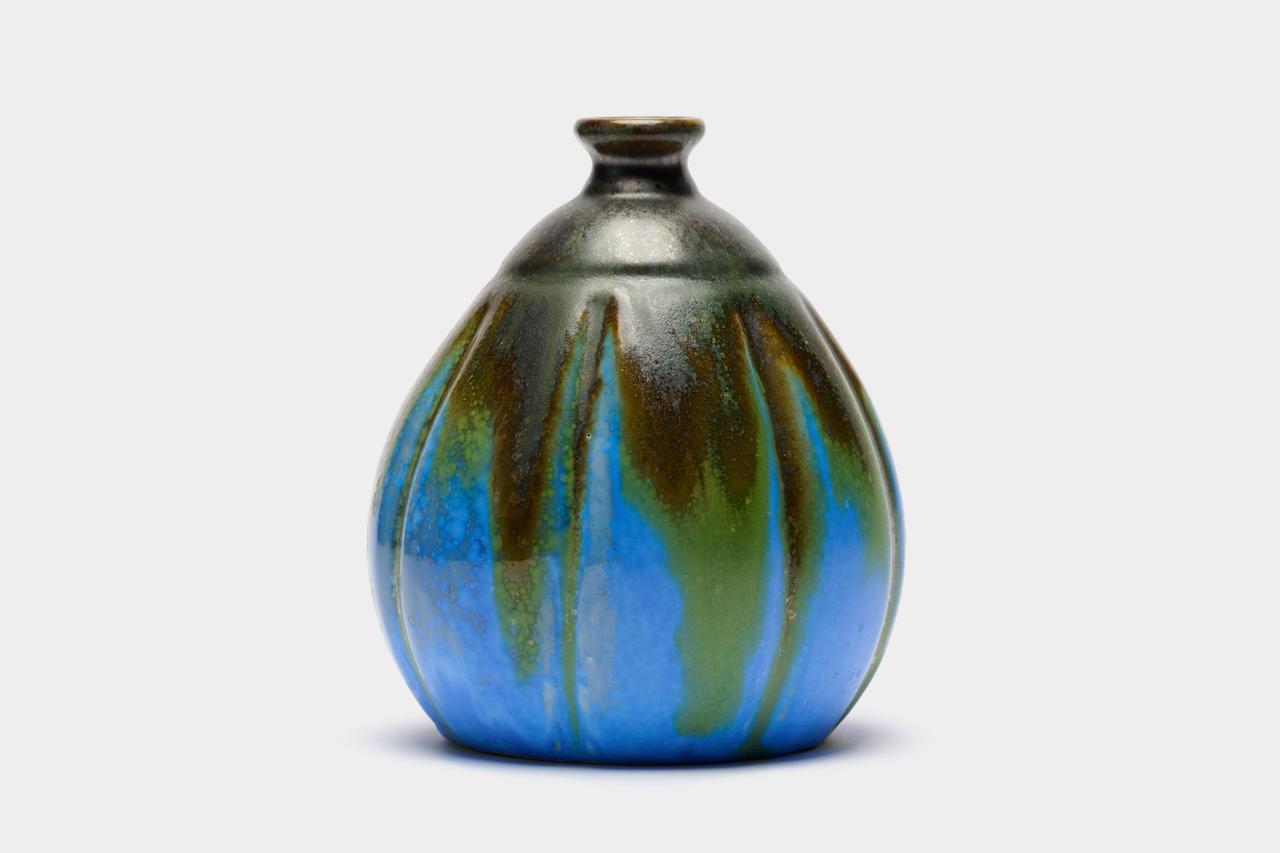
Loetz - PN I-7035 - Vase - Candia Papillon - iridescent glass - Art Nouveau glass vase 1898


05
days
16
hours
15
minutes
43
seconds
Current bid
€ 333
Reserve price not met

Expert
Selected by Michel Karis
Art historian with extensive experience working at various auction houses in antiques.
Estimate € 1,800 - € 2,000
 | €333 | |
|---|---|---|
 | €7 | |
| €6 | |
Catawiki Buyer Protection
Your payment’s safe with us until you receive your object.View details
Trustpilot 4.4 | 146014 reviews
Rated Excellent on Trustpilot.
An Austrian Art Nouveau Loetz Candia Papillon iridescent glass vase, model PN I-7035, dated 1898, in gold-toned glass and measuring 30 cm high by 14 cm wide, with minor signs of age and a scratched base.
AI-assisted summary
Description from the seller
Art Nouveau antique, beautifully shaped, highly decorative glass art
Large glass vase with silver-gold Papillon décor
by Johann Loetz Witwe
Klostermühle, Austria glass factory, dating to 1898
An embodiment of the Art Nouveau era and the style of the period around 1900!
Finest workmanship and exceptionally high quality
Series: Candia Papillon PN I-7035
The fairy-tale magic of iridescent, lustrous glass is especially evident in the creations of the world-renowned firm Joh. Loetz Witwe, whose finest pieces united artistic design with handcrafted and technical perfection. Initially inspired by Tiffany glass, the creative forces of the Bohemian glassworks soon developed a style of their own, owing much, no doubt, to Viennese design.
Joh. Loetz Witwe
(also Johan Lötz Witwe) was an important art glass manufactory in Klostermühle, Bohemia. Loetz’s works are among the finest examples of Art Nouveau. One of the oldest glassworks was located in the Wottawa Valley in the Bohemian Forest. It was purchased in 1850 by Johann Lötz, the founder of the firm and former owner of the Deffernik, Hurkental, Annatal, and Vogelsang glassworks. In 1879, Max Ritter von Spaun, a grandson of Joh. Lötz, inherited the factory from his grandmother and continued to operate it under the old firm name, “Joh. Lötz Witwe.” Like Louis Comfort Tiffany, Loetz was able to produce Phenomenon décor glass with metallic, iridescent colors to a very high standard. The company maintained contacts with other manufacturers, including J. & L. Lobmeyr and E. Bakalowits Söhne in Vienna, as well as the Argentor works. Notable artists who collaborated with the company included Josef Hoffmann, Koloman Moser, and the Wiener Werkstätte. Their collaboration reached its peak in the years after 1900. The company won a prize at the Paris World’s Fair and received awards in Chicago and St. Louis. Art Nouveau works by Joh. Loetz Witwe can be found in several museums and fetch high prices at auction.
A magnificent, large, characteristic Loetz glass vase from the early Art Nouveau period, circa 1900!
The beautiful, classic shape narrows toward the bottom and widens toward the top.
Yellow glass in Papillon décor, with shimmering oil-spot granules created from fused glass fragments in silver, blue, rose, turquoise, and gold that glimmer dreamily.
The base has a small, round, typical Loetz pontil mark.
In different lighting, its color and irresistible brilliance change!
Papillon is one of the most common Loetz décors! It is a wonderful technique developed by Loetz and aptly named “Candia Papillon” or “Amber Spotted Butterfly Wings,” and referred to by some collectors as “Oil Spot” décor.
The quality of this glass is comparable to L.C.T. Tiffany Favrile and Steuben Glass from New York. Around the turn of the century, these three competed fiercely for the Art Nouveau glass market in the United States.
Papillon décor was a major innovation and discovery for Loetz at the time, causing a sensation in the world of glass.
An exceptionally beautiful design and a fantastic focal point for any collection or modern interior.
Literature: Lötz. Böhmisches Glas 1880–1940, Volume 2, Pattern Catalog
Height: 30 cm; diameter: 14 cm at the widest point at the top, 12.5 cm at the bottom
Condition: Very good used condition, with minor signs of age. Base is scratched.
Shipping: Insured DHL.
Details
Specific region of origin
Klostermühle
Glass type
iridescent glass
Weight
400 g
Era
1900-2000
Title additional information
Art Nouveau glass vase 1898
Number of objects
1
Country of origin
Austria
Model
Candia Papillon
Designer/artist/maker
PN I-7035
Material
Glass
Style
Art Nouveau
Manufacturer/brand
Loetz
Colour
Gold
Condition
Excellent condition: barely used with minimal signs of wear
Height
30 cm
Width
14 cm
Depth
14 cm
Diameter
14 cm
Estimated period
1900-1910
Sold by