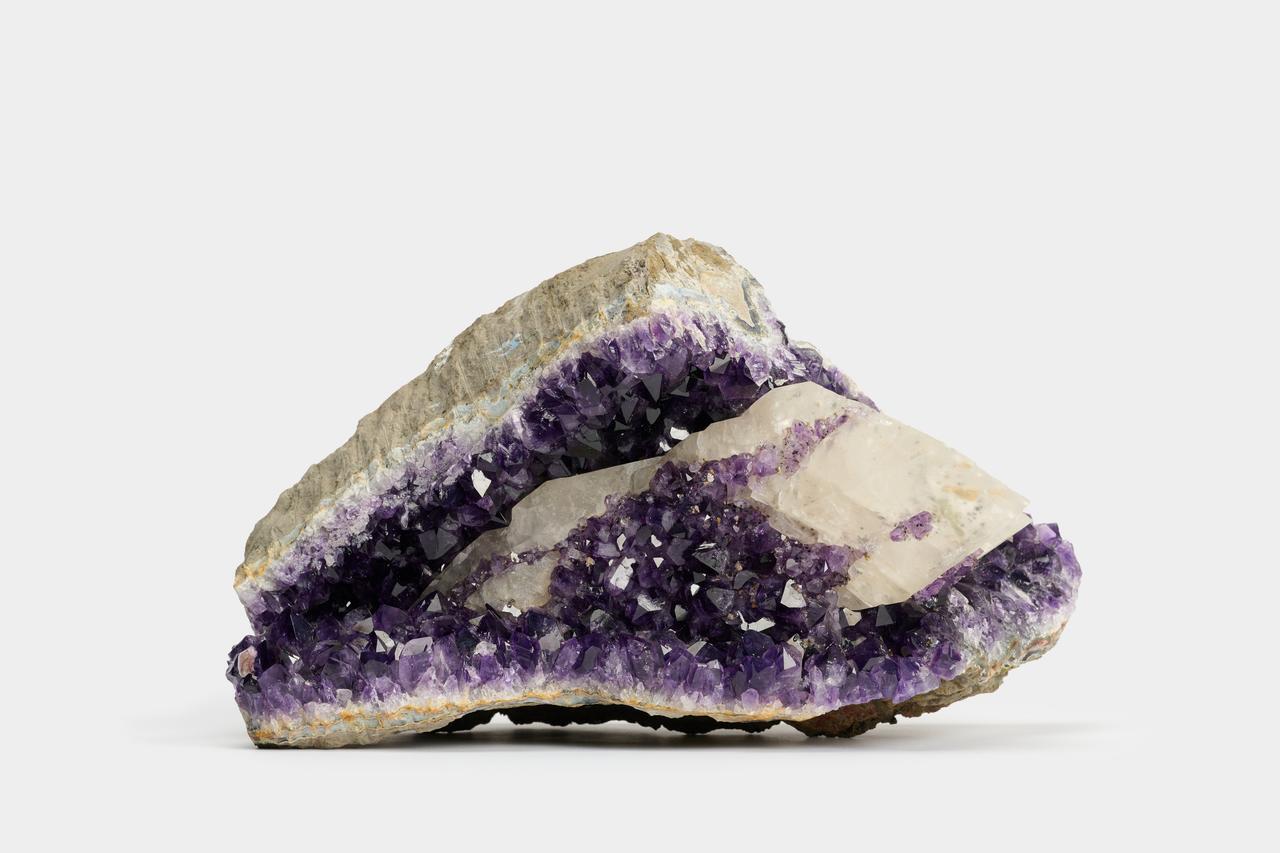
Vibrantly Crystalline Sulfur Drusy Cluster Exceptional Native Sulfur formation - Height: 222 mm - Width: 134 mm- 1741 g - (1)


00
days
07
hours
38
minutes
33
seconds
Current bid
€ 35
Reserve price not met

Expert
Selected by Georgia Foteinou
Holds BSc in geology and post-graduate qualifications in geochemistry.
Estimate € 530 - € 600
 | €35 | |
|---|---|---|
 | €30 | |
 | €25 | |
Catawiki Buyer Protection
Your payment’s safe with us until you receive your object.View details
Trustpilot 4.4 | 146393 reviews
Rated Excellent on Trustpilot.
A crystalline native-sulphur cluster from Potosí, Bolivia, is mounted on a wooden and brass display base and measures 222 × 134 × 82 mm.
AI-assisted summary
Description from the seller
Elegant display on an artistic base made of wood and brass — This specimen represents a remarkable cluster of native sulfur crystallized, geologically classified as an orthorhombic solid allotrope (crystal system orthorhombic). Its formation results from volcanic or hydrothermal processes, where hydrogen sulfide vapors (H2S) react with oxygen or sulfur trioxide (SO2), depositing elemental sulfur in cavities and fractures of the host rock. The macroscopic structure shows a compact druse of micro-faceted crystals. Visual analysis reveals an extraordinarily intense and uniform lemon-yellow coloration, indicative of high chemical purity and absence of significant impurities that could alter the color. The surface exhibits a distinctive luster, attributable to the resinous nature of sulfur crystals which, despite their minute size, reflect light with remarkable efficiency, creating a sparkling effect across the exposed area. No heterogeneous inclusions are observed that would compromise the aesthetic uniformity of the sample. The provenance of this magnificent specimen is the famous El Desierto Mine, located in the San Pablo de Napa region, in the Daniel Campos district, Potosí province, Bolivia. This locality is universally recognized within collecting circles for producing sulfur of exceptional quality, distinguished by vivid coloration and unique crystal formations. The geological context of the area is characterized by tertiary and quaternary volcanic activity, which favored the genesis of sulfur epitermal deposits. Aesthetically, the piece stands out for the density of micro-crystals that form a nearly velvety surface, while maintaining the typical adamantine luster of sulfur. Its natural form, a massive fragment with a dominant face covered in crystals, makes it a piece of strong visual impact. The absence of fractures or significant surface alterations further elevates its value. The specimen is mounted on an artistic base that enhances its presentation. The preservation state is excellent, with no signs of deterioration or damage. The stability of the sample is ensured by mounting on a custom wooden and brass base, designed to highlight the optimal orientation of the specimen and facilitate display. This support not only guarantees the mineral’s physical integrity but also enhances its aesthetic appeal, turning it into a collectible object ready to be admired. In the realm of mineralogical collecting, native sulfur specimens with such chromatic saturation and crystal integrity, originating from a classical locality like the El Desierto Mine, are highly sought after. They represent not only a geological icon but also an investment in a piece of natural history, difficult to replicate due to beauty and rarity. The combination of prestigious provenance, aesthetic quality, and considerable size makes it a museum piece, ideal for demanding collectors and connoisseurs of fine mineralogy.
Seller's Story
The Mineral Art Gallery offers minerals, fossils, shells and natural elements.
Born in Italy in 2017, today she collaborates with international galleries and collectors, she is a direct importer of large minerals and naturalistic collectible elements; deals with the processing to insert them inside the living space. A section of the gallery was dedicated to the Wunderkammer, "chamber of wonders or cabinet of curiosities" in which Mirabilia elements are presented: naturalia and italiania, a union between "the present is the past".
All lots are shipped via DHL Express and Fercam couriers, with insured parcel and tracking.
Translated by Google TranslateElegant display on an artistic base made of wood and brass — This specimen represents a remarkable cluster of native sulfur crystallized, geologically classified as an orthorhombic solid allotrope (crystal system orthorhombic). Its formation results from volcanic or hydrothermal processes, where hydrogen sulfide vapors (H2S) react with oxygen or sulfur trioxide (SO2), depositing elemental sulfur in cavities and fractures of the host rock. The macroscopic structure shows a compact druse of micro-faceted crystals. Visual analysis reveals an extraordinarily intense and uniform lemon-yellow coloration, indicative of high chemical purity and absence of significant impurities that could alter the color. The surface exhibits a distinctive luster, attributable to the resinous nature of sulfur crystals which, despite their minute size, reflect light with remarkable efficiency, creating a sparkling effect across the exposed area. No heterogeneous inclusions are observed that would compromise the aesthetic uniformity of the sample. The provenance of this magnificent specimen is the famous El Desierto Mine, located in the San Pablo de Napa region, in the Daniel Campos district, Potosí province, Bolivia. This locality is universally recognized within collecting circles for producing sulfur of exceptional quality, distinguished by vivid coloration and unique crystal formations. The geological context of the area is characterized by tertiary and quaternary volcanic activity, which favored the genesis of sulfur epitermal deposits. Aesthetically, the piece stands out for the density of micro-crystals that form a nearly velvety surface, while maintaining the typical adamantine luster of sulfur. Its natural form, a massive fragment with a dominant face covered in crystals, makes it a piece of strong visual impact. The absence of fractures or significant surface alterations further elevates its value. The specimen is mounted on an artistic base that enhances its presentation. The preservation state is excellent, with no signs of deterioration or damage. The stability of the sample is ensured by mounting on a custom wooden and brass base, designed to highlight the optimal orientation of the specimen and facilitate display. This support not only guarantees the mineral’s physical integrity but also enhances its aesthetic appeal, turning it into a collectible object ready to be admired. In the realm of mineralogical collecting, native sulfur specimens with such chromatic saturation and crystal integrity, originating from a classical locality like the El Desierto Mine, are highly sought after. They represent not only a geological icon but also an investment in a piece of natural history, difficult to replicate due to beauty and rarity. The combination of prestigious provenance, aesthetic quality, and considerable size makes it a museum piece, ideal for demanding collectors and connoisseurs of fine mineralogy.
Seller's Story
The Mineral Art Gallery offers minerals, fossils, shells and natural elements.
Born in Italy in 2017, today she collaborates with international galleries and collectors, she is a direct importer of large minerals and naturalistic collectible elements; deals with the processing to insert them inside the living space. A section of the gallery was dedicated to the Wunderkammer, "chamber of wonders or cabinet of curiosities" in which Mirabilia elements are presented: naturalia and italiania, a union between "the present is the past".
All lots are shipped via DHL Express and Fercam couriers, with insured parcel and tracking.
Translated by Google TranslateDetails
Number of objects
1
Main mineral
Vibrantly Crystalline Sulfur Drusy Cluster
Mineral form
Exceptional Native Sulfur formation
Supplement
Bolivian Sulfur Cluster
Weight
1741 g
Origin (region/city)
Potosí
Country of origin
Bolivia
Height
222 mm
Width
134 mm
Depth
82 mm
Sold by