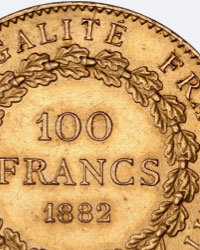
. Portugal D. Afonso I (1128-1185). Dinheiro


07
days
09
hours
51
minutes
58
seconds
Current bid
€ 2
Reserve price not met

Expert
Selected by Iria Marcos Blanco
Holds an MBA in written historical heritage and specialised in world coins with a focus on early modern Spanish and Portuguese coins.
Estimate € 800 - € 900
 | €2 | |
|---|---|---|
| €1 |
Catawiki Buyer Protection
Your payment’s safe with us until you receive your object.View details
Trustpilot 4.4 | 146353 reviews
Rated Excellent on Trustpilot.
A 0.37 g Portuguese Dinheiro from the reign of D. Afonso I (1128–1185).
AI-assisted summary
Description from the seller
Born around 1109 in Guimarães (or Viseu), D. Afonso Henriques—known to history as D. Afonso I or O Conquistador ("The Conqueror")—transformed a small northern Iberian county into the independent Kingdom of Portugal, founding the House of Burgundy and establishing borders that remain largely intact today.
Rebellion and the Battle of São Mamede (1128)
Afonso was the son of Henry of Burgundy, Count of Portugal, and Teresa of León, an illegitimate daughter of King Alfonso VI of León and Castile. When Count Henry died in 1112, Teresa ruled the County of Portugal as regent. Over the following decade, she grew politically close to Galician nobles—particularly Fernão Peres de Trava—alienating the local Portuguese nobility and clergy, who feared their territory would be absorbed into Galicia.
Rallying the discontented Portuguese barons and the Archbishop of Braga, the teenage Afonso rose against his own mother. On 24 June 1128, his forces defeated Teresa’s army at the Battle of São Mamede, just outside Guimarães. Taking control of the county at age nineteen, Afonso expelled his mother and her Galician allies, laying the political foundation for an autonomous state.
Ourique and the Royal Title (1139–1143)
For the next decade, Afonso fought on two fronts: pushing back against his cousin, Emperor Alfonso VII of León-Castile, to the north and east, while campaigning south against the Almoravid Moorish taifas.
His defining military breakthrough came on 25 July 1139 at the Battle of Ourique, where he decisively defeated a larger Almoravid force in the southern plains. Immediately after the victory—later wrapped in legend as a miraculous apparition of Christ promising the longevity of his kingdom—Afonso’s troops acclaimed him King of the Portuguese (Rex Portugallensium).
Alfonso VII of León-Castile initially refused to accept the loss of his vassal county. Following border skirmishes and negotiations mediated by the Church, the two cousins signed the Treaty of Zamora in October 1143. Under the treaty, Alfonso VII recognized Afonso’s royal title in exchange for Afonso's nominal homage to the Papacy—a clever diplomatic move designed to bypass Castilian overlordship by placing Portugal directly under the protection of Rome.
The Southern Conquests: Santarém and Lisbon (1147)
With his northern flank secured, D. Afonso I turned his full attention to the Reconquista, aiming to push Portugal's frontier from the Mondego River down to the Tagus River.
Santarém (March 1147): In a daring night assault with a small handpicked force, Afonso scaled the walls of the heavily fortified Moorish city of Santarém, taking it by surprise without a prolonged siege.
Lisbon (July–October 1147): Four months later, Afonso besieged Lisbon. He seized a strategic opportunity when a large fleet of Northern European Crusaders—English, Flemish, German, and Norman knights bound for the Second Crusade—put into Porto. Convincing them to join his campaign in exchange for plunder and land, Afonso captured Lisbon on 24 October 1147 after a grueling four-month siege, securing the vital Tagus estuary.
Over the next two decades, with the help of the Knights Templar, the Hospitallers, and legendary frontier warriors like Geraldo Sem Pavor ("Gerald the Fearless"), Portuguese forces pushed deep into the Alentejo, capturing Alcácer do Sal, Beja, and Évora.
Disaster at Badajoz and Papal Recognition (1169–1179)
Afonso’s relentless expansion suffered a severe setback in 1169 during a siege of Badajoz, a Muslim city within the sphere of influence of his son-in-law, King Ferdinand II of León. While attempting to escape through the city gates as Leonese forces arrived to relieve the garrison, Afonso’s leg was crushed against an iron bolt, shattering his femur. Captured by Ferdinand II, the sixty-year-old king was eventually released, though he never rode a horse again and spent the rest of his life ruling alongside his capable son and heir, the future D. Sancho I.
Despite his physical decline, Afonso’s greatest diplomatic triumph arrived ten years later. On 23 May 1179, Pope Alexander III issued the papal bull Manifestis Probatum, formally recognizing D. Afonso I as an independent king and Portugal as a sovereign kingdom, forever ending any legal claim of overlordship by León or Castile.
Legacy and Coinage
D. Afonso I died in Coimbra (then the capital of Portugal) on 6 December 1185, at roughly seventy-six years old, and was buried in the Monastery of Santa Cruz.
Beyond his military conquests, he cemented Portugal’s independence through institution-building—granting municipal charters (forais) to repopulate conquered towns, patronizing Cistercian and Templar monastic orders, and minting the first sovereign Portuguese coins (such as the billon dinheiros bearing REX ALFONSVS and PORTVGAL alongside his stylized portrait), asserting royal authority in everyday commerce across his newly forged nation.
Details
Era
Before 1400
Culture/region
Portugal
Ruler
D. Afonso I (1128-1185)
Denomination
Dinheiro
Condition
Ungraded
Weight
0.37 g
Number of objects
1
Sold by