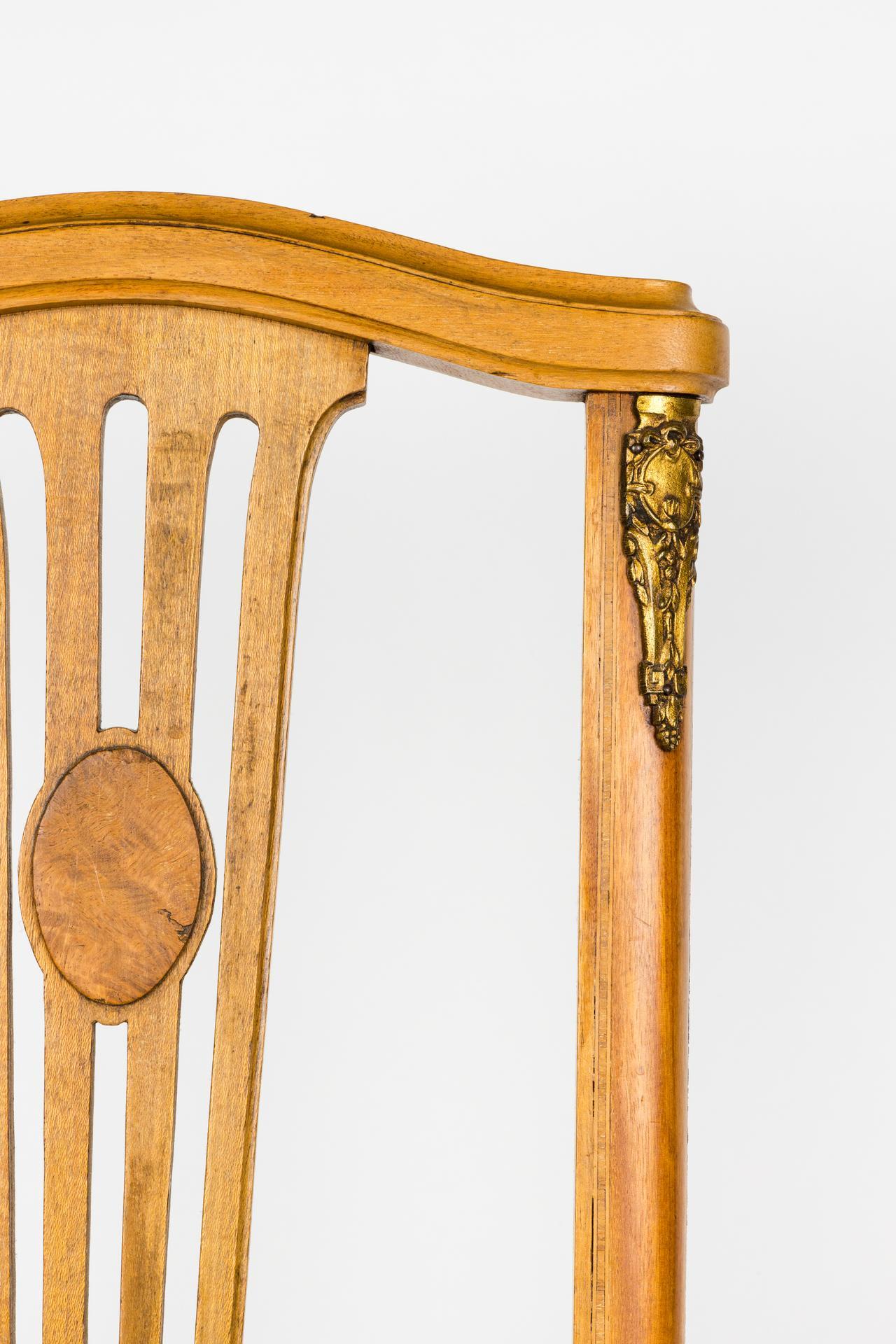
Writing table - Beech - roll-top desk


08
days
07
hours
45
minutes
17
seconds

No bids placed
Catawiki Buyer Protection
Your payment’s safe with us until you receive your object.View details
Trustpilot 4.4 | 146393 reviews
Rated Excellent on Trustpilot.
This antique 19th-century Empire-style fall-front secrétaire is made of beech wood and features a central mirror, side columns and two lower drawers.
AI-assisted summary
Description from the seller
Biedermeier or Empire-style fall-front secretaire, featuring a polished wood finish with book-matched grain, two side columns, a central fall-front door with a lock, and two drawers at the bottom.
Opening the door reveals an elegant architectural interior with a central mirror, a characteristic feature of 19th-century Empire- and Biedermeier-style secrétaires.
Details revealed inside
• Temple-front design: The central compartment is framed by two small side columns and topped with a moulded entablature enclosing a back mirror.
• Side compartments and secret compartments: Small shelves and document drawers sit on either side of the central niche. Secret compartments are often concealed behind the mirror or within the uprights of these structures, and can be opened using springs or hidden catches.
• Writing surface: When open, the fall-front provides a spacious work surface (originally sometimes covered in leather or green baize; here it is entirely in polished wood).
• Lower structure: The side uprights of the base feature scroll-shaped brackets and carved feet with stylised paw/claw details, a decorative element widely used in Austro-Hungarian and Lombard-Venetian furniture of the first half of the 19th century.
Details
Era
1400-1900
Style subtype
Empire
Wood type
Beech
Title additional information
roll-top desk
Number of objects
1
Country of origin
Italy
Material
Wood
Style
Antique
Condition
Good condition - used with small signs of aging & blemishes
Height
182 cm
Width
106 cm
Depth
55 cm
Height of the underside of the table
79 cm
Estimated period
1800-1850, 1850-1900
Sold by