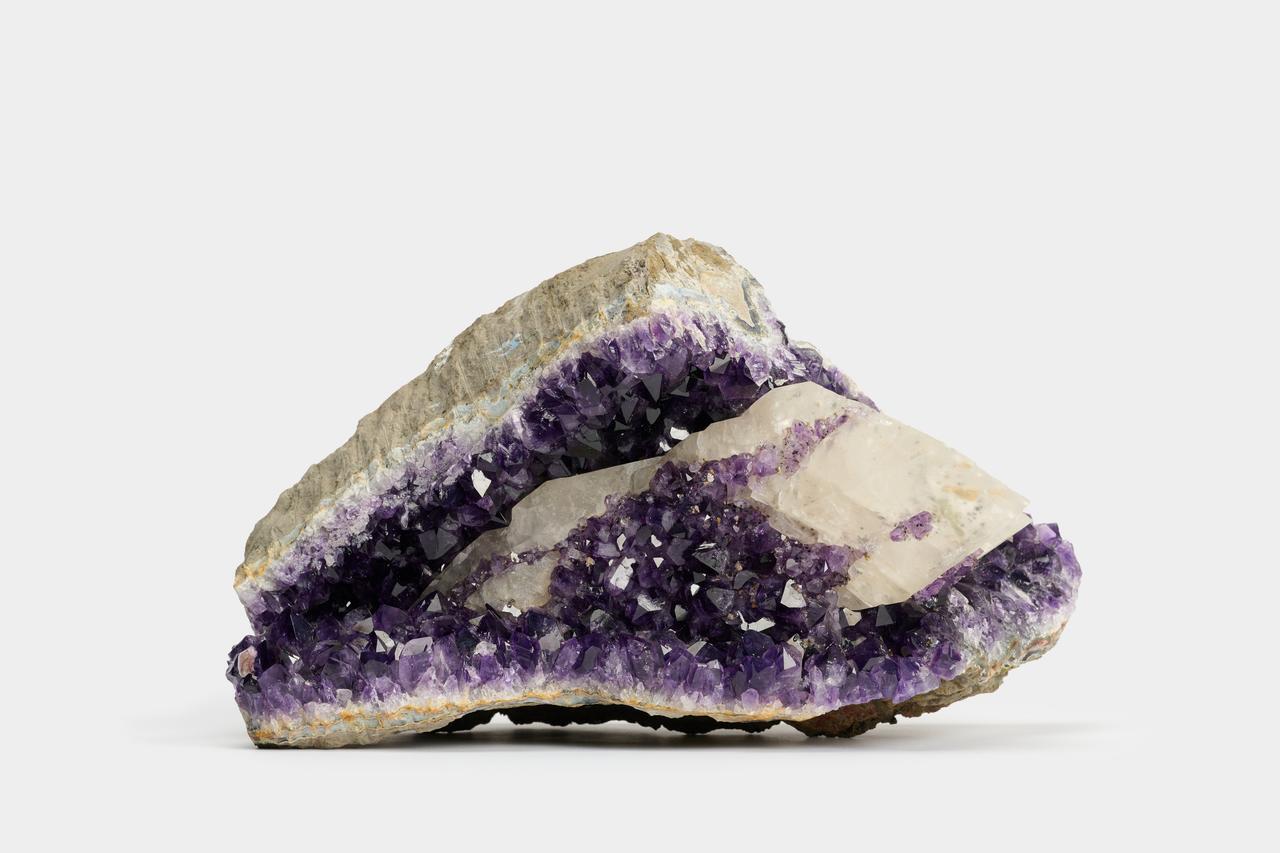
Vivid turquoise chrysocolla with “Eye” formations Sample of intricate orbicular and botryoidal patterns - Height: 140 mm - Width: 90 mm- 344 g - (1)


00
days
18
hours
53
minutes
39
seconds
Current bid
€ 31
Reserve price not met

Expert
Selected by Georgia Foteinou
Holds BSc in geology and post-graduate qualifications in geochemistry.
Estimate € 260 - € 290
 | €31 | |
|---|---|---|
| €28 | |
| €25 | |
Catawiki Buyer Protection
Your payment’s safe with us until you receive your object.View details
Trustpilot 4.4 | 146393 reviews
Rated Excellent on Trustpilot.
Description from the seller
Naturally Polished Chrysocolla with Malachite Specimen from Congo This specimen, from the rich deposits of the Democratic Republic of the Congo, is a superb polished slab that reveals the intimate association between Chrysocolla and Malachite. The piece’s freeform, sculptural shape has been worked to enhance its surface, transforming the mineral into a natural work of art. Its visual impact is immediate, dominated by vibrant turquoise-blue hues reminiscent of tropical waters, punctuated and crisscrossed by green orbicular patterns that give the specimen a unique, hypnotic character. A close look at its polished surface is like gazing out over an abstract geological landscape. Chrysocolla forms the main matrix, with its intense, saturated color. Within it, Malachite appears in spectacular botryoidal formations and concentric rings known as “eyes.” These patterns, ranging from forest green to lighter shades of green, bear witness to slow, layered growth. The color contrast between blue and green is exceptionally vivid, creating a dynamic composition of great elegance. Fine mineralized fracture lines and a delicate natural craquelure can also be seen, adding depth and history to the piece’s texture. The formation of a specimen like this is rooted in the oxidation processes that affect copper deposits. Chrysocolla, a hydrated copper phyllosilicate, and Malachite, a copper carbonate, are secondary minerals that form when rainwater enriched with oxygen and carbon dioxide percolates through rocks containing primary copper minerals. This chemical weathering process dissolves the copper and redeposits it in new mineral forms, layer by layer, giving rise to these marvelous colored concretions. The orbicular patterns are the hallmark of this gradual growth process. The association of Chrysocolla and Malachite is especially prized by collectors not only for its beauty, but also because it offers direct visual evidence of the geochemical processes involving copper. In this case, polishing does not detract from the specimen; rather, it reveals its essence, allowing every tiny detail of its internal structure—otherwise hidden in its rough form—to be appreciated. This specimen is much more than a simple mineral; it is a fragment of Earth’s history, a conversation piece that captures the eye and sparks curiosity. Its strong aesthetic presence makes it ideal for display in a contemporary Wunderkammer, a professional studio, or as a focal point in an interior design scheme that celebrates the authenticity and beauty of natural materials. It is a small abstract painting created by nature.
Technical Details
Name: Chrysocolla with Malachite
Origin: Democratic Republic of the Congo
Dimensions: 140 x 90 x 25 mm
Weight: 344 g
Treatment: Surface polishing
Condition: Natural
Seller's Story
The Mineral Art Gallery offers minerals, fossils, shells and natural elements.
Born in Italy in 2017, today she collaborates with international galleries and collectors, she is a direct importer of large minerals and naturalistic collectible elements; deals with the processing to insert them inside the living space. A section of the gallery was dedicated to the Wunderkammer, "chamber of wonders or cabinet of curiosities" in which Mirabilia elements are presented: naturalia and italiania, a union between "the present is the past".
All lots are shipped via DHL Express and Fercam couriers, with insured parcel and tracking.
Translated by Google TranslateNaturally Polished Chrysocolla with Malachite Specimen from Congo This specimen, from the rich deposits of the Democratic Republic of the Congo, is a superb polished slab that reveals the intimate association between Chrysocolla and Malachite. The piece’s freeform, sculptural shape has been worked to enhance its surface, transforming the mineral into a natural work of art. Its visual impact is immediate, dominated by vibrant turquoise-blue hues reminiscent of tropical waters, punctuated and crisscrossed by green orbicular patterns that give the specimen a unique, hypnotic character. A close look at its polished surface is like gazing out over an abstract geological landscape. Chrysocolla forms the main matrix, with its intense, saturated color. Within it, Malachite appears in spectacular botryoidal formations and concentric rings known as “eyes.” These patterns, ranging from forest green to lighter shades of green, bear witness to slow, layered growth. The color contrast between blue and green is exceptionally vivid, creating a dynamic composition of great elegance. Fine mineralized fracture lines and a delicate natural craquelure can also be seen, adding depth and history to the piece’s texture. The formation of a specimen like this is rooted in the oxidation processes that affect copper deposits. Chrysocolla, a hydrated copper phyllosilicate, and Malachite, a copper carbonate, are secondary minerals that form when rainwater enriched with oxygen and carbon dioxide percolates through rocks containing primary copper minerals. This chemical weathering process dissolves the copper and redeposits it in new mineral forms, layer by layer, giving rise to these marvelous colored concretions. The orbicular patterns are the hallmark of this gradual growth process. The association of Chrysocolla and Malachite is especially prized by collectors not only for its beauty, but also because it offers direct visual evidence of the geochemical processes involving copper. In this case, polishing does not detract from the specimen; rather, it reveals its essence, allowing every tiny detail of its internal structure—otherwise hidden in its rough form—to be appreciated. This specimen is much more than a simple mineral; it is a fragment of Earth’s history, a conversation piece that captures the eye and sparks curiosity. Its strong aesthetic presence makes it ideal for display in a contemporary Wunderkammer, a professional studio, or as a focal point in an interior design scheme that celebrates the authenticity and beauty of natural materials. It is a small abstract painting created by nature.
Technical Details
Name: Chrysocolla with Malachite
Origin: Democratic Republic of the Congo
Dimensions: 140 x 90 x 25 mm
Weight: 344 g
Treatment: Surface polishing
Condition: Natural
Seller's Story
The Mineral Art Gallery offers minerals, fossils, shells and natural elements.
Born in Italy in 2017, today she collaborates with international galleries and collectors, she is a direct importer of large minerals and naturalistic collectible elements; deals with the processing to insert them inside the living space. A section of the gallery was dedicated to the Wunderkammer, "chamber of wonders or cabinet of curiosities" in which Mirabilia elements are presented: naturalia and italiania, a union between "the present is the past".
All lots are shipped via DHL Express and Fercam couriers, with insured parcel and tracking.
Translated by Google TranslateDetails
Number of objects
1
Main mineral
Vivid turquoise chrysocolla with “Eye” formations
Mineral form
Sample of intricate orbicular and botryoidal patterns
Supplement
chrysolite
Weight
344 g
Country of origin
Congo
Height
140 mm
Width
90 mm
Depth
25 mm
Sold by