Mirror- Double Frame - Wood - Art and Crafts


Starting bid
€ 1
Add to your favourites to get an alert when the auction starts.

Catawiki Buyer Protection
Your payment’s safe with us until you receive your object.View details
Trustpilot 4.4 | 146393 reviews
Rated Excellent on Trustpilot.
Description from the seller
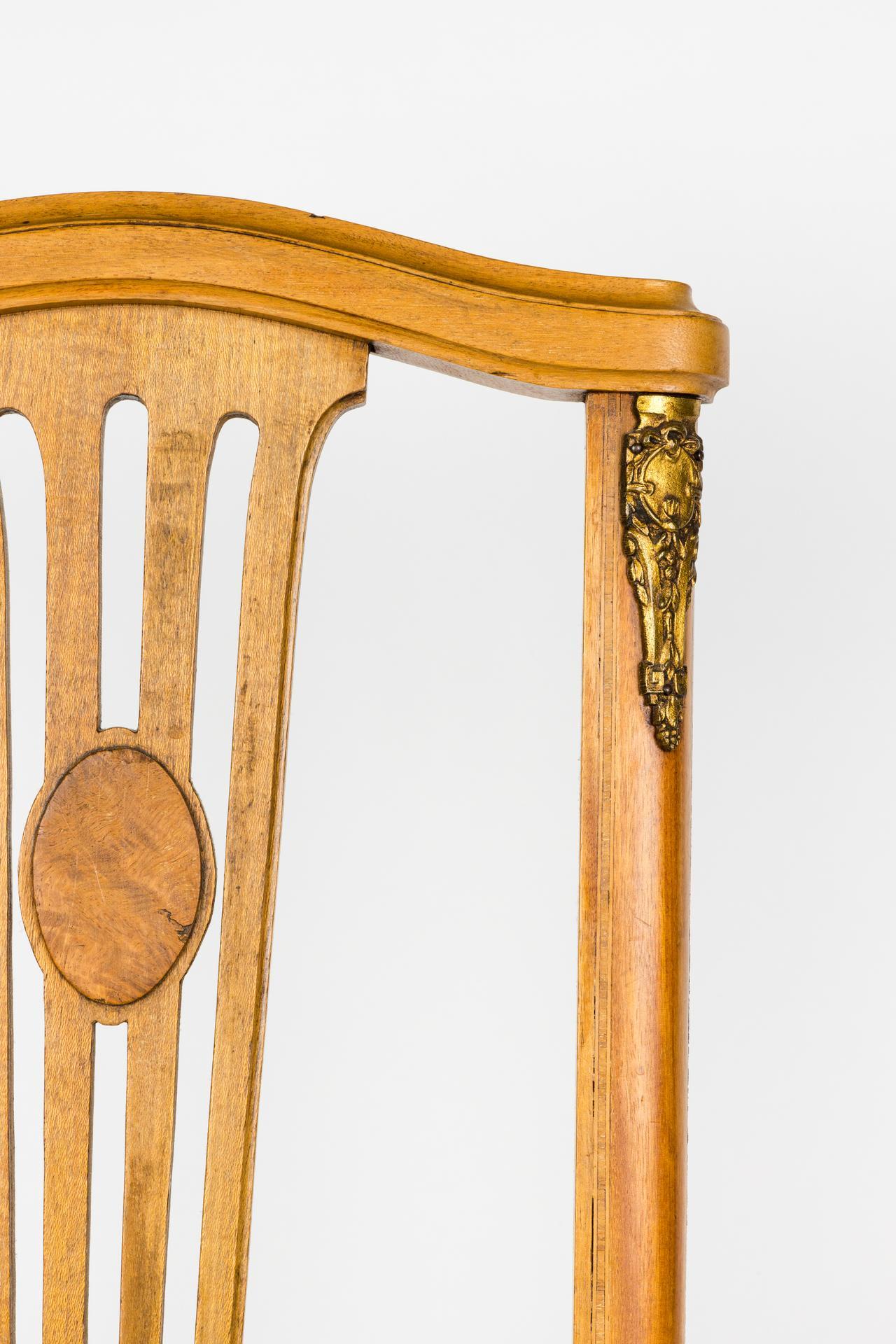
This elegant English Arts & Crafts-style mirror, made between the late 19th and early 20th centuries, stands out for its refined restraint and structural honesty—qualities characteristic of the movement championed by figures such as William Morris. Its rectangular design creates an attractive contrast between the warmth of the fine wood, probably mahogany or stained walnut, and the decorative richness of the gilded inner frame surrounding the mirror glass.
The structure is formed by a double stepped frame. The broad outer frame, with its clean lines, highlights the natural beauty of the grain through a polished, deep mahogany-toned finish, allowing the quality of the material to take precedence over ornament. By contrast, the inner frame features a delicate raised gilded border decorated with repeating stylised botanical motifs. These evoke the handcrafted, nature-inspired spirit of the Arts & Crafts movement, while also reflecting some decorative influences inherited from late Victorian taste.
The mitred corners emphasise the precision of its craftsmanship, while the combination of dark wood and gilding creates an especially appealing balance between austerity and ornamentation. Its vertical proportions and generous reflective surface make it a versatile piece, designed for both practical and decorative use.
With its aesthetic quality and restrained formal language, this mirror is a splendid example of British design from the transition between the 19th and 20th centuries. It can blend naturally into Arts & Crafts, Edwardian, colonial, or even contemporary interiors where historical character and handcrafted warmth are desired. Its serene presence, grounded in the nobility of its materials and measured ornamentation, faithfully reflects the ideals of functional beauty and craftsmanship that defined one of the most influential decorative movements in design history.
Insured shipping and careful packaging.
Seller's Story
Vintage Shop SL is a prominent antique store that since 2010 has been committed to customer satisfaction and sustainability. This shop is not only a cultural treasure that preserves the history and heritage of our societies, but also strives to operate in a sustainable and environmentally responsible manner.
At Vintage Shop SL, we believe that customer service is essential to our success. Our highly trained team is dedicated to providing friendly, knowledgeable, and personalized service. We take pride in helping our customers find the perfect vintage pieces that fit their individual tastes and needs, ensuring their satisfaction and fostering lasting relationships.
But that's not all. At Vintage Shop SL, we also care about the sustainability of the business and its impact on the natural environment. We are committed to reducing our carbon footprint and promoting responsible business practices.
On the one hand, we promote the circular economy and reuse by offering vintage items in excellent condition. By acquiring antiques at our shop, customers contribute to the conservation of natural resources by avoiding the production of new items and reducing the carbon emissions associated with manufacturing and transportation.
Translated by Google TranslateThis elegant English Arts & Crafts-style mirror, made between the late 19th and early 20th centuries, stands out for its refined restraint and structural honesty—qualities characteristic of the movement championed by figures such as William Morris. Its rectangular design creates an attractive contrast between the warmth of the fine wood, probably mahogany or stained walnut, and the decorative richness of the gilded inner frame surrounding the mirror glass.
The structure is formed by a double stepped frame. The broad outer frame, with its clean lines, highlights the natural beauty of the grain through a polished, deep mahogany-toned finish, allowing the quality of the material to take precedence over ornament. By contrast, the inner frame features a delicate raised gilded border decorated with repeating stylised botanical motifs. These evoke the handcrafted, nature-inspired spirit of the Arts & Crafts movement, while also reflecting some decorative influences inherited from late Victorian taste.
The mitred corners emphasise the precision of its craftsmanship, while the combination of dark wood and gilding creates an especially appealing balance between austerity and ornamentation. Its vertical proportions and generous reflective surface make it a versatile piece, designed for both practical and decorative use.
With its aesthetic quality and restrained formal language, this mirror is a splendid example of British design from the transition between the 19th and 20th centuries. It can blend naturally into Arts & Crafts, Edwardian, colonial, or even contemporary interiors where historical character and handcrafted warmth are desired. Its serene presence, grounded in the nobility of its materials and measured ornamentation, faithfully reflects the ideals of functional beauty and craftsmanship that defined one of the most influential decorative movements in design history.
Insured shipping and careful packaging.
Seller's Story
Vintage Shop SL is a prominent antique store that since 2010 has been committed to customer satisfaction and sustainability. This shop is not only a cultural treasure that preserves the history and heritage of our societies, but also strives to operate in a sustainable and environmentally responsible manner.
At Vintage Shop SL, we believe that customer service is essential to our success. Our highly trained team is dedicated to providing friendly, knowledgeable, and personalized service. We take pride in helping our customers find the perfect vintage pieces that fit their individual tastes and needs, ensuring their satisfaction and fostering lasting relationships.
But that's not all. At Vintage Shop SL, we also care about the sustainability of the business and its impact on the natural environment. We are committed to reducing our carbon footprint and promoting responsible business practices.
On the one hand, we promote the circular economy and reuse by offering vintage items in excellent condition. By acquiring antiques at our shop, customers contribute to the conservation of natural resources by avoiding the production of new items and reducing the carbon emissions associated with manufacturing and transportation.
Translated by Google TranslateDetails
Era
1400-1900
Style subtype
Arts & Crafts style
Title additional information
Art and Crafts
Country of origin
United Kingdom
Model
Double Frame
Material
Wood
Style
Antique
Condition
Good condition - used with small signs of aging & blemishes
External height
94 cm
External width
58 cm
Internal height
80 cm
Internal width
44 cm
Estimated period
1850-1900
Sold by