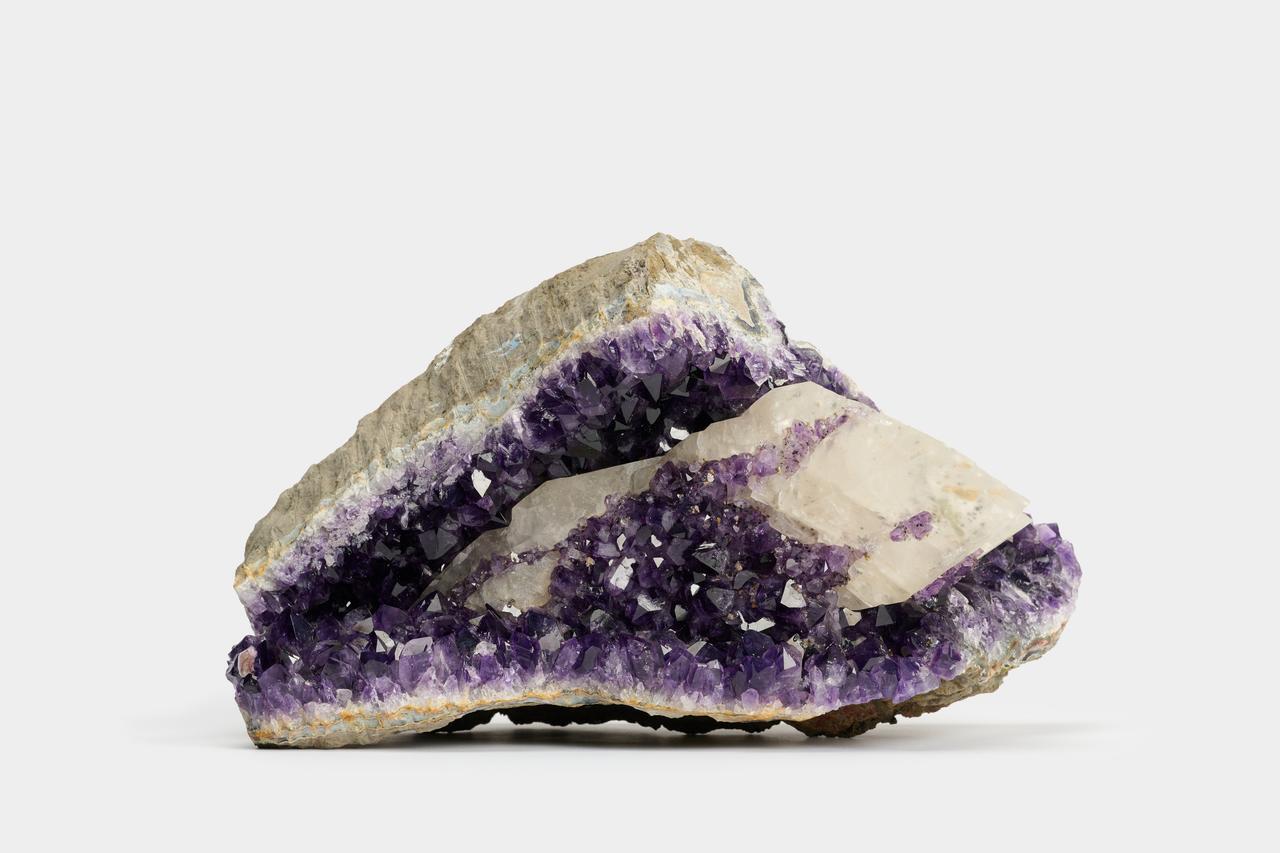
Septarian Nodule - an intricate 'Dragon Skin' pattern and contrasting internal geode cavity Septarian Geode with a dark internal geode cavity - Height: 230 mm - Width: 160 mm- 5946 g - (1)


04
days
15
hours
27
minutes
28
seconds
Current bid
€ 55
Reserve price not met

Expert
Selected by Georgia Foteinou
Holds BSc in geology and post-graduate qualifications in geochemistry.
Estimate € 550 - € 630
 | €55 |
|---|
Catawiki Buyer Protection
Your payment’s safe with us until you receive your object.View details
Trustpilot 4.4 | 146393 reviews
Rated Excellent on Trustpilot.
This polished and sectioned septarian geode from Madagascar weighs 5,946 g and measures 230 × 160 × 115 mm, with calcite-filled fractures and a dark cavity lined with microcrystalline quartz.
AI-assisted summary
Description from the seller
A specimen of geological history, with “dragon skin” and a crystal cave — Expertly sectioned and polished, this extraordinary septarian nodule offers a fascinating glimpse into the geological processes that shaped it. Its mirror-polished outer surface highlights a complex, unique network of calcite-filled fractures, creating a distinctive “dragon skin” pattern. The dark veins intersect precisely across the beige-gray host rock, creating a striking visual contrast and an impressive natural aesthetic that transforms the mineral into a geological sculpture. The central opening of the nodule reveals a remarkable inner cavity, a true geode lined with clusters of dark quartz microcrystals. These tiny, sparkling black crystals create a “starry sky” effect, adding depth and mystery to the specimen. The contrast between the light exterior and the dark, crystalline interior is striking, emphasizing the complex, layered nature of this piece. The accompanying sectioned piece attests to the continuity of the formations and the integrity of the matrix. Septarian nodules are unique sedimentary concretions. Their formation begins with the deposition of clay and sediment, followed by drying, which causes fractures (septaria) to form within the nodule. These fissures are subsequently filled by minerals precipitated from aqueous solutions, primarily calcite, aragonite and microcrystalline quartz. This specimen from Madagascar is an eloquent testament to this process, offering a magnificent example of how nature can create such elaborate shapes and textures. Besides its undeniable aesthetic value as a decorative object, this septarian nodule is also a collectible specimen of considerable scientific interest to mineralogy and geology enthusiasts. Its substantial size, quality polish and the intrinsic beauty of its geode make it ideal for enhancing a mineral collection, study space or refined interior, providing a unique conversation piece and an elegant connection to natural history. Every septarian nodule is a unique, one-of-a-kind work of natural art. The irregularities and color variations visible on its surface and inside the cavity are inherent features of its geological formation and attest to its authenticity and millennia-long journey. The specimen is in excellent condition, retaining its beauty and distinctive geological features.
Name: Septarian Nodule
Classification: Sedimentary Concretion
Origin: Madagascar
Find location: Madagascar
Material: Calcite, Aragonite, Quartz, Claystone
Workmanship: Sectioned and polished
Dimensions: 230 x 160 x 115 mm
Weight: 5946 g
Condition: Good
Lot code: RUA-056
Seller's Story
The Mineral Art Gallery offers minerals, fossils, shells and natural elements.
Born in Italy in 2017, today she collaborates with international galleries and collectors, she is a direct importer of large minerals and naturalistic collectible elements; deals with the processing to insert them inside the living space. A section of the gallery was dedicated to the Wunderkammer, "chamber of wonders or cabinet of curiosities" in which Mirabilia elements are presented: naturalia and italiania, a union between "the present is the past".
All lots are shipped via DHL Express and Fercam couriers, with insured parcel and tracking.
Translated by Google TranslateA specimen of geological history, with “dragon skin” and a crystal cave — Expertly sectioned and polished, this extraordinary septarian nodule offers a fascinating glimpse into the geological processes that shaped it. Its mirror-polished outer surface highlights a complex, unique network of calcite-filled fractures, creating a distinctive “dragon skin” pattern. The dark veins intersect precisely across the beige-gray host rock, creating a striking visual contrast and an impressive natural aesthetic that transforms the mineral into a geological sculpture. The central opening of the nodule reveals a remarkable inner cavity, a true geode lined with clusters of dark quartz microcrystals. These tiny, sparkling black crystals create a “starry sky” effect, adding depth and mystery to the specimen. The contrast between the light exterior and the dark, crystalline interior is striking, emphasizing the complex, layered nature of this piece. The accompanying sectioned piece attests to the continuity of the formations and the integrity of the matrix. Septarian nodules are unique sedimentary concretions. Their formation begins with the deposition of clay and sediment, followed by drying, which causes fractures (septaria) to form within the nodule. These fissures are subsequently filled by minerals precipitated from aqueous solutions, primarily calcite, aragonite and microcrystalline quartz. This specimen from Madagascar is an eloquent testament to this process, offering a magnificent example of how nature can create such elaborate shapes and textures. Besides its undeniable aesthetic value as a decorative object, this septarian nodule is also a collectible specimen of considerable scientific interest to mineralogy and geology enthusiasts. Its substantial size, quality polish and the intrinsic beauty of its geode make it ideal for enhancing a mineral collection, study space or refined interior, providing a unique conversation piece and an elegant connection to natural history. Every septarian nodule is a unique, one-of-a-kind work of natural art. The irregularities and color variations visible on its surface and inside the cavity are inherent features of its geological formation and attest to its authenticity and millennia-long journey. The specimen is in excellent condition, retaining its beauty and distinctive geological features.
Name: Septarian Nodule
Classification: Sedimentary Concretion
Origin: Madagascar
Find location: Madagascar
Material: Calcite, Aragonite, Quartz, Claystone
Workmanship: Sectioned and polished
Dimensions: 230 x 160 x 115 mm
Weight: 5946 g
Condition: Good
Lot code: RUA-056
Seller's Story
The Mineral Art Gallery offers minerals, fossils, shells and natural elements.
Born in Italy in 2017, today she collaborates with international galleries and collectors, she is a direct importer of large minerals and naturalistic collectible elements; deals with the processing to insert them inside the living space. A section of the gallery was dedicated to the Wunderkammer, "chamber of wonders or cabinet of curiosities" in which Mirabilia elements are presented: naturalia and italiania, a union between "the present is the past".
All lots are shipped via DHL Express and Fercam couriers, with insured parcel and tracking.
Translated by Google TranslateDetails
Number of objects
1
Main mineral
Septarian Nodule - an intricate 'Dragon Skin' pattern and contrasting internal geode cavity
Mineral form
Septarian Geode with a dark internal geode cavity
Supplement
Septarian Geode
Weight
5946 g
Country of origin
Madagascar
Height
230 mm
Width
160 mm
Depth
115 mm
Sold by