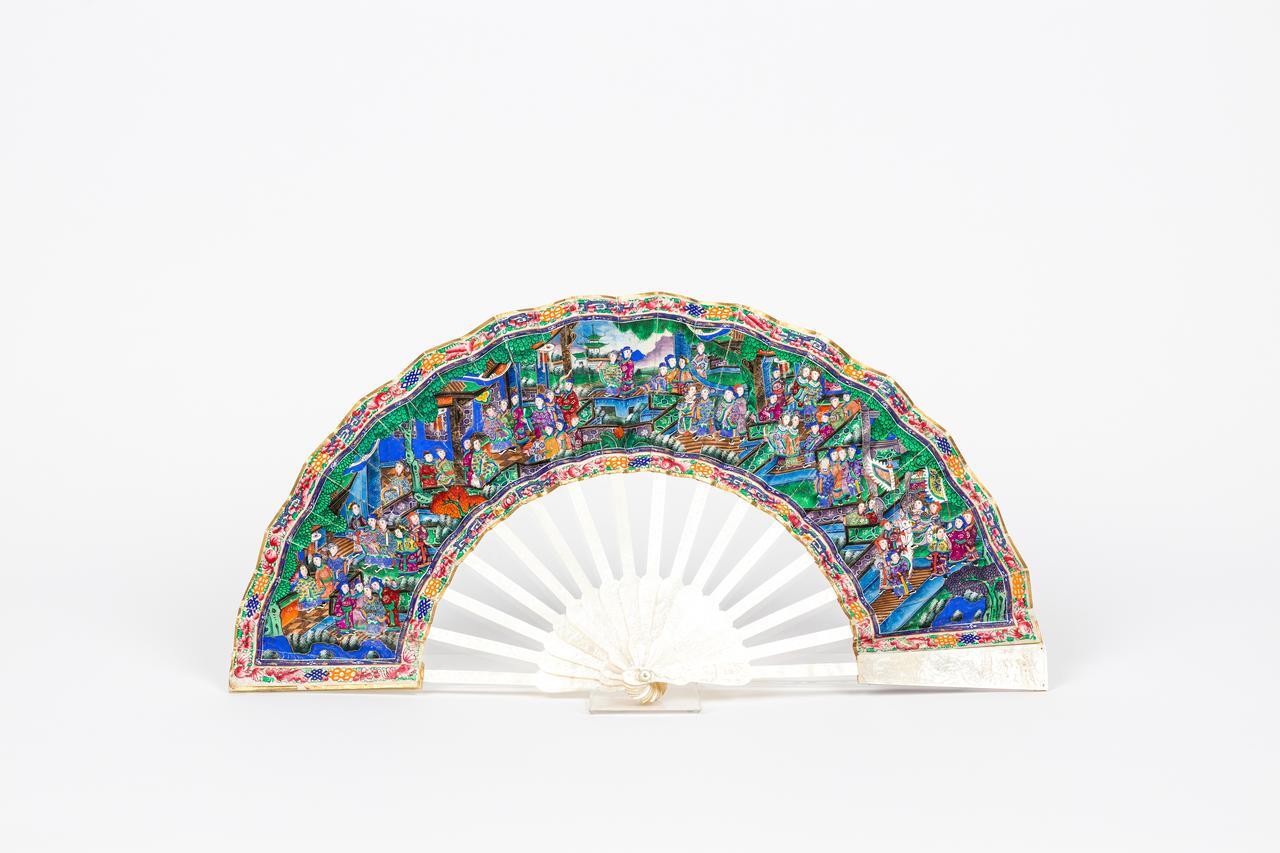
little mirror - Jade, Silvered bronze - China - Qing Dynasty (1644-1911)


03
days
07
hours
22
minutes
00
seconds
Current bid
€ 127
Reserve price met

Expert
Selected by Sarah Le Helley
Studied Asian art and art market management; researched art in Taipei; worked in auctions.
Estimate € 300 - € 380
 | €127 | |
|---|---|---|
| €100 |
Catawiki Buyer Protection
Your payment’s safe with us until you receive your object.View details
Trustpilot 4.4 | 146393 reviews
Rated Excellent on Trustpilot.
Description from the seller
Antique mirror made in the traditional Chinese style, characterized by the use of fine materials and meticulous craftsmanship.
The object consists of three main parts:
• The upper (oval) panel is the most elaborate part, made of a large piece of white or celadon jade, intricately openwork-carved. The decorative motifs appear to depict intertwined natural elements typical of Chinese dynastic art, such as phoenixes, dragons, or flowering branches, symbolizing good fortune and nobility. The panel is set within a beaded metal mount.
The junction between the oval head and the handle is decorated with an embossed metal ring (probably silver or silver-plated bronze) featuring raised geometric and floral motifs.
The handle is straight, smooth, and polished, carved from a single piece of pale green jade (jadeite or nephrite), with translucent shades ranging from milky white to apple green.
In Chinese antiquities, mirrors with this particular construction are almost always dressing-table objects assembled during the late Qing dynasty for the aristocracy or the luxury goods market. However, there is one crucial technical detail that collectors and auction houses often encounter:
• Reuse of the panel: very often, the openwork-carved oval white jade panel is older than the mount itself. It was originally made as a belt buckle or a hair ornament (sometimes dating to the preceding Ming dynasty or the early Qing dynasty).
• Later assembly: toward the end of the nineteenth century, these valuable antique panels were removed and set in new silver mounts to create elegant hand mirrors, paired with handles carved from pre-existing sculptures (such as dragon-shaped belt hooks or sections of Ruyi sceptres).
The art of jade carving in China was never purely aesthetic; each motif carried a visual auspicious message (a rebus or homophone). The carving on this particular panel belongs to the traditional decorative category known as “Chunshui” (Spring Water), a theme that originated under the Liao/Jin dynasty and was passed down through the centuries that followed:
• The Phoenix (Fenghuang) or the Heron among the Lotuses: Within the dense openwork, aquatic or mythical birds can be made out moving among the sinuous stems of lotus flowers.
• The Lotus (Lian) evokes spiritual purity, since it rises from the mud yet blooms immaculate, and is synonymous with harmony and lasting union.
• The Bird (heron/egret or phoenix) symbolizes elegance, feminine grace, and resilience.
• A wish for integrity and longevity: The combination of birds and aquatic vegetation expressed the wish, “May your career and life flow smoothly and purely like spring water.”
As an object intended for the women’s quarters of the court (the gonggui), it also symbolized marital fidelity and the purity of the noblewoman who owned it.
Dimensions: 16 x 5.8 x 1.5 cm; weight: 101 g
In good condition, with just signs of age
Insured shipping with professional packaging
Seller's Story
The love for art in its many expressions gave birth to a company that has been operating uninterruptedly for years, in order to provide unique and sought-after products. The most demanding client... The insatiable collector... makes MEDI@RT the ideal partner in the search for the unobtainable. Follow us on www.vendendovendendo.it
Translated by Google TranslateAntique mirror made in the traditional Chinese style, characterized by the use of fine materials and meticulous craftsmanship.
The object consists of three main parts:
• The upper (oval) panel is the most elaborate part, made of a large piece of white or celadon jade, intricately openwork-carved. The decorative motifs appear to depict intertwined natural elements typical of Chinese dynastic art, such as phoenixes, dragons, or flowering branches, symbolizing good fortune and nobility. The panel is set within a beaded metal mount.
The junction between the oval head and the handle is decorated with an embossed metal ring (probably silver or silver-plated bronze) featuring raised geometric and floral motifs.
The handle is straight, smooth, and polished, carved from a single piece of pale green jade (jadeite or nephrite), with translucent shades ranging from milky white to apple green.
In Chinese antiquities, mirrors with this particular construction are almost always dressing-table objects assembled during the late Qing dynasty for the aristocracy or the luxury goods market. However, there is one crucial technical detail that collectors and auction houses often encounter:
• Reuse of the panel: very often, the openwork-carved oval white jade panel is older than the mount itself. It was originally made as a belt buckle or a hair ornament (sometimes dating to the preceding Ming dynasty or the early Qing dynasty).
• Later assembly: toward the end of the nineteenth century, these valuable antique panels were removed and set in new silver mounts to create elegant hand mirrors, paired with handles carved from pre-existing sculptures (such as dragon-shaped belt hooks or sections of Ruyi sceptres).
The art of jade carving in China was never purely aesthetic; each motif carried a visual auspicious message (a rebus or homophone). The carving on this particular panel belongs to the traditional decorative category known as “Chunshui” (Spring Water), a theme that originated under the Liao/Jin dynasty and was passed down through the centuries that followed:
• The Phoenix (Fenghuang) or the Heron among the Lotuses: Within the dense openwork, aquatic or mythical birds can be made out moving among the sinuous stems of lotus flowers.
• The Lotus (Lian) evokes spiritual purity, since it rises from the mud yet blooms immaculate, and is synonymous with harmony and lasting union.
• The Bird (heron/egret or phoenix) symbolizes elegance, feminine grace, and resilience.
• A wish for integrity and longevity: The combination of birds and aquatic vegetation expressed the wish, “May your career and life flow smoothly and purely like spring water.”
As an object intended for the women’s quarters of the court (the gonggui), it also symbolized marital fidelity and the purity of the noblewoman who owned it.
Dimensions: 16 x 5.8 x 1.5 cm; weight: 101 g
In good condition, with just signs of age
Insured shipping with professional packaging
Seller's Story
The love for art in its many expressions gave birth to a company that has been operating uninterruptedly for years, in order to provide unique and sought-after products. The most demanding client... The insatiable collector... makes MEDI@RT the ideal partner in the search for the unobtainable. Follow us on www.vendendovendendo.it
Translated by Google TranslateDetails
Dynastic Style/Period
Qing Dynasty (1644-1911)
Number of objects
1
Country of Origin
China
Attribution
Original
Material
Jade, Silvered bronze
Height
16 cm
Width
5.8 cm
Title of artwork
little mirror
Depth
1.5 cm
Condition
Good condition
Provenance
Private collection
Authenticity
Original/official