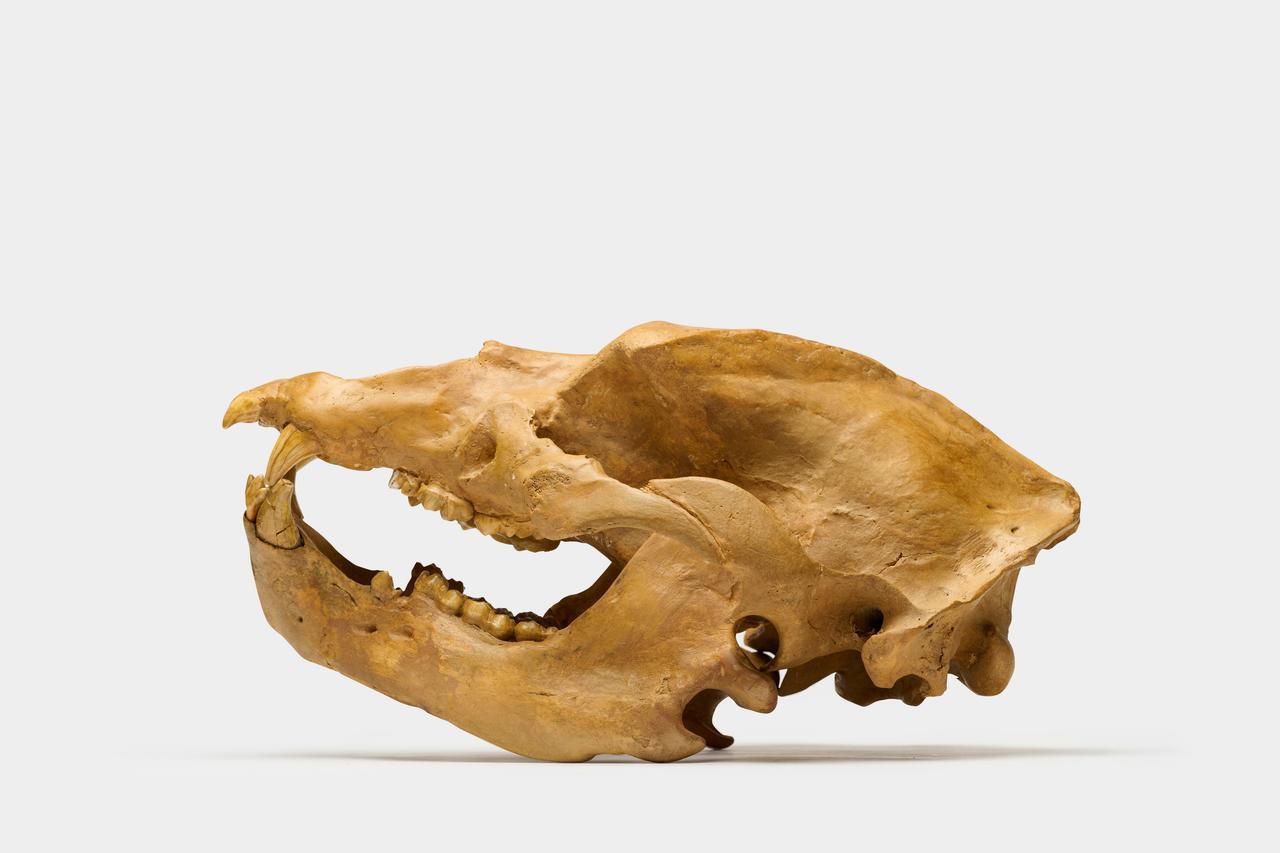
Sinomegaceros sp. - Fossil maxilla bone - 43 mm - 74 mm


02
days
09
hours
17
minutes
42
seconds

 | €10 | |
|---|---|---|
| €9 | |
| €8 |
Catawiki Buyer Protection
Your payment’s safe with us until you receive your object.View details
Trustpilot 4.4 | 146393 reviews
Rated Excellent on Trustpilot.
This natural Pleistocene specimen is a partial maxilla of Sinomegaceros sp. with two preserved molars, measuring 43 × 74 × 49 mm.
AI-assisted summary
Description from the seller
Exceptional Pleistocene Fossil — Sinomegaceros sp. partial maxilla with two preserved molars (M2 - M3).
Recovered from Quaternary deposits along the Amur River basin, this specimen represents a rarely available cranial element of the giant deer Sinomegaceros, a lineage renowned for its highly derived and elaborately patterned antler morphology. Closely related to the European Megaloceros, Sinomegaceros occupied a pivotal evolutionary position among the Late Pleistocene cervids of Northeast Asia.
The preserved maxillary fragment retains two well-defined molars, exhibiting diagnostic occlusal features valuable for comparative or display purposes. Fossils of this genus seldom enter private collections, making this an unusual opportunity to acquire material from one of the most striking and scientifically significant giant deer of the Pleistocene.
A distinguished and scarce addition for collectors specializing in Quaternary faunas, cervid evolution, or Amur River paleontology.
Details
Number of objects
1
Specimen
Sinomegaceros sp.
Geological period
Quaternary, Pleistocene (2.58 - 0.0117 million years)
Condition
Natural
Height
43 mm
Width
74 mm
Depth
49 mm
Authenticity
Original/official
Sold by