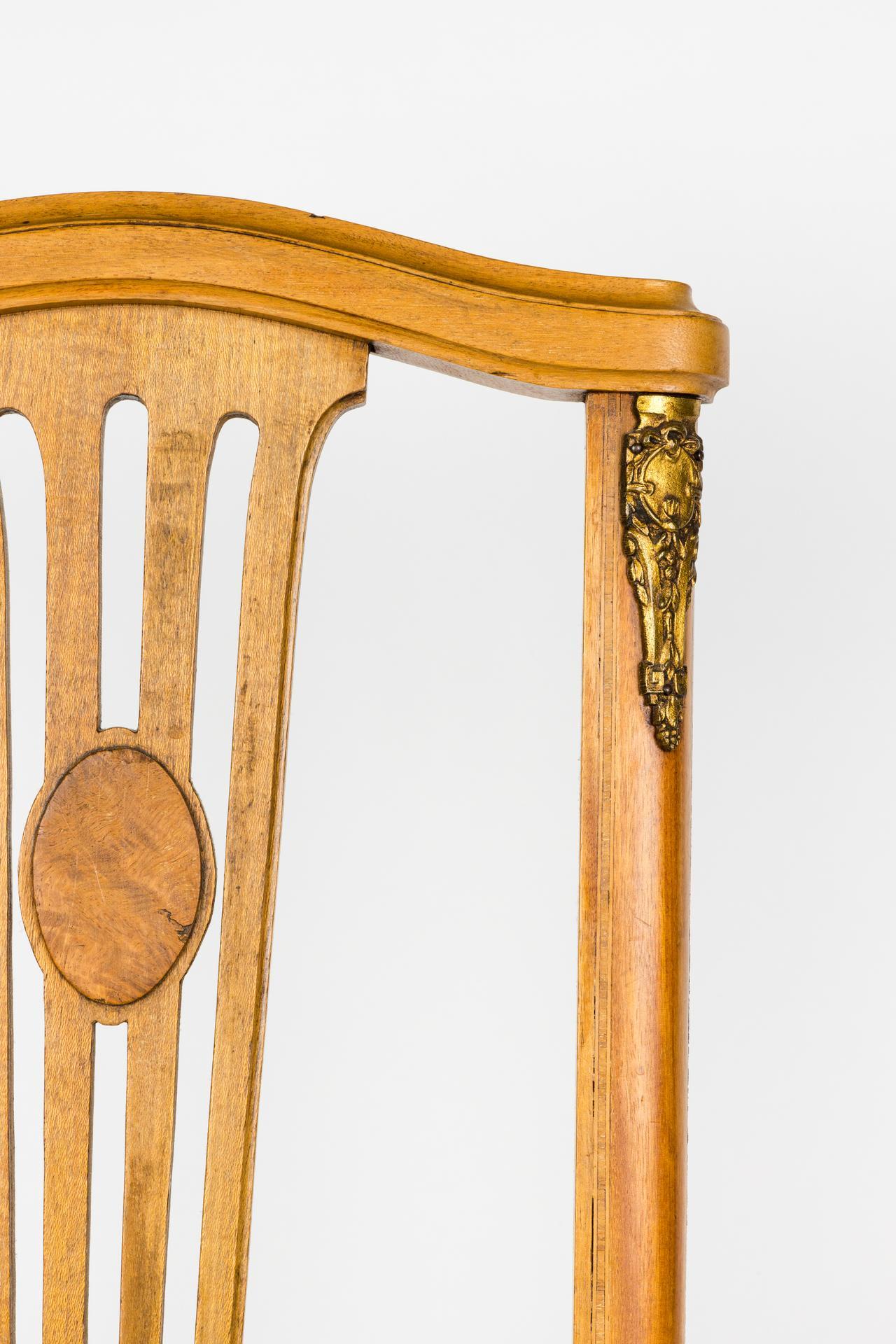
Games table - Mahogany, Polychrome wood

06
days
11
hours
24
minutes
11
seconds
Starting bid
€ 1
Reserve price not met

Anna Hue-Roques
Expert
Selected by Anna Hue-Roques

Holds bachelor's degrees in Law and Art History with an Ecole du Louvre auctioneer diploma.

Estimate  € 750 - € 850
No bids placed

Catawiki Buyer Protection

Your payment’s safe with us until you receive your object.View details

Trustpilot 4.4 | 146353 reviews

Rated Excellent on Trustpilot.
Description from the seller

Corner game table; the openings beneath are for the legs.
The hinges are made of wood. This is clear evidence that the table has been kept as original as possible, including the ingenious design that folds back on itself, as shown in the photos.

Mahogany corner table with fluted legs, inlaid with floral motifs. When the two hinged sides are opened out, it becomes square in shape and transforms into a gaming table. Of Flemish origin.

This type of floral and naturalistic inlay, historically known as Dutch inlay (or Dutch marquetry), originated and was most popular in the 17th and 18th centuries (from the late 1600s throughout the 1700s).
The history and development of this style can be divided into distinct stages:
Origins and Golden Age (late 17th–18th centuries)
• The influence of painters: This style originated in the Netherlands, drawing direct inspiration from the still lifes of the great masters of Flemish painting. Meaning: The elaborate floral bouquets featuring little birds, butterflies and insects were not merely decorative, but symbolised wealth, nature and...

Details

Era
1400-1900
Over 200 years old
Yes
Number of objects
1
Country of origin
Netherlands
Material
Mahogany, Polychrome wood
Condition
Good condition - used with small signs of aging & blemishes
Height
75 cm
Width
79 cm
Depth
79 cm
Estimated period
late 19th century
Sold by
ItalyVerified
202
Objects sold
100%
pro

Similar objects

  • ​
    ​
    ​
  • ​
    ​
    ​
  • ​
    ​
    ​
  • ​
    ​
    ​
  • ​
    ​
    ​
  • ​
    ​
    ​
  • ​
    ​
    ​
  • ​
    ​
    ​
  • ​
    ​
    ​
  • ​
    ​
    ​

For you in

Antiques & Classic Furniture

  • ​
    ​
    ​
  • ​
    ​
    ​
  • ​
    ​
    ​
  • ​
    ​
    ​
  • ​
    ​
    ​
  • ​
    ​
    ​
  • ​
    ​
    ​
  • ​
    ​
    ​
  • ​
    ​
    ​
  • ​
    ​
    ​