Carlo Maratti (1625-1713) e aiuti - Madonna col libro

16
days
11
hours
52
minutes
56
seconds
Current bid
€ 200
Reserve price not met

Expert
Selected by Caterina Maffeis
Master in early Renaissance Italian painting with internship at Sotheby’s and 15 years' experience.
Estimate € 15,000 - € 20,000
17 other people are watching this object
 Bidder 1250 Bidder 1250 | €200 | |
|---|---|---|
 Bidder 4553 Bidder 4553 | €120 | |
| Bidder 4553 | €110 | |
Catawiki Buyer Protection
Your payment’s safe with us until you receive your object.View details
Trustpilot 4.4 | 121899 reviews
Rated Excellent on Trustpilot.
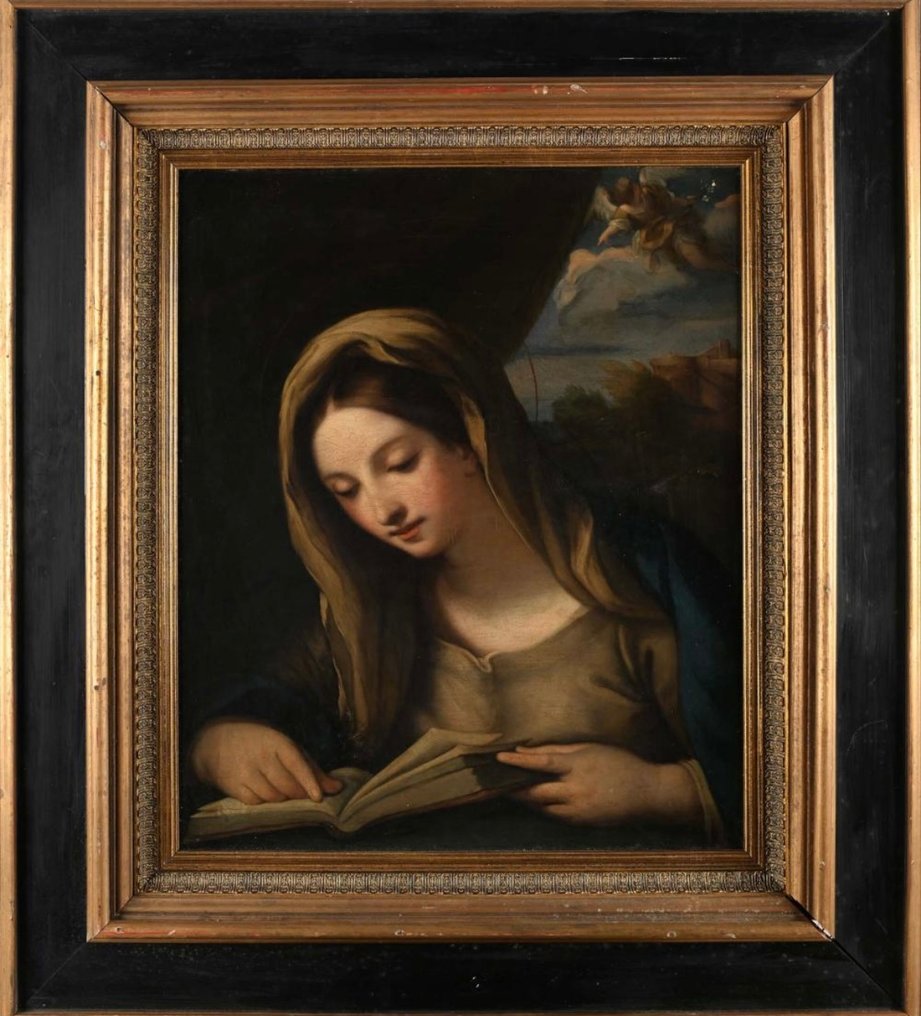
Madonna col libro, a 1670 oil on canvas in the Italian Baroque style by Carlo Maratti, depicting a religious scene, measuring 70 x 57 cm and sold with a frame.
AI-assisted summary
Description from the seller
Unpublished painting by the Roman Baroque painter Carlo Maratti (Camerano 1625-1713 Rome), also called Maratti.
Representing the Virgin studying, in oil on canvas, with canvas dimensions of 70 x 57 cm, and with an antique frame measuring 100 x 90 cm.
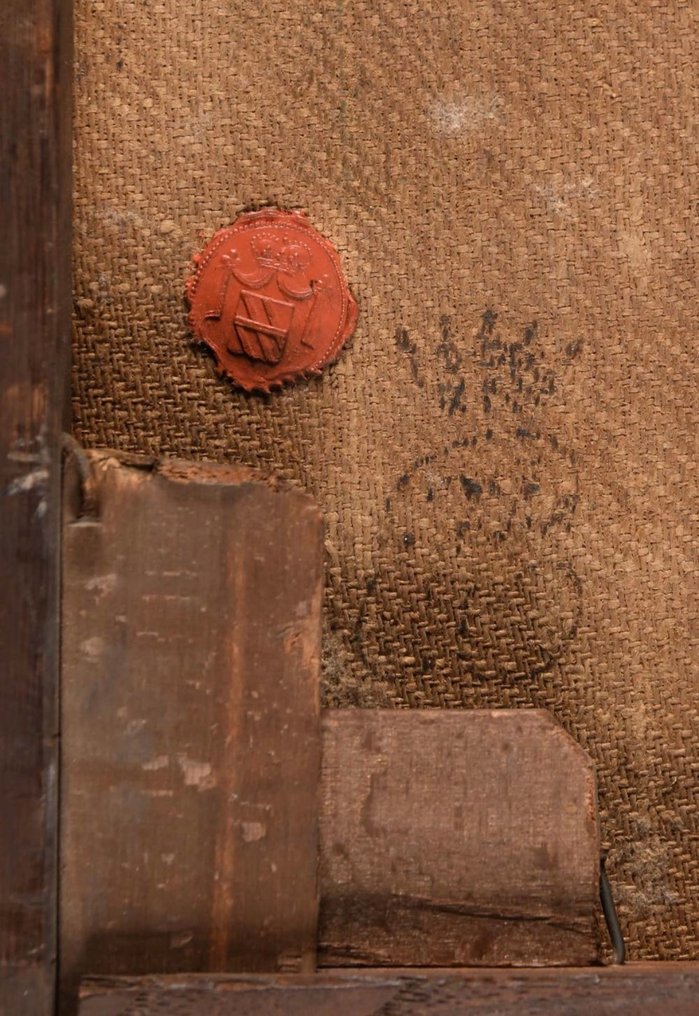
Important provenance as evidenced by the Corsini Family wax seal and the initials of Prince Corsini.
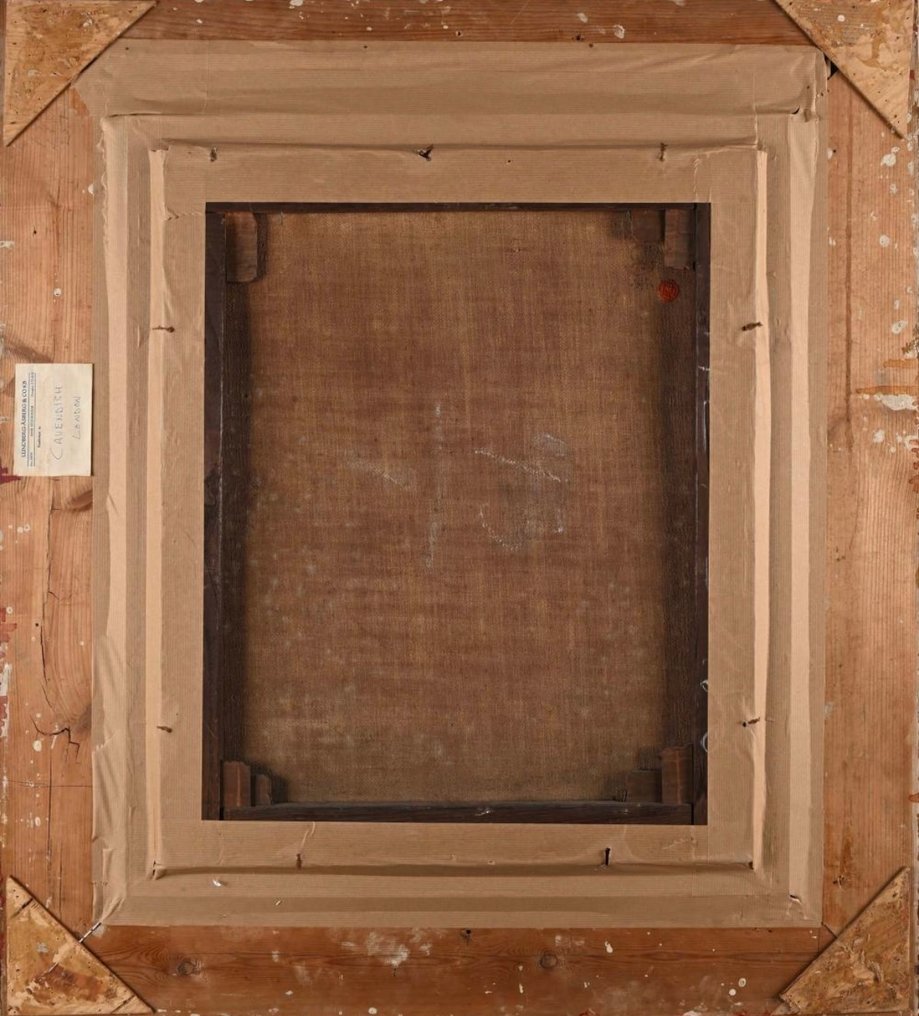
Prestigious Cavendish Art and Antique Gallery, London.
private collection
Carlo Maratti, an artist who was as successful as Bernini both as a painter and sculptor in Baroque Rome, with significant historical importance and international influence that extended well into the 18th century.
Despite his importance as the preeminent painter of the High Baroque in Rome, still the center of taste for the grand style in the second half of the 17th century and the main painter for eight successive popes, there are no paintings by Maratti in the National Gallery of London; the National Gallery of Art in Washington; the Metropolitan Museum in New York; or even in most major American museums.
He is perhaps the most important unknown painter of the 17th century, partly because many of his most significant works are altarpieces still located in their original settings, in Baroque churches away from Rome and the Marche. It is also because his qualities as an example of the high classical style, which made Maratti a resounding success in his time, make him seem inaccessible to the modern audience. Just as people are more attracted to Michelangelo than to Raphael, and to Caravaggio than to Carracci, Bernini is the artist whose audience is most drawn to Maratti.
A brief note about the artist's name. For many years, English speakers have referred to this artist as Carlo Maratta. This is incorrect. His real name was always Carlo Maratti with an 'i'. Rudolph believes that 'Maratta with an a' is a corruption originating from the French translation of his name to 'Le Maratte,' after his success with Louis XIV.
Among the generation of Bolognese classicist painters active in Rome at the beginning of the 17th century, Maratta maintained a special sensitivity towards the legacy of Francesco Albani (1578-1660). Albani's refined approach to sacred themes exerted a lasting influence on Maratta's conception of devotional imagery, particularly in the gentle expressiveness and harmonious composition that can be appreciated here.
LITERATURE
E. K. Waterhouse, Baroque Painting in Rome, London, 1937, p. 78.
F. Zeri, La Galleria Pallavicini in Rome, Florence, 1959, pages 302-3, nos. 85 and 113.
F. Petrucci, Ferdinand Voet (1639-1689), also known as Ferdinando de Ritratti, Rome, 2005, p. 70, fig. 55.
F. Petrucci, Portrait Painting in Rome: The Seventeenth Century, Rome, 2007, I, p. 233, fig. 330; II, p. 337; III, p. 649, fig. 417.
Unpublished painting by the Roman Baroque painter Carlo Maratti (Camerano 1625-1713 Rome), also called Maratti.
Representing the Virgin studying, in oil on canvas, with canvas dimensions of 70 x 57 cm, and with an antique frame measuring 100 x 90 cm.
Important provenance as evidenced by the Corsini Family wax seal and the initials of Prince Corsini.
Prestigious Cavendish Art and Antique Gallery, London.
private collection
Carlo Maratti, an artist who was as successful as Bernini both as a painter and sculptor in Baroque Rome, with significant historical importance and international influence that extended well into the 18th century.
Despite his importance as the preeminent painter of the High Baroque in Rome, still the center of taste for the grand style in the second half of the 17th century and the main painter for eight successive popes, there are no paintings by Maratti in the National Gallery of London; the National Gallery of Art in Washington; the Metropolitan Museum in New York; or even in most major American museums.
He is perhaps the most important unknown painter of the 17th century, partly because many of his most significant works are altarpieces still located in their original settings, in Baroque churches away from Rome and the Marche. It is also because his qualities as an example of the high classical style, which made Maratti a resounding success in his time, make him seem inaccessible to the modern audience. Just as people are more attracted to Michelangelo than to Raphael, and to Caravaggio than to Carracci, Bernini is the artist whose audience is most drawn to Maratti.
A brief note about the artist's name. For many years, English speakers have referred to this artist as Carlo Maratta. This is incorrect. His real name was always Carlo Maratti with an 'i'. Rudolph believes that 'Maratta with an a' is a corruption originating from the French translation of his name to 'Le Maratte,' after his success with Louis XIV.
Among the generation of Bolognese classicist painters active in Rome at the beginning of the 17th century, Maratta maintained a special sensitivity towards the legacy of Francesco Albani (1578-1660). Albani's refined approach to sacred themes exerted a lasting influence on Maratta's conception of devotional imagery, particularly in the gentle expressiveness and harmonious composition that can be appreciated here.
LITERATURE
E. K. Waterhouse, Baroque Painting in Rome, London, 1937, p. 78.
F. Zeri, La Galleria Pallavicini in Rome, Florence, 1959, pages 302-3, nos. 85 and 113.
F. Petrucci, Ferdinand Voet (1639-1689), also known as Ferdinando de Ritratti, Rome, 2005, p. 70, fig. 55.
F. Petrucci, Portrait Painting in Rome: The Seventeenth Century, Rome, 2007, I, p. 233, fig. 330; II, p. 337; III, p. 649, fig. 417.
Details
Artist
Carlo Maratti (1625-1713) e aiuti
Sold with frame
Yes
Title of artwork
Madonna col libro
Technique
Oil painting
Signature
Not signed
Country of Origin
Italy
Year
1670
Condition
Excellent condition
Height
70 cm
Width
57 cm
Depiction/Theme
Religion
Style
Baroque
Period
17th century
Sold by
