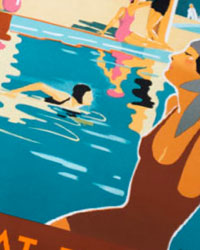
Pablo Picasso (1881-1973) - (after) - Nu De Dos - Artprint - 58 x 51,5 cm


03
days
14
hours
53
minutes
34
seconds
Current bid
€ 50
Reserve price met

Expert
Selected by Juan Antonio Rodríguez
Eight years experience valuing posters, previously valuer at Balclis, Barcelona.
Estimate € 150 - € 200
12 other people are watching this object
 Bidder 3686 Bidder 3686 | €50 | |
|---|---|---|
 Bidder 0762 Bidder 0762 | €30 | |
 Bidder 7369 Bidder 7369 | €25 | |
Catawiki Buyer Protection
Your payment’s safe with us until you receive your object.View details
Trustpilot 4.4 | 122630 reviews
Rated Excellent on Trustpilot.
Description from the seller
Artist: Pablo Picasso
Now the two
Technology: Offset printing
Art: high-quality art print
Condition: in very good condition
Note: beautiful print with vivid colors, embossed print.
Overall size: 58 x 51.5 cm.
Publisher: 1987 Pro Litteris; 1987 Wizard & Genius-Idealdecor AG 8618 Oetwil am See/Zürich
Copyright: 1987 Pro Litteris; 1987 Wizard & Genius-Idealdecor AG 8618 Oetwil am See/Zürich, Printed in Switzerland
Pablo Picasso
Pablo Picasso (1881–1973) was an influential Spanish painter, sculptor, and graphic artist who is considered one of the co-founders of Cubism and profoundly influenced modern art. In addition to his groundbreaking work, Picasso is part of a network of artistic influences and interactions with many other significant artists.
Picasso's early works, especially during his 'Blue Period' (1901–1904), were heavily influenced by the melancholic mood and the theme of social isolation, similar to artists like Edvard Munch and Henri de Toulouse-Lautrec. During the 'Rose Period' (1904–1906), Picasso approached the style of Paul Gauguin, whose use of vibrant colors and simplified forms influenced Picasso's works of that time.
The development of Cubism, which Picasso advanced together with Georges Braque around 1907–1908, was a revolutionary step in art history. It was inspired by the experimental works of Paul Cézanne, who played with the fragmentation of forms and perspective. Besides Braque, artists such as Juan Gris and Fernand Léger were also important figures in the Cubist circle, developing their own interpretations of this style. Jean Metzinger and Albert Gleizes were additional artists who contributed to the early phase of Cubism.
Picasso's interest in primitive art and masks from Africa and Oceania influenced not only himself but also other artists like André Derain and Henri Matisse. These artists shared an interest in the simplicity and expressiveness of non-Western art forms. Matisse and Picasso, although often portrayed as rivals, had a mutual artistic relationship in which they exchanged ideas and learned from each other.
In Surrealism, a movement to which Picasso later occasionally turned, artists such as Salvador Dalí, Joan Miró, and Max Ernst were active. Picasso's works during this phase, such as his distorted figures and dreamlike scenes, reflected the surrealist engagement with the unconscious, similar to the works of Dalí and Miró. René Magritte, known for his ironic and enigmatic images, was also a contemporary who further developed the surrealist visual language.
Picasso's work influenced and was influenced by many artists of modern and contemporary art. He was an inspiration for the Pop Art movement, with artists like Andy Warhol and Roy Lichtenstein adopting Picasso's techniques such as collage and the distortion of reality. Even abstract expressionists like Jackson Pollock and Willem de Kooning, despite their different styles, showed an appreciation for Picasso's free form handling and emotional expressiveness.
In the field of sculpture and ceramics, Picasso is in the tradition of artists like Henri Matisse and Constantin Brâncuși, who also experimented with various materials and forms. Brâncuși's reduced and abstract shapes resonated with Picasso's later sculptural works.
In summary, Picasso was influenced by numerous artists and also exerted a profound influence on many subsequent art movements and generations of artists. His ability to combine and reinvent various styles makes him a unique and central figure in 20th-century art history.
Shipping information:
We roll prints onto rigid cardboard tubes and wrap them with corrugated cardboard.
and send them in special, very sturdy boxes.
The shipment is sent with a tracking number for parcel tracking.
About us
We have been active in the art trade for over 20 years and have extensive experience.
professional handling and shipping of artworks
No shipping to the Canary Islands.
Seller's Story
We have been operating several online shops in the art trade for over 20 years. On the one hand, we specialize in rare art prints, exhibition posters and collectible reproductions, and on the other hand, we trade in art editions and originals by well-known contemporary artists.
The works we offer all come from the respective publishers, art galleries and institutions such as museums that published them in close cooperation with the artists. The works you find with us are often several decades old, in perfect or good condition and without a previous private owner.
We place particular emphasis on professional packaging. Nothing is more annoying than purchasing a rare print that arrives damaged due to poor or inadequate packaging.
If you have any questions about the works on offer, we are always happy to help you!
Translated by Google TranslateArtist: Pablo Picasso
Now the two
Technology: Offset printing
Art: high-quality art print
Condition: in very good condition
Note: beautiful print with vivid colors, embossed print.
Overall size: 58 x 51.5 cm.
Publisher: 1987 Pro Litteris; 1987 Wizard & Genius-Idealdecor AG 8618 Oetwil am See/Zürich
Copyright: 1987 Pro Litteris; 1987 Wizard & Genius-Idealdecor AG 8618 Oetwil am See/Zürich, Printed in Switzerland
Pablo Picasso
Pablo Picasso (1881–1973) was an influential Spanish painter, sculptor, and graphic artist who is considered one of the co-founders of Cubism and profoundly influenced modern art. In addition to his groundbreaking work, Picasso is part of a network of artistic influences and interactions with many other significant artists.
Picasso's early works, especially during his 'Blue Period' (1901–1904), were heavily influenced by the melancholic mood and the theme of social isolation, similar to artists like Edvard Munch and Henri de Toulouse-Lautrec. During the 'Rose Period' (1904–1906), Picasso approached the style of Paul Gauguin, whose use of vibrant colors and simplified forms influenced Picasso's works of that time.
The development of Cubism, which Picasso advanced together with Georges Braque around 1907–1908, was a revolutionary step in art history. It was inspired by the experimental works of Paul Cézanne, who played with the fragmentation of forms and perspective. Besides Braque, artists such as Juan Gris and Fernand Léger were also important figures in the Cubist circle, developing their own interpretations of this style. Jean Metzinger and Albert Gleizes were additional artists who contributed to the early phase of Cubism.
Picasso's interest in primitive art and masks from Africa and Oceania influenced not only himself but also other artists like André Derain and Henri Matisse. These artists shared an interest in the simplicity and expressiveness of non-Western art forms. Matisse and Picasso, although often portrayed as rivals, had a mutual artistic relationship in which they exchanged ideas and learned from each other.
In Surrealism, a movement to which Picasso later occasionally turned, artists such as Salvador Dalí, Joan Miró, and Max Ernst were active. Picasso's works during this phase, such as his distorted figures and dreamlike scenes, reflected the surrealist engagement with the unconscious, similar to the works of Dalí and Miró. René Magritte, known for his ironic and enigmatic images, was also a contemporary who further developed the surrealist visual language.
Picasso's work influenced and was influenced by many artists of modern and contemporary art. He was an inspiration for the Pop Art movement, with artists like Andy Warhol and Roy Lichtenstein adopting Picasso's techniques such as collage and the distortion of reality. Even abstract expressionists like Jackson Pollock and Willem de Kooning, despite their different styles, showed an appreciation for Picasso's free form handling and emotional expressiveness.
In the field of sculpture and ceramics, Picasso is in the tradition of artists like Henri Matisse and Constantin Brâncuși, who also experimented with various materials and forms. Brâncuși's reduced and abstract shapes resonated with Picasso's later sculptural works.
In summary, Picasso was influenced by numerous artists and also exerted a profound influence on many subsequent art movements and generations of artists. His ability to combine and reinvent various styles makes him a unique and central figure in 20th-century art history.
Shipping information:
We roll prints onto rigid cardboard tubes and wrap them with corrugated cardboard.
and send them in special, very sturdy boxes.
The shipment is sent with a tracking number for parcel tracking.
About us
We have been active in the art trade for over 20 years and have extensive experience.
professional handling and shipping of artworks
No shipping to the Canary Islands.
Seller's Story
We have been operating several online shops in the art trade for over 20 years. On the one hand, we specialize in rare art prints, exhibition posters and collectible reproductions, and on the other hand, we trade in art editions and originals by well-known contemporary artists.
The works we offer all come from the respective publishers, art galleries and institutions such as museums that published them in close cooperation with the artists. The works you find with us are often several decades old, in perfect or good condition and without a previous private owner.
We place particular emphasis on professional packaging. Nothing is more annoying than purchasing a rare print that arrives damaged due to poor or inadequate packaging.
If you have any questions about the works on offer, we are always happy to help you!
Translated by Google TranslateDetails
Artist
Pablo Picasso (1881-1973)
Sold by
Owner or reseller
Title of artwork
(after) - Nu De Dos - Artprint - 58 x 51,5 cm
Technique
Offset print
Signature
Plate signed
Country of Origin
Switzerland
Condition
Good condition
Height
58 cm
Width
51.5 cm
Style
Modern
Period
1950-1960
Sold with frame
No