Ovidio - Metamorphoseon - 1670



09
days
00
hours
05
minutes
47
seconds
Current bid
€ 25
Reserve price not met

Expert
Selected by Ilaria Colombo
Specialist in old books, specialising in theological disputes since 1999.
Estimate € 800 - € 1,500
14 other people are watching this object
 Bidder 8738 Bidder 8738 | €25 | |
|---|---|---|
 Bidder 7140 Bidder 7140 | €20 | |
| Bidder 9830 | €15 | |
Catawiki Buyer Protection
Your payment’s safe with us until you receive your object.View details
Trustpilot 4.4 | 122473 reviews
Rated Excellent on Trustpilot.
Metamorphoseon by Ovid, Hackiana edition (1670), Latin illustrated edition bound in parchment, 822 pages with full-page plates.
AI-assisted summary
Description from the seller
The Great Western Book of Changes: The universe according to the most ironic of poets
An edition of extraordinary finesse, this splendid volume of the Opera Omnia of Publius Ovidius Naso, printed in Lugdunum Batavorum in 1670 by the Hackiana workshop, gathers the fifteen books of Metamorphoses in a form that transforms mythological poetry into allegorical vision. The full-page engravings illustrate the most famous passages of the poem, conveying the symbolic power of metamorphosis as a cosmic principle: the universe in perpetual change, matter becoming image, words turning into form. The Hackiana edition, one of the most refined of the Dutch 17th century, venerates Ovid as a poet of light and eternal transformation.
Market value
The Hackiana editions of Ovid's Opera Omnia, particularly the volume dedicated to the Metamorphoses, are among the most appreciated by scholars and collectors of illustrated classical texts. Complete copies, in contemporary parchment binding, are currently valued on the antiquarian market between 1,200 and 2,000 euros, with higher prices for specimens in excellent condition, with clear plates and full margins. This copy, intact, fresh, with precisely inked plates, falls within the high-value range.
Physical description and condition - collector's copy
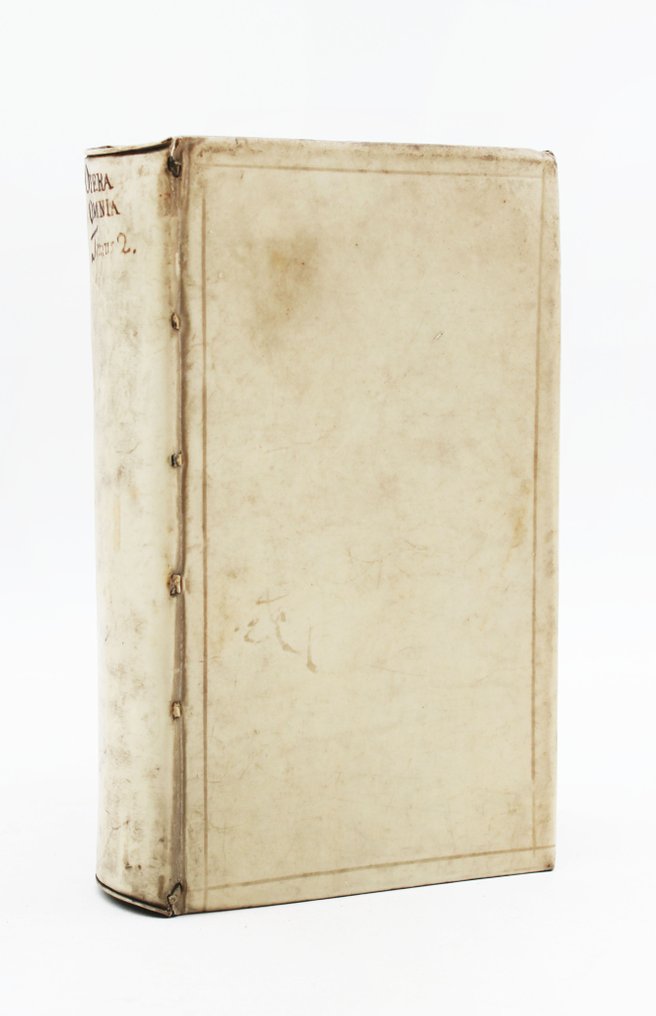
Contemporary binding in full stiff parchment with handwritten title on the spine: Opera Omnia. Typographic frontispiece in elegant Roman type, numerous full-page plates depicting mythological episodes from the Metamorphoses. Normal signs of use, some marginal staining. Pages (2); 806; 10 unnumbered pages; (4).
In ancient books with a centuries-old history, some imperfections may be present, which are not always noted in the description.
Full title and author
Metamorphosis.
Lugdunum, Ex Officina Hackiana, 1670.
Publications of Ovid of Naso
Context and Significance
The Hackiana workshop, one of the most prestigious of the Dutch Seicento, continued Elzevier's tradition in printing Latin classics, offering philologically accurate texts adorned with baroque-style engravings. This edition of the Metamorphoses stands out for its balance between typographic elegance and iconographic splendor. The plates, of the Dutch school, are not mere illustrations but true figurative dramas: they depict in image the exact moment of transformation, the threshold between human and divine, matter and spirit.
Ovid's poem, in this guise, becomes a manual of poetic alchemy, a journey through the stages of transformation that unites the universe and reveals the continuity of all forms.
Biography of the Author
Publius Ovidius Naso (Sulmona, 43 BC – Tomi, 17 AD), a Latin poet of extraordinary refinement, was the author of Metamorphoses, Amores, Heroides, Ars Amatoria, and Tristia. His poetry, elegant and learned, blends mythology and introspection, eroticism and philosophy of destiny. Exiled by Augustus for reasons not clarified, he transformed personal experience into an art of memory and desire. The Metamorphoses, written in hexameters, represent the summation of his thought: reality as a flow of forms, life as perpetual transfiguration.
Printing history and circulation
The Hackian edition of 1670 fits into the great Dutch tradition of Latin classics, inaugurated by the Elzeviers and rigorously continued by Hackius. The Metamorphoses are highly appreciated for their rich illustrative apparatus and the elegance of the typographic character. The edition was distributed throughout Europe, often included in the aristocratic and academic libraries of the North, and became a model for the reprints in Leiden and The Hague in the early eighteenth century.
BIBLIOGRAPHY AND REFERENCES
Brunet IV, 237; Graesse V, 108; Schweiger, Handbook of Classical Bibliography, II, 666; Willems, Les Elzevier, p. 486 (note on the Hackiana workshop); Moss, Manual of Classical Bibliography, II, p. 417; Gaskell, Dutch Printing and Bookmaking, 1968; BnF Rés. P-Y 3945; Ovid, Opera Omnia, Hackiana 1670, WorldCat OCLC 45834592.
Seller's Story
Luxury Books: Your Go-To Guide for Nabbing Literary Treasures!
Embarking on the thrilling journey of collecting rare and timeless printed works? Here's your snappy rundown, "The Collector's Cheat Sheet," to ensure you're not just flipping pages but stacking up the value:
1. Edition and Rarity: Rarity is the name of the game. First editions, limited printings, and books flaunting unique features like eye-catching illustrations or mind-blowing bindings? Consider them the VIPs of the collector's world.
2. Condition & Dimension: Picture this – a book in mint condition, untouched by the woes of wear and tear. Now, flip the script: wear, foxing, discoloration – they're the villains here. And don't forget to size up the dimensions, because a book's size matters in the collector's universe.
3. Authenticity: In a world of replicas and forgeries, verifying a book's authenticity is your superhero move. Expert examination and authentication – your trusty sidekicks in this quest.
4. Provenance: Who owned it before you? If the book has hobnobbed with famous figures or danced through historical events, its value skyrockets. Every book has a story, but some have blockbuster tales.
5. Demand and Market Trends: Think of book values as the stock market of the literary world. Stay savvy on collector trends and market shifts to ride the waves of value.
6. Subject Matter: Some topics are like fine wine – they get better with time. Dive into subjects with a timeless appeal or ride the wave of emerging cultural and historical relevance.
7. Binding and Design: Beauty is more than skin deep. Intricate bindings, stunning covers, and illustrations – these are the accessories that make a book runway-ready in the collector's eyes.
8. Association Copies: Books with a personal touch – whether it's a connection to the author or a famous personality – elevate the historical vibes. A book with a backstory? Count us in.
9. Investment Potential: Passion is the engine, but some collectors eye future returns. Keep in mind, though, that the book market can be as unpredictable as a plot twist.
10. Expert Advice: New to the game? Don't play solo. Seek wisdom from the book gurus, hit up book fairs, and join collector communities. We at Luxury Books are the Yodas of the rare book galaxy, helping you build collections that scream sophistication and cultural clout.
Because collecting rare books isn't just about dollar signs – it's a journey of preserving heritage and embracing literary treasures. Happy collecting!
Translated by Google TranslateThe Great Western Book of Changes: The universe according to the most ironic of poets
An edition of extraordinary finesse, this splendid volume of the Opera Omnia of Publius Ovidius Naso, printed in Lugdunum Batavorum in 1670 by the Hackiana workshop, gathers the fifteen books of Metamorphoses in a form that transforms mythological poetry into allegorical vision. The full-page engravings illustrate the most famous passages of the poem, conveying the symbolic power of metamorphosis as a cosmic principle: the universe in perpetual change, matter becoming image, words turning into form. The Hackiana edition, one of the most refined of the Dutch 17th century, venerates Ovid as a poet of light and eternal transformation.
Market value
The Hackiana editions of Ovid's Opera Omnia, particularly the volume dedicated to the Metamorphoses, are among the most appreciated by scholars and collectors of illustrated classical texts. Complete copies, in contemporary parchment binding, are currently valued on the antiquarian market between 1,200 and 2,000 euros, with higher prices for specimens in excellent condition, with clear plates and full margins. This copy, intact, fresh, with precisely inked plates, falls within the high-value range.
Physical description and condition - collector's copy
Contemporary binding in full stiff parchment with handwritten title on the spine: Opera Omnia. Typographic frontispiece in elegant Roman type, numerous full-page plates depicting mythological episodes from the Metamorphoses. Normal signs of use, some marginal staining. Pages (2); 806; 10 unnumbered pages; (4).
In ancient books with a centuries-old history, some imperfections may be present, which are not always noted in the description.
Full title and author
Metamorphosis.
Lugdunum, Ex Officina Hackiana, 1670.
Publications of Ovid of Naso
Context and Significance
The Hackiana workshop, one of the most prestigious of the Dutch Seicento, continued Elzevier's tradition in printing Latin classics, offering philologically accurate texts adorned with baroque-style engravings. This edition of the Metamorphoses stands out for its balance between typographic elegance and iconographic splendor. The plates, of the Dutch school, are not mere illustrations but true figurative dramas: they depict in image the exact moment of transformation, the threshold between human and divine, matter and spirit.
Ovid's poem, in this guise, becomes a manual of poetic alchemy, a journey through the stages of transformation that unites the universe and reveals the continuity of all forms.
Biography of the Author
Publius Ovidius Naso (Sulmona, 43 BC – Tomi, 17 AD), a Latin poet of extraordinary refinement, was the author of Metamorphoses, Amores, Heroides, Ars Amatoria, and Tristia. His poetry, elegant and learned, blends mythology and introspection, eroticism and philosophy of destiny. Exiled by Augustus for reasons not clarified, he transformed personal experience into an art of memory and desire. The Metamorphoses, written in hexameters, represent the summation of his thought: reality as a flow of forms, life as perpetual transfiguration.
Printing history and circulation
The Hackian edition of 1670 fits into the great Dutch tradition of Latin classics, inaugurated by the Elzeviers and rigorously continued by Hackius. The Metamorphoses are highly appreciated for their rich illustrative apparatus and the elegance of the typographic character. The edition was distributed throughout Europe, often included in the aristocratic and academic libraries of the North, and became a model for the reprints in Leiden and The Hague in the early eighteenth century.
BIBLIOGRAPHY AND REFERENCES
Brunet IV, 237; Graesse V, 108; Schweiger, Handbook of Classical Bibliography, II, 666; Willems, Les Elzevier, p. 486 (note on the Hackiana workshop); Moss, Manual of Classical Bibliography, II, p. 417; Gaskell, Dutch Printing and Bookmaking, 1968; BnF Rés. P-Y 3945; Ovid, Opera Omnia, Hackiana 1670, WorldCat OCLC 45834592.
Seller's Story
Luxury Books: Your Go-To Guide for Nabbing Literary Treasures!
Embarking on the thrilling journey of collecting rare and timeless printed works? Here's your snappy rundown, "The Collector's Cheat Sheet," to ensure you're not just flipping pages but stacking up the value:
1. Edition and Rarity: Rarity is the name of the game. First editions, limited printings, and books flaunting unique features like eye-catching illustrations or mind-blowing bindings? Consider them the VIPs of the collector's world.
2. Condition & Dimension: Picture this – a book in mint condition, untouched by the woes of wear and tear. Now, flip the script: wear, foxing, discoloration – they're the villains here. And don't forget to size up the dimensions, because a book's size matters in the collector's universe.
3. Authenticity: In a world of replicas and forgeries, verifying a book's authenticity is your superhero move. Expert examination and authentication – your trusty sidekicks in this quest.
4. Provenance: Who owned it before you? If the book has hobnobbed with famous figures or danced through historical events, its value skyrockets. Every book has a story, but some have blockbuster tales.
5. Demand and Market Trends: Think of book values as the stock market of the literary world. Stay savvy on collector trends and market shifts to ride the waves of value.
6. Subject Matter: Some topics are like fine wine – they get better with time. Dive into subjects with a timeless appeal or ride the wave of emerging cultural and historical relevance.
7. Binding and Design: Beauty is more than skin deep. Intricate bindings, stunning covers, and illustrations – these are the accessories that make a book runway-ready in the collector's eyes.
8. Association Copies: Books with a personal touch – whether it's a connection to the author or a famous personality – elevate the historical vibes. A book with a backstory? Count us in.
9. Investment Potential: Passion is the engine, but some collectors eye future returns. Keep in mind, though, that the book market can be as unpredictable as a plot twist.
10. Expert Advice: New to the game? Don't play solo. Seek wisdom from the book gurus, hit up book fairs, and join collector communities. We at Luxury Books are the Yodas of the rare book galaxy, helping you build collections that scream sophistication and cultural clout.
Because collecting rare books isn't just about dollar signs – it's a journey of preserving heritage and embracing literary treasures. Happy collecting!
Translated by Google TranslateDetails
Number of Books
1
Subject
Esotericism
Book Title
Metamorphoseon
Author/ Illustrator
Ovidio
Condition
Good
Publication year oldest item
1670
Height
206 mm
Edition
1st Edition Thus, Illustrated Edition
Width
122 mm
Language
Latin
Original language
Yes
Publisher
Lugd., Ex Officina Hackiana, 1670
Binding/ Material
Vellum
Extras
Tipped in plates
Number of pages
822
Sold by
