Della Porta / Ingegneri / Monteccuoli - Fisonomia dell'Huomo / Celeste Fisonomia / Naturale / di Polemone - 1622-1623

09
days
23
hours
33
minutes
08
seconds
Current bid
€ 2
Reserve price not met

Expert
Selected by Ilaria Colombo
Specialist in old books, specialising in theological disputes since 1999.
Estimate € 1,000 - € 2,500
5 other people are watching this object
 Bidder 6926 Bidder 6926 | €2 | |
|---|---|---|
| Bidder 6926 | €1 |
Catawiki Buyer Protection
Your payment’s safe with us until you receive your object.View details
Trustpilot 4.4 | 122385 reviews
Rated Excellent on Trustpilot.
Della Porta, Ingegneri and Monteccuoli are the authors of Fisonomia dell’Huomo / Celeste Fisonomia / Naturale / di Polemone.
AI-assisted summary
Description from the seller
Great Magical Atlas of the Human Body: 4 Works by the 3 Authors of Baroque Physiognomy
Natural magic, anatomy, optics, and Hermetic philosophy converge into a single science of the signs of the body. An extraordinary anthology of the physiognomy works by the three major sixteenth-century authors. Particularly important are the two works by Dalla Porta: the 'Fisonomia dell’Huomo' and the 'Celeste Fisonomia,' rarely preserved together.
In the first half of the seventeenth century, physiognomy ceased to be a Renaissance curiosity and became a true science. The body is a symbolic alphabet through which the divine shapes temperaments, while the face is read as a celestial chart.
This Padovan collection, published between 1622 and 1623 by the workshop of Pietro Paolo Tozzi, is extraordinary for its completeness and represents an editorial construction of remarkable coherence: four works, three authors, a single vision of the body as a mirror of the soul and the universe. The presence in the same volume of the two fundamental works by Giovan Battista Della Porta – the Fisonomia dell’Huomo and the Celeste Fisonomia – is particularly rare and grants the copy an exceptional philological and esoteric stature.
Market value
The printed physiognomic editions by Pietro Paolo Tozzi in Padua between 1622 and 1623 are highly sought after for their typographic quality and the iconographic unity of the cycle. Composite collections containing all four works, especially with both treatments of Della Porta combined, are now rare on the market and fetch high prices. Estimate: €6,000–€9,000; complete copies, in contemporary binding and with well-preserved plates, can exceed €10,000. The specimen described here, genuine and in excellent condition, represents a particularly significant witness to Baroque physiognomy.
Physical description and condition
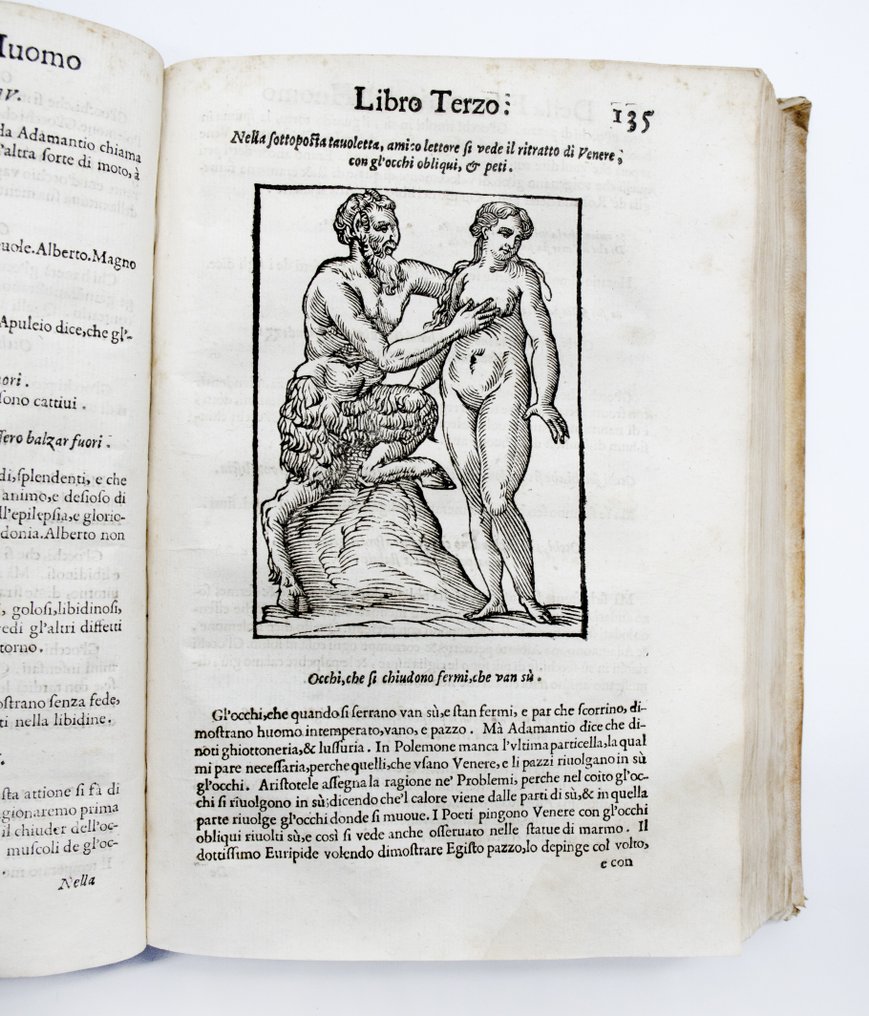
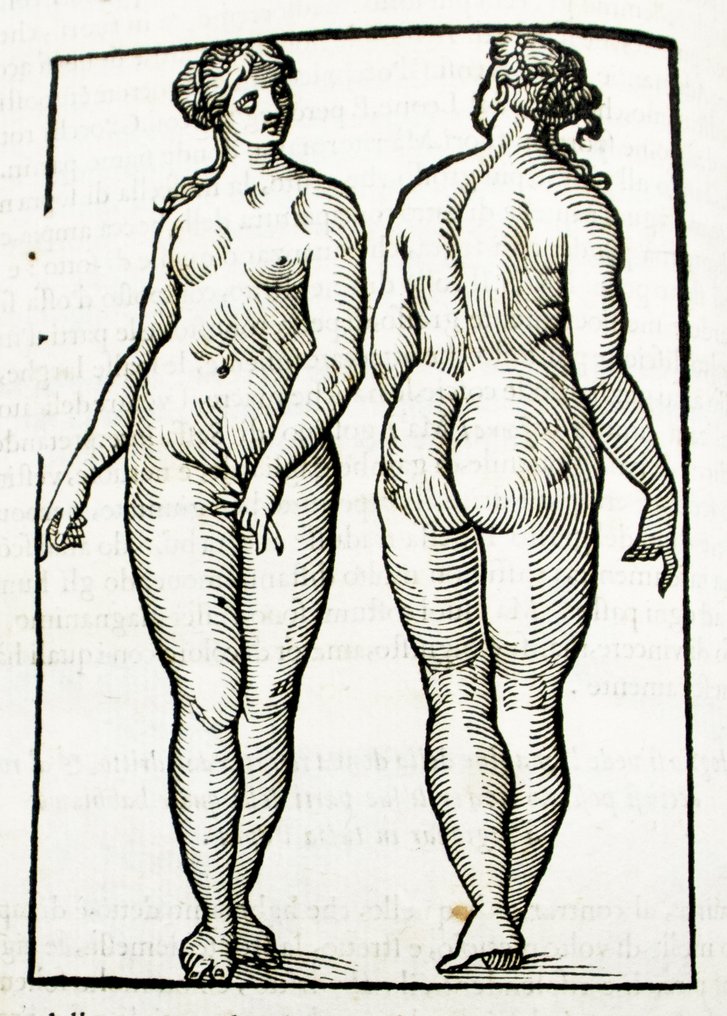
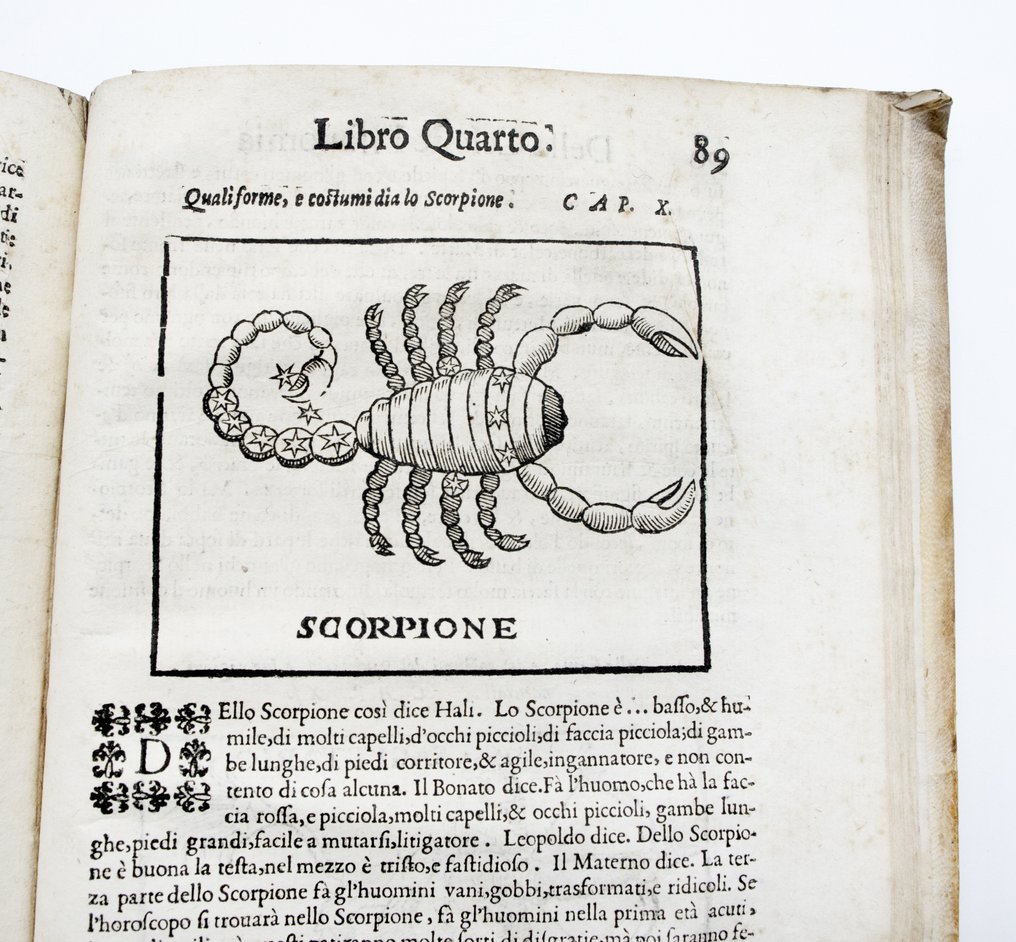
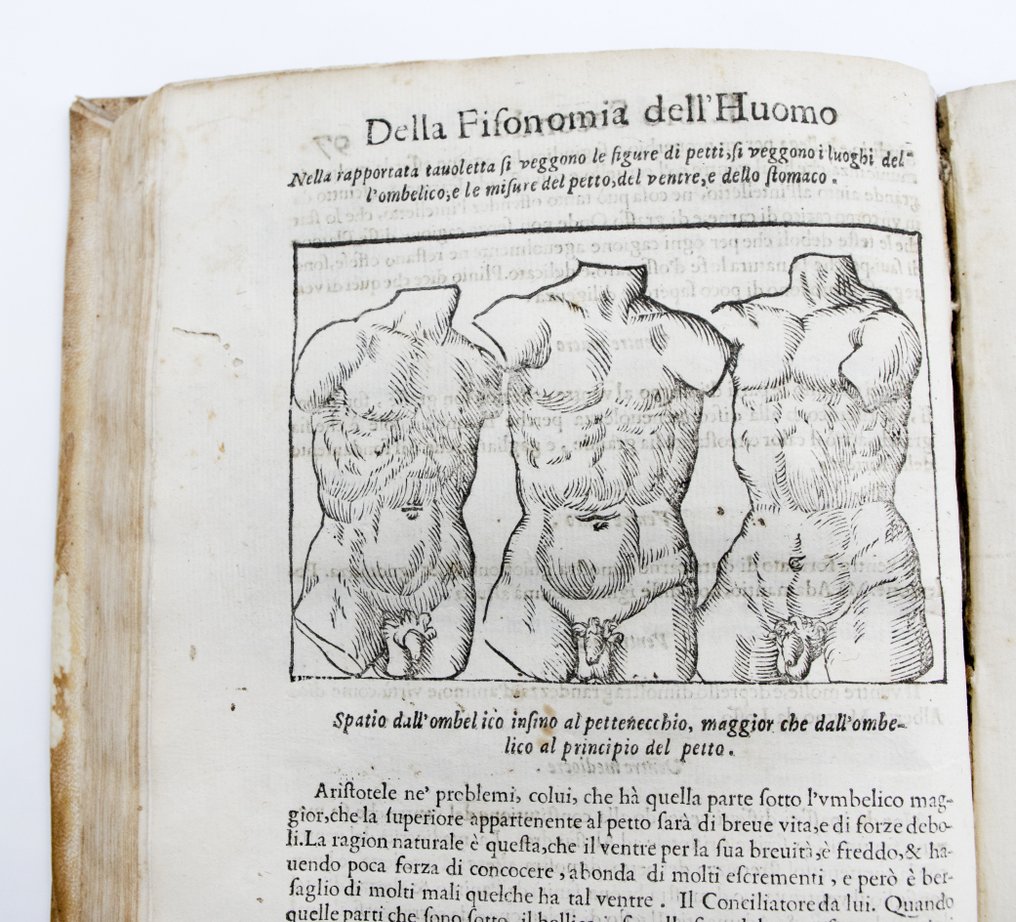
Contemporary binding in semi-rigid parchment, handwritten title on the spine, signs of wear. Composite volume comprising four distinct works, all printed in Padua by Pietro Paolo Tozzi between 1622 and 1623. Separate title pages with engraved vignettes and two identical portraits on the preface of the two works by Dalla Porta, woodcut plates in the text. Small tear repaired without loss to page 128, foxing and browning. Pages. (1); 6nn; 222; 64 pages; 40; 12nn. 148.
Full title and author
On the Nature of Man.
Padua, for Pietro Paolo Tozzi, 1623.
Gio. Battista Della Porta from Naples.
Bound w:
Natural physiognomy
Padua, by Pietro Paolo Tozzi, 1622.
Giovanni Ingegneri
Bound w:
Physiognomy of Polemone.
Padua, for Pietro Paolo Tozzi, 1623.
Carlo Monteccuoli
Bound w:
Of the celestial physiognomy.
Padua, for Pietro Paolo Tozzi, 1623.
Gio. Battista Della Porta
Context and Significance
The collection represents one of the most comprehensive expressions of Baroque physiognomy. Della Porta's vision, in which natural magic, anatomy, optics, and hermetic philosophy converge into a single science of the signs of the body, is present here in two forms: the Physiognomy of Man and the Celestial Physiognomy, rarely preserved together and fundamental to understanding the breadth of his doctrine, which combines natural and astrological physiognomy.
Engineers develop a moral and medical physiognomy based on temperaments, while Monteccuoli reinterprets Polemone in a modern and Christian key. Tozzi's project, by publishing these four texts at close intervals, aimed to create a true corpus of the science of the face: an encyclopedia of human destiny in which body proportions and features reveal the movements of the soul and celestial influences. The editorial unity of the cycle and the presence of the three authors give the volume a rare systematic character in the European landscape of physiognomy.
Biography of the Authors
Giovan Battista Della Porta (Naples, 1535 – 1615), natural philosopher, playwright, and scientist, founder of the Accademia dei Segreti, is the author who contributed most to the codification of modern physiognomy. His works blend empirical observation, astrological symbolism, and Hermetic tradition.
Giovanni Ingegneri (Venice, c. 1550 – 1600), bishop of Capodistria, developed a physiognomy based on the analysis of temperaments, integrating Aristotle, Galen, and Christian morality.
Carlo Monteccuoli (Modena, 16th–17th century), humanist and translator, reinterprets Polemone, adapting it to the anthropological and moral needs of the modern Christian world.
Printing history and circulation
Pietro Paolo Tozzi's Padovan workshop, active from 1608 to 1632, was distinguished by fine typography and a meticulous iconographic program. The physiognomic editions of 1622–1623 form a coherent cycle, with similar title pages and a uniform illustrative apparatus. The woodcuts, partly derived from the Neapolitan tradition of the first edition in 1586, were updated according to the Padovan taste. The print run was moderate, but the works circulated among doctors, natural philosophers, astrologers, and scholars. Composite copies that gather all four works, especially the two by Della Porta together, are now rare and of great historical and editorial interest.
BIBLIOGRAPHY AND REFERENCES
Caillet 8671; Riccardi I, 382; Wellcome I, 5090; Mortimer, Italian Books, II, 174; Adams D 312; Durling 1404; ICCU CNCE 18073, 18252, 18401.
Seller's Story
Luxury Books: Your Go-To Guide for Nabbing Literary Treasures!
Embarking on the thrilling journey of collecting rare and timeless printed works? Here's your snappy rundown, "The Collector's Cheat Sheet," to ensure you're not just flipping pages but stacking up the value:
1. Edition and Rarity: Rarity is the name of the game. First editions, limited printings, and books flaunting unique features like eye-catching illustrations or mind-blowing bindings? Consider them the VIPs of the collector's world.
2. Condition & Dimension: Picture this – a book in mint condition, untouched by the woes of wear and tear. Now, flip the script: wear, foxing, discoloration – they're the villains here. And don't forget to size up the dimensions, because a book's size matters in the collector's universe.
3. Authenticity: In a world of replicas and forgeries, verifying a book's authenticity is your superhero move. Expert examination and authentication – your trusty sidekicks in this quest.
4. Provenance: Who owned it before you? If the book has hobnobbed with famous figures or danced through historical events, its value skyrockets. Every book has a story, but some have blockbuster tales.
5. Demand and Market Trends: Think of book values as the stock market of the literary world. Stay savvy on collector trends and market shifts to ride the waves of value.
6. Subject Matter: Some topics are like fine wine – they get better with time. Dive into subjects with a timeless appeal or ride the wave of emerging cultural and historical relevance.
7. Binding and Design: Beauty is more than skin deep. Intricate bindings, stunning covers, and illustrations – these are the accessories that make a book runway-ready in the collector's eyes.
8. Association Copies: Books with a personal touch – whether it's a connection to the author or a famous personality – elevate the historical vibes. A book with a backstory? Count us in.
9. Investment Potential: Passion is the engine, but some collectors eye future returns. Keep in mind, though, that the book market can be as unpredictable as a plot twist.
10. Expert Advice: New to the game? Don't play solo. Seek wisdom from the book gurus, hit up book fairs, and join collector communities. We at Luxury Books are the Yodas of the rare book galaxy, helping you build collections that scream sophistication and cultural clout.
Because collecting rare books isn't just about dollar signs – it's a journey of preserving heritage and embracing literary treasures. Happy collecting!
Translated by Google TranslateGreat Magical Atlas of the Human Body: 4 Works by the 3 Authors of Baroque Physiognomy
Natural magic, anatomy, optics, and Hermetic philosophy converge into a single science of the signs of the body. An extraordinary anthology of the physiognomy works by the three major sixteenth-century authors. Particularly important are the two works by Dalla Porta: the 'Fisonomia dell’Huomo' and the 'Celeste Fisonomia,' rarely preserved together.
In the first half of the seventeenth century, physiognomy ceased to be a Renaissance curiosity and became a true science. The body is a symbolic alphabet through which the divine shapes temperaments, while the face is read as a celestial chart.
This Padovan collection, published between 1622 and 1623 by the workshop of Pietro Paolo Tozzi, is extraordinary for its completeness and represents an editorial construction of remarkable coherence: four works, three authors, a single vision of the body as a mirror of the soul and the universe. The presence in the same volume of the two fundamental works by Giovan Battista Della Porta – the Fisonomia dell’Huomo and the Celeste Fisonomia – is particularly rare and grants the copy an exceptional philological and esoteric stature.
Market value
The printed physiognomic editions by Pietro Paolo Tozzi in Padua between 1622 and 1623 are highly sought after for their typographic quality and the iconographic unity of the cycle. Composite collections containing all four works, especially with both treatments of Della Porta combined, are now rare on the market and fetch high prices. Estimate: €6,000–€9,000; complete copies, in contemporary binding and with well-preserved plates, can exceed €10,000. The specimen described here, genuine and in excellent condition, represents a particularly significant witness to Baroque physiognomy.
Physical description and condition
Contemporary binding in semi-rigid parchment, handwritten title on the spine, signs of wear. Composite volume comprising four distinct works, all printed in Padua by Pietro Paolo Tozzi between 1622 and 1623. Separate title pages with engraved vignettes and two identical portraits on the preface of the two works by Dalla Porta, woodcut plates in the text. Small tear repaired without loss to page 128, foxing and browning. Pages. (1); 6nn; 222; 64 pages; 40; 12nn. 148.
Full title and author
On the Nature of Man.
Padua, for Pietro Paolo Tozzi, 1623.
Gio. Battista Della Porta from Naples.
Bound w:
Natural physiognomy
Padua, by Pietro Paolo Tozzi, 1622.
Giovanni Ingegneri
Bound w:
Physiognomy of Polemone.
Padua, for Pietro Paolo Tozzi, 1623.
Carlo Monteccuoli
Bound w:
Of the celestial physiognomy.
Padua, for Pietro Paolo Tozzi, 1623.
Gio. Battista Della Porta
Context and Significance
The collection represents one of the most comprehensive expressions of Baroque physiognomy. Della Porta's vision, in which natural magic, anatomy, optics, and hermetic philosophy converge into a single science of the signs of the body, is present here in two forms: the Physiognomy of Man and the Celestial Physiognomy, rarely preserved together and fundamental to understanding the breadth of his doctrine, which combines natural and astrological physiognomy.
Engineers develop a moral and medical physiognomy based on temperaments, while Monteccuoli reinterprets Polemone in a modern and Christian key. Tozzi's project, by publishing these four texts at close intervals, aimed to create a true corpus of the science of the face: an encyclopedia of human destiny in which body proportions and features reveal the movements of the soul and celestial influences. The editorial unity of the cycle and the presence of the three authors give the volume a rare systematic character in the European landscape of physiognomy.
Biography of the Authors
Giovan Battista Della Porta (Naples, 1535 – 1615), natural philosopher, playwright, and scientist, founder of the Accademia dei Segreti, is the author who contributed most to the codification of modern physiognomy. His works blend empirical observation, astrological symbolism, and Hermetic tradition.
Giovanni Ingegneri (Venice, c. 1550 – 1600), bishop of Capodistria, developed a physiognomy based on the analysis of temperaments, integrating Aristotle, Galen, and Christian morality.
Carlo Monteccuoli (Modena, 16th–17th century), humanist and translator, reinterprets Polemone, adapting it to the anthropological and moral needs of the modern Christian world.
Printing history and circulation
Pietro Paolo Tozzi's Padovan workshop, active from 1608 to 1632, was distinguished by fine typography and a meticulous iconographic program. The physiognomic editions of 1622–1623 form a coherent cycle, with similar title pages and a uniform illustrative apparatus. The woodcuts, partly derived from the Neapolitan tradition of the first edition in 1586, were updated according to the Padovan taste. The print run was moderate, but the works circulated among doctors, natural philosophers, astrologers, and scholars. Composite copies that gather all four works, especially the two by Della Porta together, are now rare and of great historical and editorial interest.
BIBLIOGRAPHY AND REFERENCES
Caillet 8671; Riccardi I, 382; Wellcome I, 5090; Mortimer, Italian Books, II, 174; Adams D 312; Durling 1404; ICCU CNCE 18073, 18252, 18401.
Seller's Story
Luxury Books: Your Go-To Guide for Nabbing Literary Treasures!
Embarking on the thrilling journey of collecting rare and timeless printed works? Here's your snappy rundown, "The Collector's Cheat Sheet," to ensure you're not just flipping pages but stacking up the value:
1. Edition and Rarity: Rarity is the name of the game. First editions, limited printings, and books flaunting unique features like eye-catching illustrations or mind-blowing bindings? Consider them the VIPs of the collector's world.
2. Condition & Dimension: Picture this – a book in mint condition, untouched by the woes of wear and tear. Now, flip the script: wear, foxing, discoloration – they're the villains here. And don't forget to size up the dimensions, because a book's size matters in the collector's universe.
3. Authenticity: In a world of replicas and forgeries, verifying a book's authenticity is your superhero move. Expert examination and authentication – your trusty sidekicks in this quest.
4. Provenance: Who owned it before you? If the book has hobnobbed with famous figures or danced through historical events, its value skyrockets. Every book has a story, but some have blockbuster tales.
5. Demand and Market Trends: Think of book values as the stock market of the literary world. Stay savvy on collector trends and market shifts to ride the waves of value.
6. Subject Matter: Some topics are like fine wine – they get better with time. Dive into subjects with a timeless appeal or ride the wave of emerging cultural and historical relevance.
7. Binding and Design: Beauty is more than skin deep. Intricate bindings, stunning covers, and illustrations – these are the accessories that make a book runway-ready in the collector's eyes.
8. Association Copies: Books with a personal touch – whether it's a connection to the author or a famous personality – elevate the historical vibes. A book with a backstory? Count us in.
9. Investment Potential: Passion is the engine, but some collectors eye future returns. Keep in mind, though, that the book market can be as unpredictable as a plot twist.
10. Expert Advice: New to the game? Don't play solo. Seek wisdom from the book gurus, hit up book fairs, and join collector communities. We at Luxury Books are the Yodas of the rare book galaxy, helping you build collections that scream sophistication and cultural clout.
Because collecting rare books isn't just about dollar signs – it's a journey of preserving heritage and embracing literary treasures. Happy collecting!
Translated by Google TranslateDetails
Number of Books
1
Subject
Esotericism, Science
Book Title
Fisonomia dell'Huomo / Celeste Fisonomia / Naturale / di Polemone
Author/ Illustrator
Della Porta / Ingegneri / Monteccuoli
Condition
Good
Publication year oldest item
1622
Publication year youngest item
1623
Height
225 mm
Edition
1st Edition Thus, Illustrated Edition
Width
179 mm
Language
Italian
Original language
Yes
Publisher
Padova, per Pietro Paolo Tozzi, 1622-1623
Binding/ Material
Vellum
Extras
Tipped in plates
Number of pages
724
Sold by
