Illuminated Manuscript - Manoscritto Etiope Ge‘ez - 1790
10
days
08
hours
15
minutes
46
seconds
Starting bid
€ 1
Reserve price not met

Expert
Selected by Ilaria Colombo
Specialist in old books, specialising in theological disputes since 1999.
Estimate € 1,200 - € 2,000
No bids placed
Catawiki Buyer Protection
Your payment’s safe with us until you receive your object.View details
Trustpilot 4.4 | 122290 reviews
Rated Excellent on Trustpilot.
This Ge‘ez illuminated manuscript titled Manoscritto Etiope Ge‘ez by Illuminated Manuscript showcases carved iconography and hand colored illustrations within a genuine leather binding.
AI-assisted summary
Description from the seller
The Book of the Desert and of Color – Miniature and Colored Ethiopian Codex on Parchment
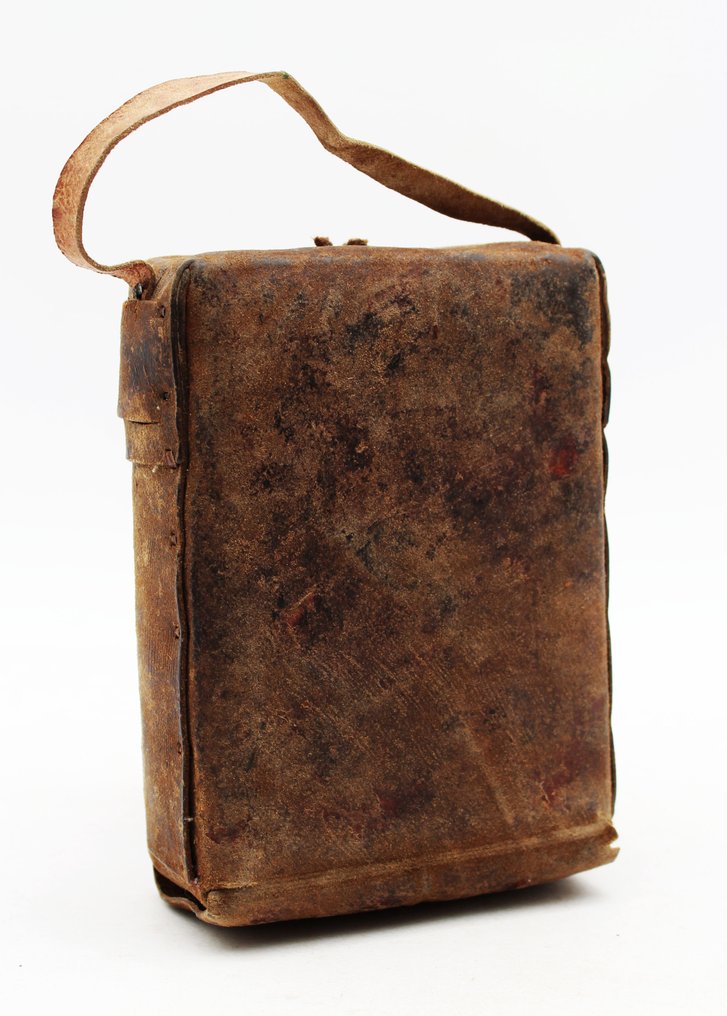
This manuscript, enclosed in an original leather binding with a patina of use and a hand strap, represents a typical example of private devotion in Christian Ethiopia.
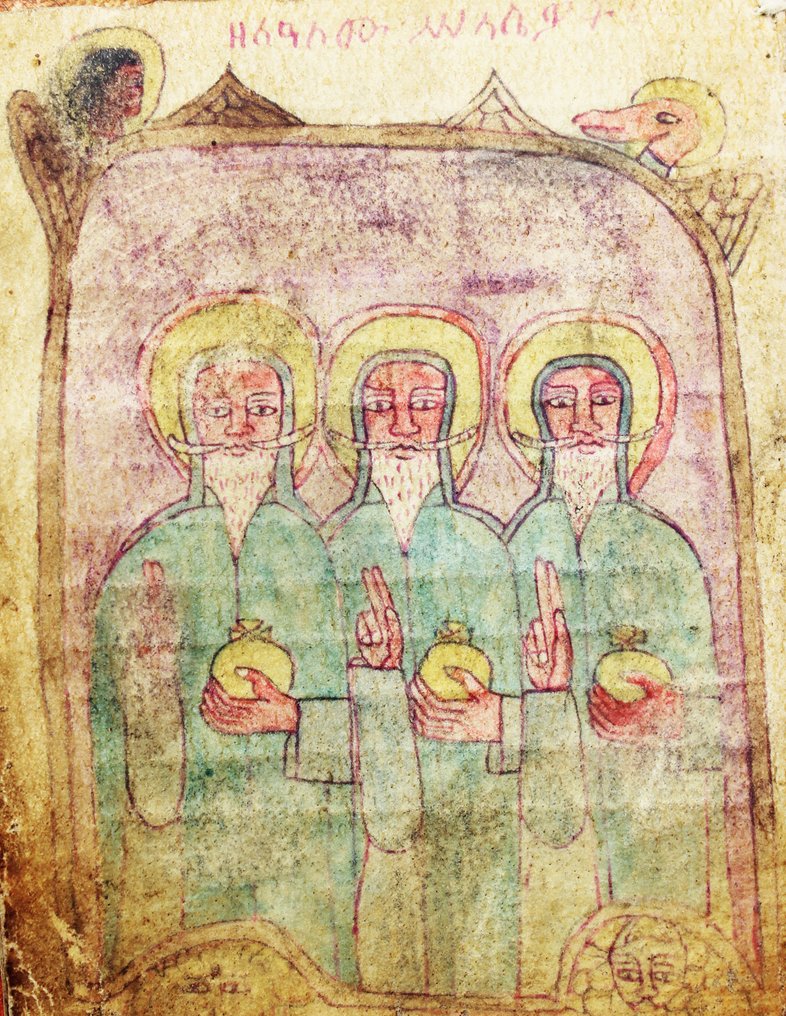
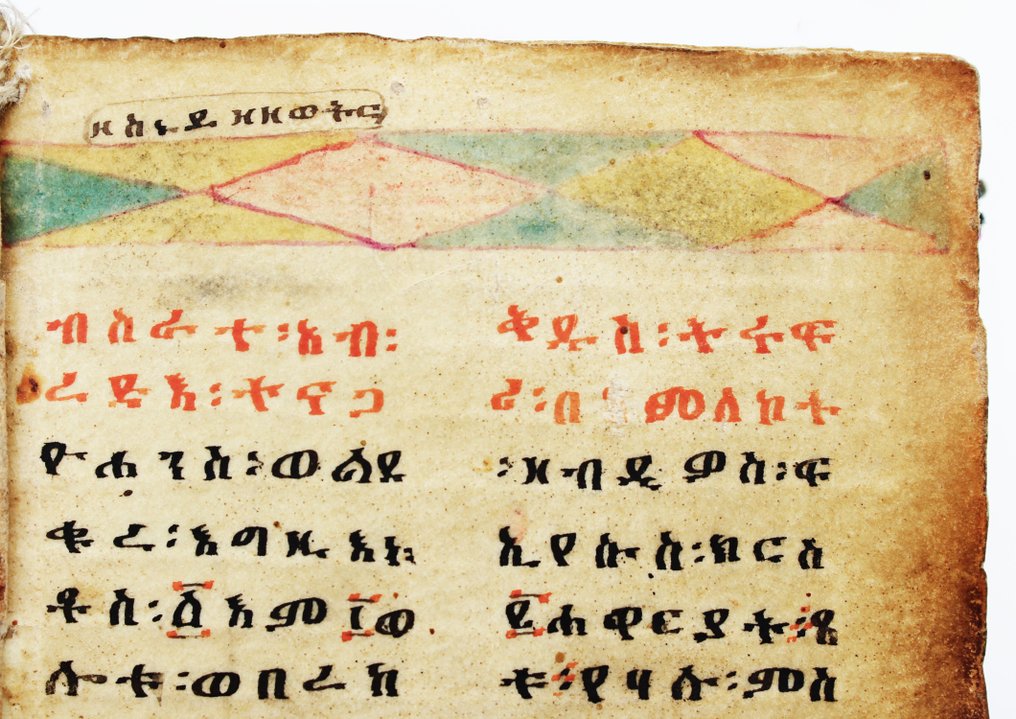
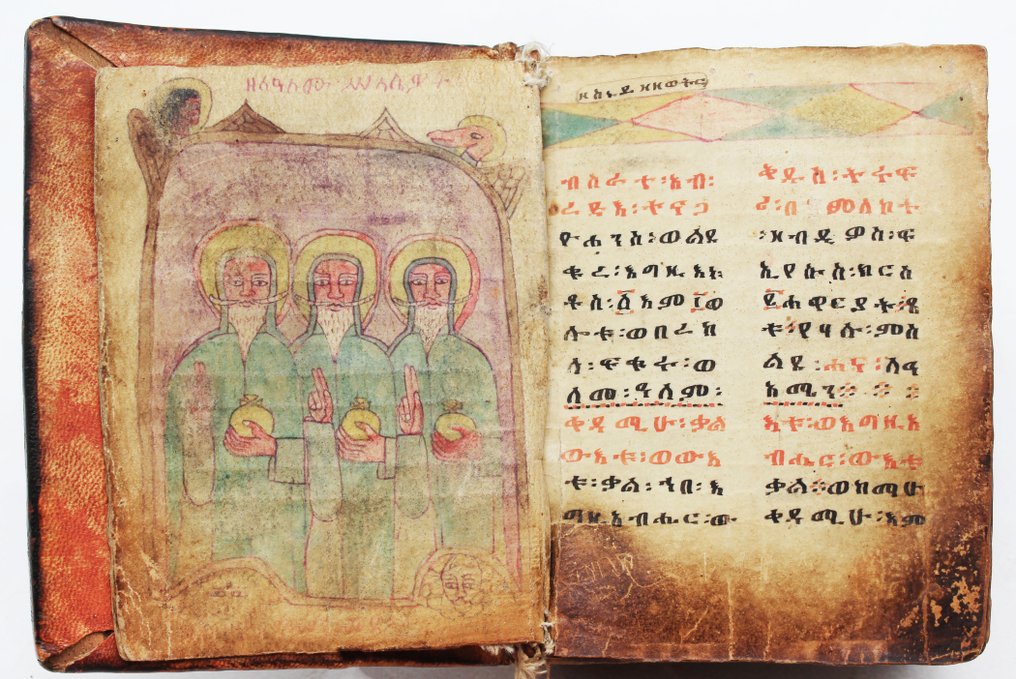
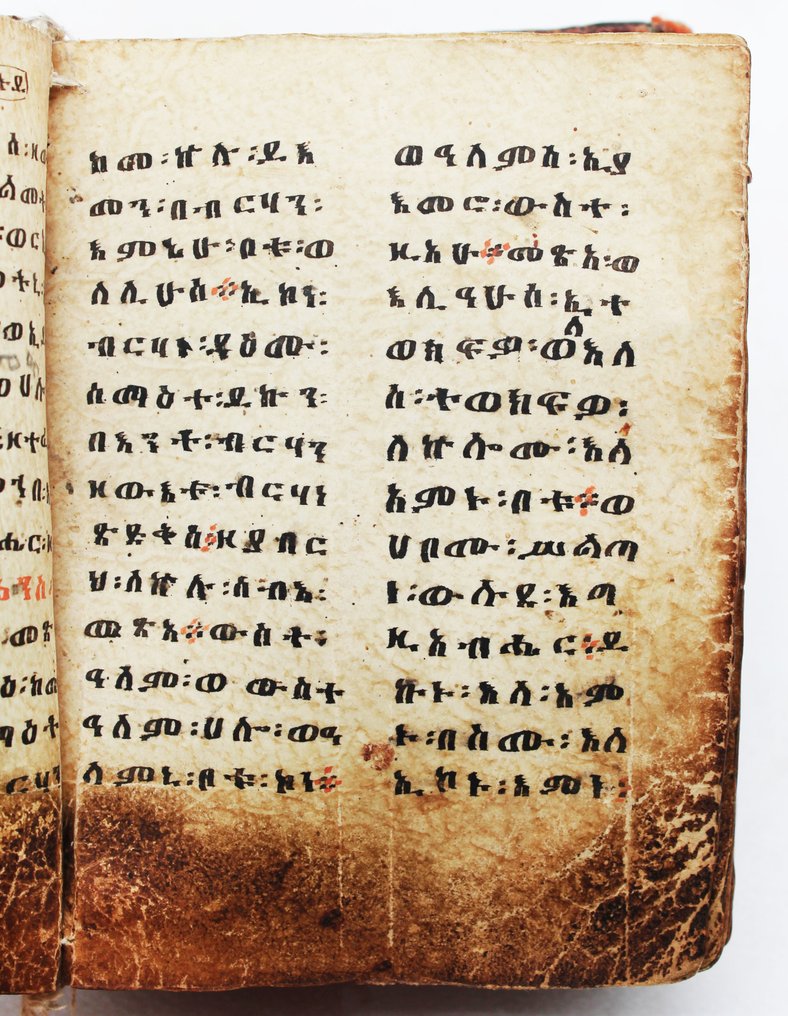
The text, written in Ge‘ez — the sacred and liturgical language of the Coptic-Ethiopian rite — contains prayers and liturgical formulas accompanied by rubrics in red, following the custom of monastic manuscripts. The front miniature depicts three saints or prophets with halos and white beards, drawn with an essential yet powerful stroke, within a chromatic register of pastel tones now faded by time.
Market value
In the international antiquarian market, Ethiopian illuminated manuscripts in good condition with original binding generally range from 900 to 2,000 euros, with higher prices for complete and illustrated copies. This code falls within the middle range, between 1,200 and 1,500 euros, depending on preservation and textual integrity.
condition
Ethiopian manuscript on parchment, written in Ge‘ez language in black and red, 2 columns per page, 14 lines per column. A full-page polychrome miniature at the beginning of the text, depicting three saints with halos. Original brown leather binding with patina of use and an integral strap, wear at the edges, and small gaps; internally well preserved, with browning and traces of use. Pp. 142.
Full title and author
Ethiopian liturgical code in Ge‘ez language.
Ethiopia, 18th–19th centuries.
S.A.
Context
The manuscript testifies to the continuity of Ethiopian Christian tradition, rooted in the ancient Coptic and Greek versions of the Scriptures. The codices of this type were produced in the monasteries of the Gondar and Tigray regions, often on goat parchment, intended for personal or devotional use. The iconography of the three saints with pomegranates can be linked to Trinitarian symbolism or the Three Magi, but also to representations of the saintly monastic founders of Ethiopian communities.
Biography of the Author
Anonymous Ethiopian monk scribe, likely active between the late 18th and early 19th century. The training of Ethiopian scribes took place within monastic schools, where the Ge‘ez language continued to be learned as a sacred and literary language.
Printing History
Ethiopian manuscripts were produced continuously until the 20th century, when printing began to replace them in liturgical production. The copies on goat or sheep parchment, with natural pigments and leather bindings, represent the last reflection of the late medieval African Christian tradition.
BIBLIOGRAPHY
Mercier, Jacques. Ethiopian Art. Paris: Citadelles & Mazenod, 2007.
Uhlig, Siegbert. Encyclopaedia Aethiopica. Wiesbaden: Harrassowitz, 2003–2014.
Leroy, Jules. The Illustrated Ethiopian Manuscripts. Paris: CNRS, 1964.
Seller's Story
Luxury Books: Your Go-To Guide for Nabbing Literary Treasures!
Embarking on the thrilling journey of collecting rare and timeless printed works? Here's your snappy rundown, "The Collector's Cheat Sheet," to ensure you're not just flipping pages but stacking up the value:
1. Edition and Rarity: Rarity is the name of the game. First editions, limited printings, and books flaunting unique features like eye-catching illustrations or mind-blowing bindings? Consider them the VIPs of the collector's world.
2. Condition & Dimension: Picture this – a book in mint condition, untouched by the woes of wear and tear. Now, flip the script: wear, foxing, discoloration – they're the villains here. And don't forget to size up the dimensions, because a book's size matters in the collector's universe.
3. Authenticity: In a world of replicas and forgeries, verifying a book's authenticity is your superhero move. Expert examination and authentication – your trusty sidekicks in this quest.
4. Provenance: Who owned it before you? If the book has hobnobbed with famous figures or danced through historical events, its value skyrockets. Every book has a story, but some have blockbuster tales.
5. Demand and Market Trends: Think of book values as the stock market of the literary world. Stay savvy on collector trends and market shifts to ride the waves of value.
6. Subject Matter: Some topics are like fine wine – they get better with time. Dive into subjects with a timeless appeal or ride the wave of emerging cultural and historical relevance.
7. Binding and Design: Beauty is more than skin deep. Intricate bindings, stunning covers, and illustrations – these are the accessories that make a book runway-ready in the collector's eyes.
8. Association Copies: Books with a personal touch – whether it's a connection to the author or a famous personality – elevate the historical vibes. A book with a backstory? Count us in.
9. Investment Potential: Passion is the engine, but some collectors eye future returns. Keep in mind, though, that the book market can be as unpredictable as a plot twist.
10. Expert Advice: New to the game? Don't play solo. Seek wisdom from the book gurus, hit up book fairs, and join collector communities. We at Luxury Books are the Yodas of the rare book galaxy, helping you build collections that scream sophistication and cultural clout.
Because collecting rare books isn't just about dollar signs – it's a journey of preserving heritage and embracing literary treasures. Happy collecting!
Translated by Google TranslateThe Book of the Desert and of Color – Miniature and Colored Ethiopian Codex on Parchment
This manuscript, enclosed in an original leather binding with a patina of use and a hand strap, represents a typical example of private devotion in Christian Ethiopia.
The text, written in Ge‘ez — the sacred and liturgical language of the Coptic-Ethiopian rite — contains prayers and liturgical formulas accompanied by rubrics in red, following the custom of monastic manuscripts. The front miniature depicts three saints or prophets with halos and white beards, drawn with an essential yet powerful stroke, within a chromatic register of pastel tones now faded by time.
Market value
In the international antiquarian market, Ethiopian illuminated manuscripts in good condition with original binding generally range from 900 to 2,000 euros, with higher prices for complete and illustrated copies. This code falls within the middle range, between 1,200 and 1,500 euros, depending on preservation and textual integrity.
condition
Ethiopian manuscript on parchment, written in Ge‘ez language in black and red, 2 columns per page, 14 lines per column. A full-page polychrome miniature at the beginning of the text, depicting three saints with halos. Original brown leather binding with patina of use and an integral strap, wear at the edges, and small gaps; internally well preserved, with browning and traces of use. Pp. 142.
Full title and author
Ethiopian liturgical code in Ge‘ez language.
Ethiopia, 18th–19th centuries.
S.A.
Context
The manuscript testifies to the continuity of Ethiopian Christian tradition, rooted in the ancient Coptic and Greek versions of the Scriptures. The codices of this type were produced in the monasteries of the Gondar and Tigray regions, often on goat parchment, intended for personal or devotional use. The iconography of the three saints with pomegranates can be linked to Trinitarian symbolism or the Three Magi, but also to representations of the saintly monastic founders of Ethiopian communities.
Biography of the Author
Anonymous Ethiopian monk scribe, likely active between the late 18th and early 19th century. The training of Ethiopian scribes took place within monastic schools, where the Ge‘ez language continued to be learned as a sacred and literary language.
Printing History
Ethiopian manuscripts were produced continuously until the 20th century, when printing began to replace them in liturgical production. The copies on goat or sheep parchment, with natural pigments and leather bindings, represent the last reflection of the late medieval African Christian tradition.
BIBLIOGRAPHY
Mercier, Jacques. Ethiopian Art. Paris: Citadelles & Mazenod, 2007.
Uhlig, Siegbert. Encyclopaedia Aethiopica. Wiesbaden: Harrassowitz, 2003–2014.
Leroy, Jules. The Illustrated Ethiopian Manuscripts. Paris: CNRS, 1964.
Seller's Story
Luxury Books: Your Go-To Guide for Nabbing Literary Treasures!
Embarking on the thrilling journey of collecting rare and timeless printed works? Here's your snappy rundown, "The Collector's Cheat Sheet," to ensure you're not just flipping pages but stacking up the value:
1. Edition and Rarity: Rarity is the name of the game. First editions, limited printings, and books flaunting unique features like eye-catching illustrations or mind-blowing bindings? Consider them the VIPs of the collector's world.
2. Condition & Dimension: Picture this – a book in mint condition, untouched by the woes of wear and tear. Now, flip the script: wear, foxing, discoloration – they're the villains here. And don't forget to size up the dimensions, because a book's size matters in the collector's universe.
3. Authenticity: In a world of replicas and forgeries, verifying a book's authenticity is your superhero move. Expert examination and authentication – your trusty sidekicks in this quest.
4. Provenance: Who owned it before you? If the book has hobnobbed with famous figures or danced through historical events, its value skyrockets. Every book has a story, but some have blockbuster tales.
5. Demand and Market Trends: Think of book values as the stock market of the literary world. Stay savvy on collector trends and market shifts to ride the waves of value.
6. Subject Matter: Some topics are like fine wine – they get better with time. Dive into subjects with a timeless appeal or ride the wave of emerging cultural and historical relevance.
7. Binding and Design: Beauty is more than skin deep. Intricate bindings, stunning covers, and illustrations – these are the accessories that make a book runway-ready in the collector's eyes.
8. Association Copies: Books with a personal touch – whether it's a connection to the author or a famous personality – elevate the historical vibes. A book with a backstory? Count us in.
9. Investment Potential: Passion is the engine, but some collectors eye future returns. Keep in mind, though, that the book market can be as unpredictable as a plot twist.
10. Expert Advice: New to the game? Don't play solo. Seek wisdom from the book gurus, hit up book fairs, and join collector communities. We at Luxury Books are the Yodas of the rare book galaxy, helping you build collections that scream sophistication and cultural clout.
Because collecting rare books isn't just about dollar signs – it's a journey of preserving heritage and embracing literary treasures. Happy collecting!
Translated by Google TranslateDetails
Number of Books
1
Subject
History
Book Title
Manoscritto Etiope Ge‘ez
Author/ Illustrator
Illuminated Manuscript
Condition
Good
Publication year oldest item
1790
Height
141 mm
Edition
1st Edition, Illustrated Edition
Width
108 mm
Language
Ge'ez
Original language
Yes
Publisher
Etiopia, XVIII–XIX secolo
Binding/ Material
Leather
Extras
Hand coloured illustrations
Number of pages
142
Sold by
