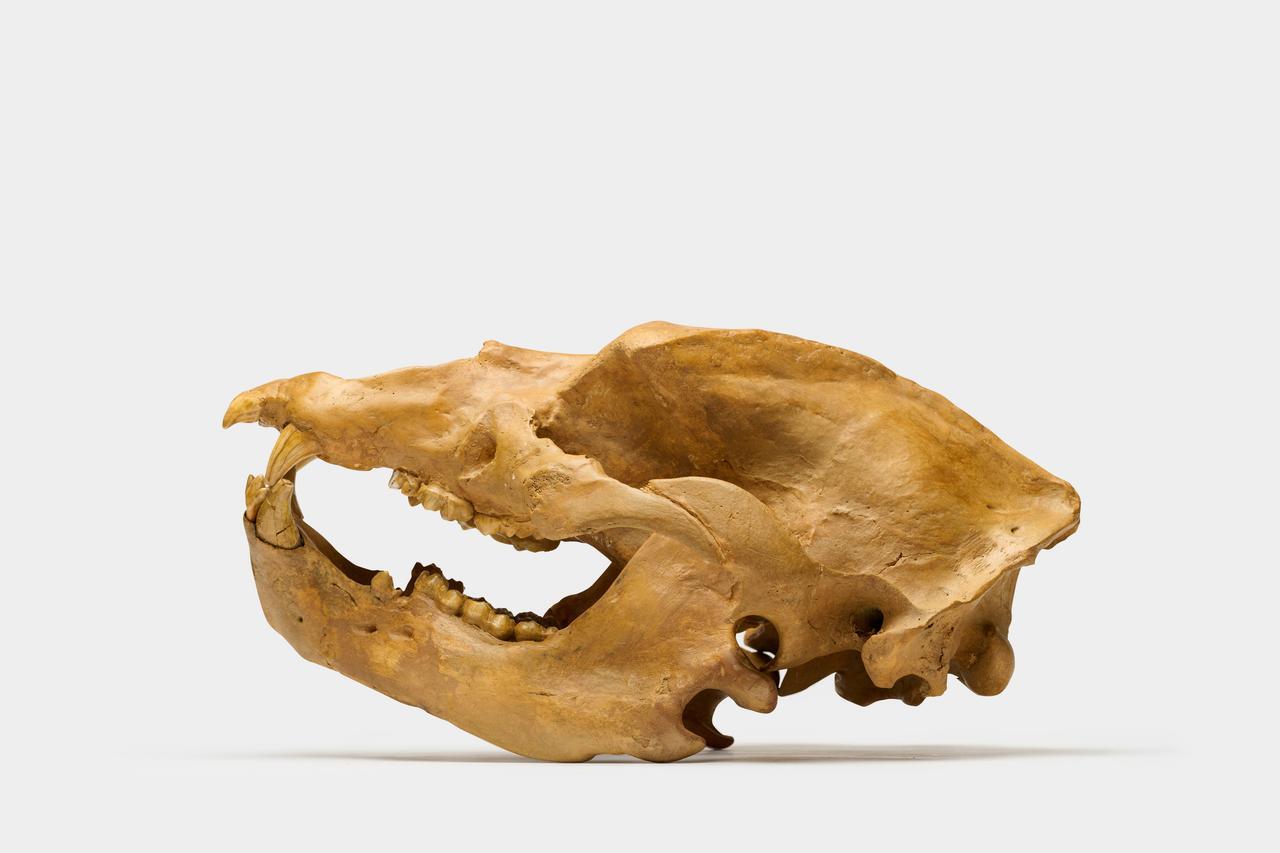
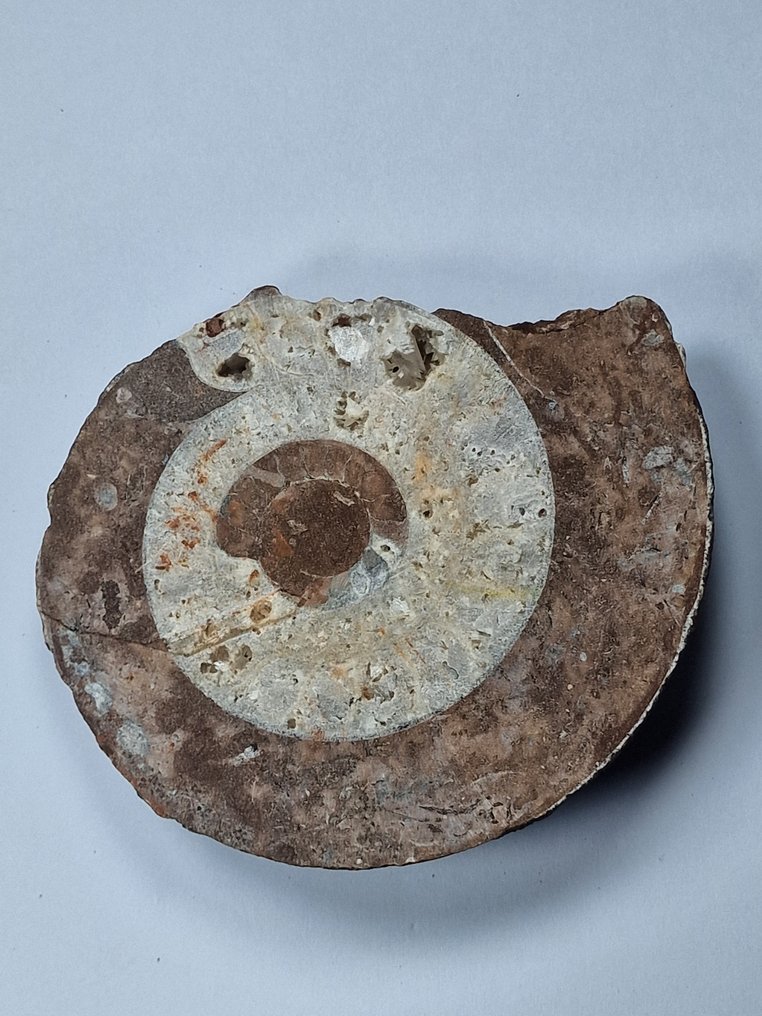
Ammonite - Fossilised shell - Aioloceras (Cleoniceras) sp. - 13.5 cm (No Reserve Price)


05
days
08
hours
54
minutes
29
seconds

No bids placed
Catawiki Buyer Protection
Your payment’s safe with us until you receive your object.View details
Trustpilot 4.4 | 121798 reviews
Rated Excellent on Trustpilot.
Aioloceras (Cleoniceras) sp., an Ammonite specimen from Madagascar, from the Lower Cretaceous (about 145–100.5 Ma), in natural condition with polished treatment and a height of 13.5 cm.
AI-assisted summary
Description from the seller
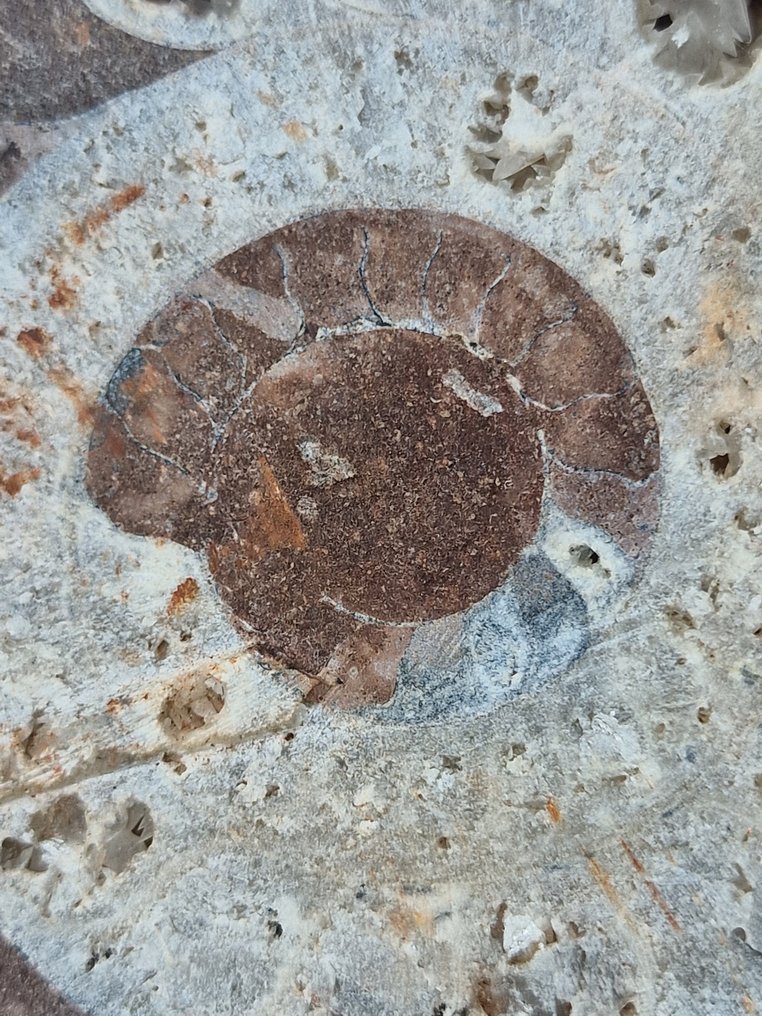
This is a thick, 13cm wide cut and polished Phylloceras ammonite from Mahajanga Province, Madagascar. It has been agate replaced, and many of the internal chambers are lined with calcite crystals. Exhibitor stands included.
This is an extinct cephalopod mollusc belonging to the ammonites. It lived in the Upper Jurassic (172-149 million years ago), and its fossil remains are found on all continents.
These are marine animals, characterized by an external shell composed mainly of calcium carbonate, in the form of aragonite, and partly of an organic substance of a protein nature (conchiolin). The shell was internally divided by septa into several chambers, of which the mollusc occupied only the last (living chamber). The others, which made up the phragmocone (chambered part of the shell), were used as "air chambers" (similarly to the current Nautilus), filled with gas and chamber liquid to control the buoyancy of the organism. The pressure of the chamber fluids was controlled by a thin, richly vascularized, partly mineralized tubular organic structure (the siphon), which passed through all the septa and allowed the exchange of fluids from the blood and soft tissues of the animal to the chambers through a process of osmosis.
This is a thick, 13cm wide cut and polished Phylloceras ammonite from Mahajanga Province, Madagascar. It has been agate replaced, and many of the internal chambers are lined with calcite crystals. Exhibitor stands included.
This is an extinct cephalopod mollusc belonging to the ammonites. It lived in the Upper Jurassic (172-149 million years ago), and its fossil remains are found on all continents.
These are marine animals, characterized by an external shell composed mainly of calcium carbonate, in the form of aragonite, and partly of an organic substance of a protein nature (conchiolin). The shell was internally divided by septa into several chambers, of which the mollusc occupied only the last (living chamber). The others, which made up the phragmocone (chambered part of the shell), were used as "air chambers" (similarly to the current Nautilus), filled with gas and chamber liquid to control the buoyancy of the organism. The pressure of the chamber fluids was controlled by a thin, richly vascularized, partly mineralized tubular organic structure (the siphon), which passed through all the septa and allowed the exchange of fluids from the blood and soft tissues of the animal to the chambers through a process of osmosis.
Details
Specimen
Ammonite
Scientific name
Aioloceras (Cleoniceras) sp.
Country of Origin
Madagascar
Geological Period
Cretaceous, Lower (145 - 100.5 million years)
Condition
Natural
Treatment
Polished
Height
13.5 cm
Sold by