Alice A. Bailey - Lot with 14 books - 1950-1980


Opens 11:00
Starting bid
€ 1
Add to your favourites to get an alert when the auction starts.

Expert
Selected by Zena Chiara Masud
Holds a master’s degree in bibliography, with seven years of experience specialising in incunabula and Arabic manuscripts.
Estimate € 200 - € 250
Catawiki Buyer Protection
Your payment’s safe with us until you receive your object.View details
Trustpilot 4.4 | 121798 reviews
Rated Excellent on Trustpilot.
Description from the seller
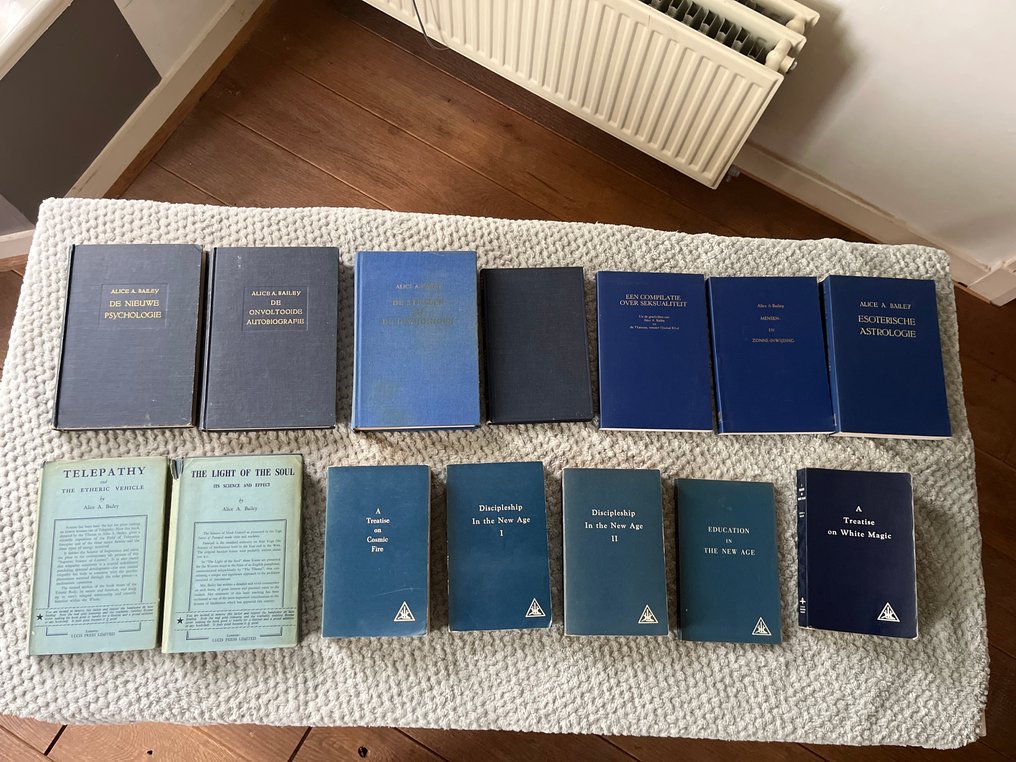
This is a very beautiful collection of books by the world-renowned author Alice A. Bailey.
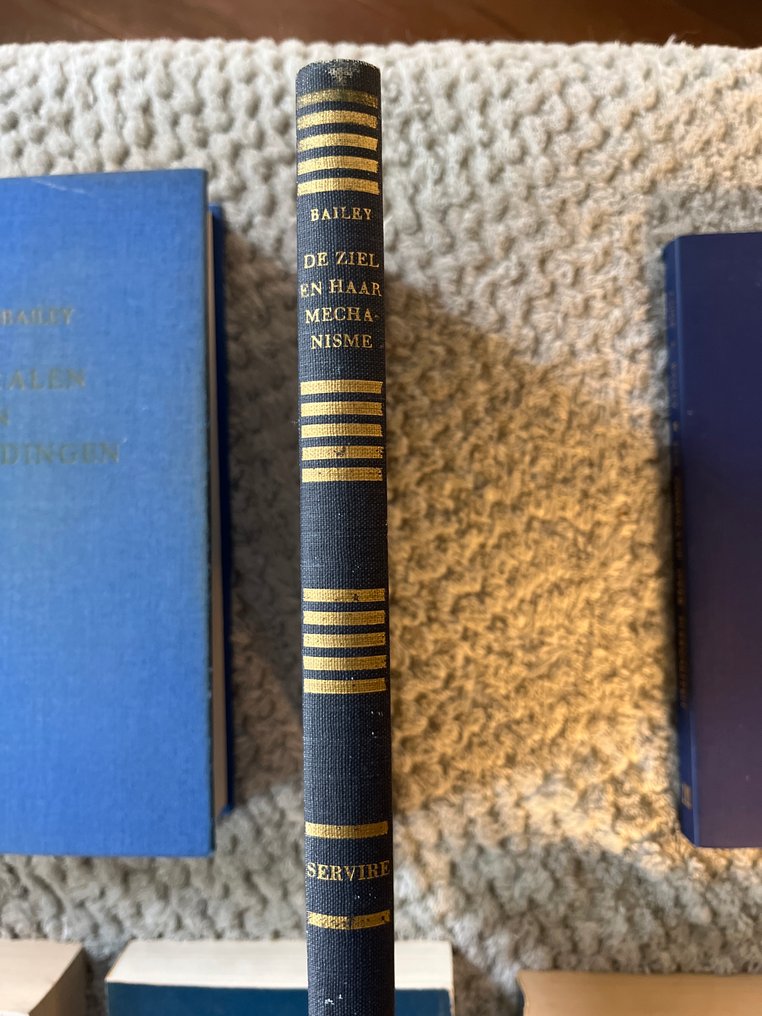
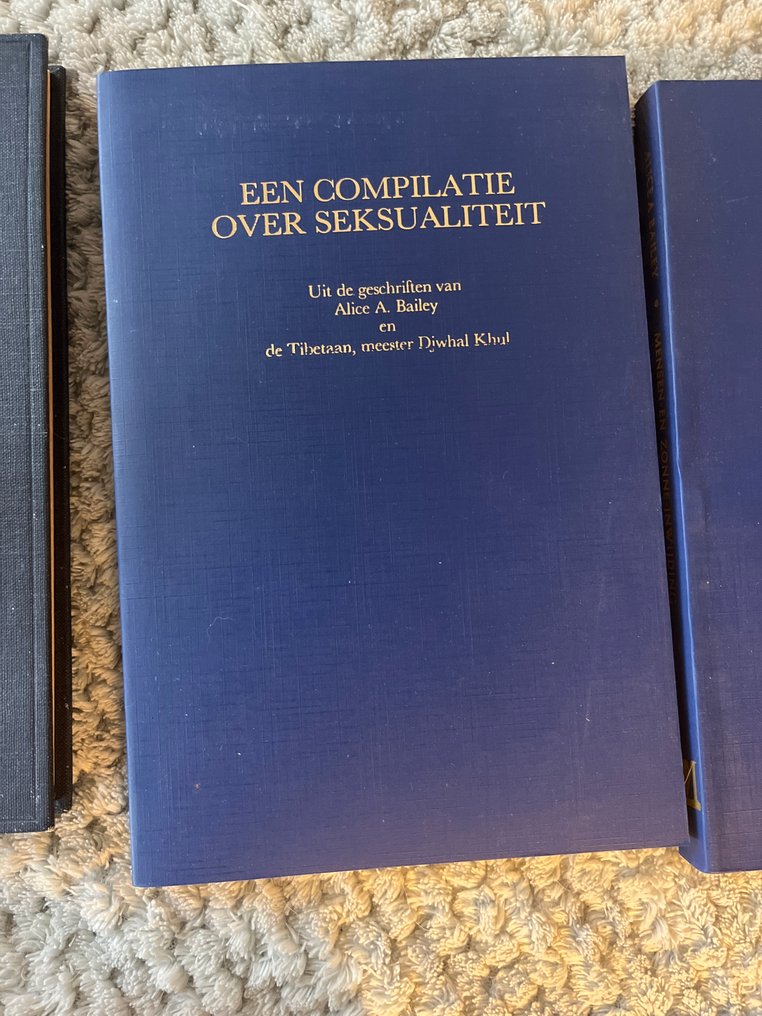
The collection consists of 7 books in Dutch, of which 4 are hardcover and 3 are soft covers.
Seven books in English, of which two are hardcovers and five are softcovers.
Alice Ann Bailey, born as Alice La Trobe Bateman (June 16, 1880 – December 15, 1949), was a British writer. She is regarded by her followers as the successor to the work of theosophist Helena Petrovna Blavatsky.
Bailey was born as Alice La Trobe-Bateman in Manchester into a well-off middle-class family and received a solid Christian upbringing as a member of the Anglican Church. At the age of 15, on June 30, 1895, she was approached by a strange, tall man dressed in European clothing but wearing a turban on his head, who advised her to focus on self-control and to prepare for future work. At 22, Bailey engaged in evangelical work for the YMCA and the British Army, which took her to India. There, in 1907, she met her husband Walter Evans, who served in the British Army. Together, they moved to America, where Evans became a priest in the Episcopal Church. However, the marriage did not last, and Bailey filed for divorce. In 1915, she left with her three daughters Dorothy, Mildred, and Ellison. A difficult period followed, during which she supported herself by working in a sardine factory. It was then that she discovered the Theosophical Society and the work of H.P. Blavatsky.
In 1917, she became involved with the T.S. (Theosophical Society), and in 1918, she became a member of the E.S. (Esoteric Section) of the American branch of the Adyar association. In 1895, four years after Blavatsky's death, the Theosophical Society had already split between the two leaders, Annie Besant and William Quan Judge, both of whom still claimed to be in contact with the Masters. Besant was influenced by Charles Webster Leadbeater, who introduced ideas such as the imminent return of Christ. Bailey would later build upon this. Bailey moved to Krotona in Hollywood and became editor of the magazine The Messenger. In 1919, Foster Bailey (1888-1977) became the national secretary of the Adyar T.S., and they married on March 14, 1921, in Manhattan, New York. Foster Bailey was initiated into the Charles W. Moore Lodge of Freemasonry in Fitchburg, Massachusetts, in 1913, where he would ascend to the 33rd degree (Sovereign Grand Inspector General). He wrote in 1957 The Spirit of Freemasonry. Together, they opposed Besant's 'neo-theosophy', which diverged from Blavatsky's theosophy in several ideas. Bailey wrote her first book, which she claimed to have received from 'the Tibetan'. Besant doubted whether Bailey was truly in contact with the Tibetan and expelled the Baileys from the organization. Bailey participated in and took leadership of the 'Back to Blavatsky' movement. They founded the Lucis Trust in 1922. Nevertheless, Bailey continued to build upon ideas from Besant's/Leadbeater's neo-theosophy.
Her followers see her as a channel of what they call the Hierarchy of Masters, particularly of Master Djwhal Khul. Between 1919 and her death in 1949, she wrote 24 books with esoteric content, mainly related to the development of the soul and service to humanity. She herself stated that the texts of the majority of these books were telepathically dictated to her by Djwhal Khul.
To this end, she founded an organization, the Lucis Trust, which is active in all countries and recognized by the United Nations as a non-governmental organization (NGO): In addition to her task of disseminating Alice Bailey's 24 books in as many languages and countries as possible, the Lucis Trust consists of three major departments:
De Arcane School (training of students into discipleship and thus more useful for the Hierarchy).
World Good Will (development of the WGW program in various units of service).
Triangles (a worldwide meditation network accessible to everyone, consisting of triangles made up of three people).
After her death in 1949, her husband Foster Bailey continued the Arcane School.
This is a very beautiful collection of books by the world-renowned author Alice A. Bailey.
The collection consists of 7 books in Dutch, of which 4 are hardcover and 3 are soft covers.
Seven books in English, of which two are hardcovers and five are softcovers.
Alice Ann Bailey, born as Alice La Trobe Bateman (June 16, 1880 – December 15, 1949), was a British writer. She is regarded by her followers as the successor to the work of theosophist Helena Petrovna Blavatsky.
Bailey was born as Alice La Trobe-Bateman in Manchester into a well-off middle-class family and received a solid Christian upbringing as a member of the Anglican Church. At the age of 15, on June 30, 1895, she was approached by a strange, tall man dressed in European clothing but wearing a turban on his head, who advised her to focus on self-control and to prepare for future work. At 22, Bailey engaged in evangelical work for the YMCA and the British Army, which took her to India. There, in 1907, she met her husband Walter Evans, who served in the British Army. Together, they moved to America, where Evans became a priest in the Episcopal Church. However, the marriage did not last, and Bailey filed for divorce. In 1915, she left with her three daughters Dorothy, Mildred, and Ellison. A difficult period followed, during which she supported herself by working in a sardine factory. It was then that she discovered the Theosophical Society and the work of H.P. Blavatsky.
In 1917, she became involved with the T.S. (Theosophical Society), and in 1918, she became a member of the E.S. (Esoteric Section) of the American branch of the Adyar association. In 1895, four years after Blavatsky's death, the Theosophical Society had already split between the two leaders, Annie Besant and William Quan Judge, both of whom still claimed to be in contact with the Masters. Besant was influenced by Charles Webster Leadbeater, who introduced ideas such as the imminent return of Christ. Bailey would later build upon this. Bailey moved to Krotona in Hollywood and became editor of the magazine The Messenger. In 1919, Foster Bailey (1888-1977) became the national secretary of the Adyar T.S., and they married on March 14, 1921, in Manhattan, New York. Foster Bailey was initiated into the Charles W. Moore Lodge of Freemasonry in Fitchburg, Massachusetts, in 1913, where he would ascend to the 33rd degree (Sovereign Grand Inspector General). He wrote in 1957 The Spirit of Freemasonry. Together, they opposed Besant's 'neo-theosophy', which diverged from Blavatsky's theosophy in several ideas. Bailey wrote her first book, which she claimed to have received from 'the Tibetan'. Besant doubted whether Bailey was truly in contact with the Tibetan and expelled the Baileys from the organization. Bailey participated in and took leadership of the 'Back to Blavatsky' movement. They founded the Lucis Trust in 1922. Nevertheless, Bailey continued to build upon ideas from Besant's/Leadbeater's neo-theosophy.
Her followers see her as a channel of what they call the Hierarchy of Masters, particularly of Master Djwhal Khul. Between 1919 and her death in 1949, she wrote 24 books with esoteric content, mainly related to the development of the soul and service to humanity. She herself stated that the texts of the majority of these books were telepathically dictated to her by Djwhal Khul.
To this end, she founded an organization, the Lucis Trust, which is active in all countries and recognized by the United Nations as a non-governmental organization (NGO): In addition to her task of disseminating Alice Bailey's 24 books in as many languages and countries as possible, the Lucis Trust consists of three major departments:
De Arcane School (training of students into discipleship and thus more useful for the Hierarchy).
World Good Will (development of the WGW program in various units of service).
Triangles (a worldwide meditation network accessible to everyone, consisting of triangles made up of three people).
After her death in 1949, her husband Foster Bailey continued the Arcane School.
Details
Number of Books
14
Subject
Astrology
Book Title
Lot with 14 books
Author/ Illustrator
Alice A. Bailey
Condition
Good
Publication year oldest item
1950
Publication year youngest item
1980
Edition
Multiple Books / Editions
Language
Dutch, English
Original language
Yes
Publisher
Lucis publishing company/ servire/ mirananda
Binding/ Material
Mix / Multiple
Number of pages
6799
Sold by
