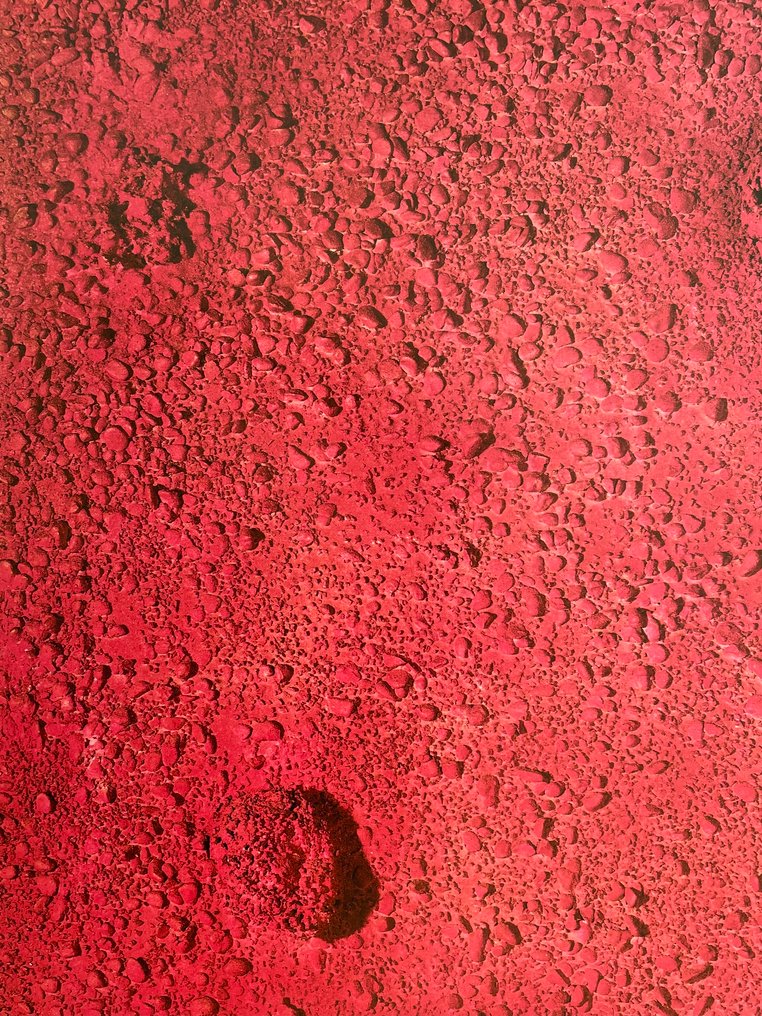
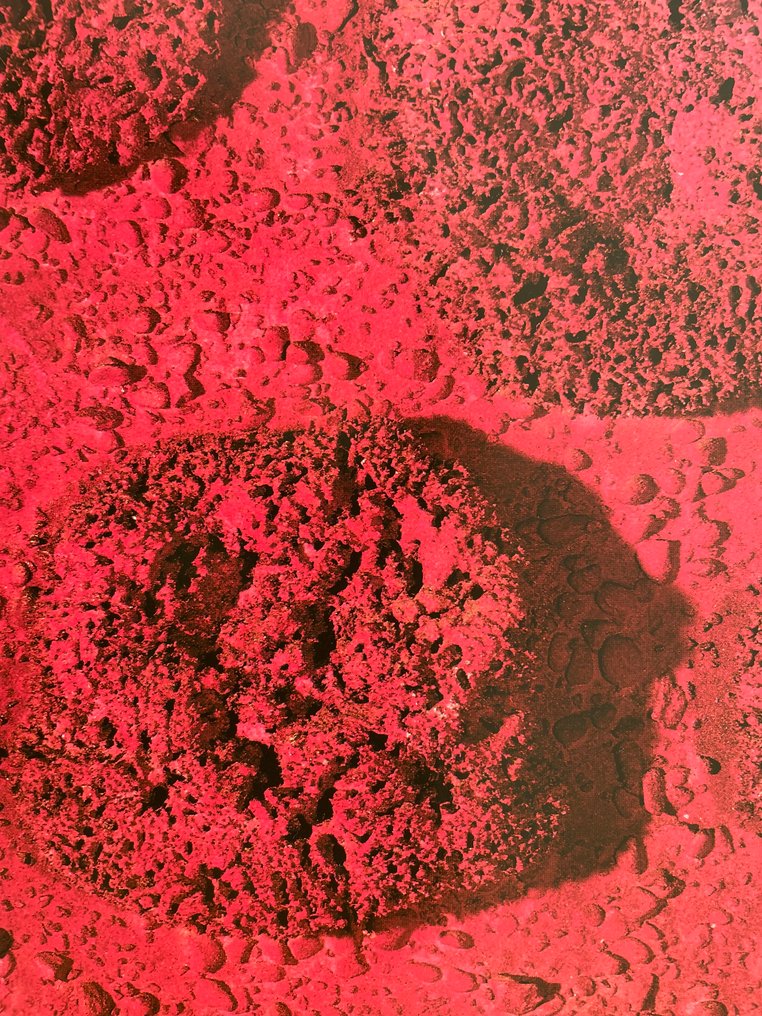
Yves Klein (after) - RE 26 - Offset Lithography - Achenbach licensed print 1994


07
days
11
hours
40
minutes
36
seconds
Starting bid
€ 1
Reserve price not met

Expert
Selected by Juan Antonio Rodríguez
Eight years experience valuing posters, previously valuer at Balclis, Barcelona.
Estimate € 150 - € 200
No bids placed
Catawiki Buyer Protection
Your payment’s safe with us until you receive your object.View details
Trustpilot 4.4 | 122115 reviews
Rated Excellent on Trustpilot.
Description from the seller
Offset lithograph after Yves Klein (*)
Reproduction of the work “RE 26” created by Yves Klein in 1960.
Luxury edition on high-quality satin-finish thick paper (250g).
Published by Achenbach Art Edition, Düsseldorf.
Authorized print with copyright
Large Format.
Sheet dimensions: 70.5 x 90 cm
Year: 1994
Condition: Excellent (this work has never been framed or exhibited, always stored in a professional art folder, and is therefore in perfect condition).
Provenance: Private collection.
The artwork will be carefully handled and packaged in a reinforced cardboard box. The shipment will be certified with a tracking number.
The shipment will also include transport insurance for the final value of the work with full reimbursement in case of loss or damage, at no cost to the buyer.
Paul Klee is a very difficult artist to categorize, impossible to assign to any clear trend or specific school. During his youth, he was close to the intellectual atmosphere of German Expressionism, and his later work sometimes approached geometric abstraction and other times Surrealism.
He was born near Bern into a family of musicians, and music was fundamental to both his life and his work. He trained as an artist in Munich, where he was associated with the Der Blaue Reiter (The Blue Rider) group, along with Wassily Kandinsky, Franz Marc, August Macke, and Alexej Jawlensky. In this city, then one of the most progressive artistic centers, his interest in the international avant-garde began, leading him to make the obligatory visit to Paris, where he was particularly impressed by the work of Robert Delaunay. In 1914, he traveled to Tunisia with Macke and Louis Moilliet. There, the light of North Africa led him to discover color, which would from then on be the principal motif of his artistic explorations. During the war, he was drafted, but continued to paint (especially watercolors) in a luminous style with a certain expressionist air. Between 1921 and 1931, he was a professor at the Bauhaus, first in Weimar and later in Dessau. These were the most fruitful years of his artistic career, when his pictorial language was definitively consolidated and his work began to be recognized. Despite his independent spirit, the constructive tone of the Bauhaus was noticeable in his artistic output, especially during the Dessau period. In 1928, he traveled to Egypt, where the landscape there inspired his striated compositions, related to his theory of horizontal and vertical structures, and influenced the incorporation of hieroglyphs and inscriptions into his painting. From 1931 to 1933, he lived in Düsseldorf, where he worked as a professor at the Akademie. After the rise of Nazism and the declaration of his art as degenerate, he had to leave Germany and return to Bern, where he spent the last years of his life. Despite his pessimism and physical weakness, the result of a serious illness he suffered in 1935, this final period was marked by unprecedented creative intensity. Then, perhaps more than ever, his painting achieved a perfect unity between life and art.
Seller's Story
EsKobARTE carefully selects artworks and posters from recognized and emerging artists worldwide to offer them here at affordable prices.*** AUTHENTIC WORKS *** We only sell genuine artworks and posters, as well as officially authorized prints.*** WE ARE PROFESSIONALS *** You can bid on your items with complete confidence. Over 1,000 positive reviews from our clients attest to our experience and professionalism on Catawiki.*** PROTECTED, CERTIFIED, AND INSURED SHIPPING *** All our items are carefully packaged in eco-friendly cardboard packaging. We work with the best shipping companies (UPS-DPD-DHL-FEDEX) to ensure the best service and tracking. Additionally, our shipments include insurance against damage or loss at no cost to the buyer.*** IF YOU PURCHASE MORE THAN ONE ITEM, WE COMBINE SHIPPING *** Even if they come from different auctions, you'll only have to pay the shipping cost for a single item.*** ANY QUESTIONS? CONTACT US *** You can use the chat to talk to us; we will be happy to assist you as soon as possible.*** THANK YOU AND GOOD LUCK WITH YOUR BIDS! ***
Translated by Google TranslateOffset lithograph after Yves Klein (*)
Reproduction of the work “RE 26” created by Yves Klein in 1960.
Luxury edition on high-quality satin-finish thick paper (250g).
Published by Achenbach Art Edition, Düsseldorf.
Authorized print with copyright
Large Format.
Sheet dimensions: 70.5 x 90 cm
Year: 1994
Condition: Excellent (this work has never been framed or exhibited, always stored in a professional art folder, and is therefore in perfect condition).
Provenance: Private collection.
The artwork will be carefully handled and packaged in a reinforced cardboard box. The shipment will be certified with a tracking number.
The shipment will also include transport insurance for the final value of the work with full reimbursement in case of loss or damage, at no cost to the buyer.
Paul Klee is a very difficult artist to categorize, impossible to assign to any clear trend or specific school. During his youth, he was close to the intellectual atmosphere of German Expressionism, and his later work sometimes approached geometric abstraction and other times Surrealism.
He was born near Bern into a family of musicians, and music was fundamental to both his life and his work. He trained as an artist in Munich, where he was associated with the Der Blaue Reiter (The Blue Rider) group, along with Wassily Kandinsky, Franz Marc, August Macke, and Alexej Jawlensky. In this city, then one of the most progressive artistic centers, his interest in the international avant-garde began, leading him to make the obligatory visit to Paris, where he was particularly impressed by the work of Robert Delaunay. In 1914, he traveled to Tunisia with Macke and Louis Moilliet. There, the light of North Africa led him to discover color, which would from then on be the principal motif of his artistic explorations. During the war, he was drafted, but continued to paint (especially watercolors) in a luminous style with a certain expressionist air. Between 1921 and 1931, he was a professor at the Bauhaus, first in Weimar and later in Dessau. These were the most fruitful years of his artistic career, when his pictorial language was definitively consolidated and his work began to be recognized. Despite his independent spirit, the constructive tone of the Bauhaus was noticeable in his artistic output, especially during the Dessau period. In 1928, he traveled to Egypt, where the landscape there inspired his striated compositions, related to his theory of horizontal and vertical structures, and influenced the incorporation of hieroglyphs and inscriptions into his painting. From 1931 to 1933, he lived in Düsseldorf, where he worked as a professor at the Akademie. After the rise of Nazism and the declaration of his art as degenerate, he had to leave Germany and return to Bern, where he spent the last years of his life. Despite his pessimism and physical weakness, the result of a serious illness he suffered in 1935, this final period was marked by unprecedented creative intensity. Then, perhaps more than ever, his painting achieved a perfect unity between life and art.
Seller's Story
EsKobARTE carefully selects artworks and posters from recognized and emerging artists worldwide to offer them here at affordable prices.*** AUTHENTIC WORKS *** We only sell genuine artworks and posters, as well as officially authorized prints.*** WE ARE PROFESSIONALS *** You can bid on your items with complete confidence. Over 1,000 positive reviews from our clients attest to our experience and professionalism on Catawiki.*** PROTECTED, CERTIFIED, AND INSURED SHIPPING *** All our items are carefully packaged in eco-friendly cardboard packaging. We work with the best shipping companies (UPS-DPD-DHL-FEDEX) to ensure the best service and tracking. Additionally, our shipments include insurance against damage or loss at no cost to the buyer.*** IF YOU PURCHASE MORE THAN ONE ITEM, WE COMBINE SHIPPING *** Even if they come from different auctions, you'll only have to pay the shipping cost for a single item.*** ANY QUESTIONS? CONTACT US *** You can use the chat to talk to us; we will be happy to assist you as soon as possible.*** THANK YOU AND GOOD LUCK WITH YOUR BIDS! ***
Translated by Google TranslateDetails
Era
1900-2000
Designer/Artist
Yves Klein (after)
Poster title
RE 26 - Offset Lithography - Achenbach licensed print 1994
Subject
Art
Country of Origin
Germany
Condition
A (excellent - mint condition)
Height
91 cm
Width
70 cm