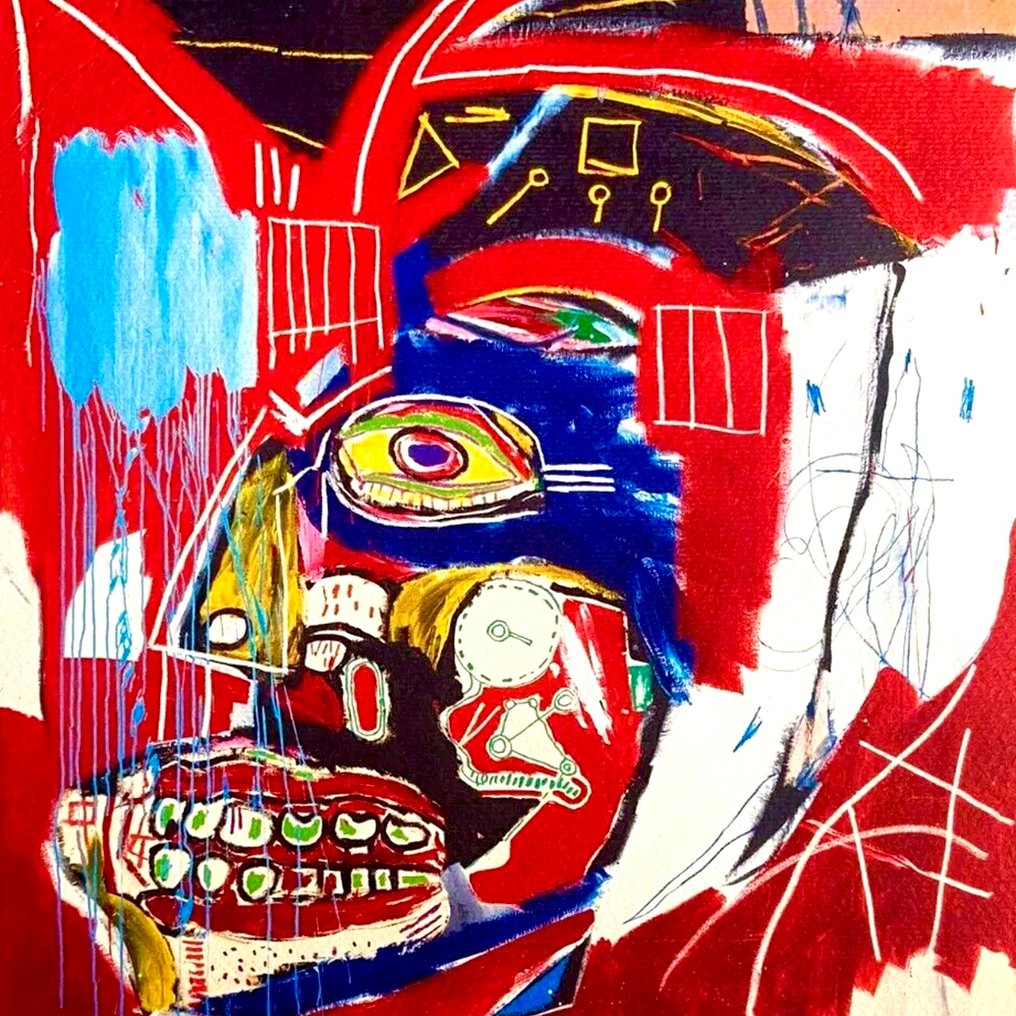
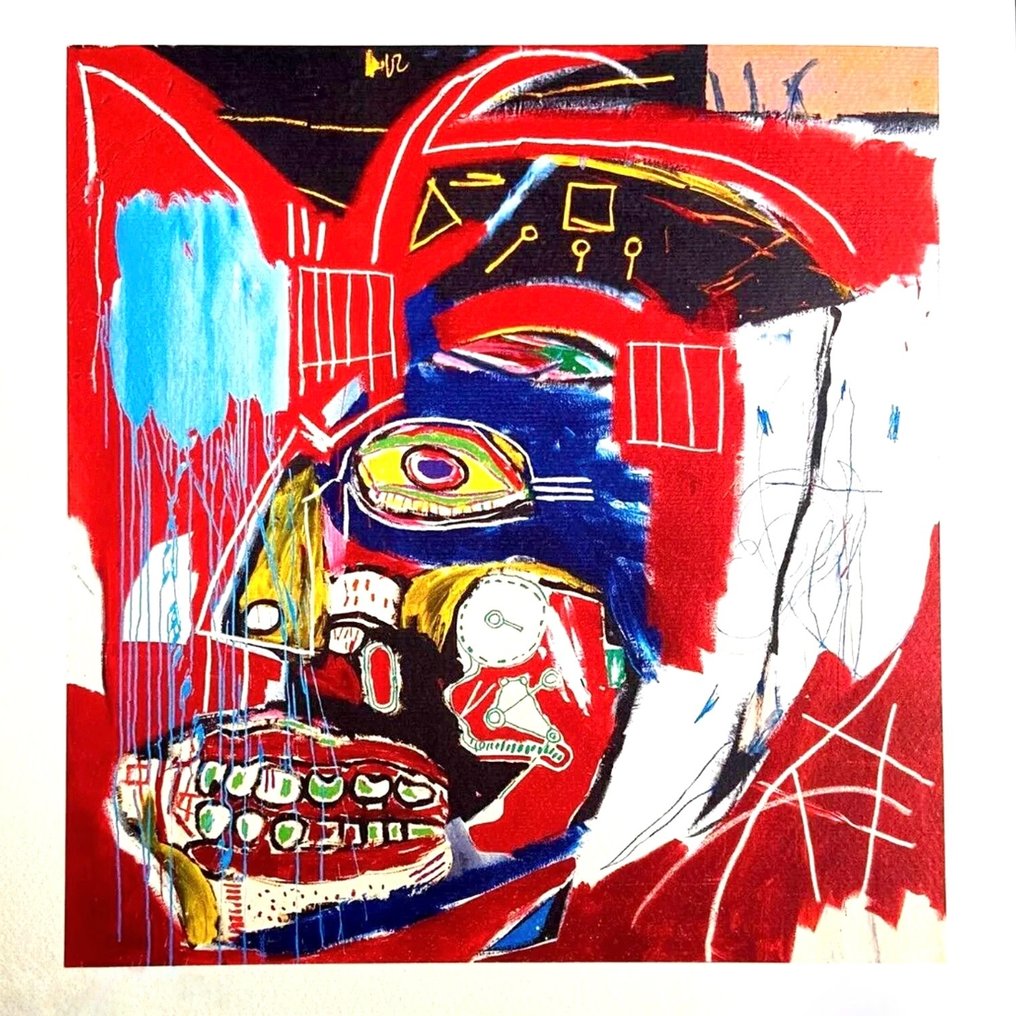
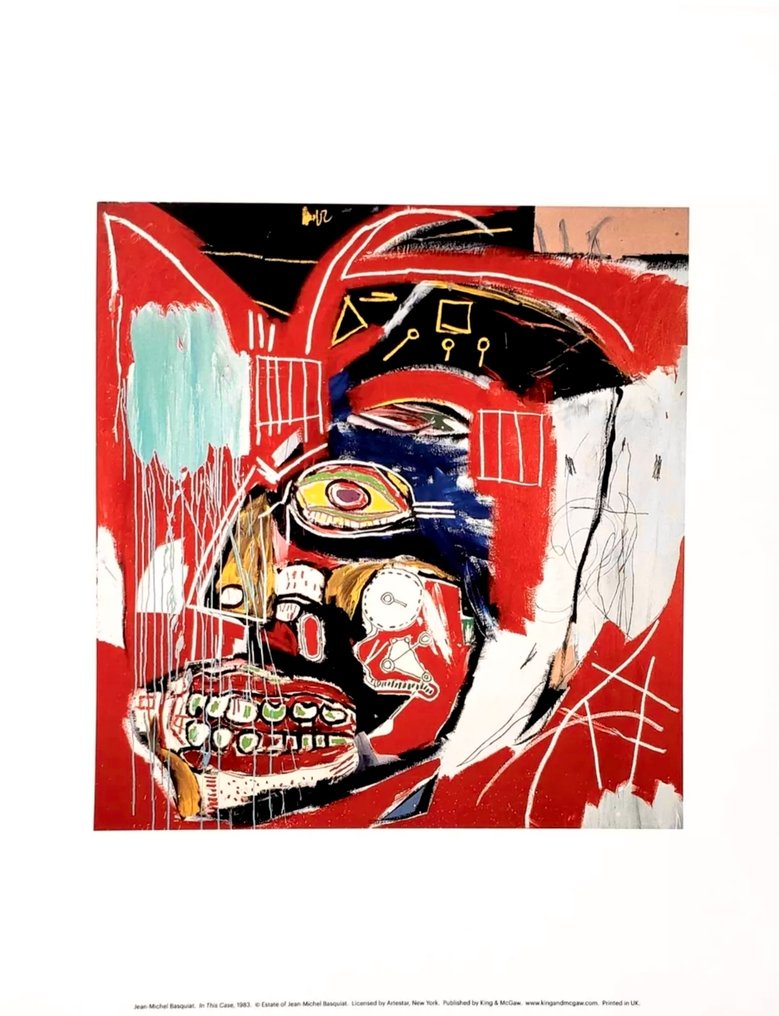
Jean-Michel Basquiat (1960-1988) - In This Case - Artestar licensed print - COA
02
days
15
hours
08
minutes
46
seconds
Current bid
€ 90
Reserve price met

Expert
Selected by Juan Antonio Rodríguez
Eight years experience valuing posters, previously valuer at Balclis, Barcelona.
Estimate € 150 - € 200
20 other people are watching this object
 Bidder 2094 Bidder 2094 | €90 | |
|---|---|---|
 Bidder 8053 Bidder 8053 | €85 | |
 Bidder 7755 Bidder 7755 | €80 | |
Catawiki Buyer Protection
Your payment’s safe with us until you receive your object.View details
Trustpilot 4.4 | 122115 reviews
Rated Excellent on Trustpilot.
Description from the seller
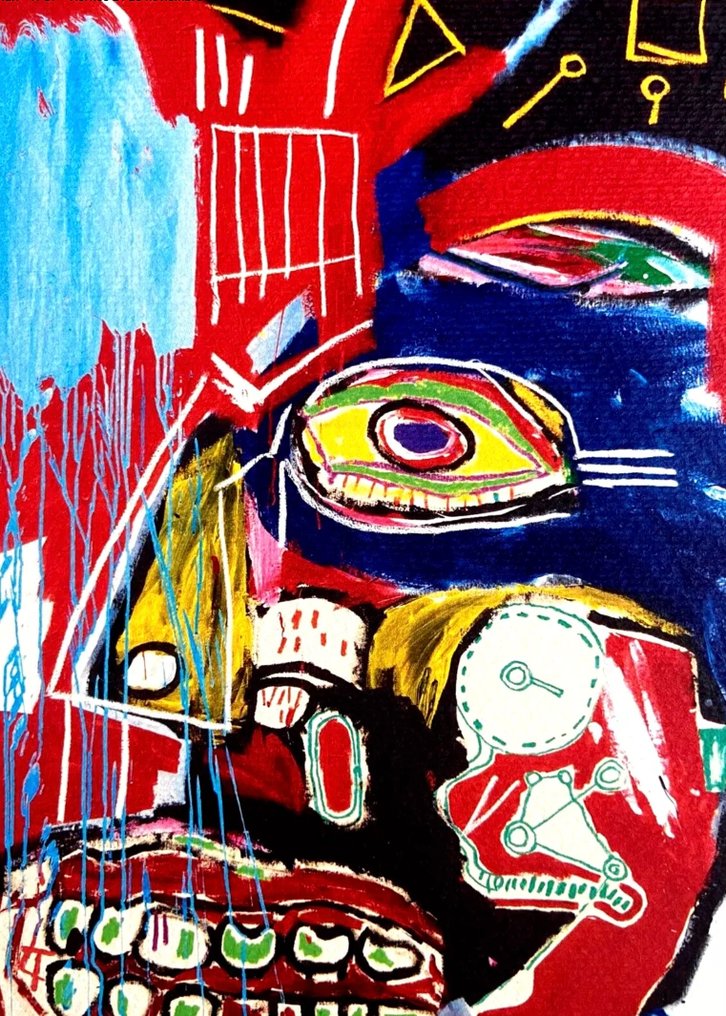
Photolithograph by Jean-Michel Basquiat (*)
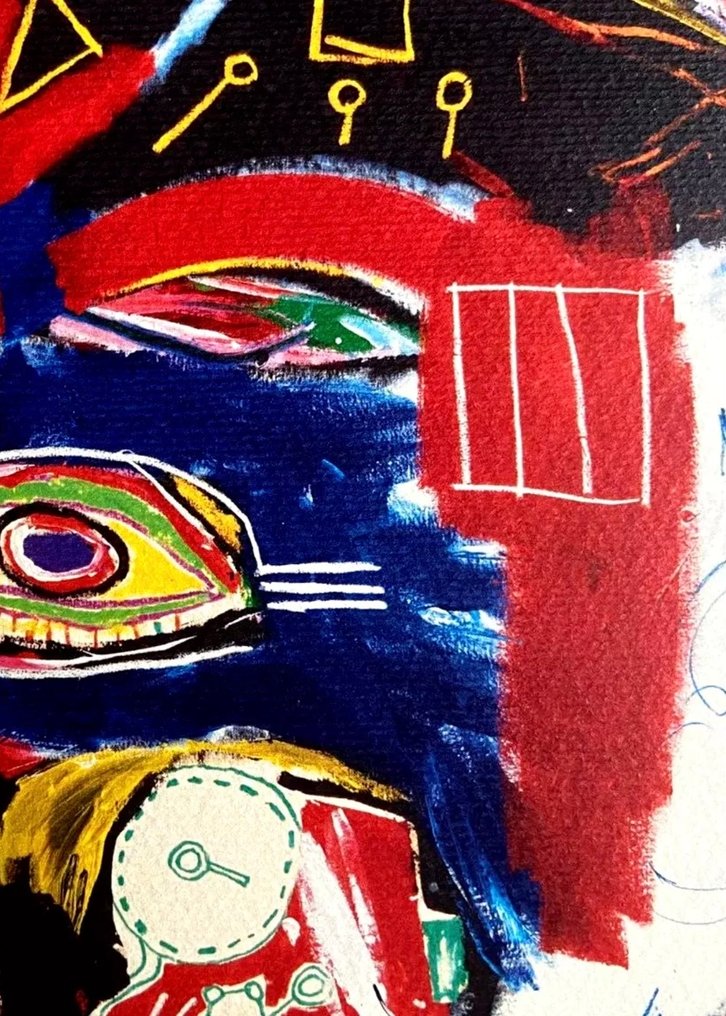
Reproduction of the work “In This Case” (**) work created by Basquiat in 1983.
Deluxe edition on high grammage Monte Carlo watercolor paper (300 g/m2)
Printed by Artestar New York
Copyright of the Estate of Jean-Michel Basquiat.
Includes Certificate of Authenticity (COA).
Specifications
- Stand dimensions: 50 x 48 cm
- Stain dimensions: 40 x 38 cm
Condition: Excellent (this artwork has never been framed or displayed, and has always been stored in a professional art folder, so it is in perfect condition).
The artwork will be carefully handled and packaged in a reinforced flat cardboard box. Shipping will be certified with a tracking number and handled by top-tier shipping companies (UPS/DPD/DHL/FedEx).
The shipment will also include full insurance for the final value of the work with full reimbursement in case of loss or damage, at no cost to the buyer.
(*) Jean-Michel Basquiat was the first of three children born to Matilde Andrades and Gerard Basquiat. His father was a Haitian accountant of considerable means, and his mother a highly respected Puerto Rican graphic designer. Jean-Michel grew up in a troubled family environment; his parents divorced, and as a result, he had to change schools many times. He studied at a private Catholic school, then at a public school, and finally, at age 16, he enrolled at City-As-School, a school for gifted teenagers, from which he was expelled for rebellious behavior a year before graduating.
Even in his youth, he came into contact with the big-city subculture associated with drug use and street gangs. In 1977, along with Al Díaz, he entered the world of graffiti, painting on subway cars and in the SoHo area, a New York neighborhood where art galleries abound.
The following year, he dropped out of school a year before graduating high school and left home to live on the streets for two years, in abandoned buildings or with friends in Lower Manhattan, surviving by selling postcards and T-shirts that he decorated himself. He continued to dedicate himself to graffiti; his paintings and writings were highly poetic and philosophical, but above all, satirical. The pseudonym of his alter ego, shared with Al Díaz, was SAMO (an acronym for "Same Old Shit"), which they both used to sign their tags and graffiti with cryptic messages. The use of this name was decisive in his life.
These murals bore inscriptions such as “SAMO saves idiots” or “SAMO puts an end to religious brainwashing, the politics of nothingness, and false philosophy.” An article about SAMO’s street writing published in The Village Voice was the first indication that the art world was taking an interest in him.
The artist had several relationships that influenced his work, one of the most significant being with the artist Andy Warhol.
In his love life, he was involved with several women, one of the most well-known being Madonna. They lived in Lower Manhattan at the time, and it was in 1982 that they began spending more time together and going to parties in galleries. One thing that united them, she mentioned in an interview, was that "I was a big fan of Miles Davis and Charlie Parker."
In 1988, exhibitions were held in Paris and New York, and in April of that year, he attempted to overcome his addictions and retreated to his home in Hawaii. He returned to New York in June, announcing his liberation from addiction, but on August 12, 1988, at the age of 27, he died of a heroin overdose, becoming the most successful visual artist in the history of African American art. He is buried in Green-Wood Cemetery in Brooklyn.
Throughout his brief but intense artistic career, he held more than 40 solo exhibitions and participated in around 100 group shows. Self-promotion and publicity were paramount for Basquiat, as they had been previously for Andy Warhol and Julian Schnabel.
Neo-expressionism gradually prevailed over appropriationism, partly due to the economic boom that drove art prices, especially for paintings, to soaring levels, and partly thanks to the support of gallery owners and collectors. Critical assessment, however, was not unanimous, and the lack of a theoretical foundation for the neo-expressionist discourse was frequently denounced. It was argued that the art practiced by the neo-expressionists lacked any political or social significance; it was merely a commodity and, therefore, subject to the whims and fluctuations of the market. Neo-expressionist painting was thus reduced to a consumer product and, as such, considered creatively disqualified and vulgar.
(**) No theme is more powerful or more coveted in the work of Jean-Michel Basquiat (1960-1988) than the singular skull. For this enigmatic artist, the human head was more than an obsession. As the title of “In This Case” (1983) suggests, the head is a box or cage that houses a toothed machine brimming with impulses and ideas.
This work is among Basquiat's greatest achievements: a cranial abyss into which the artist has poured the contents of his visual imagination, fusing centuries of stylistic influence.
“In This Case” is one of only three monumental skulls that Basquiat painted. The pictorial intensity and immediacy present in this work are unparalleled in Basquiat's oeuvre.
#freeshipping #freeshipping #freeshipping
Seller's Story
EsKobARTE carefully selects artworks and posters from recognized and emerging artists worldwide to offer them here at affordable prices.*** AUTHENTIC WORKS *** We only sell genuine artworks and posters, as well as officially authorized prints.*** WE ARE PROFESSIONALS *** You can bid on your items with complete confidence. Over 1,000 positive reviews from our clients attest to our experience and professionalism on Catawiki.*** PROTECTED, CERTIFIED, AND INSURED SHIPPING *** All our items are carefully packaged in eco-friendly cardboard packaging. We work with the best shipping companies (UPS-DPD-DHL-FEDEX) to ensure the best service and tracking. Additionally, our shipments include insurance against damage or loss at no cost to the buyer.*** IF YOU PURCHASE MORE THAN ONE ITEM, WE COMBINE SHIPPING *** Even if they come from different auctions, you'll only have to pay the shipping cost for a single item.*** ANY QUESTIONS? CONTACT US *** You can use the chat to talk to us; we will be happy to assist you as soon as possible.*** THANK YOU AND GOOD LUCK WITH YOUR BIDS! ***
Translated by Google TranslatePhotolithograph by Jean-Michel Basquiat (*)
Reproduction of the work “In This Case” (**) work created by Basquiat in 1983.
Deluxe edition on high grammage Monte Carlo watercolor paper (300 g/m2)
Printed by Artestar New York
Copyright of the Estate of Jean-Michel Basquiat.
Includes Certificate of Authenticity (COA).
Specifications
- Stand dimensions: 50 x 48 cm
- Stain dimensions: 40 x 38 cm
Condition: Excellent (this artwork has never been framed or displayed, and has always been stored in a professional art folder, so it is in perfect condition).
The artwork will be carefully handled and packaged in a reinforced flat cardboard box. Shipping will be certified with a tracking number and handled by top-tier shipping companies (UPS/DPD/DHL/FedEx).
The shipment will also include full insurance for the final value of the work with full reimbursement in case of loss or damage, at no cost to the buyer.
(*) Jean-Michel Basquiat was the first of three children born to Matilde Andrades and Gerard Basquiat. His father was a Haitian accountant of considerable means, and his mother a highly respected Puerto Rican graphic designer. Jean-Michel grew up in a troubled family environment; his parents divorced, and as a result, he had to change schools many times. He studied at a private Catholic school, then at a public school, and finally, at age 16, he enrolled at City-As-School, a school for gifted teenagers, from which he was expelled for rebellious behavior a year before graduating.
Even in his youth, he came into contact with the big-city subculture associated with drug use and street gangs. In 1977, along with Al Díaz, he entered the world of graffiti, painting on subway cars and in the SoHo area, a New York neighborhood where art galleries abound.
The following year, he dropped out of school a year before graduating high school and left home to live on the streets for two years, in abandoned buildings or with friends in Lower Manhattan, surviving by selling postcards and T-shirts that he decorated himself. He continued to dedicate himself to graffiti; his paintings and writings were highly poetic and philosophical, but above all, satirical. The pseudonym of his alter ego, shared with Al Díaz, was SAMO (an acronym for "Same Old Shit"), which they both used to sign their tags and graffiti with cryptic messages. The use of this name was decisive in his life.
These murals bore inscriptions such as “SAMO saves idiots” or “SAMO puts an end to religious brainwashing, the politics of nothingness, and false philosophy.” An article about SAMO’s street writing published in The Village Voice was the first indication that the art world was taking an interest in him.
The artist had several relationships that influenced his work, one of the most significant being with the artist Andy Warhol.
In his love life, he was involved with several women, one of the most well-known being Madonna. They lived in Lower Manhattan at the time, and it was in 1982 that they began spending more time together and going to parties in galleries. One thing that united them, she mentioned in an interview, was that "I was a big fan of Miles Davis and Charlie Parker."
In 1988, exhibitions were held in Paris and New York, and in April of that year, he attempted to overcome his addictions and retreated to his home in Hawaii. He returned to New York in June, announcing his liberation from addiction, but on August 12, 1988, at the age of 27, he died of a heroin overdose, becoming the most successful visual artist in the history of African American art. He is buried in Green-Wood Cemetery in Brooklyn.
Throughout his brief but intense artistic career, he held more than 40 solo exhibitions and participated in around 100 group shows. Self-promotion and publicity were paramount for Basquiat, as they had been previously for Andy Warhol and Julian Schnabel.
Neo-expressionism gradually prevailed over appropriationism, partly due to the economic boom that drove art prices, especially for paintings, to soaring levels, and partly thanks to the support of gallery owners and collectors. Critical assessment, however, was not unanimous, and the lack of a theoretical foundation for the neo-expressionist discourse was frequently denounced. It was argued that the art practiced by the neo-expressionists lacked any political or social significance; it was merely a commodity and, therefore, subject to the whims and fluctuations of the market. Neo-expressionist painting was thus reduced to a consumer product and, as such, considered creatively disqualified and vulgar.
(**) No theme is more powerful or more coveted in the work of Jean-Michel Basquiat (1960-1988) than the singular skull. For this enigmatic artist, the human head was more than an obsession. As the title of “In This Case” (1983) suggests, the head is a box or cage that houses a toothed machine brimming with impulses and ideas.
This work is among Basquiat's greatest achievements: a cranial abyss into which the artist has poured the contents of his visual imagination, fusing centuries of stylistic influence.
“In This Case” is one of only three monumental skulls that Basquiat painted. The pictorial intensity and immediacy present in this work are unparalleled in Basquiat's oeuvre.
#freeshipping #freeshipping #freeshipping
Seller's Story
EsKobARTE carefully selects artworks and posters from recognized and emerging artists worldwide to offer them here at affordable prices.*** AUTHENTIC WORKS *** We only sell genuine artworks and posters, as well as officially authorized prints.*** WE ARE PROFESSIONALS *** You can bid on your items with complete confidence. Over 1,000 positive reviews from our clients attest to our experience and professionalism on Catawiki.*** PROTECTED, CERTIFIED, AND INSURED SHIPPING *** All our items are carefully packaged in eco-friendly cardboard packaging. We work with the best shipping companies (UPS-DPD-DHL-FEDEX) to ensure the best service and tracking. Additionally, our shipments include insurance against damage or loss at no cost to the buyer.*** IF YOU PURCHASE MORE THAN ONE ITEM, WE COMBINE SHIPPING *** Even if they come from different auctions, you'll only have to pay the shipping cost for a single item.*** ANY QUESTIONS? CONTACT US *** You can use the chat to talk to us; we will be happy to assist you as soon as possible.*** THANK YOU AND GOOD LUCK WITH YOUR BIDS! ***
Translated by Google TranslateDetails
Artist
Jean-Michel Basquiat (1960-1988)
Sold by
Gallery
Edition
Limited edition
Title of artwork
In This Case - Artestar licensed print - COA
Technique
Photolithography
Signature
Not signed
Country of Origin
United Kingdom
Condition
Excellent condition
Height
50 cm
Width
48 cm
Style
Neo-Expressionism
Period
1990-2000
Sold with frame
No