Hermann Conring (1606-1681) - De sanguinis generatione et motu naturali - 1646


02
days
00
hours
40
minutes
59
seconds
Current bid
€ 365
No reserve price

Expert
Selected by Volker Riepenhausen
Specialist in travel literature and pre-1600 rare prints with 28 years experience.
Estimate € 200 - € 250
10 other people are watching this object
 Bidder 6335 Bidder 6335 | €365 | |
|---|---|---|
 Bidder 2401 Bidder 2401 | €345 | |
| Bidder 6335 | €325 | |
Catawiki Buyer Protection
Your payment’s safe with us until you receive your object.View details
Trustpilot 4.4 | 121980 reviews
Rated Excellent on Trustpilot.
First edition of Hermann Conring’s De sanguinis generatione et motu naturali, a landmark Latin medical treatise defending Harvey and exploring fermentation in a vellum binding.
AI-assisted summary
Description from the seller
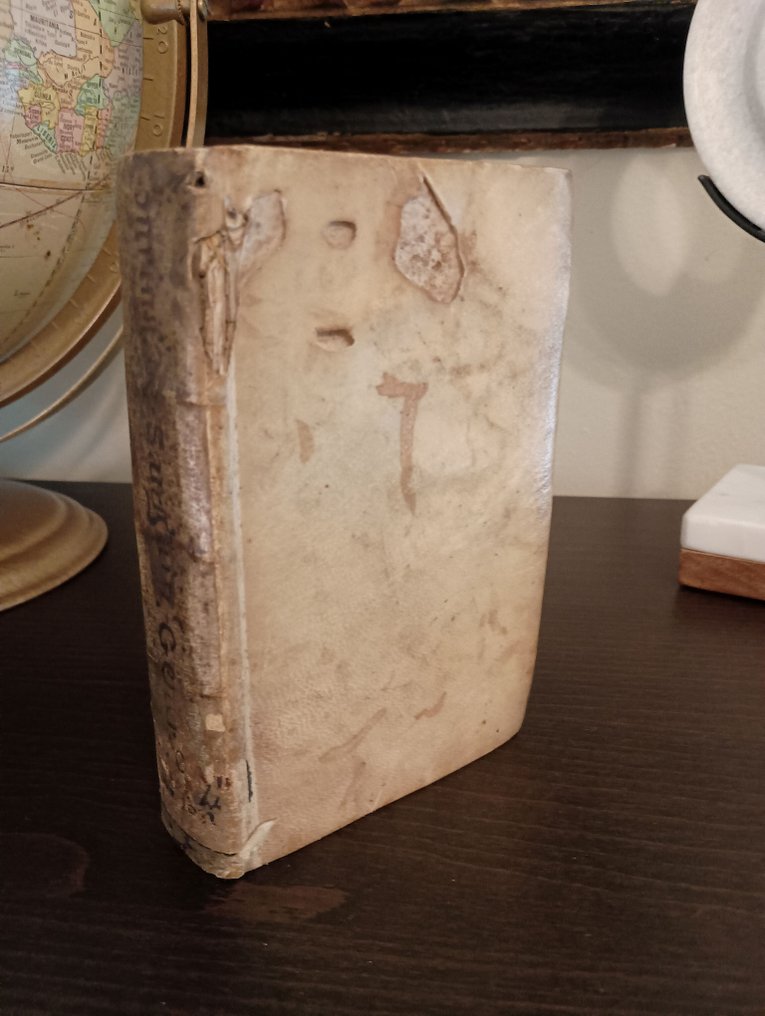
The first edition of Conring's study on the circulation of blood, the first German writer to defend William Harvey's theory. Conring's Aristotelianism and his criticisim of hermetic medicine led him to seek natural causes of anatomical phenomena. Included are three other works: 'Anatome fermentatione Platonicae' by Anton Gunther Billich (1598-1640; a response to this work by Conring entitled: 'De fermentatione exercitationes' by Conring; and the medical letters of Daniel Sennert (1572-1637). The two works on 'Fermentation' are a discussion on a subject of lively discussion during the mid-17th century. 'Fermentation' here means the process of the digestive system and the creation of blood. Carmen Schmechel states in her abstract on Descartes and Fermentation that: "Starting around the mid-seventeenth century, ‘fermentation’ undergoes a major change: from a phenomenon understood in either traditional Galenic or alchymical terms, into a more decidedly corpuscular phenomenon that better suited an emerging mechanistic framework in natural philosophy" (BJHS, March 2024). Despite the importance of this book, it is rare in the marketplace. 8vo (15 x 10cm), [xiv], 626pp. Occasional browning and/or foxing, some worming to inner margin at title-page, front endpaper, upper spine, and front cover. Bound in contemporary vellum, spine soiled.
The first edition of Conring's study on the circulation of blood, the first German writer to defend William Harvey's theory. Conring's Aristotelianism and his criticisim of hermetic medicine led him to seek natural causes of anatomical phenomena. Included are three other works: 'Anatome fermentatione Platonicae' by Anton Gunther Billich (1598-1640; a response to this work by Conring entitled: 'De fermentatione exercitationes' by Conring; and the medical letters of Daniel Sennert (1572-1637). The two works on 'Fermentation' are a discussion on a subject of lively discussion during the mid-17th century. 'Fermentation' here means the process of the digestive system and the creation of blood. Carmen Schmechel states in her abstract on Descartes and Fermentation that: "Starting around the mid-seventeenth century, ‘fermentation’ undergoes a major change: from a phenomenon understood in either traditional Galenic or alchymical terms, into a more decidedly corpuscular phenomenon that better suited an emerging mechanistic framework in natural philosophy" (BJHS, March 2024). Despite the importance of this book, it is rare in the marketplace. 8vo (15 x 10cm), [xiv], 626pp. Occasional browning and/or foxing, some worming to inner margin at title-page, front endpaper, upper spine, and front cover. Bound in contemporary vellum, spine soiled.
Details
Number of Books
1
Subject
Medicine
Book Title
De sanguinis generatione et motu naturali
Author/ Illustrator
Hermann Conring (1606-1681)
Condition
Good
Publication year oldest item
1646
Language
Latin
Original language
Yes
Publisher
Franciscum Hackium & Ludovicum Elzevirium
Binding/ Material
Vellum
Number of pages
626
Sold by
