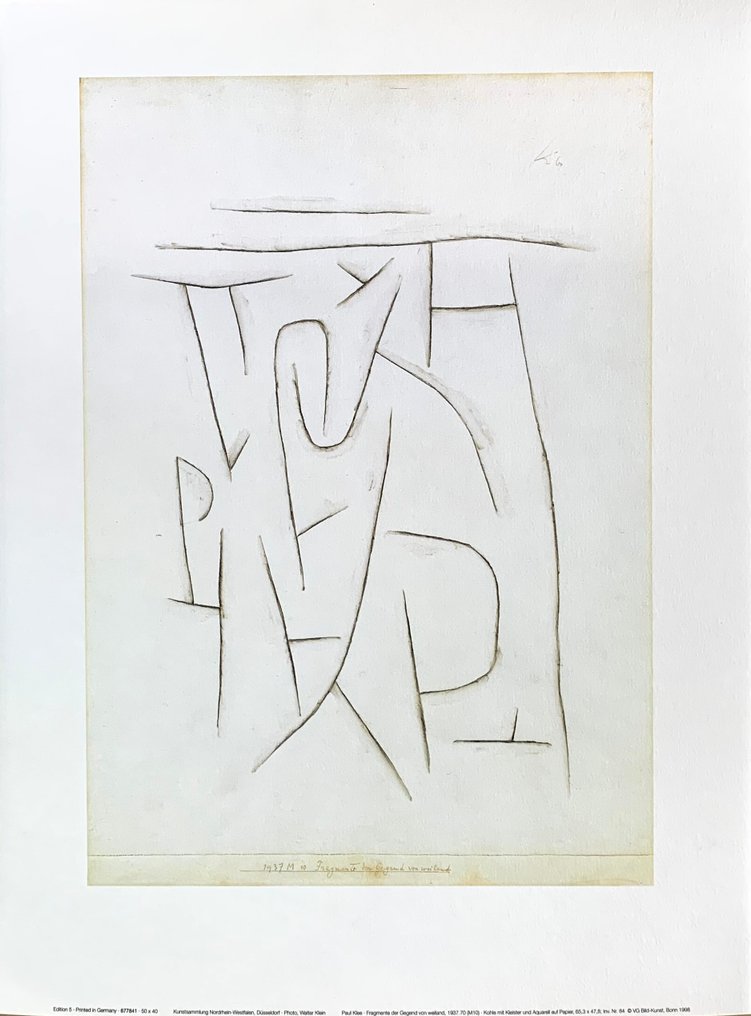
Paul Klee (after) - Fragments of the Weiland area, 1937 - Artprint on watercolor Paper - 50x40cm

06
days
18
hours
16
minutes
16
seconds
Starting bid
€ 1
No reserve price

Expert
Selected by Juan Antonio Rodríguez
Eight years experience valuing posters, previously valuer at Balclis, Barcelona.
Estimate € 150 - € 200
No bids placed
Catawiki Buyer Protection
Your payment’s safe with us until you receive your object.View details
Trustpilot 4.4 | 122190 reviews
Rated Excellent on Trustpilot.
Description from the seller
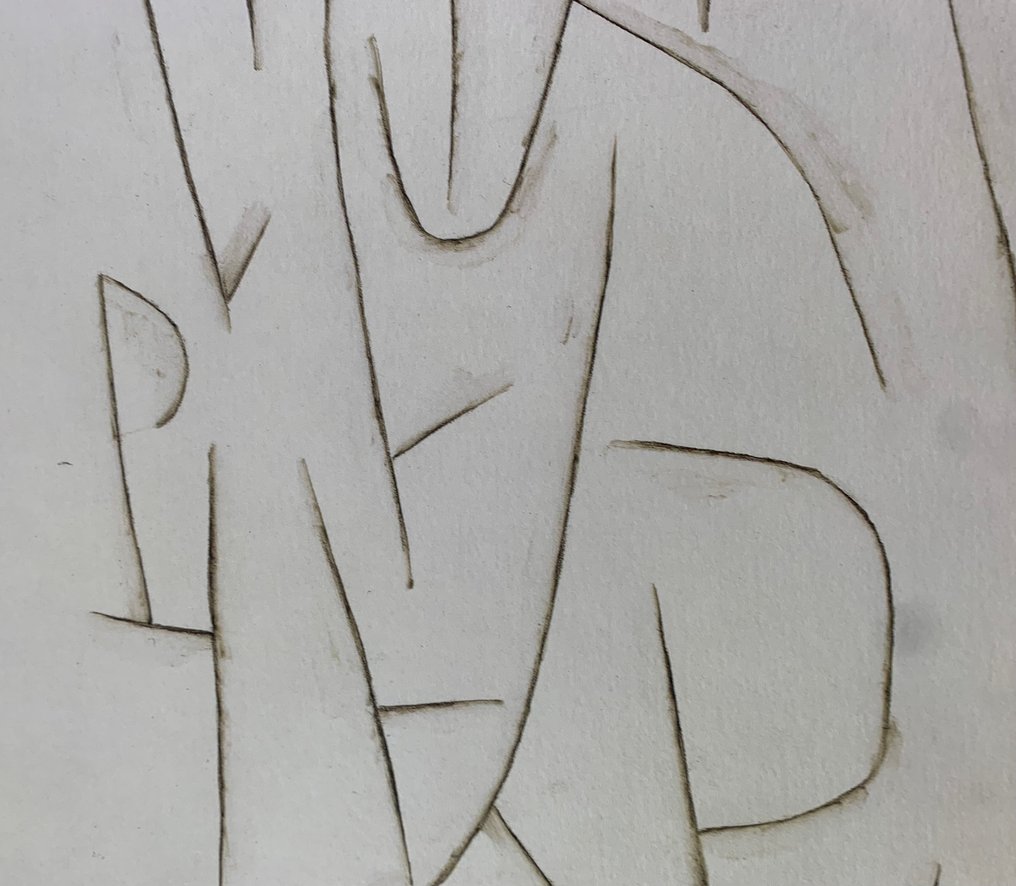
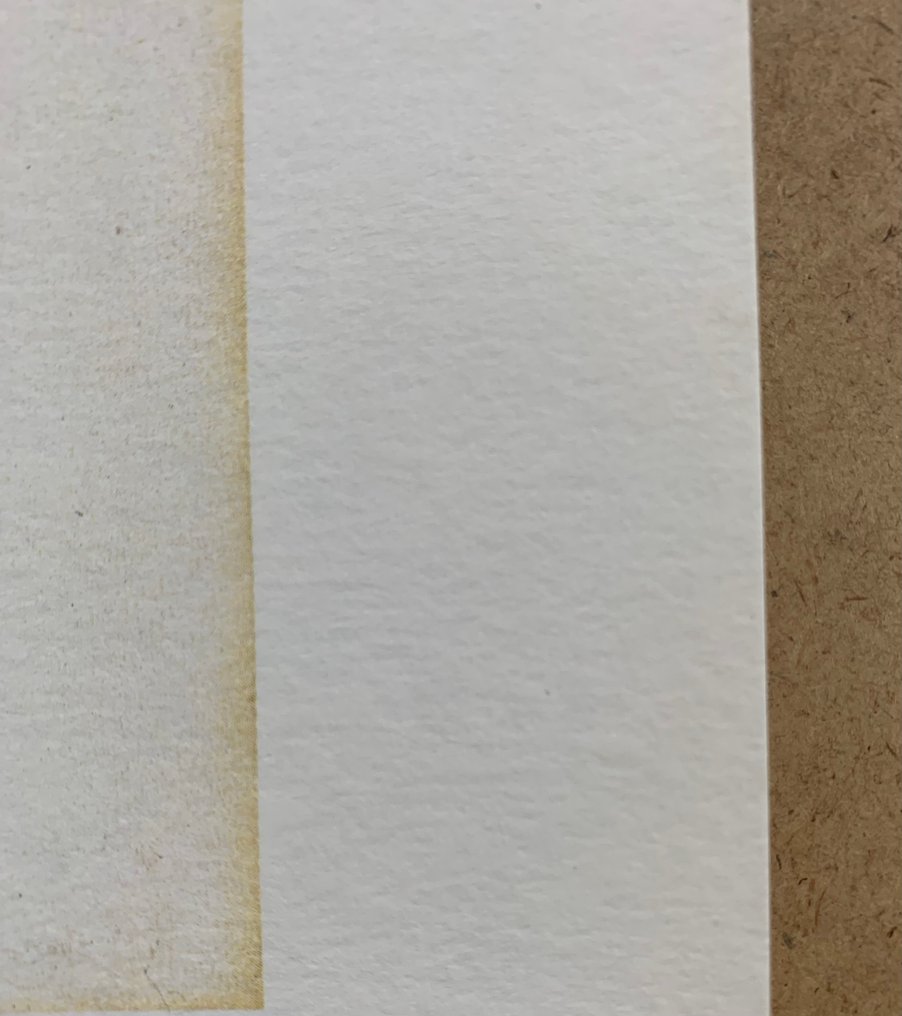
- Rarer art print by Paul Klee in the size of 50.0 x 40.0 cm titled 'Fragments of the Land' (1937). The work is a high-quality print on sturdy paper and is in very good condition.
Printed and published by Kunstverlag from around 2000
directly obtained from the art publisher
since then professionally stored, protected from light in a graphic archive
Artist: Paul Klee
Fragments of the Region of Weiland (1937)
Type: Poster Art Print
Art: art print on sturdy paper
Technology: Offset printing
Originality: Reproduction
Overall size: 50.0 x 40.0 cm
Condition: Very good
Publisher: Art Publishing
Portrait orientation
Era: Modern Art
Nationality: German Art
Style of presentation: abstract
Stylistic device: painting
Information about shipping:
We roll prints onto solid cardboard cores, wrap them with corrugated cardboard, and ship them in sturdy boxes with tracking numbers.
About us:
We have been active in the art dealing industry for over 20 years and possess extensive experience in the professional handling and shipping of artworks.
- No shipping to the Canary Islands or Taiwan available -
Paul Klee:
Paul Klee, one of the most important artists of Classical Modernism, combined abstract, expressionist, and surrealist elements into a unique visual language in his work. His art is characterized by fine lines, luminous color compositions, and a playful lightness that often reflects musical and poetic structures.
Klee was closely associated with Wassily Kandinsky, Franz Marc, and August Macke, with whom he co-founded the artist group The Blue Rider. His work shows clear influences of Expressionism and Cubism, especially in the use of geometric shapes and colored surfaces, which he deepened through contact with Robert and Sonia Delaunay in Paris.
As a teacher at the Bauhaus in Weimar and Dessau, Klee collaborated with artists such as Lyonel Feininger, László Moholy-Nagy, and Josef Albers. His theories on color and composition had a profound influence on modern art and were further developed by Bauhaus artists like Johannes Itten.
Inspiration also came to Klee from children's art and the so-called 'primitive art,' which connects him with Jean Dubuffet and the Art Brut movement. His work also shows parallels to Surrealism, particularly to Joan Miró and Max Ernst, who also engaged with an organic, imaginative visual language.
Klee's influence extends into post-war art. Artists like Mark Rothko, Cy Twombly, and Paul Klee continued his color theories and symbolic structures in new contexts. His works, often built like musical compositions, still have a strong impact on abstract art and modern painting today.
With his experimental approach, poetic forms, and deep engagement with color and line, Paul Klee created art that transcends any stylistic classification. His work remains a bridge between dream and reality, abstraction and figuration, intellect and intuition.
Seller's Story
We have been operating several online shops in the art trade for over 20 years. On the one hand, we specialize in rare art prints, exhibition posters and collectible reproductions, and on the other hand, we trade in art editions and originals by well-known contemporary artists.
The works we offer all come from the respective publishers, art galleries and institutions such as museums that published them in close cooperation with the artists. The works you find with us are often several decades old, in perfect or good condition and without a previous private owner.
We place particular emphasis on professional packaging. Nothing is more annoying than purchasing a rare print that arrives damaged due to poor or inadequate packaging.
If you have any questions about the works on offer, we are always happy to help you!
Translated by Google Translate- Rarer art print by Paul Klee in the size of 50.0 x 40.0 cm titled 'Fragments of the Land' (1937). The work is a high-quality print on sturdy paper and is in very good condition.
Printed and published by Kunstverlag from around 2000
directly obtained from the art publisher
since then professionally stored, protected from light in a graphic archive
Artist: Paul Klee
Fragments of the Region of Weiland (1937)
Type: Poster Art Print
Art: art print on sturdy paper
Technology: Offset printing
Originality: Reproduction
Overall size: 50.0 x 40.0 cm
Condition: Very good
Publisher: Art Publishing
Portrait orientation
Era: Modern Art
Nationality: German Art
Style of presentation: abstract
Stylistic device: painting
Information about shipping:
We roll prints onto solid cardboard cores, wrap them with corrugated cardboard, and ship them in sturdy boxes with tracking numbers.
About us:
We have been active in the art dealing industry for over 20 years and possess extensive experience in the professional handling and shipping of artworks.
- No shipping to the Canary Islands or Taiwan available -
Paul Klee:
Paul Klee, one of the most important artists of Classical Modernism, combined abstract, expressionist, and surrealist elements into a unique visual language in his work. His art is characterized by fine lines, luminous color compositions, and a playful lightness that often reflects musical and poetic structures.
Klee was closely associated with Wassily Kandinsky, Franz Marc, and August Macke, with whom he co-founded the artist group The Blue Rider. His work shows clear influences of Expressionism and Cubism, especially in the use of geometric shapes and colored surfaces, which he deepened through contact with Robert and Sonia Delaunay in Paris.
As a teacher at the Bauhaus in Weimar and Dessau, Klee collaborated with artists such as Lyonel Feininger, László Moholy-Nagy, and Josef Albers. His theories on color and composition had a profound influence on modern art and were further developed by Bauhaus artists like Johannes Itten.
Inspiration also came to Klee from children's art and the so-called 'primitive art,' which connects him with Jean Dubuffet and the Art Brut movement. His work also shows parallels to Surrealism, particularly to Joan Miró and Max Ernst, who also engaged with an organic, imaginative visual language.
Klee's influence extends into post-war art. Artists like Mark Rothko, Cy Twombly, and Paul Klee continued his color theories and symbolic structures in new contexts. His works, often built like musical compositions, still have a strong impact on abstract art and modern painting today.
With his experimental approach, poetic forms, and deep engagement with color and line, Paul Klee created art that transcends any stylistic classification. His work remains a bridge between dream and reality, abstraction and figuration, intellect and intuition.
Seller's Story
We have been operating several online shops in the art trade for over 20 years. On the one hand, we specialize in rare art prints, exhibition posters and collectible reproductions, and on the other hand, we trade in art editions and originals by well-known contemporary artists.
The works we offer all come from the respective publishers, art galleries and institutions such as museums that published them in close cooperation with the artists. The works you find with us are often several decades old, in perfect or good condition and without a previous private owner.
We place particular emphasis on professional packaging. Nothing is more annoying than purchasing a rare print that arrives damaged due to poor or inadequate packaging.
If you have any questions about the works on offer, we are always happy to help you!
Translated by Google TranslateDetails
Artist
Paul Klee (after)
Sold by
Owner or reseller
Title of artwork
Fragments of the Weiland area, 1937 - Artprint on watercolor Paper - 50x40cm
Technique
Offset print
Country of Origin
Germany
Condition
Excellent condition
Height
50 cm
Width
40 cm
Style
Modern
Period
2000-2010
Sold with frame
No