Porzio - Homo Bonus Vel Malus - 1551

Opens 11:00
Starting bid
€ 1
Add to your favourites to get an alert when the auction starts.

Expert
Selected by Volker Riepenhausen
Specialist in travel literature and pre-1600 rare prints with 28 years experience.
Estimate € 1,200 - € 1,500
Catawiki Buyer Protection
Your payment’s safe with us until you receive your object.View details
Trustpilot 4.4 | 121798 reviews
Rated Excellent on Trustpilot.
Description from the seller
Wills, Vices, and Virtues in Renaissance Florence
Man becomes good or bad by his own will.
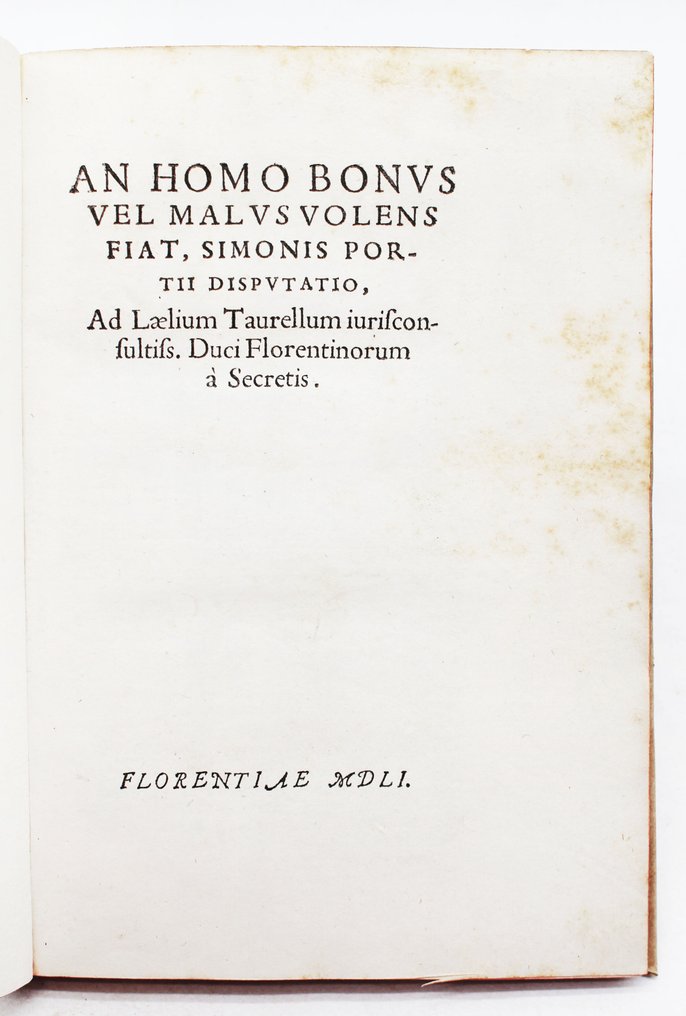
First edition of Simone Porzio's philosophical work, a student of Pietro Pomponazzi, printed in Florence by Lorenzo Torrentino in 1551. The text addresses one of the most debated topics in Renaissance moral philosophy: whether man becomes good or bad by his own will. With an argumentative framework rooted in Aristotelianism, Porzio compares ancient philosophical schools and contemporary currents, weaving ethical, psychological, and theological considerations. The dedication to Lelio Torelli and the Florentine academic context reveal the intent to engage in intellectual disputes promoted at the Medici court.
Market value
The specimens of this first edition, in good condition and with margins, rarely appear on the antique market. Recent sales range between 800 and 1,500 euros, with higher values for copies in coeval binding and with intact margins.
Physical description and condition - collector's copy
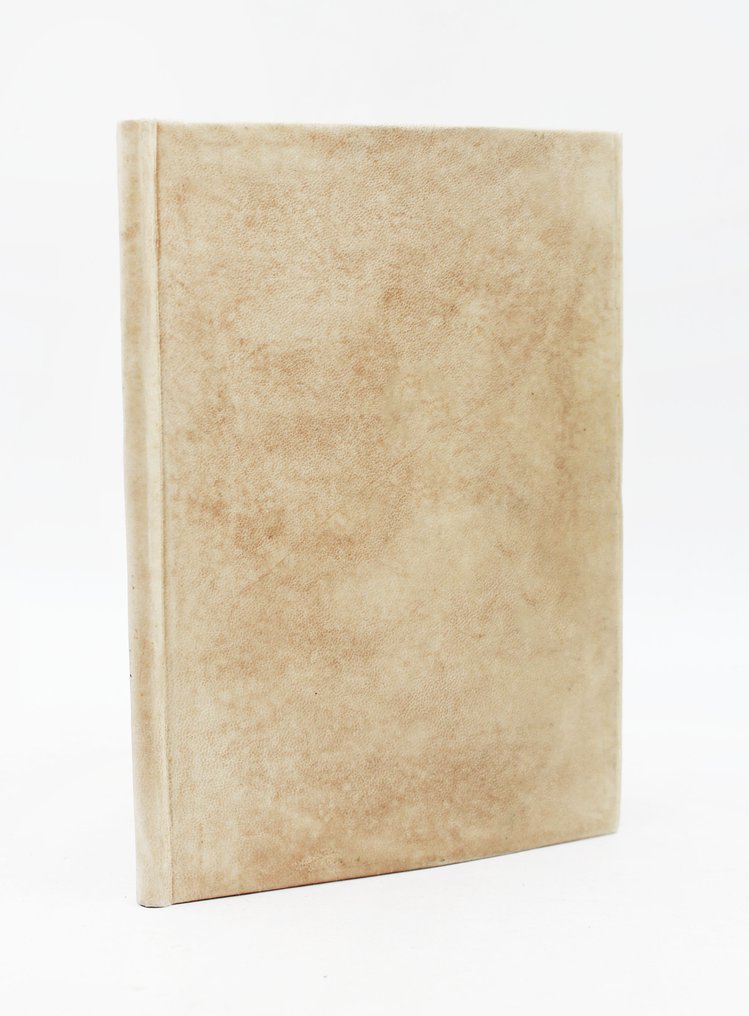
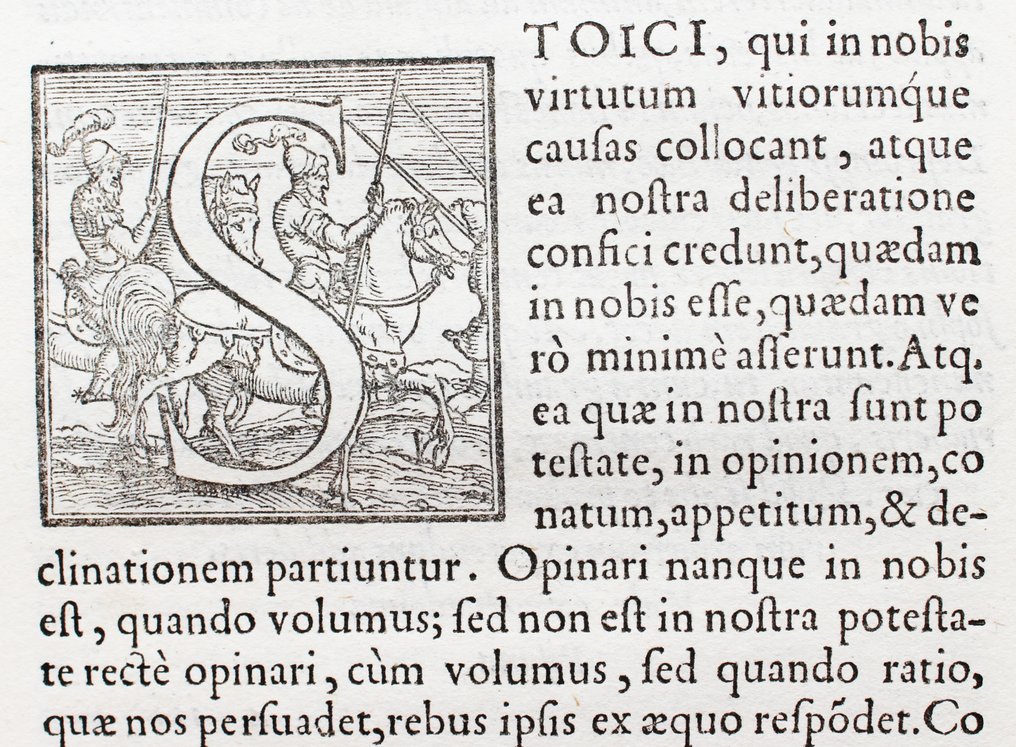
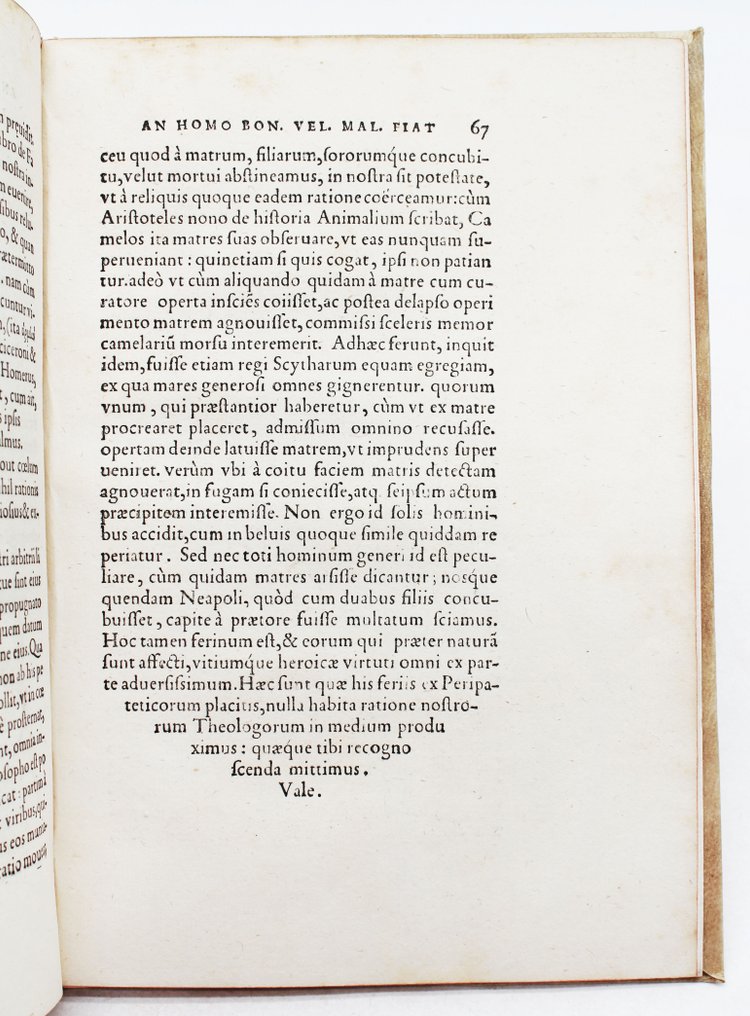
Beautiful fresh copy, clear pages, wide margins, and bright printing. Initial engraved woodcut illustration. Subsequent binding in parchment with red edges. Pp. (2), 68, (2).
Full title and author
A good or bad man willingly becomes what he desires.
Florence, Lorenzo Torrentino, 1551.
Simone Porzio
Context and Significance
The treatise, structured as a disputation, examines whether human goodness or evilness derives from free will. Porzio, following an Aristotelian framework, investigates the nature of moral habitus, comparing the positions of the Stoics, Platonists, and other ancient philosophers. The volume fits within the Renaissance tradition of studies on ethics and freedom, engaging with the views of Pomponazzi and Florentine humanism. Its clarity of exposition and systematic approach made it a reference text for the academic circles of the time.
Simone Porzio (1496-1554), Neapolitan philosopher and doctor, was among the main interpreters of Aristotle in the 16th century. A student of Pietro Pomponazzi in Bologna, he taught philosophy in Pisa and Florence. His works range from natural philosophy to ethics and medicine, characterized by strong rationalism and a critical approach to traditional scholasticism.
Printing history and circulation
First absolute edition, published in Florence by Lorenzo Torrentino, official printer of the Grand Duchy of Tuscany. The work had a limited but significant circulation among Italian academic and humanist circles, without subsequent sixteenth-century reprints, which increases its bibliographic rarity.
BIBLIOGRAPHY AND REFERENCES
EDIT16 CNCE 31440
Adams P-1937
Graesse V, 444
Riccardi I, 298
Fiorentino, Italian Philosophical Bibliography, 1879, p. 412
Seller's Story
RareBooks NO-RESERVE brings the charm of antiquity into the digital age — with curated sales, exceptional deals, and stories worth collecting.
Because owning a rare book should feel like a discovery, not a luxury.
RareBooks NO-RESERVE is revolutionizing the online market for antique and rare books.
As a pioneer in e-commerce, the company transforms access to valuable and collectible editions by launching exclusive flash sales across leading platforms — offering significant discounts on books that are typically available only at premium prices.
With a sharp focus on visibility, digital innovation, and strategic pricing, RareBooks NO-RESERVE turns rarity into opportunity, building lasting customer loyalty through irresistible deals and curated value propositions.
Marina
Translated by Google TranslateWills, Vices, and Virtues in Renaissance Florence
Man becomes good or bad by his own will.
First edition of Simone Porzio's philosophical work, a student of Pietro Pomponazzi, printed in Florence by Lorenzo Torrentino in 1551. The text addresses one of the most debated topics in Renaissance moral philosophy: whether man becomes good or bad by his own will. With an argumentative framework rooted in Aristotelianism, Porzio compares ancient philosophical schools and contemporary currents, weaving ethical, psychological, and theological considerations. The dedication to Lelio Torelli and the Florentine academic context reveal the intent to engage in intellectual disputes promoted at the Medici court.
Market value
The specimens of this first edition, in good condition and with margins, rarely appear on the antique market. Recent sales range between 800 and 1,500 euros, with higher values for copies in coeval binding and with intact margins.
Physical description and condition - collector's copy
Beautiful fresh copy, clear pages, wide margins, and bright printing. Initial engraved woodcut illustration. Subsequent binding in parchment with red edges. Pp. (2), 68, (2).
Full title and author
A good or bad man willingly becomes what he desires.
Florence, Lorenzo Torrentino, 1551.
Simone Porzio
Context and Significance
The treatise, structured as a disputation, examines whether human goodness or evilness derives from free will. Porzio, following an Aristotelian framework, investigates the nature of moral habitus, comparing the positions of the Stoics, Platonists, and other ancient philosophers. The volume fits within the Renaissance tradition of studies on ethics and freedom, engaging with the views of Pomponazzi and Florentine humanism. Its clarity of exposition and systematic approach made it a reference text for the academic circles of the time.
Simone Porzio (1496-1554), Neapolitan philosopher and doctor, was among the main interpreters of Aristotle in the 16th century. A student of Pietro Pomponazzi in Bologna, he taught philosophy in Pisa and Florence. His works range from natural philosophy to ethics and medicine, characterized by strong rationalism and a critical approach to traditional scholasticism.
Printing history and circulation
First absolute edition, published in Florence by Lorenzo Torrentino, official printer of the Grand Duchy of Tuscany. The work had a limited but significant circulation among Italian academic and humanist circles, without subsequent sixteenth-century reprints, which increases its bibliographic rarity.
BIBLIOGRAPHY AND REFERENCES
EDIT16 CNCE 31440
Adams P-1937
Graesse V, 444
Riccardi I, 298
Fiorentino, Italian Philosophical Bibliography, 1879, p. 412
Seller's Story
RareBooks NO-RESERVE brings the charm of antiquity into the digital age — with curated sales, exceptional deals, and stories worth collecting.
Because owning a rare book should feel like a discovery, not a luxury.
RareBooks NO-RESERVE is revolutionizing the online market for antique and rare books.
As a pioneer in e-commerce, the company transforms access to valuable and collectible editions by launching exclusive flash sales across leading platforms — offering significant discounts on books that are typically available only at premium prices.
With a sharp focus on visibility, digital innovation, and strategic pricing, RareBooks NO-RESERVE turns rarity into opportunity, building lasting customer loyalty through irresistible deals and curated value propositions.
Marina
Translated by Google TranslateDetails
Number of Books
1
Subject
Philosophy
Book Title
Homo Bonus Vel Malus
Author/ Illustrator
Porzio
Condition
Good
Publication year oldest item
1551
Height
208 mm
Edition
1st Edition
Width
150 mm
Language
Latin
Original language
Yes
Publisher
Firenze, Lorenzo Torrentino, 1551
Binding/ Material
Vellum
Number of pages
72
Sold by
