Vitruvio - Les Dix Livres d’Architecture - 1684




Opens 11:00
Starting bid
€ 1
Add to your favourites to get an alert when the auction starts.

Expert
Selected by Ilaria Colombo
Specialist in old books, specialising in theological disputes since 1999.
Estimate € 2,500 - € 3,500
Catawiki Buyer Protection
Your payment’s safe with us until you receive your object.View details
Trustpilot 4.4 | 122290 reviews
Rated Excellent on Trustpilot.
Description from the seller
Vitrubio and the Science of Construction in the Architecture of Louis XIV
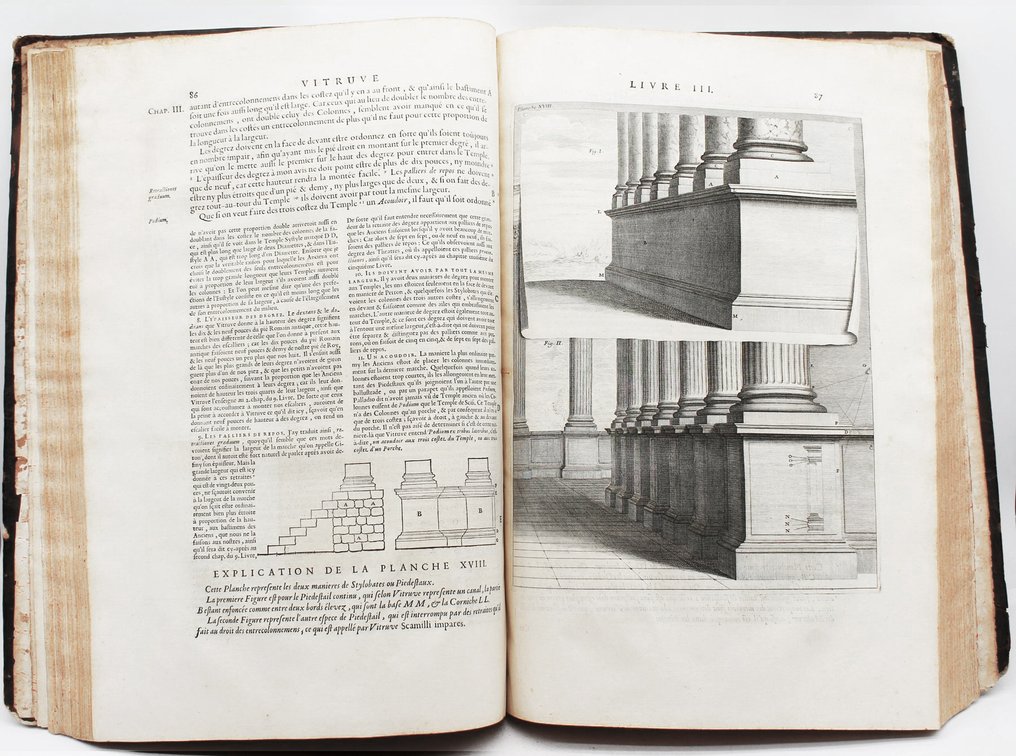
Claude Perrault's translation of the Dix Livres d’Architecture represents one of the most influential reinterpretations of the Vitruvian text in 17th-century Europe. Perrault, a key figure in French classicism and a central member of the Académie Royale d’Architecture, reinterprets Vitruvius by filtering him through a new, Cartesian rationality that diminishes the absolute authority of the ancient to open it to scientific experimentation, measurable proportion, and the modern eye. The 1684 volume is broader, more elaborate, and more aware of architecture's political function, positioning itself not only as a foundational text but also as a critical tool for defining the official taste under Louis XIV. The monumental iconographic apparatus draws on the symbolism of monarchical power and the rigor of the classical order, transforming the reading into an initiatory journey through geometries, ideal buildings, and allegories that legitimize the new French classicism.
Market value
Complete copies of the second edition of Perrault on the international market generally range between 2,500 and 5,500 euros, with copies in good binding condition and intact plates. Particularly fresh copies with prestigious provenance can reach or exceed the threshold of 6,500–7,000 euros. The value is heavily influenced by the integrity of the plates and the quality of the engraved frontispiece.
Physical description and condition
Example with engraved frontispiece, rich illustrative apparatus within the text, numerous plates and explanatory figures. Contemporary full leather binding, spine with raised bands and gold decoration, signs of wear. Interior with some foxing and browning. Pages: (2); 20 numbered pages; 354; 16 numbered pages; (2). In old books, with a multi-century history, some imperfections may be present, not always noted in the description.
Full title and author
The Ten Books of Architecture by Vitruve.
Paris, Jean-Baptiste Coignard, 1684.
Marcus Vitruvius Pollio.
Context and Significance
The Vitruvian text forms the theoretical foundation of all Western architecture: proportions, orders, materials, machines, and civil engineering find their first organic arrangement here. The second edition of Perrault's version plays a decisive role because it offers an innovative reading, less dogmatic and more experimental, which will profoundly influence French architectural theory and academic architecture. Perrault's notes open up the possibility that Vitruvius may be fallible, debatable, even surpassable: this marks the beginning of critical classicism. The plates complement this approach by providing a visual lexicon that blends antiquity and modernity, contributing to the definition of the 'taste in the manner of the King,' a key point of architecture in the Grand Siècle.
The iconographic apparatus, dominated by the great allegory on the frontispiece, introduces an almost esoteric journey: Vitruvius receives inspiration, the personified figures of the arts dialogue in the light of power; geometry becomes a symbol of rationality, and architecture itself manifests as the science of invisible relationships.
Biography of the Author
Marcus Vitruvius Pollio, a Roman architect and military engineer active in the 1st century BC, worked under Caesar and Augustus. His work De architectura is the only complete treatise on architecture from antiquity that has survived to the present day, and it represents the theoretical foundation of Western architecture.
Claude Perrault (1613–1688), medic, scientist, architect, and member of the Académie Royale des Sciences, is a central figure of French classicism. Author of the famous eastern façade of the Louvre, he introduced a critical view of the classical tradition, based on measurement, experience, and scientific observation.
Printing history and circulation
The first edition of Perrault's translation was published in 1673, marking the beginning of a new Vitruvian era characterized by the direct involvement of the Académie Royale. The 1684 expanded edition, corrected and enriched with new illustrations, solidified the work's success, spreading among architects, engineers, and collectors. It is considered the most authoritative edition among the seventeenth-century French editions and one of the most important in the post-Renaissance Vitruvian tradition. The volume was widely circulated in aristocratic libraries and scientific cabinets, becoming an essential reference for the training of architects in the kingdom.
BIBLIOGRAPHY AND REFERENCES
Baldus, the French editions of Vitruvius from the 17th century
FOWLER, Vitruvius and the French Classical Tradition
MILLARD, French Architectural Books of the Seventeenth Century
WORLD CAT, BnF, ICCU, ESTC for collations and locations.
Germain, Claude Perrault, and the Academy
LE FÈVRE, Commentary on the Coignard edition
Seller's Story
Luxury Books: Your Go-To Guide for Nabbing Literary Treasures!
Embarking on the thrilling journey of collecting rare and timeless printed works? Here's your snappy rundown, "The Collector's Cheat Sheet," to ensure you're not just flipping pages but stacking up the value:
1. Edition and Rarity: Rarity is the name of the game. First editions, limited printings, and books flaunting unique features like eye-catching illustrations or mind-blowing bindings? Consider them the VIPs of the collector's world.
2. Condition & Dimension: Picture this – a book in mint condition, untouched by the woes of wear and tear. Now, flip the script: wear, foxing, discoloration – they're the villains here. And don't forget to size up the dimensions, because a book's size matters in the collector's universe.
3. Authenticity: In a world of replicas and forgeries, verifying a book's authenticity is your superhero move. Expert examination and authentication – your trusty sidekicks in this quest.
4. Provenance: Who owned it before you? If the book has hobnobbed with famous figures or danced through historical events, its value skyrockets. Every book has a story, but some have blockbuster tales.
5. Demand and Market Trends: Think of book values as the stock market of the literary world. Stay savvy on collector trends and market shifts to ride the waves of value.
6. Subject Matter: Some topics are like fine wine – they get better with time. Dive into subjects with a timeless appeal or ride the wave of emerging cultural and historical relevance.
7. Binding and Design: Beauty is more than skin deep. Intricate bindings, stunning covers, and illustrations – these are the accessories that make a book runway-ready in the collector's eyes.
8. Association Copies: Books with a personal touch – whether it's a connection to the author or a famous personality – elevate the historical vibes. A book with a backstory? Count us in.
9. Investment Potential: Passion is the engine, but some collectors eye future returns. Keep in mind, though, that the book market can be as unpredictable as a plot twist.
10. Expert Advice: New to the game? Don't play solo. Seek wisdom from the book gurus, hit up book fairs, and join collector communities. We at Luxury Books are the Yodas of the rare book galaxy, helping you build collections that scream sophistication and cultural clout.
Because collecting rare books isn't just about dollar signs – it's a journey of preserving heritage and embracing literary treasures. Happy collecting!
Translated by Google TranslateVitrubio and the Science of Construction in the Architecture of Louis XIV
Claude Perrault's translation of the Dix Livres d’Architecture represents one of the most influential reinterpretations of the Vitruvian text in 17th-century Europe. Perrault, a key figure in French classicism and a central member of the Académie Royale d’Architecture, reinterprets Vitruvius by filtering him through a new, Cartesian rationality that diminishes the absolute authority of the ancient to open it to scientific experimentation, measurable proportion, and the modern eye. The 1684 volume is broader, more elaborate, and more aware of architecture's political function, positioning itself not only as a foundational text but also as a critical tool for defining the official taste under Louis XIV. The monumental iconographic apparatus draws on the symbolism of monarchical power and the rigor of the classical order, transforming the reading into an initiatory journey through geometries, ideal buildings, and allegories that legitimize the new French classicism.
Market value
Complete copies of the second edition of Perrault on the international market generally range between 2,500 and 5,500 euros, with copies in good binding condition and intact plates. Particularly fresh copies with prestigious provenance can reach or exceed the threshold of 6,500–7,000 euros. The value is heavily influenced by the integrity of the plates and the quality of the engraved frontispiece.
Physical description and condition
Example with engraved frontispiece, rich illustrative apparatus within the text, numerous plates and explanatory figures. Contemporary full leather binding, spine with raised bands and gold decoration, signs of wear. Interior with some foxing and browning. Pages: (2); 20 numbered pages; 354; 16 numbered pages; (2). In old books, with a multi-century history, some imperfections may be present, not always noted in the description.
Full title and author
The Ten Books of Architecture by Vitruve.
Paris, Jean-Baptiste Coignard, 1684.
Marcus Vitruvius Pollio.
Context and Significance
The Vitruvian text forms the theoretical foundation of all Western architecture: proportions, orders, materials, machines, and civil engineering find their first organic arrangement here. The second edition of Perrault's version plays a decisive role because it offers an innovative reading, less dogmatic and more experimental, which will profoundly influence French architectural theory and academic architecture. Perrault's notes open up the possibility that Vitruvius may be fallible, debatable, even surpassable: this marks the beginning of critical classicism. The plates complement this approach by providing a visual lexicon that blends antiquity and modernity, contributing to the definition of the 'taste in the manner of the King,' a key point of architecture in the Grand Siècle.
The iconographic apparatus, dominated by the great allegory on the frontispiece, introduces an almost esoteric journey: Vitruvius receives inspiration, the personified figures of the arts dialogue in the light of power; geometry becomes a symbol of rationality, and architecture itself manifests as the science of invisible relationships.
Biography of the Author
Marcus Vitruvius Pollio, a Roman architect and military engineer active in the 1st century BC, worked under Caesar and Augustus. His work De architectura is the only complete treatise on architecture from antiquity that has survived to the present day, and it represents the theoretical foundation of Western architecture.
Claude Perrault (1613–1688), medic, scientist, architect, and member of the Académie Royale des Sciences, is a central figure of French classicism. Author of the famous eastern façade of the Louvre, he introduced a critical view of the classical tradition, based on measurement, experience, and scientific observation.
Printing history and circulation
The first edition of Perrault's translation was published in 1673, marking the beginning of a new Vitruvian era characterized by the direct involvement of the Académie Royale. The 1684 expanded edition, corrected and enriched with new illustrations, solidified the work's success, spreading among architects, engineers, and collectors. It is considered the most authoritative edition among the seventeenth-century French editions and one of the most important in the post-Renaissance Vitruvian tradition. The volume was widely circulated in aristocratic libraries and scientific cabinets, becoming an essential reference for the training of architects in the kingdom.
BIBLIOGRAPHY AND REFERENCES
Baldus, the French editions of Vitruvius from the 17th century
FOWLER, Vitruvius and the French Classical Tradition
MILLARD, French Architectural Books of the Seventeenth Century
WORLD CAT, BnF, ICCU, ESTC for collations and locations.
Germain, Claude Perrault, and the Academy
LE FÈVRE, Commentary on the Coignard edition
Seller's Story
Luxury Books: Your Go-To Guide for Nabbing Literary Treasures!
Embarking on the thrilling journey of collecting rare and timeless printed works? Here's your snappy rundown, "The Collector's Cheat Sheet," to ensure you're not just flipping pages but stacking up the value:
1. Edition and Rarity: Rarity is the name of the game. First editions, limited printings, and books flaunting unique features like eye-catching illustrations or mind-blowing bindings? Consider them the VIPs of the collector's world.
2. Condition & Dimension: Picture this – a book in mint condition, untouched by the woes of wear and tear. Now, flip the script: wear, foxing, discoloration – they're the villains here. And don't forget to size up the dimensions, because a book's size matters in the collector's universe.
3. Authenticity: In a world of replicas and forgeries, verifying a book's authenticity is your superhero move. Expert examination and authentication – your trusty sidekicks in this quest.
4. Provenance: Who owned it before you? If the book has hobnobbed with famous figures or danced through historical events, its value skyrockets. Every book has a story, but some have blockbuster tales.
5. Demand and Market Trends: Think of book values as the stock market of the literary world. Stay savvy on collector trends and market shifts to ride the waves of value.
6. Subject Matter: Some topics are like fine wine – they get better with time. Dive into subjects with a timeless appeal or ride the wave of emerging cultural and historical relevance.
7. Binding and Design: Beauty is more than skin deep. Intricate bindings, stunning covers, and illustrations – these are the accessories that make a book runway-ready in the collector's eyes.
8. Association Copies: Books with a personal touch – whether it's a connection to the author or a famous personality – elevate the historical vibes. A book with a backstory? Count us in.
9. Investment Potential: Passion is the engine, but some collectors eye future returns. Keep in mind, though, that the book market can be as unpredictable as a plot twist.
10. Expert Advice: New to the game? Don't play solo. Seek wisdom from the book gurus, hit up book fairs, and join collector communities. We at Luxury Books are the Yodas of the rare book galaxy, helping you build collections that scream sophistication and cultural clout.
Because collecting rare books isn't just about dollar signs – it's a journey of preserving heritage and embracing literary treasures. Happy collecting!
Translated by Google TranslateDetails
Number of Books
1
Subject
Architecture
Book Title
Les Dix Livres d’Architecture
Author/ Illustrator
Vitruvio
Condition
Good
Publication year oldest item
1684
Height
424 mm
Edition
1st Edition Thus, Illustrated Edition
Width
298 mm
Language
French
Original language
No
Publisher
Paris, Jean-Baptiste Coignard, 1684
Binding/ Material
Leather
Extras
Tipped in plates
Number of pages
394
Sold by
