Tacito - Oeuvres de Tacite - 1582
10
days
08
hours
35
minutes
30
seconds
Starting bid
€ 1
Reserve price not met

Expert
Selected by Ilaria Colombo
Specialist in old books, specialising in theological disputes since 1999.
Estimate € 1,000 - € 2,000
No bids placed
Catawiki Buyer Protection
Your payment’s safe with us until you receive your object.View details
Trustpilot 4.4 | 122290 reviews
Rated Excellent on Trustpilot.
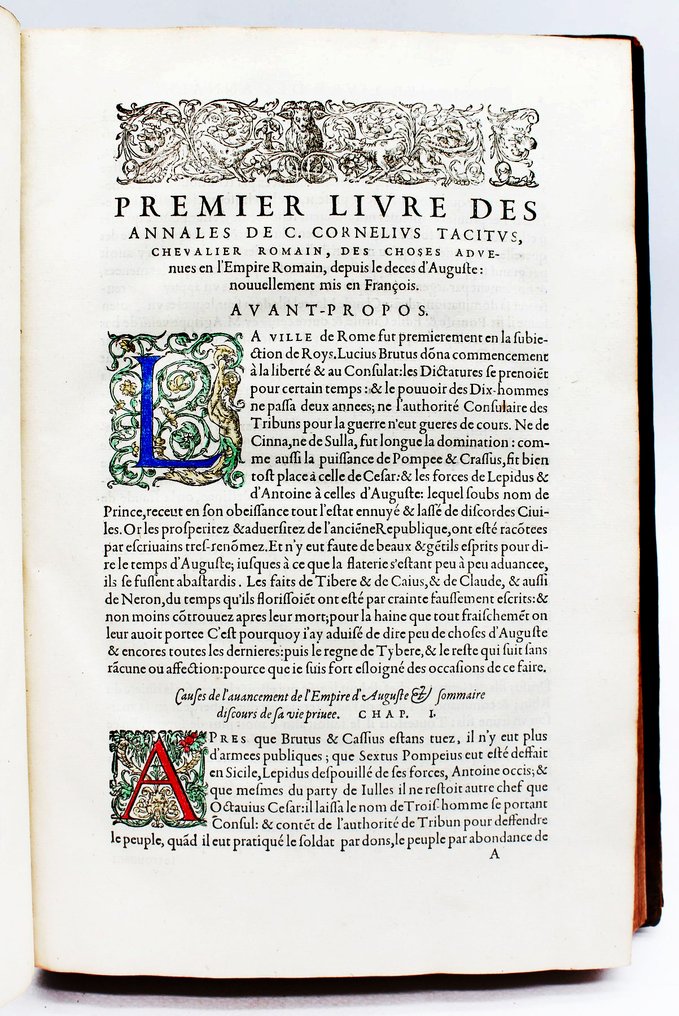
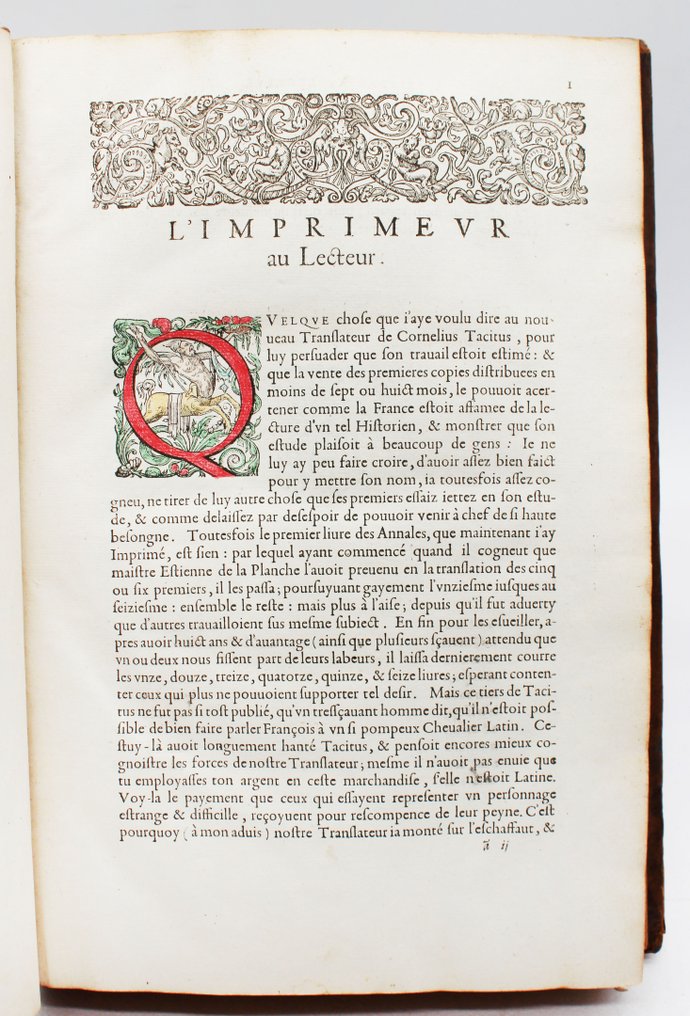
Tacitus, Oeuvres de Tacite, a 1582 Parisian edition in French, bound in full leather with hand‑coloured illustrations, 656 pages, in good condition and issued by Abel L’Angelier Libraire Iuré in its first edition format.
AI-assisted summary
Description from the seller
The Emperor and His Shadow: Tacitus in France Between Tyranny and Civil War
This imposing Parisian edition from 1582, published for Abel L’Angelier, brings the entire historical corpus of Tacitus into the French language for the first time, thanks to the collaboration of Étienne de La Planche and Claude Fauchet, two prominent figures of late Renaissance scholarship. The work presents itself as a grand attempt to make accessible to the educated public the most lucid and relentless voice of the Roman world, transforming the history of emperors into a meditation on power, political violence, and the mechanisms of memory. The typographic richness, the full-page editorial mark, and the solemn folio layout give the volume a stage presence that reflects the moral and literary authority of the text.
Market value
Sixteenth-century French editions of Tacitus's works, especially those printed for Abel L’Angelier, are highly sought after in the antiquarian market. Complete copies, with good antique bindings and no text loss, typically fetch between 1,000 and 2,000 euros, with higher prices for copies in particularly pristine condition or with significant provenance. The presence of the large typographic mark and the nature of the translation (the first complete version in French) increase collector interest.
Physical description and condition - collector's copy
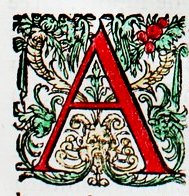
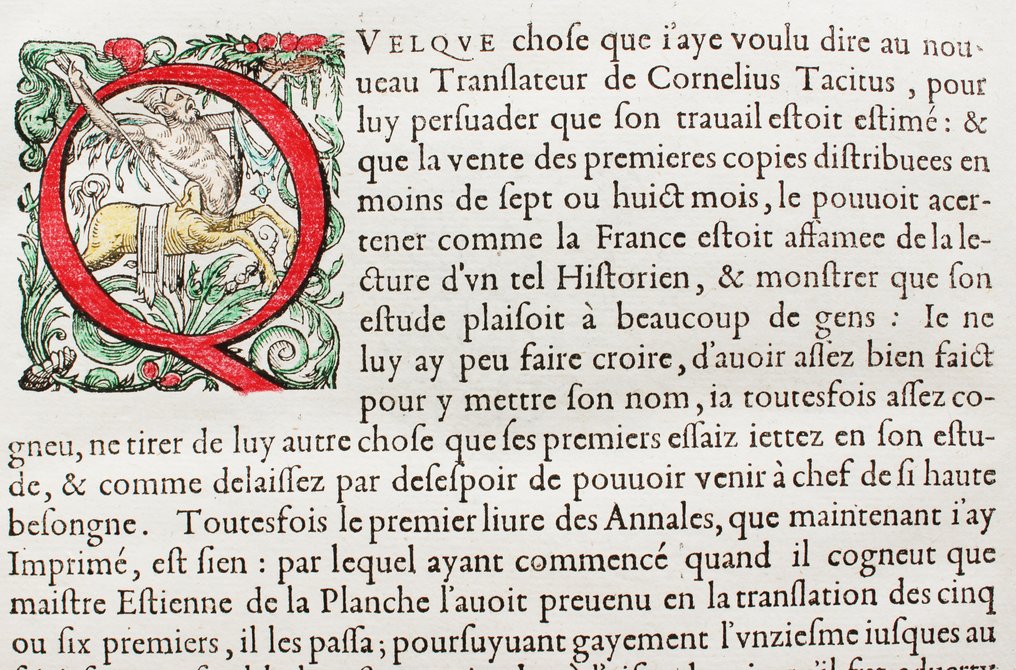
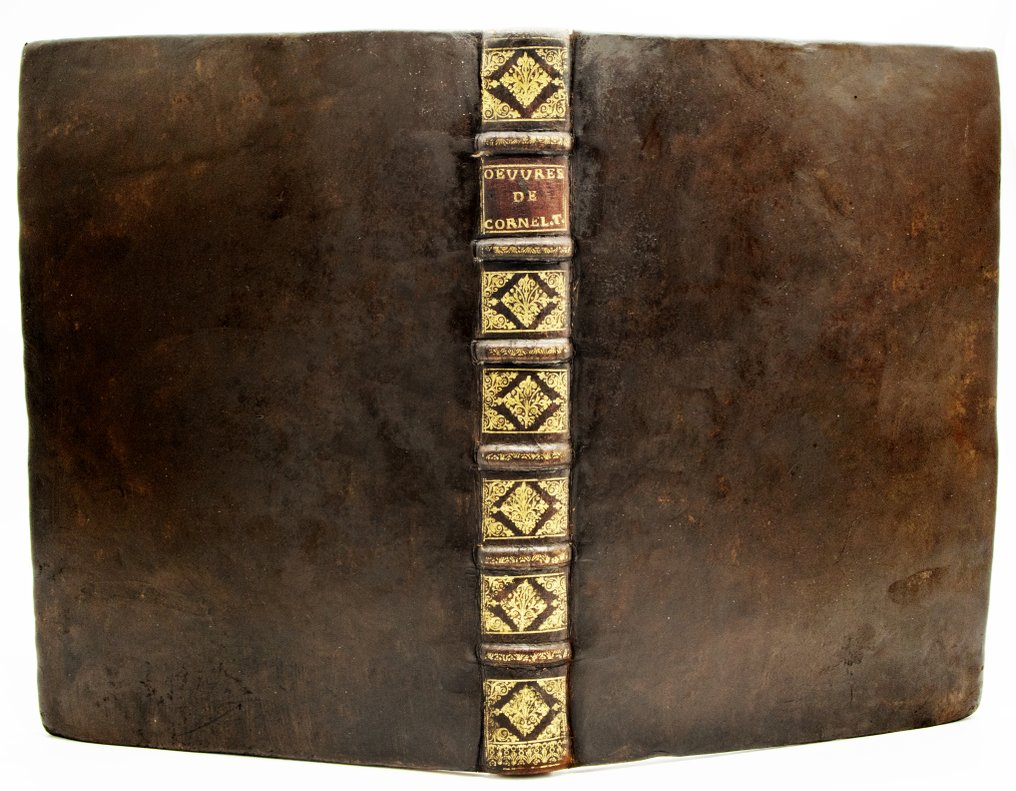
17th-century full leather binding, six-raised band spine richly decorated in gold, marbled endpapers; signs of use. Woodcut printer's mark on the title page and a large woodcut mark on p. 556 depicting the sacrifice of Abel. Illustrated initials and woodcut borders. Reinforced title page, the lower white portion of p. 557 skillfully restored. Pages (6); 20 unnumbered; 602; 20 unnumbered; (6).
In ancient books with a centuries-old history, some imperfections may be present, which are not always noted in the description.
Full title and author
The Works of Tacitus
Paris, for Abel L’Angelier, Licensed Bookseller, 1582.
Publio Cornelio Tacito
Context and Significance
The translations of La Planche (Annales I–V) and Fauchet (Annales XI–XVI and other works) represent a crucial step in the reception of Tacitus in the French context, during a period when reflection on monarchical power and civil wars fostered a growing interest in the historical models of imperial Rome. The L’Angelier edition of 1582 is the first to offer the complete corpus in French, making Tacitus one of the key authors for the political culture of the second half of the 16th century. His analyses of tyranny, the degeneration of power, and the fragility of the republican order resonated deeply in France during the Wars of Religion, becoming part of the intellectual toolkit of magistrates, humanists, and moralists.
Biography of the Author
Publius Cornelius Tacitus (c. 56 – c. 120 AD) was one of the greatest historians of Latin literature, known for his concise, dense, and morally engaged style. His major works – Annales, Historiae, Agricola, Germania – represent the most sophisticated Roman attempt to understand imperial power and its shadows, offering political reflections that influenced European thought for centuries.
Étienne de La Planche (1521–1601) and Claude Fauchet (1530–1602) were scholars and magistrates associated with the French humanist circle; both contributed to the dissemination of the classics through translations, antiquarian investigations, and historical works.
Printing history and circulation
This 1582 edition printed for Abel L’Angelier represents a milestone in the Tacitian editorial history in France. The complete translation was well received and widely circulated among jurists, nobles, officials, and educated readers interested in politics and public morality. L’Angelier, one of the most important Parisian publishers of the time, ensured the work a high-quality typographical setup and a widespread distribution in the capital and the main university cities of the kingdom.
BIBLIOGRAPHY AND REFERENCES
Brunet, Manuel of the Bookseller, V, pp. 620–625
Renouard, Parisian Printers and Booksellers of the 17th Century, vol. II: Abel L’Angelier
Mortimer, Harvard French Sixteenth and Seventeenth Century Books, numbers related to the Tacitian editions.
Schmidt, The Reception of Tacitus during the Renaissance and the Classical Age
Goulet, Dictionary of Ancient Philosophers, entry on Tacitus and political tradition
Grafton – Jardine, Classical Authority and Early Modern Political Thought
Villey, The Sources, and the Evolution of Political Thought in France during the 17th Century
National Library of France, General Catalog, notices on the editions of Tacitus published by L’Angelier
Olschki, Annals of European Culture, studies on Tacitus's fortune in the Renaissance and Baroque periods
Antique catalogs and auction repertories dedicated to 17th-century French in-folio editions.
Seller's Story
Luxury Books: Your Go-To Guide for Nabbing Literary Treasures!
Embarking on the thrilling journey of collecting rare and timeless printed works? Here's your snappy rundown, "The Collector's Cheat Sheet," to ensure you're not just flipping pages but stacking up the value:
1. Edition and Rarity: Rarity is the name of the game. First editions, limited printings, and books flaunting unique features like eye-catching illustrations or mind-blowing bindings? Consider them the VIPs of the collector's world.
2. Condition & Dimension: Picture this – a book in mint condition, untouched by the woes of wear and tear. Now, flip the script: wear, foxing, discoloration – they're the villains here. And don't forget to size up the dimensions, because a book's size matters in the collector's universe.
3. Authenticity: In a world of replicas and forgeries, verifying a book's authenticity is your superhero move. Expert examination and authentication – your trusty sidekicks in this quest.
4. Provenance: Who owned it before you? If the book has hobnobbed with famous figures or danced through historical events, its value skyrockets. Every book has a story, but some have blockbuster tales.
5. Demand and Market Trends: Think of book values as the stock market of the literary world. Stay savvy on collector trends and market shifts to ride the waves of value.
6. Subject Matter: Some topics are like fine wine – they get better with time. Dive into subjects with a timeless appeal or ride the wave of emerging cultural and historical relevance.
7. Binding and Design: Beauty is more than skin deep. Intricate bindings, stunning covers, and illustrations – these are the accessories that make a book runway-ready in the collector's eyes.
8. Association Copies: Books with a personal touch – whether it's a connection to the author or a famous personality – elevate the historical vibes. A book with a backstory? Count us in.
9. Investment Potential: Passion is the engine, but some collectors eye future returns. Keep in mind, though, that the book market can be as unpredictable as a plot twist.
10. Expert Advice: New to the game? Don't play solo. Seek wisdom from the book gurus, hit up book fairs, and join collector communities. We at Luxury Books are the Yodas of the rare book galaxy, helping you build collections that scream sophistication and cultural clout.
Because collecting rare books isn't just about dollar signs – it's a journey of preserving heritage and embracing literary treasures. Happy collecting!
Translated by Google TranslateThe Emperor and His Shadow: Tacitus in France Between Tyranny and Civil War
This imposing Parisian edition from 1582, published for Abel L’Angelier, brings the entire historical corpus of Tacitus into the French language for the first time, thanks to the collaboration of Étienne de La Planche and Claude Fauchet, two prominent figures of late Renaissance scholarship. The work presents itself as a grand attempt to make accessible to the educated public the most lucid and relentless voice of the Roman world, transforming the history of emperors into a meditation on power, political violence, and the mechanisms of memory. The typographic richness, the full-page editorial mark, and the solemn folio layout give the volume a stage presence that reflects the moral and literary authority of the text.
Market value
Sixteenth-century French editions of Tacitus's works, especially those printed for Abel L’Angelier, are highly sought after in the antiquarian market. Complete copies, with good antique bindings and no text loss, typically fetch between 1,000 and 2,000 euros, with higher prices for copies in particularly pristine condition or with significant provenance. The presence of the large typographic mark and the nature of the translation (the first complete version in French) increase collector interest.
Physical description and condition - collector's copy
17th-century full leather binding, six-raised band spine richly decorated in gold, marbled endpapers; signs of use. Woodcut printer's mark on the title page and a large woodcut mark on p. 556 depicting the sacrifice of Abel. Illustrated initials and woodcut borders. Reinforced title page, the lower white portion of p. 557 skillfully restored. Pages (6); 20 unnumbered; 602; 20 unnumbered; (6).
In ancient books with a centuries-old history, some imperfections may be present, which are not always noted in the description.
Full title and author
The Works of Tacitus
Paris, for Abel L’Angelier, Licensed Bookseller, 1582.
Publio Cornelio Tacito
Context and Significance
The translations of La Planche (Annales I–V) and Fauchet (Annales XI–XVI and other works) represent a crucial step in the reception of Tacitus in the French context, during a period when reflection on monarchical power and civil wars fostered a growing interest in the historical models of imperial Rome. The L’Angelier edition of 1582 is the first to offer the complete corpus in French, making Tacitus one of the key authors for the political culture of the second half of the 16th century. His analyses of tyranny, the degeneration of power, and the fragility of the republican order resonated deeply in France during the Wars of Religion, becoming part of the intellectual toolkit of magistrates, humanists, and moralists.
Biography of the Author
Publius Cornelius Tacitus (c. 56 – c. 120 AD) was one of the greatest historians of Latin literature, known for his concise, dense, and morally engaged style. His major works – Annales, Historiae, Agricola, Germania – represent the most sophisticated Roman attempt to understand imperial power and its shadows, offering political reflections that influenced European thought for centuries.
Étienne de La Planche (1521–1601) and Claude Fauchet (1530–1602) were scholars and magistrates associated with the French humanist circle; both contributed to the dissemination of the classics through translations, antiquarian investigations, and historical works.
Printing history and circulation
This 1582 edition printed for Abel L’Angelier represents a milestone in the Tacitian editorial history in France. The complete translation was well received and widely circulated among jurists, nobles, officials, and educated readers interested in politics and public morality. L’Angelier, one of the most important Parisian publishers of the time, ensured the work a high-quality typographical setup and a widespread distribution in the capital and the main university cities of the kingdom.
BIBLIOGRAPHY AND REFERENCES
Brunet, Manuel of the Bookseller, V, pp. 620–625
Renouard, Parisian Printers and Booksellers of the 17th Century, vol. II: Abel L’Angelier
Mortimer, Harvard French Sixteenth and Seventeenth Century Books, numbers related to the Tacitian editions.
Schmidt, The Reception of Tacitus during the Renaissance and the Classical Age
Goulet, Dictionary of Ancient Philosophers, entry on Tacitus and political tradition
Grafton – Jardine, Classical Authority and Early Modern Political Thought
Villey, The Sources, and the Evolution of Political Thought in France during the 17th Century
National Library of France, General Catalog, notices on the editions of Tacitus published by L’Angelier
Olschki, Annals of European Culture, studies on Tacitus's fortune in the Renaissance and Baroque periods
Antique catalogs and auction repertories dedicated to 17th-century French in-folio editions.
Seller's Story
Luxury Books: Your Go-To Guide for Nabbing Literary Treasures!
Embarking on the thrilling journey of collecting rare and timeless printed works? Here's your snappy rundown, "The Collector's Cheat Sheet," to ensure you're not just flipping pages but stacking up the value:
1. Edition and Rarity: Rarity is the name of the game. First editions, limited printings, and books flaunting unique features like eye-catching illustrations or mind-blowing bindings? Consider them the VIPs of the collector's world.
2. Condition & Dimension: Picture this – a book in mint condition, untouched by the woes of wear and tear. Now, flip the script: wear, foxing, discoloration – they're the villains here. And don't forget to size up the dimensions, because a book's size matters in the collector's universe.
3. Authenticity: In a world of replicas and forgeries, verifying a book's authenticity is your superhero move. Expert examination and authentication – your trusty sidekicks in this quest.
4. Provenance: Who owned it before you? If the book has hobnobbed with famous figures or danced through historical events, its value skyrockets. Every book has a story, but some have blockbuster tales.
5. Demand and Market Trends: Think of book values as the stock market of the literary world. Stay savvy on collector trends and market shifts to ride the waves of value.
6. Subject Matter: Some topics are like fine wine – they get better with time. Dive into subjects with a timeless appeal or ride the wave of emerging cultural and historical relevance.
7. Binding and Design: Beauty is more than skin deep. Intricate bindings, stunning covers, and illustrations – these are the accessories that make a book runway-ready in the collector's eyes.
8. Association Copies: Books with a personal touch – whether it's a connection to the author or a famous personality – elevate the historical vibes. A book with a backstory? Count us in.
9. Investment Potential: Passion is the engine, but some collectors eye future returns. Keep in mind, though, that the book market can be as unpredictable as a plot twist.
10. Expert Advice: New to the game? Don't play solo. Seek wisdom from the book gurus, hit up book fairs, and join collector communities. We at Luxury Books are the Yodas of the rare book galaxy, helping you build collections that scream sophistication and cultural clout.
Because collecting rare books isn't just about dollar signs – it's a journey of preserving heritage and embracing literary treasures. Happy collecting!
Translated by Google TranslateDetails
Number of Books
1
Subject
History
Book Title
Oeuvres de Tacite
Author/ Illustrator
Tacito
Condition
Good
Publication year oldest item
1582
Height
338 mm
Edition
1st Edition Thus
Width
236 mm
Language
French
Original language
No
Publisher
Paris, pour Abel L’Angelier Libraire Iuré, 1582
Binding/ Material
Leather
Extras
Hand coloured illustrations
Number of pages
656
Sold by
