European school (XIX) - Allegorie van de Lente



03
days
16
hours
20
minutes
29
seconds
Current bid
€ 200
Reserve price not met

17 other people are watching this object
 Bidder 6895 Bidder 6895 | €200 |
|---|
Catawiki Buyer Protection
Your payment’s safe with us until you receive your object.View details
Trustpilot 4.4 | 121798 reviews
Rated Excellent on Trustpilot.
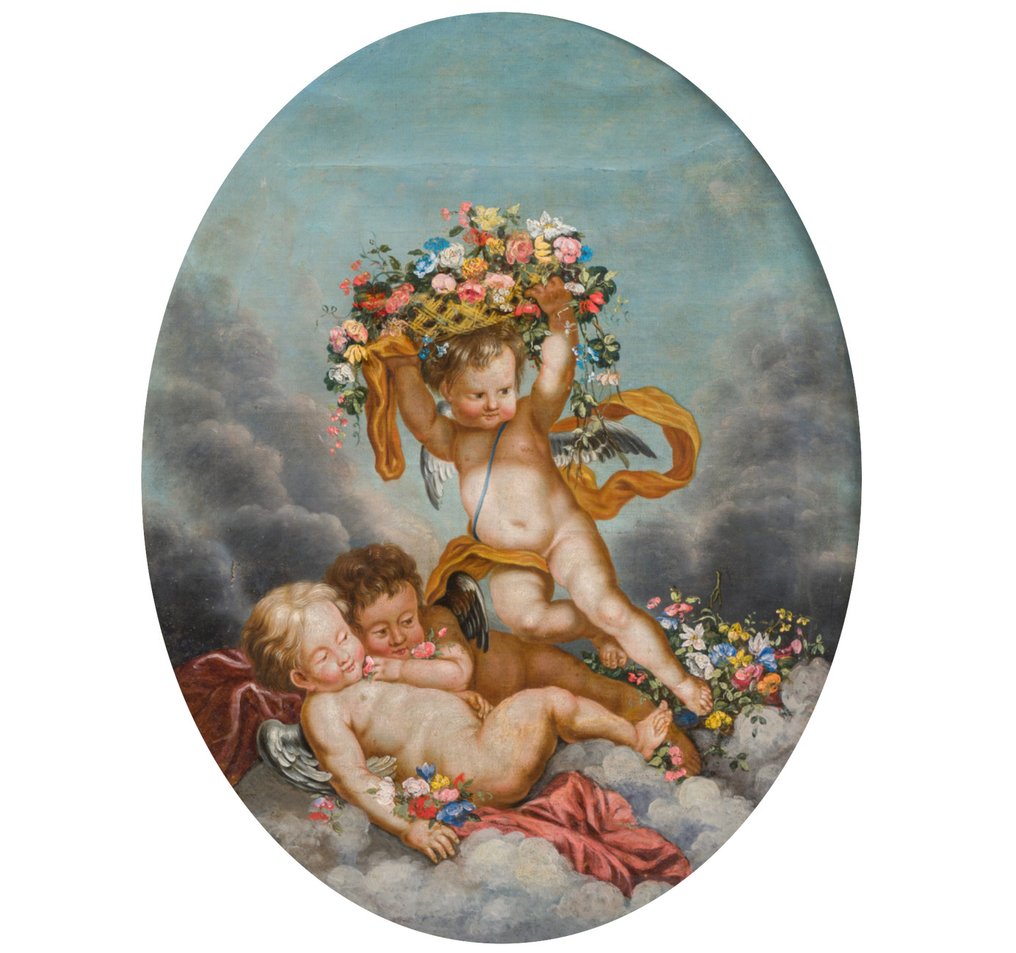
Allegorie van de Lente, an 18th‑century oil painting from France in a classical style, sold with frame.
AI-assisted summary
Description from the seller
Refined French oil painting in an oval frame featuring a scene with three putti on a cloudscape from the last quarter of the 18th century, anonymous.
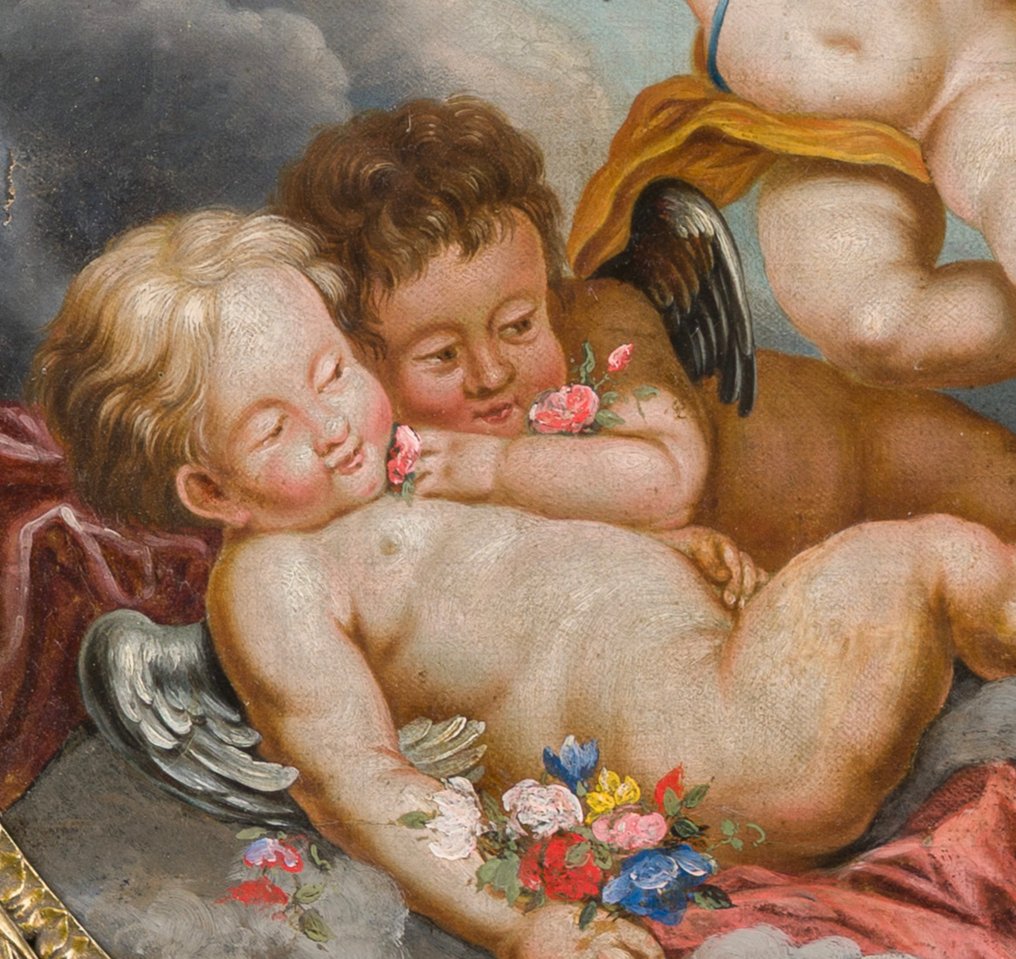
This work depicts an idyllic scene with three putti in a light sky setting with clouds and a blue sky. The scene exudes a pronounced allegorical atmosphere with various references to spring and the abundance of nature. In the foreground, two putti relax on the clouds, surrounded by flowers. The floral motifs are particularly refined, with attention to botanical details and color variation, emphasizing the symbolic nature of spring and fertility.
Putti in art history often refer to universal themes such as love, innocence, the seasons, or divine inspiration. In this work, there is a clear association with spring or Flora, the Roman goddess of flowers. The abundance of floral elements, the heavenly setting, and the playful innocence of the putti suggest a celebration of nature and life.
The soft modeling of the bodies, the use of light-dark contrast, and the airy atmosphere are characteristic of the late rococo style, which continued to influence subsequent periods. The rich gilded frame in neoclassical style supports the luxurious appearance of this work.
Refined French oil painting in an oval frame featuring a scene with three putti on a cloudscape from the last quarter of the 18th century, anonymous.
This work depicts an idyllic scene with three putti in a light sky setting with clouds and a blue sky. The scene exudes a pronounced allegorical atmosphere with various references to spring and the abundance of nature. In the foreground, two putti relax on the clouds, surrounded by flowers. The floral motifs are particularly refined, with attention to botanical details and color variation, emphasizing the symbolic nature of spring and fertility.
Putti in art history often refer to universal themes such as love, innocence, the seasons, or divine inspiration. In this work, there is a clear association with spring or Flora, the Roman goddess of flowers. The abundance of floral elements, the heavenly setting, and the playful innocence of the putti suggest a celebration of nature and life.
The soft modeling of the bodies, the use of light-dark contrast, and the airy atmosphere are characteristic of the late rococo style, which continued to influence subsequent periods. The rich gilded frame in neoclassical style supports the luxurious appearance of this work.
Details
Artist
European school (XIX)
Sold with frame
Yes
Title of artwork
Allegorie van de Lente
Technique
Oil painting
Signature
Not signed
Country of Origin
France
Condition
Good condition
Height
87 cm
Width
60 cm
Weight
5 kg
Depiction/Theme
Mythology
Style
Classical
Period
18th century
Sold by
