Edmund Spenser - Poetical Works - 1778
05
days
18
hours
48
minutes
17
seconds

No bids placed
Catawiki Buyer Protection
Your payment’s safe with us until you receive your object.View details
Trustpilot 4.4 | 122115 reviews
Rated Excellent on Trustpilot.
Description from the seller
The poetic works of Edmund Spenser (1552–1599) form one of the most magnificent monuments of Renaissance English poetry. His masterpiece, The Faerie Queene, is the jewel — an unprecedented allegorical epic, where knights, virtues, and monsters intertwine in an enchanted vision of virtue and faith. Spenser constructs a symbolic universe in which Elizabethan England becomes the stage of a cosmic battle between good and evil.
His sonnets (Amoretti), his elegies (Astrophel), and his pastorals (The Shepheardes Calender) reveal an art of musical language, of an unprecedented verbal richness, weaving archaisms and neologisms to create an almost magical language.
Each poem seems born of a golden light, that of a dreamed heroic age, where love, virtue, and glory blend into the splendor of myth. With Spenser, poetry becomes a sacred act: an attempt to translate the moral order of the universe into sound beauty.
Born in London, educated at Cambridge, Spenser was simultaneously a poet, scholar, and statesman serving Queen Elizabeth I's court. Friend of Philip Sidney and contemporary of Shakespeare, he sought to establish an English national epic as noble as those of Homer or Virgil.
In language, deliberately archaic, it weaves a link between the Middle Ages and the Renaissance, celebrating chivalry while heralding the modernity of individual lyricism. Settled in Ireland, he wrote most of his work there, in a solitude that lent his verses a melancholic and mystical hue.
Died prematurely during a revolt in 1599, Spenser left behind an immense work, celebrated by Milton and Blake, where poetry becomes a quest for moral perfection and divine harmony.
SPENSER, Edmund - Poetical Works
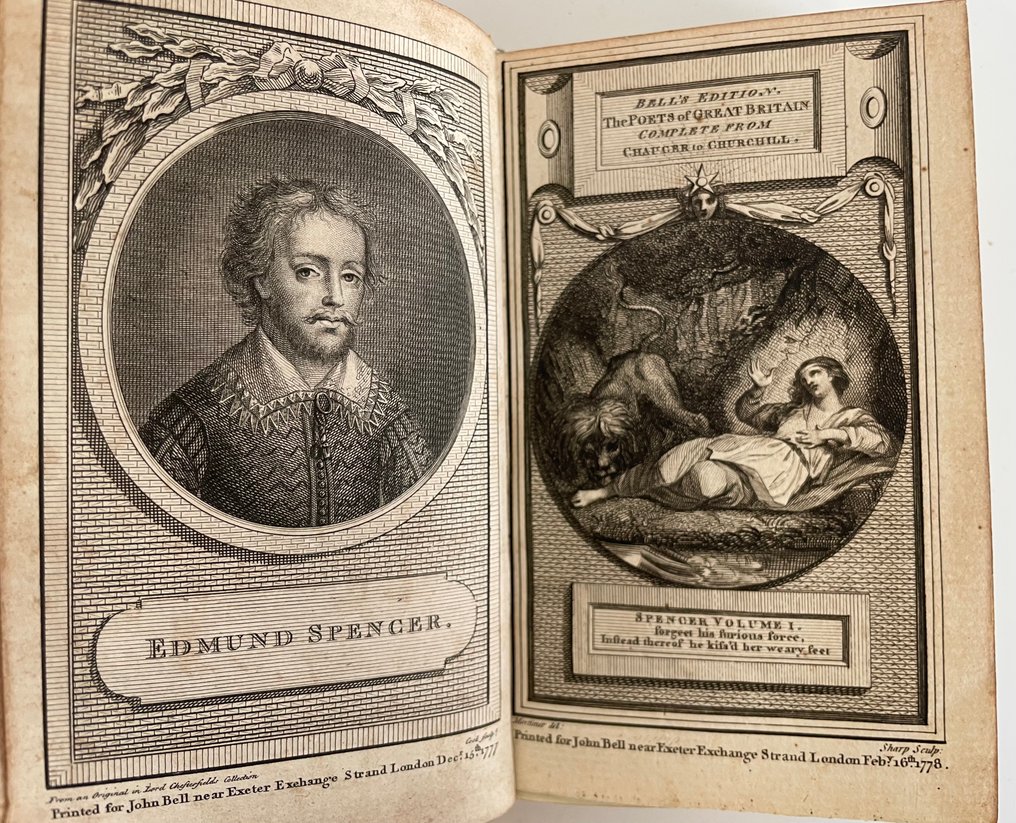
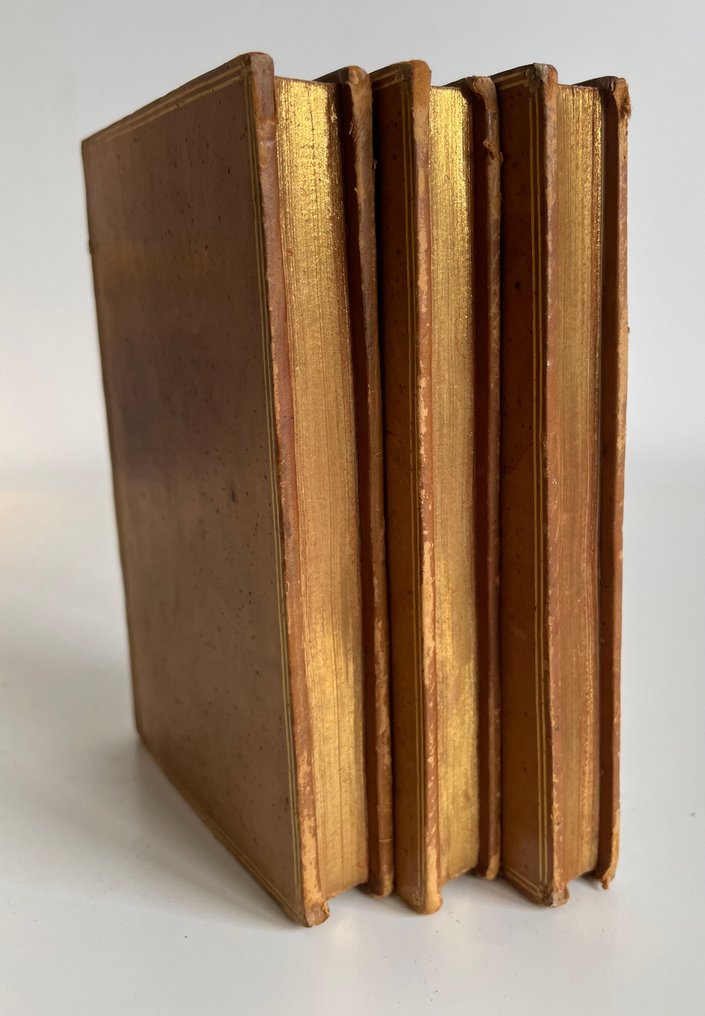
Edinburgh, 1778. 3 volumes in-16. Decorated with 3 frontispieces and a portrait of the author.
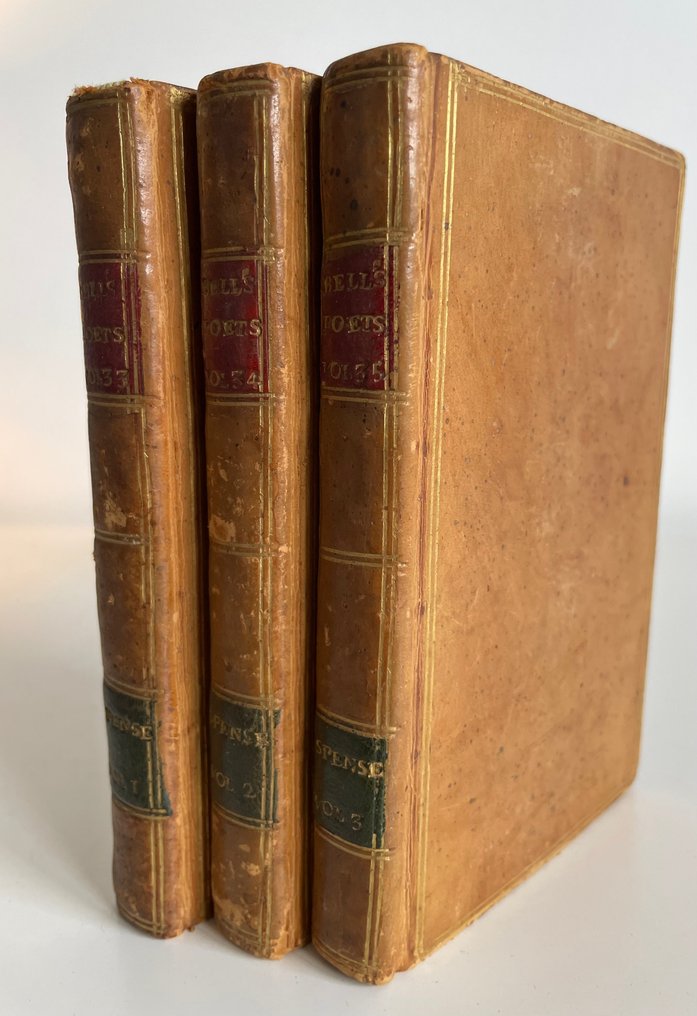
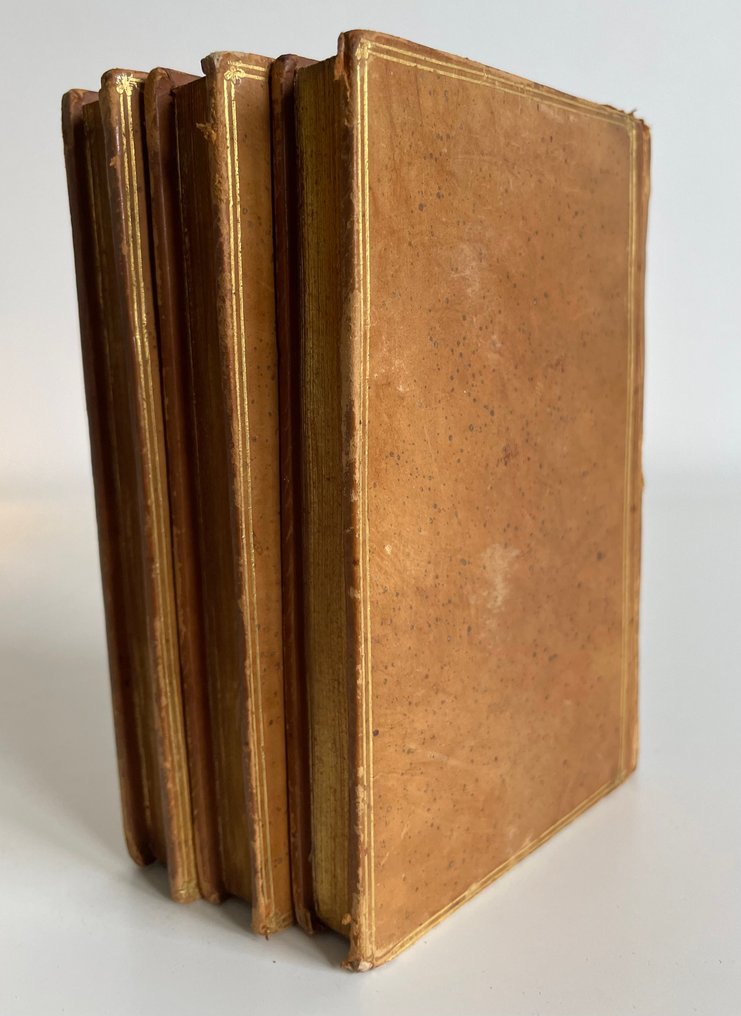
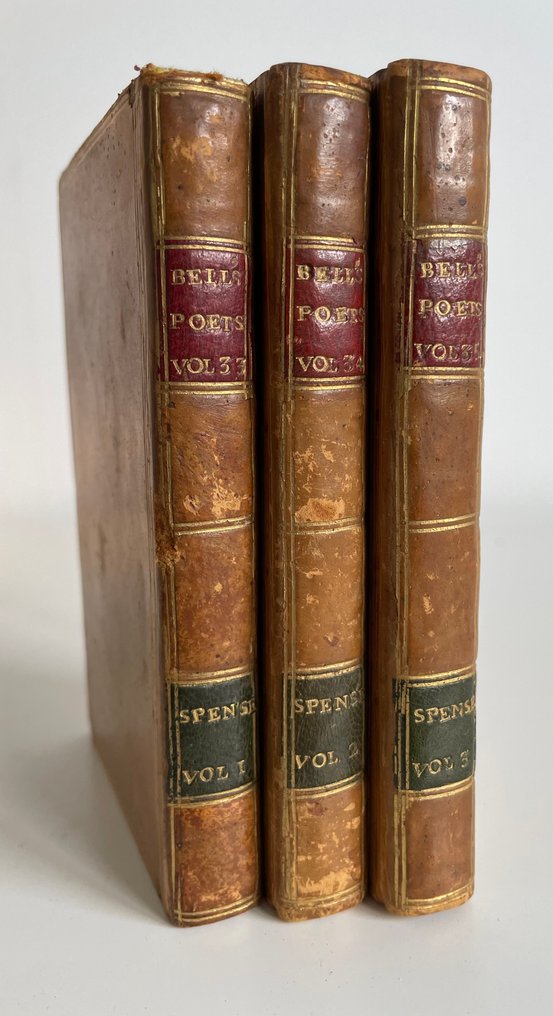
Beautiful full blond calf leather bindings in good condition. Smooth spines with title and volume labels in morocco. Wear and small losses at the corners and crowns. All edges gilded. Sturdy bindings.
Clean interior, yellowed paper.
Good specimen.
The poetic works of Edmund Spenser (1552–1599) form one of the most magnificent monuments of Renaissance English poetry. His masterpiece, The Faerie Queene, is the jewel — an unprecedented allegorical epic, where knights, virtues, and monsters intertwine in an enchanted vision of virtue and faith. Spenser constructs a symbolic universe in which Elizabethan England becomes the stage of a cosmic battle between good and evil.
His sonnets (Amoretti), his elegies (Astrophel), and his pastorals (The Shepheardes Calender) reveal an art of musical language, of an unprecedented verbal richness, weaving archaisms and neologisms to create an almost magical language.
Each poem seems born of a golden light, that of a dreamed heroic age, where love, virtue, and glory blend into the splendor of myth. With Spenser, poetry becomes a sacred act: an attempt to translate the moral order of the universe into sound beauty.
Born in London, educated at Cambridge, Spenser was simultaneously a poet, scholar, and statesman serving Queen Elizabeth I's court. Friend of Philip Sidney and contemporary of Shakespeare, he sought to establish an English national epic as noble as those of Homer or Virgil.
In language, deliberately archaic, it weaves a link between the Middle Ages and the Renaissance, celebrating chivalry while heralding the modernity of individual lyricism. Settled in Ireland, he wrote most of his work there, in a solitude that lent his verses a melancholic and mystical hue.
Died prematurely during a revolt in 1599, Spenser left behind an immense work, celebrated by Milton and Blake, where poetry becomes a quest for moral perfection and divine harmony.
SPENSER, Edmund - Poetical Works
Edinburgh, 1778. 3 volumes in-16. Decorated with 3 frontispieces and a portrait of the author.
Beautiful full blond calf leather bindings in good condition. Smooth spines with title and volume labels in morocco. Wear and small losses at the corners and crowns. All edges gilded. Sturdy bindings.
Clean interior, yellowed paper.
Good specimen.
Details
Number of Books
3
Subject
Literature, Poetry
Book Title
Poetical Works
Author/ Illustrator
Edmund Spenser
Condition
Good
Publication year oldest item
1778
Height
15 cm
Edition
Reprint
Width
9 cm
Language
English
Original language
Yes
Number of pages
750
Sold by
