Theocritus, ed. L.C. Valckenaer - Theocriti, Bionis et Moschi carmina bucolica - 1781
12
days
17
hours
25
minutes
50
seconds
Current bid
€ 1
No reserve price

Expert
Selected by Sebastian Hau
Founded and directed two French book fairs; nearly 20 years of experience in contemporary books.
Estimate € 180 - € 220
10 other people are watching this object
 Bidder 8482 Bidder 8482 | €1 |
|---|
Catawiki Buyer Protection
Your payment’s safe with us until you receive your object.View details
Trustpilot 4.4 | 122473 reviews
Rated Excellent on Trustpilot.
Theocriti, Bionis et Moschi carmina bucolica. Graece et Latine, edited by L.C. Valckenaer.
AI-assisted summary
Description from the seller
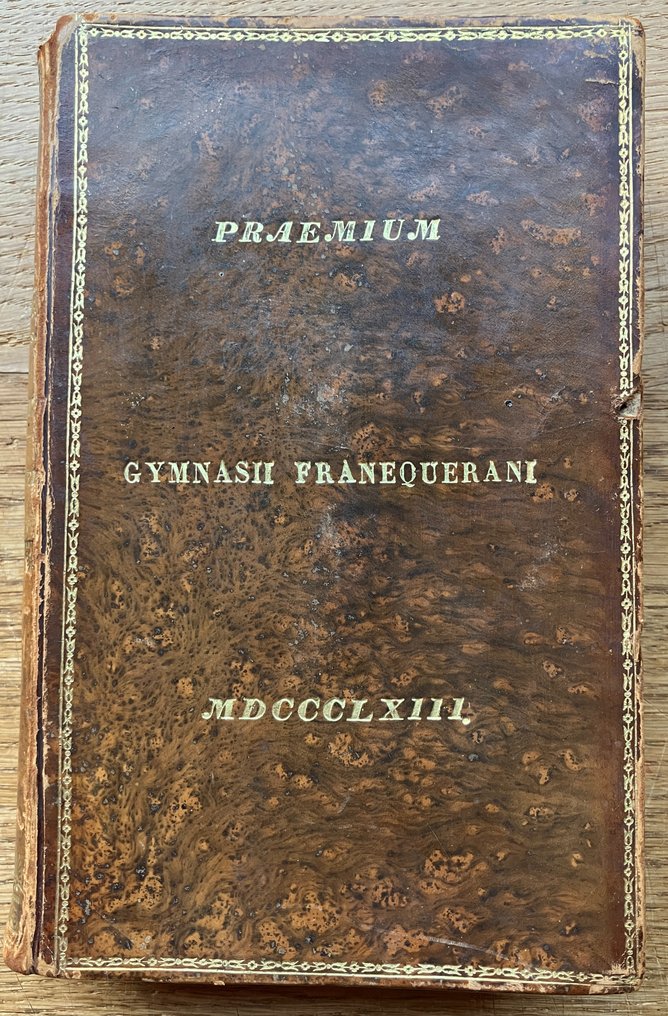
Beautiful edition in full leather Schoolprize binding of the 'Gymnasii Franequerani', dated mdccclxiii (1863).
Full title
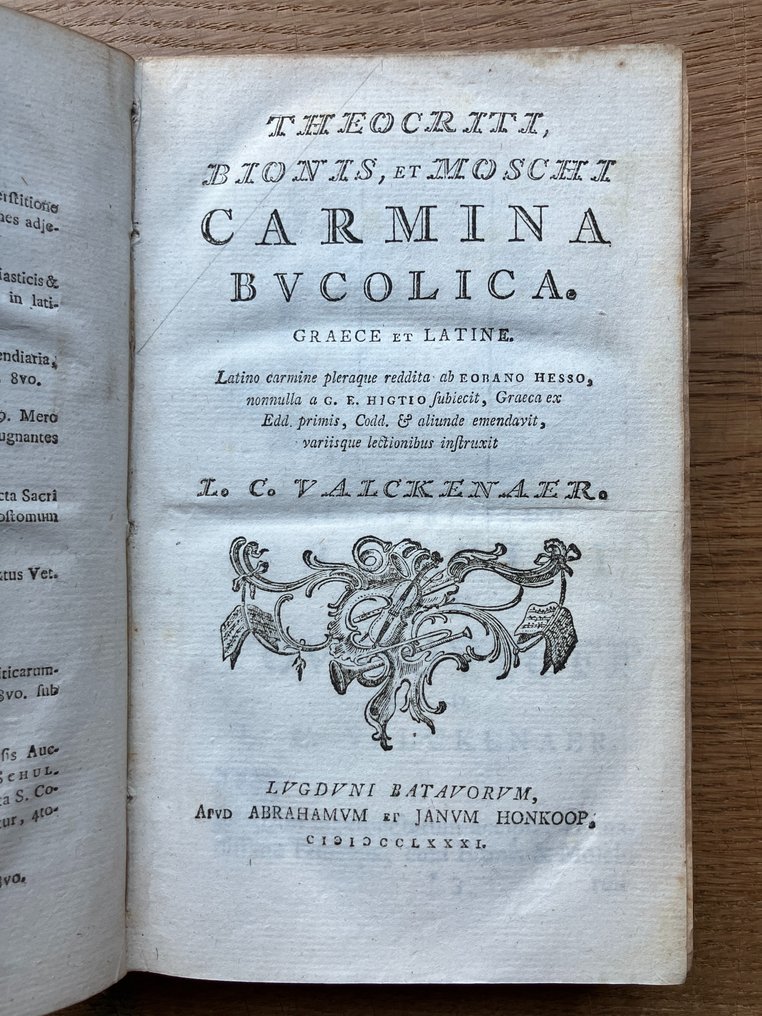
Theocriti, Bionis et Moschi carmina bucolica. Graece et Latine. Latino carmine pleraque reddita ab Eobano Hesso, nonnulla a G.E. Higtio subiecit, Graeca ex edd. primis, codd. & aliunde emendavit, variis lectionibus instruxit L.C. Valckenaer - Title print, title page dated 1781 - (xviii), 567 pp. - leather strap.
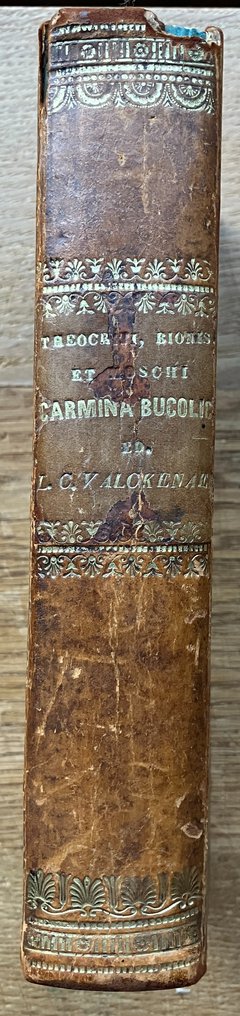
Condition: A small piece of leather is missing from the top of the spine. Hinges are good on both the inside and outside. The paper is clean and odorless.
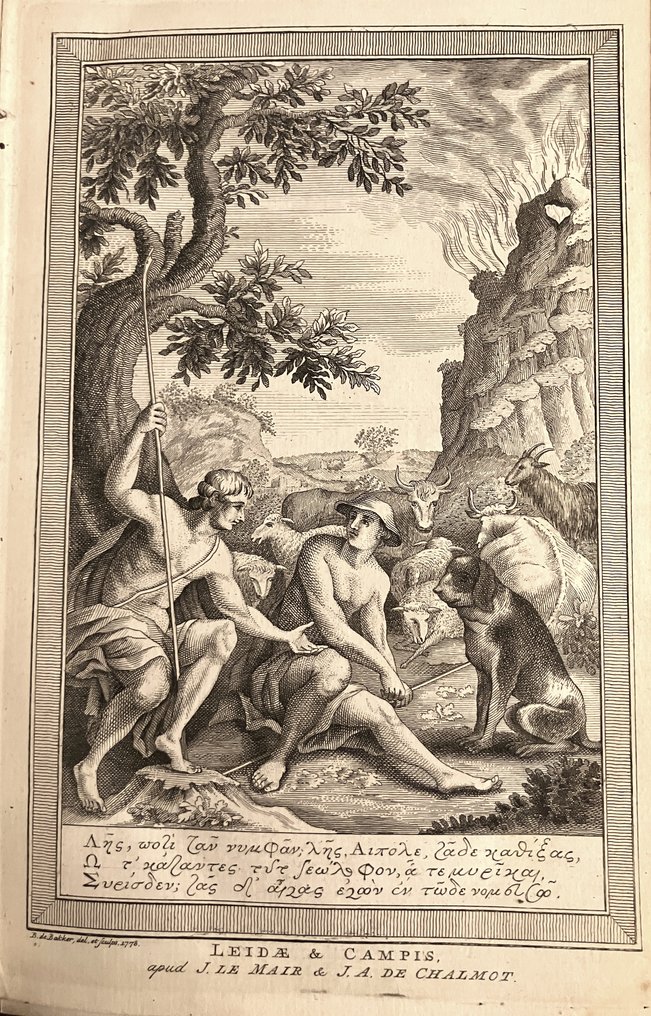
'The frontispiece, by B. de Bakker, shows a bucolic scene from the first idyll of Theocritus, two shepherds chatting.
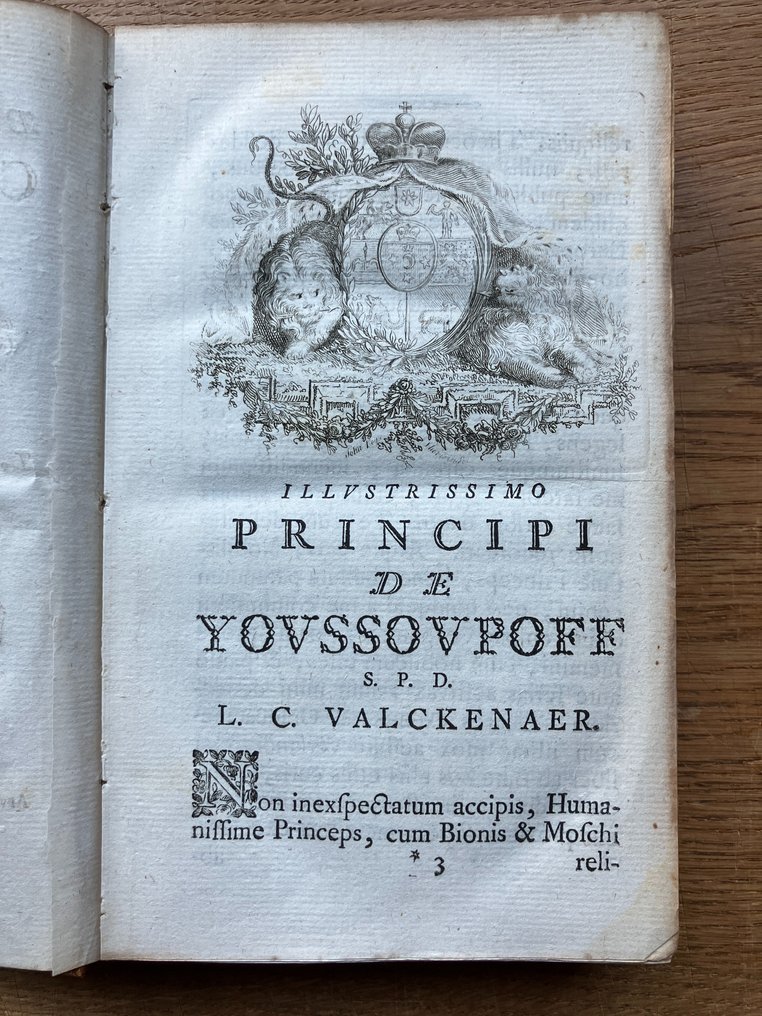
Engraved coat of arms of the Russian Prince Nikolai Borisovich Yusupov, 1750-1831, at the beginning of the dedication. Valckenaer tells us in the dedication that he has fond memories of the prince's visit to Leiden and how they read poems by Theocritus. The prince was an avid book and art collector.
The Greek poet Theocritus, c. 300–c. 260 BCE, was a native of Syracuse. He is called the father or inventor of bucolic and pastoral poetry, and the revival of mime. His remarkable dramatic, descriptive, and lyrical qualities are best expressed in his bucolic poetry.
Moschus, circa 150 BCE and also from Syracuse, is, according to Suidas, the next to Theocritus in pastoral poetry. He was an imitator, like Bion. "It is by far the most critical and valuable work yet published; the editor has expended considerable effort to restore the true readings."
Shipment registered
Beautiful edition in full leather Schoolprize binding of the 'Gymnasii Franequerani', dated mdccclxiii (1863).
Full title
Theocriti, Bionis et Moschi carmina bucolica. Graece et Latine. Latino carmine pleraque reddita ab Eobano Hesso, nonnulla a G.E. Higtio subiecit, Graeca ex edd. primis, codd. & aliunde emendavit, variis lectionibus instruxit L.C. Valckenaer - Title print, title page dated 1781 - (xviii), 567 pp. - leather strap.
Condition: A small piece of leather is missing from the top of the spine. Hinges are good on both the inside and outside. The paper is clean and odorless.
'The frontispiece, by B. de Bakker, shows a bucolic scene from the first idyll of Theocritus, two shepherds chatting.
Engraved coat of arms of the Russian Prince Nikolai Borisovich Yusupov, 1750-1831, at the beginning of the dedication. Valckenaer tells us in the dedication that he has fond memories of the prince's visit to Leiden and how they read poems by Theocritus. The prince was an avid book and art collector.
The Greek poet Theocritus, c. 300–c. 260 BCE, was a native of Syracuse. He is called the father or inventor of bucolic and pastoral poetry, and the revival of mime. His remarkable dramatic, descriptive, and lyrical qualities are best expressed in his bucolic poetry.
Moschus, circa 150 BCE and also from Syracuse, is, according to Suidas, the next to Theocritus in pastoral poetry. He was an imitator, like Bion. "It is by far the most critical and valuable work yet published; the editor has expended considerable effort to restore the true readings."
Shipment registered
Details
Number of Books
1
Subject
Literature, Poetry
Book Title
Theocriti, Bionis et Moschi carmina bucolica
Author/ Illustrator
Theocritus, ed. L.C. Valckenaer
Condition
Good
Publication year oldest item
1781
Height
20.5 cm
Edition
1st Edition Thus
Width
13 cm
Language
Greek, Latin
Original language
Yes
Publisher
Leiden (Lugduni Batavorum), Apud Abrahamum et Janum Honkoop
Binding/ Material
Leather
Number of pages
567
Sold by
