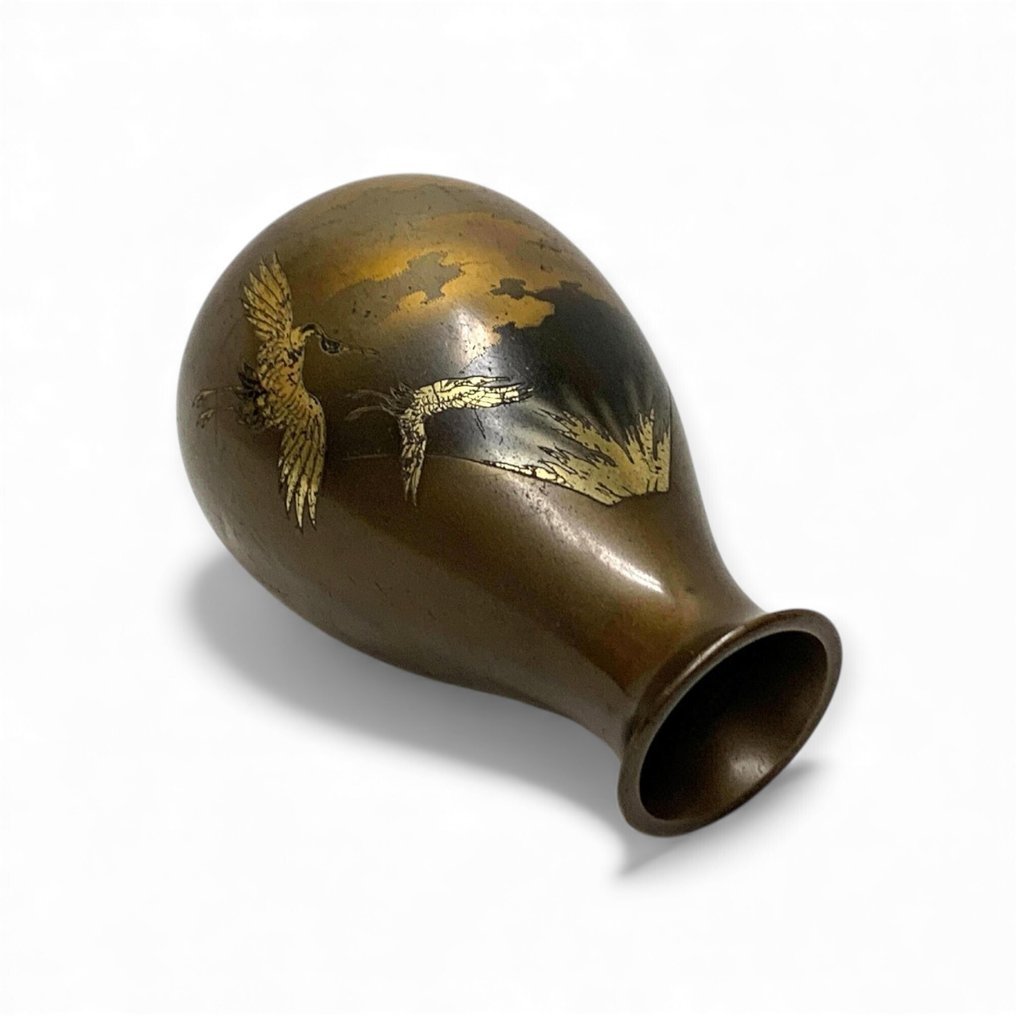
Copper Vase with Inlaid Mount Fuji and Crane Design – Japanese Bronze Metalwork - Porcelain - Japan - Shōwa period (1926-1989)
01
day
19
hours
23
minutes
06
seconds
Current bid
€ 20
No reserve price

Expert
Selected by Marion Oliviero
Holds a master's in Chinese archaeology with extensive expertise in Japanese art.
Estimate € 150 - € 200
17 other people are watching this object
 Bidder 0738 Bidder 0738 | €20 | |
|---|---|---|
 Bidder 2128 Bidder 2128 | €15 | |
| Bidder 0738 | €10 | |
Catawiki Buyer Protection
Your payment’s safe with us until you receive your object.View details
Trustpilot 4.4 | 122529 reviews
Rated Excellent on Trustpilot.
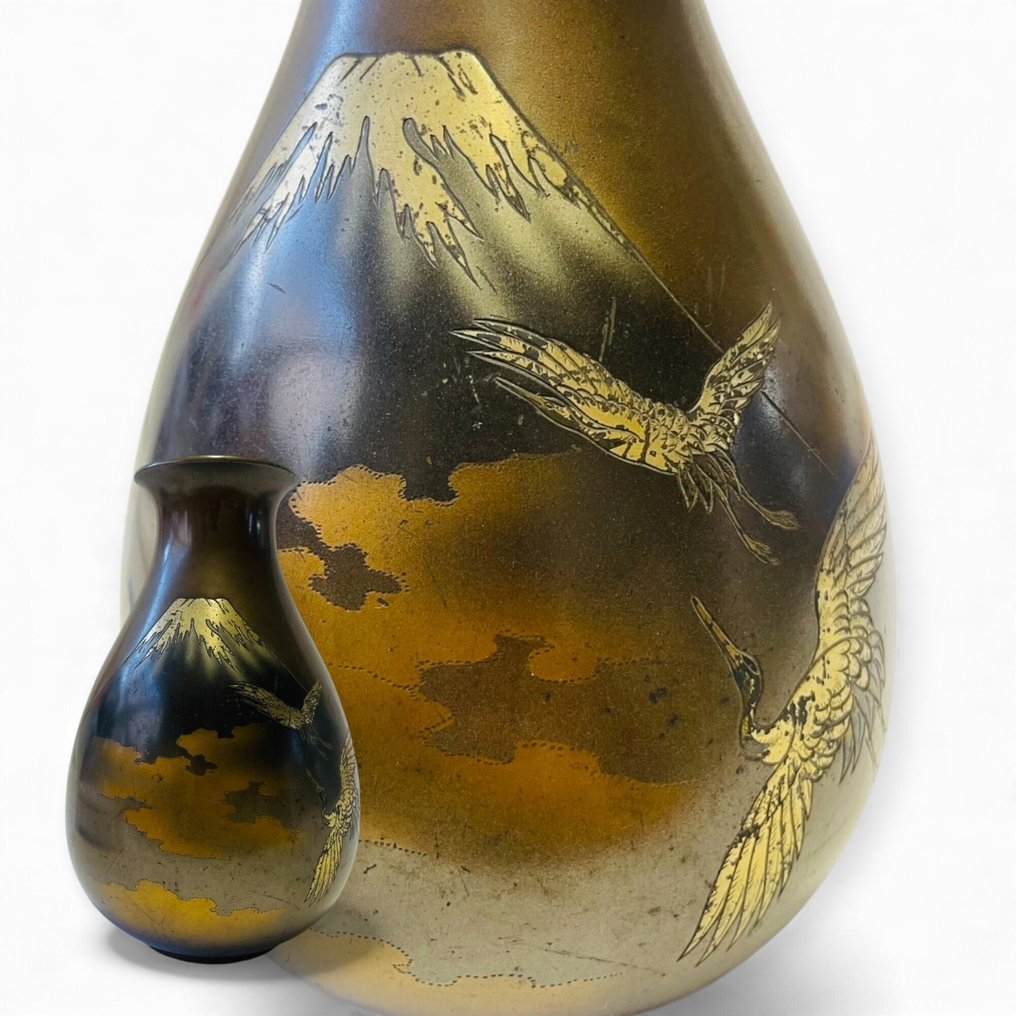
Porcelain vase from Japan, in the Shōwa period (1926–1989), with inlaid Mount Fuji and cranes, measuring 23.5 cm high by 11 cm wide and in excellent condition.
AI-assisted summary
Description from the seller
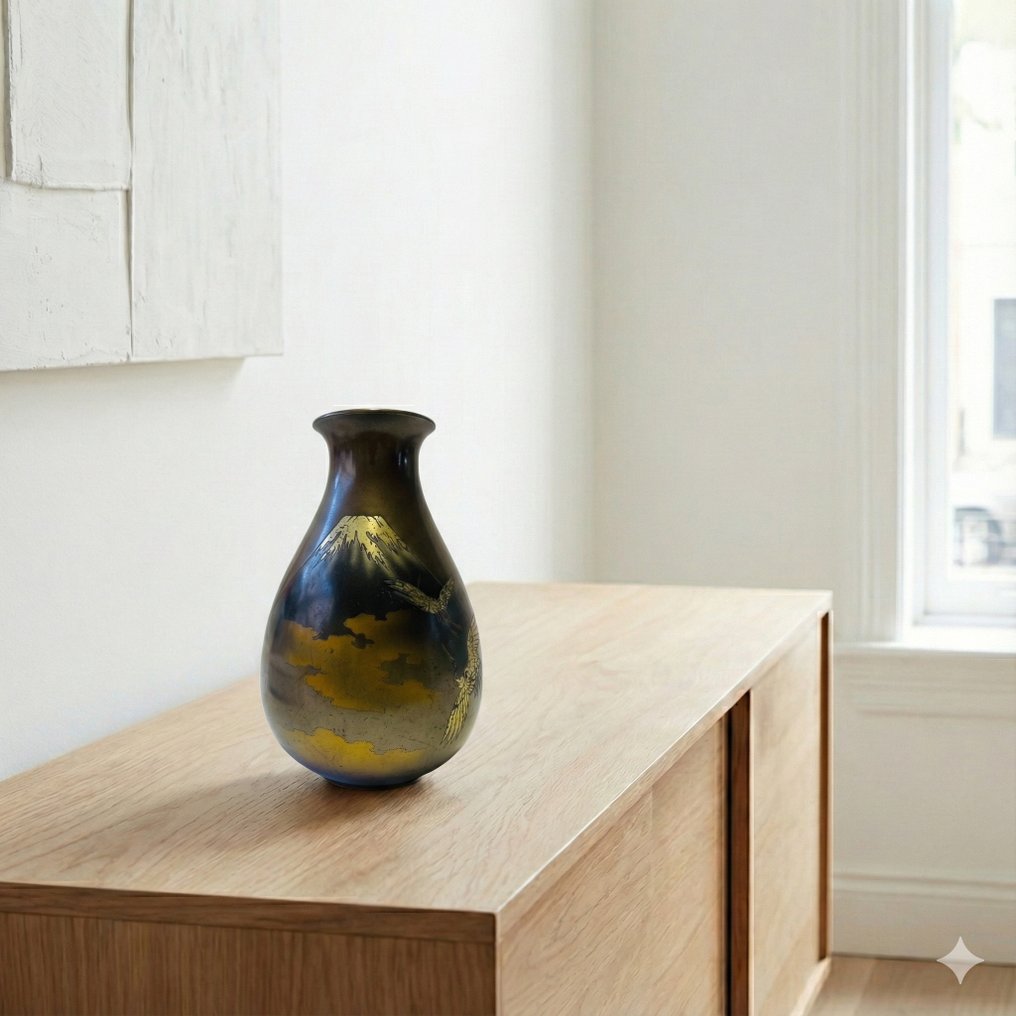
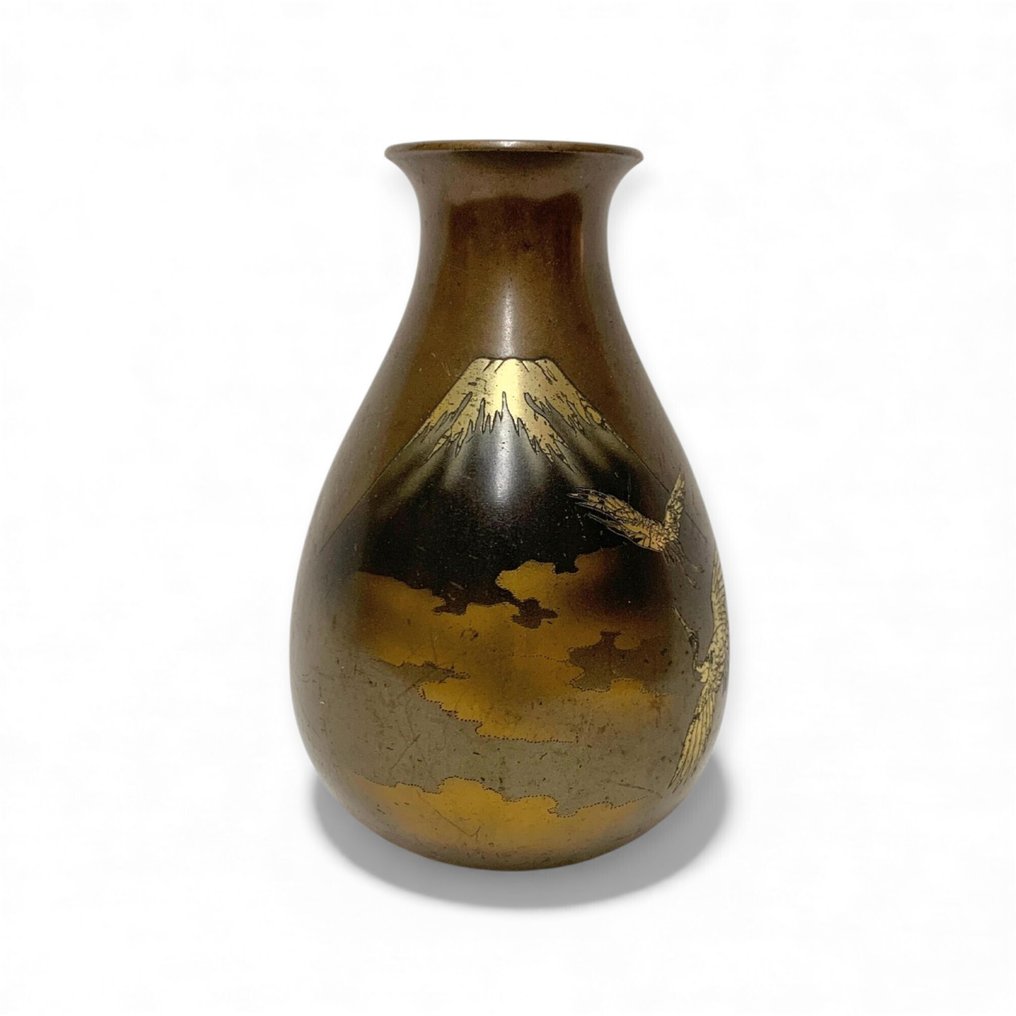
– Japanese copper flower vase with symbolic inlay decoration – Mount Fuji and twin cranes: auspicious motifs representing longevity and natural majesty – Dimensions: approximately 14.5 cm width × 23.5 cm height
Summary: This copper vase showcases traditional Japanese metalwork techniques, with inlaid decoration depicting Mount Fuji and a pair of cranes in flight. The iconography is deeply rooted in Japanese culture: Mount Fuji as the nation's sacred peak, and cranes (tsuru) as symbols of longevity, fidelity, and good fortune. The inlay work—likely achieved through zougan (metal inlay) or象嵌 techniques—creates subtle tonal contrasts against the copper body, lending the vase a refined, slightly formal character. Standing approximately 23.5 cm tall, the piece is well-proportioned for table or alcove display. Its condition reflects light use and age-appropriate patina, with minor surface marks that enhance rather than diminish its vintage appeal. For collectors of Japanese metalwork or those seeking a decorative vessel with narrative depth, this vase offers both visual elegance and cultural resonance.
Japanese metalwork has a long and distinguished history, encompassing sword fittings, temple ornaments, tea utensils, and decorative objects for the scholar's studio. The techniques of inlay and surface enrichment were refined over centuries, with artisans developing methods to embed contrasting metals—silver, gold, brass, or shakudō—into bronze or copper substrates. The resulting designs could range from delicate floral motifs to bold pictorial compositions.
This vase depicts Mount Fuji, Japan's most iconic natural landmark and a UNESCO World Heritage site. For centuries, Fuji has been a subject of pilgrimage, artistic contemplation, and national pride. Its symmetrical cone, often snow-capped, appears in countless woodblock prints, paintings, and decorative arts. Here, the mountain rises in inlaid relief, its slopes rendered with restrained precision. Above and around it, two cranes soar—symbols of marital harmony and long life in Japanese tradition. Cranes are believed to live for a thousand years, making them auspicious motifs for celebratory or ceremonial objects.
The copper body has developed a warm patina over time, shifting from bright metallic tones to deeper browns and muted ochres. This natural oxidation is prized among collectors, as it signals authenticity and age. The inlay work remains legible, with the contrasting metals catching light at different angles. The form is gracefully tapered, with a narrow neck suitable for single-stem or minimal floral arrangements. In ikebana practice, such vessels encourage contemplation of line and space rather than abundance.
In a contemporary European interior, this vase functions equally well as sculpture or as a working flower vessel. The subdued copper tones harmonise with industrial design elements, reclaimed wood, and textured ceramics. On a mantelpiece, bookshelf, or sideboard, it introduces a narrative layer—Mount Fuji and cranes evoke journeys, seasons, and the passage of time.
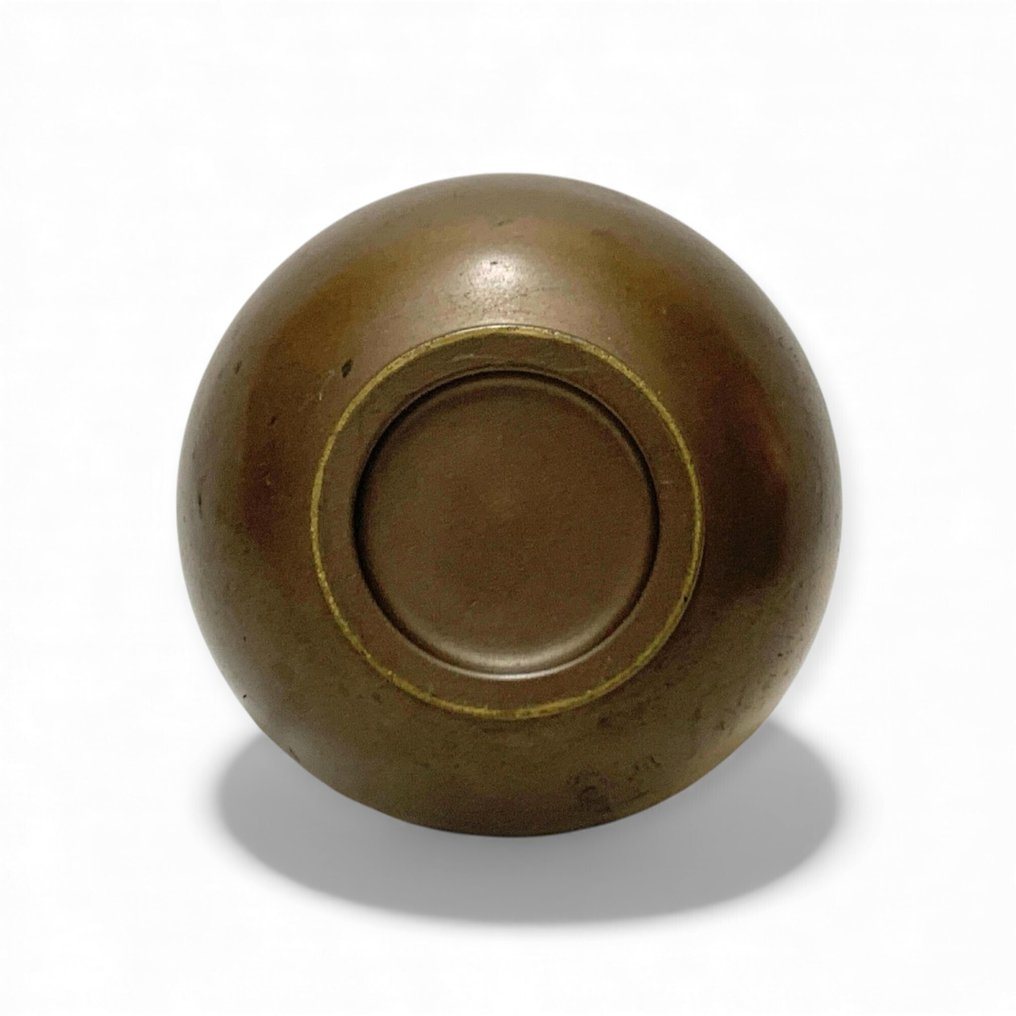
Condition is good, with minor surface wear consistent with age and use. There are no significant dents, cracks, or losses. The patina is even, and the inlay remains intact. Light handling marks and minor oxidation add to the piece's character without detracting from its display quality.
Japanese decorative metalwork, particularly pieces with inlaid designs, is appreciated by collectors of Asian art and those interested in traditional craft techniques. The combination of symbolic imagery and technical skill makes such objects both visually appealing and culturally significant.
If you are drawn to objects that carry stories within their surfaces, this copper vase offers a window into Japan's rich tradition of metalwork and symbolic design.
Shipping & Handling We ship worldwide via DHL or EMS with full insurance and tracking. Professional packing ensures safe arrival; combined shipping available for multiple wins. Local customs duties are the buyer's responsibility.
Seller Guarantee We specialise in authentic Japanese metalwork and guarantee this piece's authenticity. Questions welcome – we reply within 24 hours.
1183
Seller's Story
Hello, and thank you for visiting my page. I primarily handle Japanese antiques, as well as Western antiques, art pieces, and pre-loved items that have been cherished in Japan. Growing up in a family of historians—my grandfather was a historian and my father was an archaeologist—I have always been captivated by the eras and stories these historic objects and works of art carry with them.
My listings feature collections from both Japan and the West, pieces that have stood the test of time and remained beloved through the ages. Through these rare treasures, I hope to share with you the delight of ownership and discovery. As a professional, I strive for honest and sincere transactions to ensure customer satisfaction, always leveraging my experience and eye for quality.
I strongly believe in not letting buyers down, so I describe items as accurately and thoroughly as possible, prioritizing secure and careful packaging. If you have any questions or concerns, please feel free to reach out. It would be my pleasure to help enrich your collecting experience.
Thank you for your interest, and I look forward to doing business with you.
– Japanese copper flower vase with symbolic inlay decoration – Mount Fuji and twin cranes: auspicious motifs representing longevity and natural majesty – Dimensions: approximately 14.5 cm width × 23.5 cm height
Summary: This copper vase showcases traditional Japanese metalwork techniques, with inlaid decoration depicting Mount Fuji and a pair of cranes in flight. The iconography is deeply rooted in Japanese culture: Mount Fuji as the nation's sacred peak, and cranes (tsuru) as symbols of longevity, fidelity, and good fortune. The inlay work—likely achieved through zougan (metal inlay) or象嵌 techniques—creates subtle tonal contrasts against the copper body, lending the vase a refined, slightly formal character. Standing approximately 23.5 cm tall, the piece is well-proportioned for table or alcove display. Its condition reflects light use and age-appropriate patina, with minor surface marks that enhance rather than diminish its vintage appeal. For collectors of Japanese metalwork or those seeking a decorative vessel with narrative depth, this vase offers both visual elegance and cultural resonance.
Japanese metalwork has a long and distinguished history, encompassing sword fittings, temple ornaments, tea utensils, and decorative objects for the scholar's studio. The techniques of inlay and surface enrichment were refined over centuries, with artisans developing methods to embed contrasting metals—silver, gold, brass, or shakudō—into bronze or copper substrates. The resulting designs could range from delicate floral motifs to bold pictorial compositions.
This vase depicts Mount Fuji, Japan's most iconic natural landmark and a UNESCO World Heritage site. For centuries, Fuji has been a subject of pilgrimage, artistic contemplation, and national pride. Its symmetrical cone, often snow-capped, appears in countless woodblock prints, paintings, and decorative arts. Here, the mountain rises in inlaid relief, its slopes rendered with restrained precision. Above and around it, two cranes soar—symbols of marital harmony and long life in Japanese tradition. Cranes are believed to live for a thousand years, making them auspicious motifs for celebratory or ceremonial objects.
The copper body has developed a warm patina over time, shifting from bright metallic tones to deeper browns and muted ochres. This natural oxidation is prized among collectors, as it signals authenticity and age. The inlay work remains legible, with the contrasting metals catching light at different angles. The form is gracefully tapered, with a narrow neck suitable for single-stem or minimal floral arrangements. In ikebana practice, such vessels encourage contemplation of line and space rather than abundance.
In a contemporary European interior, this vase functions equally well as sculpture or as a working flower vessel. The subdued copper tones harmonise with industrial design elements, reclaimed wood, and textured ceramics. On a mantelpiece, bookshelf, or sideboard, it introduces a narrative layer—Mount Fuji and cranes evoke journeys, seasons, and the passage of time.
Condition is good, with minor surface wear consistent with age and use. There are no significant dents, cracks, or losses. The patina is even, and the inlay remains intact. Light handling marks and minor oxidation add to the piece's character without detracting from its display quality.
Japanese decorative metalwork, particularly pieces with inlaid designs, is appreciated by collectors of Asian art and those interested in traditional craft techniques. The combination of symbolic imagery and technical skill makes such objects both visually appealing and culturally significant.
If you are drawn to objects that carry stories within their surfaces, this copper vase offers a window into Japan's rich tradition of metalwork and symbolic design.
Shipping & Handling We ship worldwide via DHL or EMS with full insurance and tracking. Professional packing ensures safe arrival; combined shipping available for multiple wins. Local customs duties are the buyer's responsibility.
Seller Guarantee We specialise in authentic Japanese metalwork and guarantee this piece's authenticity. Questions welcome – we reply within 24 hours.
1183
Seller's Story
Hello, and thank you for visiting my page. I primarily handle Japanese antiques, as well as Western antiques, art pieces, and pre-loved items that have been cherished in Japan. Growing up in a family of historians—my grandfather was a historian and my father was an archaeologist—I have always been captivated by the eras and stories these historic objects and works of art carry with them.
My listings feature collections from both Japan and the West, pieces that have stood the test of time and remained beloved through the ages. Through these rare treasures, I hope to share with you the delight of ownership and discovery. As a professional, I strive for honest and sincere transactions to ensure customer satisfaction, always leveraging my experience and eye for quality.
I strongly believe in not letting buyers down, so I describe items as accurately and thoroughly as possible, prioritizing secure and careful packaging. If you have any questions or concerns, please feel free to reach out. It would be my pleasure to help enrich your collecting experience.
Thank you for your interest, and I look forward to doing business with you.
Details
Dynastic Style/Period
Shōwa period (1926-1989)
No. of items
1
Country of Origin
Japan
Material
Porcelain
Height
23.5 cm
Width
11 cm
Title of artwork
Copper Vase with Inlaid Mount Fuji and Crane Design – Japanese Bronze Metalwork
Condition
Excellent condition
Sold by
