Fugen Bodhisattva riding an elephant and Manjushri Bodhisattva riding a lion - Statue Bronze - Japan


05
days
06
hours
51
minutes
48
seconds
Current bid
€ 26
Reserve price not met

Expert
Selected by Marion Oliviero
Holds a master's in Chinese archaeology with extensive expertise in Japanese art.
Estimate € 180 - € 200
2 other people are watching this object
 Bidder 8237 Bidder 8237 | €26 |
|---|
Catawiki Buyer Protection
Your payment’s safe with us until you receive your object.View details
Trustpilot 4.4 | 122910 reviews
Rated Excellent on Trustpilot.
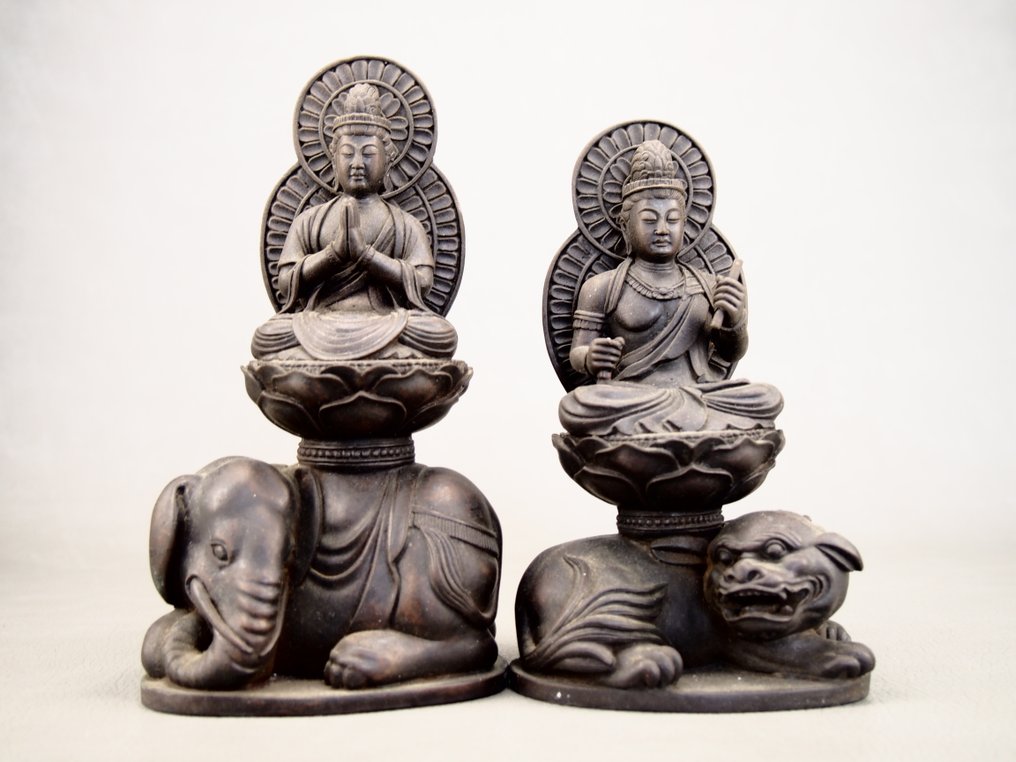
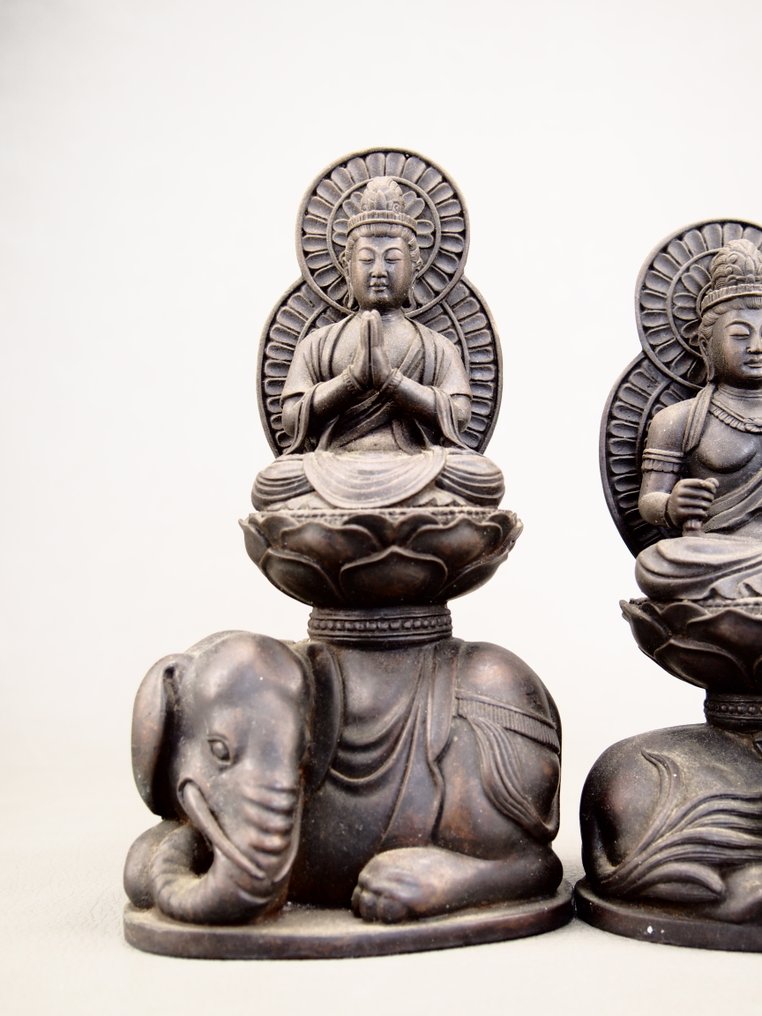
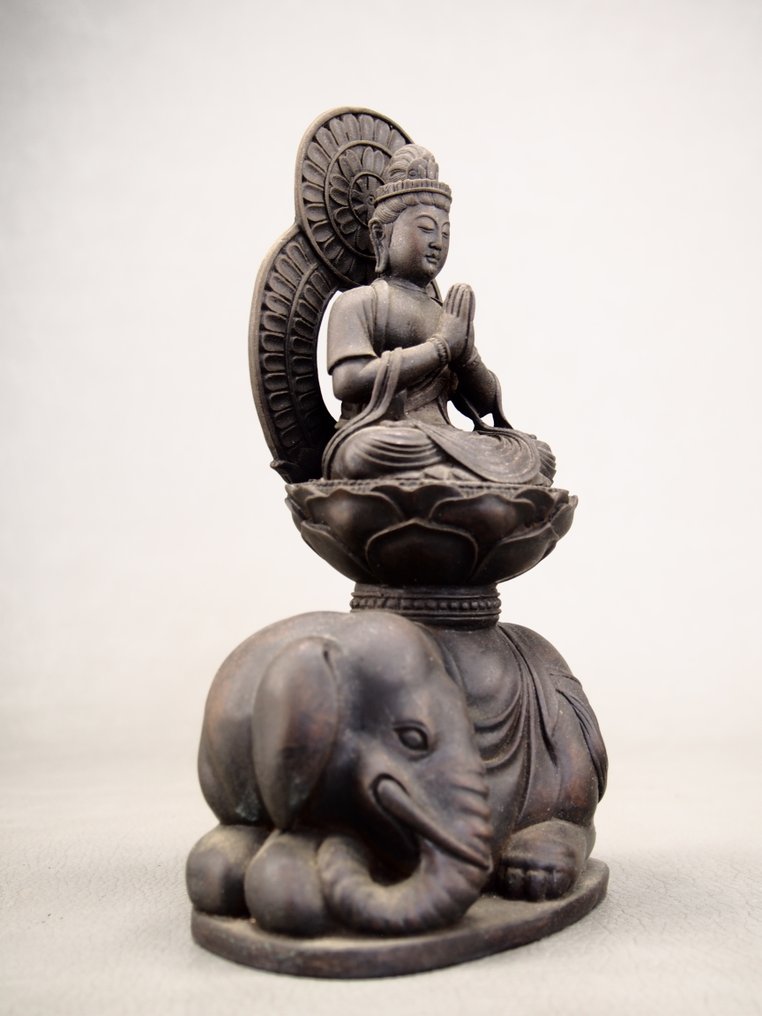
Two bronze Bodhisattva statues from Japan, Samantabhadra on a six-tusk white elephant and Manjushri on a lion, titled "Fugen Bodhisattva riding an elephant and Manjushri Bodhisattva riding a lion", with dimensions 21.2 × 11.3 × 7.2 cm (1800 g) and 18.6 × 11.2 × 7.8 cm (1500 g), in good condition and unsigned.
AI-assisted summary
Description from the seller
This set features bronze statues of Bodhisattva Samantabhadra riding an elephant and Bodhisattva Manjushri riding a lion.
They are believed to have been created between the Meiji and early Showa periods.
The Bodhisattva riding the elephant is Bodhisattva Samantabhadra. He appears riding a six-tusked white elephant and is said to protect those who believe in the Lotus Sutra in particular. This image was popular during the Heian period and is commonly seen in Buddhist statues and paintings.
Bodhisattva Samantabhadra: Meaning "one who excels in all respects," he is the Bodhisattva of compassion.
Elephant: Usually a white elephant with six tusks, it is considered a symbol of strength and enlightenment.
Connection to the Lotus Sutra: Depicted in this pose because of his vow to protect practitioners who accrue merit through the Lotus Sutra.
Placement in Buddhist Statues: In Shaka Triads, he is typically placed alongside Bodhisattva Manjushri as the attendant to Shaka Nyorai's right.
Characteristics of the statue: A lotus pedestal is placed on the elephant's back, and the Bodhisattva is seated in a cross-legged position on top of it.
The Bodhisattva riding the lion is Manjusri. Manjusri is the Bodhisattva of wisdom, and his powerful and fearless appearance is depicted as he rides a powerful lion. This figure is called "Manjusri Riding a Lion," and he often holds a sharp sword in his right hand, symbolizing wisdom.
Reason for Manjusri Riding a Lion
Symbol of Wisdom: The lion is considered an animal that symbolizes wisdom, and is the vehicle of Manjusri, the Bodhisattva of Wisdom.
Power of Wisdom: It represents abundant wisdom and a fearless and fearless appearance.
Characteristics of Manjusri Bodhisattva
The sharp sword in his right hand: This sword symbolizes the use of wisdom to cut off worldly desires.
The lotus in his left hand: He holds a lotus flower, which represents compassion.
"Manjusri Riding a Lion": This name refers to the image of Manjusri riding a lion.
"Manjusri Crossing the Sea": This group statue depicts Manjusri crossing the sea accompanied by four attendants. Particularly famous examples include the "Manjusri Riding a Lion and Standing Attendants" at the Tokyo National Museum.
Height: 21.2 cm
Width: 11.3 cm
Depth: 7.2 cm
Weight: 1800 g
Height: 18.6 cm
Width: 11.2 cm
Depth: 7.8 cm
Weight: 1500 g
Condition:
The condition is generally good. There are scratches, stains, scuffs, peeling, discoloration, etc. This is an old and delicate item, so please handle with care. There are also many photos, so please take a look.
Atention:
The items listed for sale are all used collectibles. Please consider them to have signs of aging, such as stains, scratches, scuffs, tears, discoloration, fading, fraying, and changes in thread color. We will post as many photos as possible to make it easy to understand. As these are old items, we appreciate your understanding before making a purchase.
Shipping:
The lot will be carefully packaged and shipped from Japan.
We will use either DHL or FedEx for a safe and secure transportation. It usually takes about 2-3 weeks for delivery, and the package will be shipped with a tracking number.
Import duties, taxes, VAT, and any other charges are not included in the item price and shipping cost. Please check your country's import duties before bidding.
Seller's Story
Thank you very much for showing interest in the item. I have been working as an antique dealer in Japan for about 10 years. I have visited around 10,000 customers' homes to procure items. The items I am selling on Catawiki are sourced from all over Japan. Based on my past experiences, I search for and list items with good taste. Please check out my sales page and enjoy browsing through the various other items I have listed.
This set features bronze statues of Bodhisattva Samantabhadra riding an elephant and Bodhisattva Manjushri riding a lion.
They are believed to have been created between the Meiji and early Showa periods.
The Bodhisattva riding the elephant is Bodhisattva Samantabhadra. He appears riding a six-tusked white elephant and is said to protect those who believe in the Lotus Sutra in particular. This image was popular during the Heian period and is commonly seen in Buddhist statues and paintings.
Bodhisattva Samantabhadra: Meaning "one who excels in all respects," he is the Bodhisattva of compassion.
Elephant: Usually a white elephant with six tusks, it is considered a symbol of strength and enlightenment.
Connection to the Lotus Sutra: Depicted in this pose because of his vow to protect practitioners who accrue merit through the Lotus Sutra.
Placement in Buddhist Statues: In Shaka Triads, he is typically placed alongside Bodhisattva Manjushri as the attendant to Shaka Nyorai's right.
Characteristics of the statue: A lotus pedestal is placed on the elephant's back, and the Bodhisattva is seated in a cross-legged position on top of it.
The Bodhisattva riding the lion is Manjusri. Manjusri is the Bodhisattva of wisdom, and his powerful and fearless appearance is depicted as he rides a powerful lion. This figure is called "Manjusri Riding a Lion," and he often holds a sharp sword in his right hand, symbolizing wisdom.
Reason for Manjusri Riding a Lion
Symbol of Wisdom: The lion is considered an animal that symbolizes wisdom, and is the vehicle of Manjusri, the Bodhisattva of Wisdom.
Power of Wisdom: It represents abundant wisdom and a fearless and fearless appearance.
Characteristics of Manjusri Bodhisattva
The sharp sword in his right hand: This sword symbolizes the use of wisdom to cut off worldly desires.
The lotus in his left hand: He holds a lotus flower, which represents compassion.
"Manjusri Riding a Lion": This name refers to the image of Manjusri riding a lion.
"Manjusri Crossing the Sea": This group statue depicts Manjusri crossing the sea accompanied by four attendants. Particularly famous examples include the "Manjusri Riding a Lion and Standing Attendants" at the Tokyo National Museum.
Height: 21.2 cm
Width: 11.3 cm
Depth: 7.2 cm
Weight: 1800 g
Height: 18.6 cm
Width: 11.2 cm
Depth: 7.8 cm
Weight: 1500 g
Condition:
The condition is generally good. There are scratches, stains, scuffs, peeling, discoloration, etc. This is an old and delicate item, so please handle with care. There are also many photos, so please take a look.
Atention:
The items listed for sale are all used collectibles. Please consider them to have signs of aging, such as stains, scratches, scuffs, tears, discoloration, fading, fraying, and changes in thread color. We will post as many photos as possible to make it easy to understand. As these are old items, we appreciate your understanding before making a purchase.
Shipping:
The lot will be carefully packaged and shipped from Japan.
We will use either DHL or FedEx for a safe and secure transportation. It usually takes about 2-3 weeks for delivery, and the package will be shipped with a tracking number.
Import duties, taxes, VAT, and any other charges are not included in the item price and shipping cost. Please check your country's import duties before bidding.
Seller's Story
Thank you very much for showing interest in the item. I have been working as an antique dealer in Japan for about 10 years. I have visited around 10,000 customers' homes to procure items. The items I am selling on Catawiki are sourced from all over Japan. Based on my past experiences, I search for and list items with good taste. Please check out my sales page and enjoy browsing through the various other items I have listed.
Details
Era
1900-2000
Country of Origin
Japan
Material
Bronze
Title of artwork
Fugen Bodhisattva riding an elephant and Manjushri Bodhisattva riding a lion
Signature
Not signed
Condition
Good condition
Height
21.2 cm
Width
11.3 cm
Depth
7.2 cm
Weight
1800 g
Sold by
