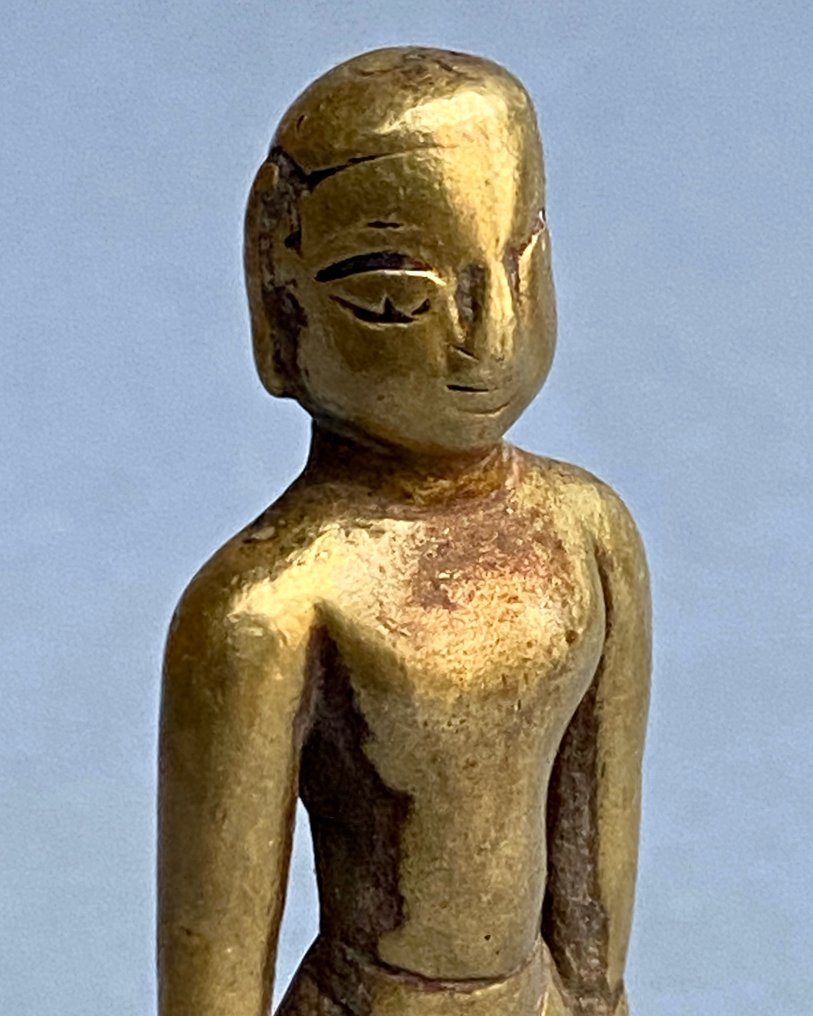
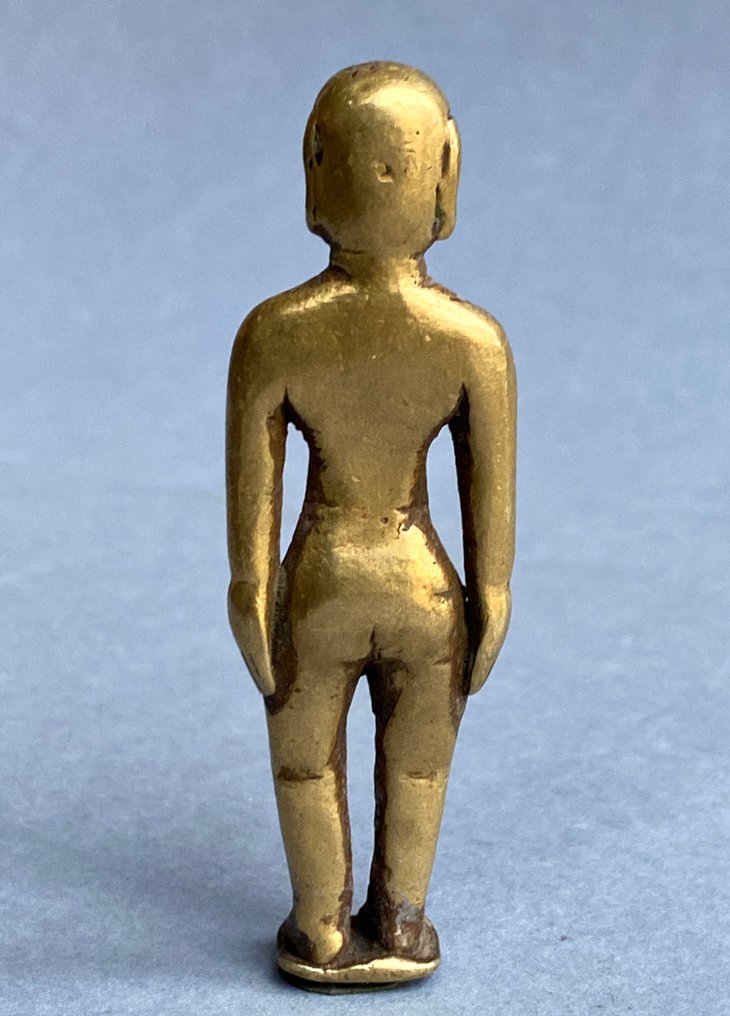
Religious objects - Tīrthaṅkara Jain figure in Persian wax bronze, nude votive figure in an upright position. - 1700-1750 Mughal Empire (1526-1857) - Tīrthaṅkara Shvetāmbara

05
days
01
hour
38
minutes
37
seconds
Current bid
€ 1
Reserve price not met

Surya Rutten
Expert
Selected by Surya Rutten

Has over 25 years' experience in Asian art and owned an art gallery.

Estimate  € 300 - € 380
10 other people are watching this object

atBidder 1583 €1

Catawiki Buyer Protection

Your payment’s safe with us until you receive your object.View details

Trustpilot 4.4 | 121980 reviews

Rated Excellent on Trustpilot.
Origin: India; Title: Tīrthaṅkara shvetāmbara; Dynastic Style/Period: Moghul Empire (1526–1857); Estimated period: 1700–1750; Description: A bronze Tīrthaṅkara Jain votive figure, nude standing pose, made by lost-wax casting from western India (Gujarat or Rajasthan).

AI-assisted summary

Description from the seller

Jain tīrthankara bronze, votive nude figure in standing position (lost-wax casting)

This small bronze, depicting a naked Jain tīrthaṅkara standing with his arms at his sides, likely belongs to the devotional tradition of western India, likely from the area of Gujarat or Rajasthan, where the production of votive statuettes in copper-tin alloy using the lost-wax technique has been attested since the medieval period. The extremely simplified forms, the elongated body, the feet joined on a small, flat base, and the stylized face with incised eyes and marked eyebrows suggest a date between the 16th and 18th centuries, a period in which such objects were made for domestic use or as offerings in Jain temples. The absence of distinctive attributes—a typical feature of depictions of shvetāmbara tīrthaṅkaras—and the rigidly frontal posture are recurring elements in late-medieval and early-modern Jain votive statuary, indicative of a practical rather than monumental function. The lost-wax casting shows simple but accurate workmanship, while the patina and wear consistent with age suggest a devotional object that was actually used.

Jain tīrthankara bronze, votive nude figure in standing position (lost-wax casting)

This small bronze, depicting a naked Jain tīrthaṅkara standing with his arms at his sides, likely belongs to the devotional tradition of western India, likely from the area of Gujarat or Rajasthan, where the production of votive statuettes in copper-tin alloy using the lost-wax technique has been attested since the medieval period. The extremely simplified forms, the elongated body, the feet joined on a small, flat base, and the stylized face with incised eyes and marked eyebrows suggest a date between the 16th and 18th centuries, a period in which such objects were made for domestic use or as offerings in Jain temples. The absence of distinctive attributes—a typical feature of depictions of shvetāmbara tīrthaṅkaras—and the rigidly frontal posture are recurring elements in late-medieval and early-modern Jain votive statuary, indicative of a practical rather than monumental function. The lost-wax casting shows simple but accurate workmanship, while the patina and wear consistent with age suggest a devotional object that was actually used.

Details

Era
1400-1900
Specific region of origin
India occidentale, area del Gujarat o del Rajasthan
Title additional information
Tīrthaṅkara Shvetāmbara
No. of items
1
Material
Tīrthaṅkara Jain figure in Persian wax bronze, nude votive figure in an upright position.
Country of Origin
India
Height
8.5 cm
Dynastic Style/Period
Mughal Empire (1526-1857)
Width
0 cm
Provenance
Private collection
Depth
0 cm
Condition
Good condition - used with small signs of aging & blemishes
Attribution
Original
Sold with stand
No
Estimated period
1700-1750
ItalyVerified
55
Objects sold
100%
Private

Similar objects

For you in

Indian & Islamic Art