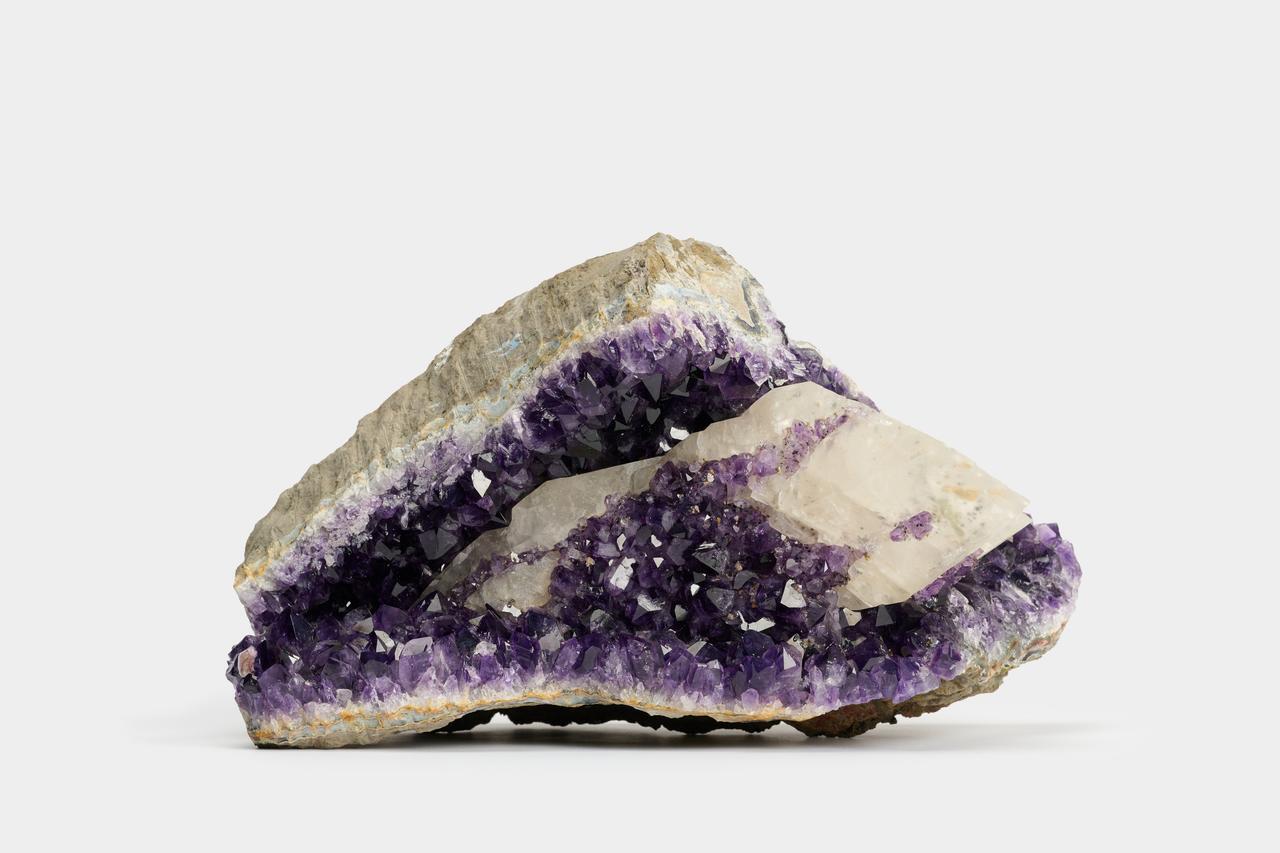
Shirokovsky Pseudo pallasite. NO RESERVE. Russian man-made meteor-wrong- 4.7 g


03
days
20
hours
26
minutes
49
seconds
Current bid
€ 15
No reserve price

Expert
Selected by Francesco Moser
Over 20 years collecting meteorites; former museum curator and experienced restorer.
Estimate € 140 - € 210
17 other people are watching this object
 Bidder 0208 Bidder 0208 | €15 | |
|---|---|---|
 Bidder 1580 Bidder 1580 | €10 | |
 Bidder 7561 Bidder 7561 | €10 | |
Catawiki Buyer Protection
Your payment’s safe with us until you receive your object.View details
Trustpilot 4.4 | 122190 reviews
Rated Excellent on Trustpilot.
Shirokovsky Pseudo pallasite meteorite from Russia, originating in the Shirokovsky area near the Kosva River.
AI-assisted summary
Description from the seller
NO RESERVE!
Specimens of an object known as the “Shirokovsky pallasite,” recently acquired by a variety of public and private collections, are probably not meteorites. The petrology and geochemistry of this object strongly suggest that it has a terrestrial origin. Below is an account of the 1956 bolide that may have produced meteorites (still undiscovered), followed by a description of the probable pseudometeorite.
At 03:30 UT on 1956 Feb 1, a fireball shining brighter than the sun and leaving a smoke trail was observed by numerous eyewitnesses in an area of about 500 km2 across Russia. The fireball disappeared in 5-6 seconds but the trail was visible for an hour. Windows in nearby villages were broken by the shock wave. A meteorite reportedly fell on the frozen Shirokovsky reservoir (58°48'N, 57°57'E), situated on the Kosva River near Shirokovsky village and the cities of Ugle-Uralsk and Kizel, Producing a 42-cm diameter hole in 80-cm thick ice. Magnetic particles enriched in Ni were extracted from the ice surrounding the hole. Several attempts by divers to recover the meteorite on the bottom were not successful. In early 2002, anonymous searchers found many fragments, totaling ~150 kg, of iron-rich material at the site.
Superficially, the mineralogy resembles that of pallasites, and the Fa number and Fe/Mn ratio of the olivine are comparable to those of pallasite olivines. However the high Ni of the olivine is distinct from that in all metal-rich meteorites. The metal-wustite eutectic has never been documented in meteorites. Accessory minerals are atypical of meteorites, and accessory phases typical of stony-iron meteorites are absent. Olivine chemistry (Fa, Fe/Mn, CaO, NiO) resembles that in some terrestrial carbonatites. Olivine was not equilibrated with the matrix melt, which crystallized quickly under highly oxidizing conditions.
NO RESERVE!
Specimens of an object known as the “Shirokovsky pallasite,” recently acquired by a variety of public and private collections, are probably not meteorites. The petrology and geochemistry of this object strongly suggest that it has a terrestrial origin. Below is an account of the 1956 bolide that may have produced meteorites (still undiscovered), followed by a description of the probable pseudometeorite.
At 03:30 UT on 1956 Feb 1, a fireball shining brighter than the sun and leaving a smoke trail was observed by numerous eyewitnesses in an area of about 500 km2 across Russia. The fireball disappeared in 5-6 seconds but the trail was visible for an hour. Windows in nearby villages were broken by the shock wave. A meteorite reportedly fell on the frozen Shirokovsky reservoir (58°48'N, 57°57'E), situated on the Kosva River near Shirokovsky village and the cities of Ugle-Uralsk and Kizel, Producing a 42-cm diameter hole in 80-cm thick ice. Magnetic particles enriched in Ni were extracted from the ice surrounding the hole. Several attempts by divers to recover the meteorite on the bottom were not successful. In early 2002, anonymous searchers found many fragments, totaling ~150 kg, of iron-rich material at the site.
Superficially, the mineralogy resembles that of pallasites, and the Fa number and Fe/Mn ratio of the olivine are comparable to those of pallasite olivines. However the high Ni of the olivine is distinct from that in all metal-rich meteorites. The metal-wustite eutectic has never been documented in meteorites. Accessory minerals are atypical of meteorites, and accessory phases typical of stony-iron meteorites are absent. Olivine chemistry (Fa, Fe/Mn, CaO, NiO) resembles that in some terrestrial carbonatites. Olivine was not equilibrated with the matrix melt, which crystallized quickly under highly oxidizing conditions.
Details
Main Mineral
Shirokovsky Pseudo pallasite.
Mineral Form
NO RESERVE. Russian man-made meteor-wrong
Weight
4.7 g
Country of Origin
Russia
Sold by