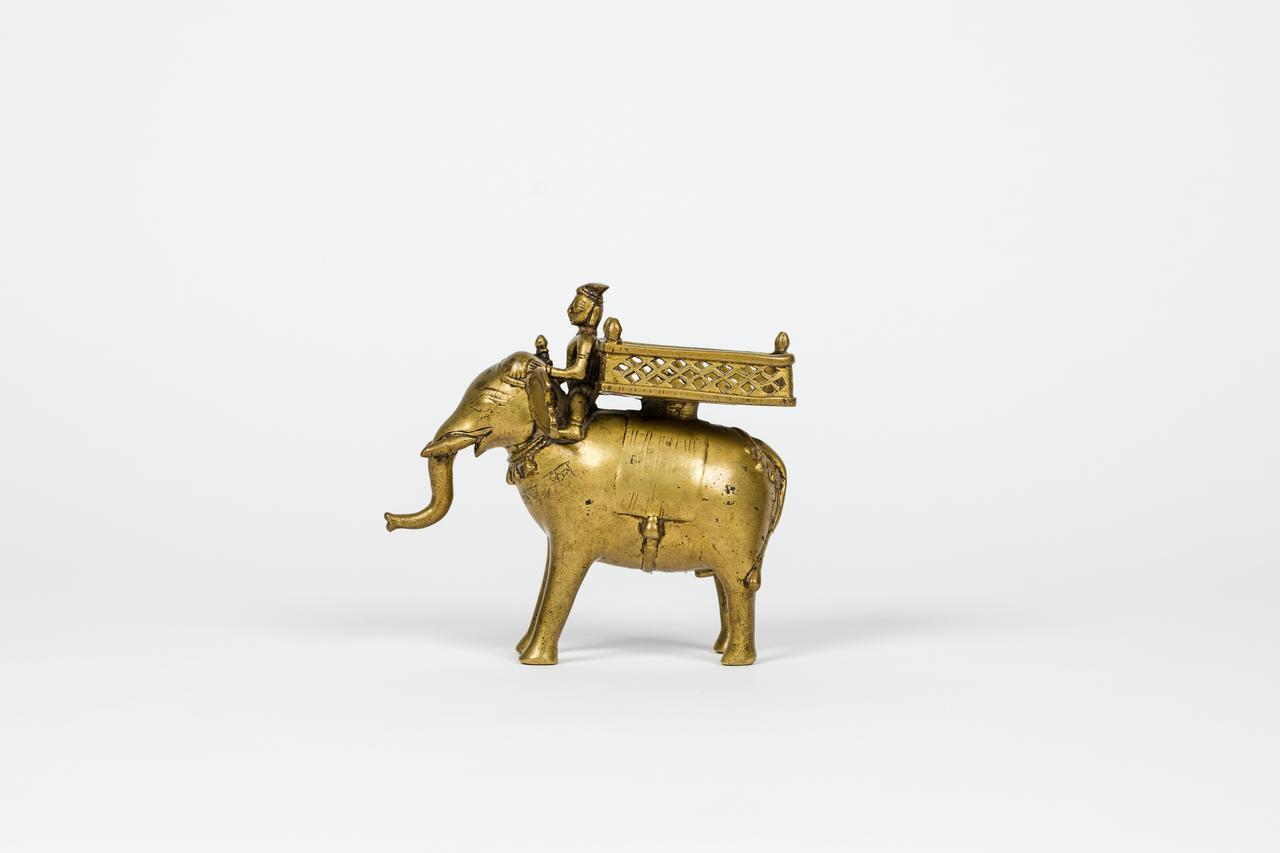
Pārśvanātha, 23° Tīrthaṅkara - Antique - Rare Jain votive bronze depicting Pārśvanātha with devotional inscription at the base, 17th century. - 1650-1700 Mughal Empire (1526-1857) - Pārśvanātha


04
days
19
hours
25
minutes
39
seconds
Starting bid
€ 1
Reserve price not met

Expert
Selected by Surya Rutten
Has over 25 years' experience in Asian art and owned an art gallery.
Estimate € 500 - € 700
No bids placed
Catawiki Buyer Protection
Your payment’s safe with us until you receive your object.View details
Trustpilot 4.4 | 122473 reviews
Rated Excellent on Trustpilot.
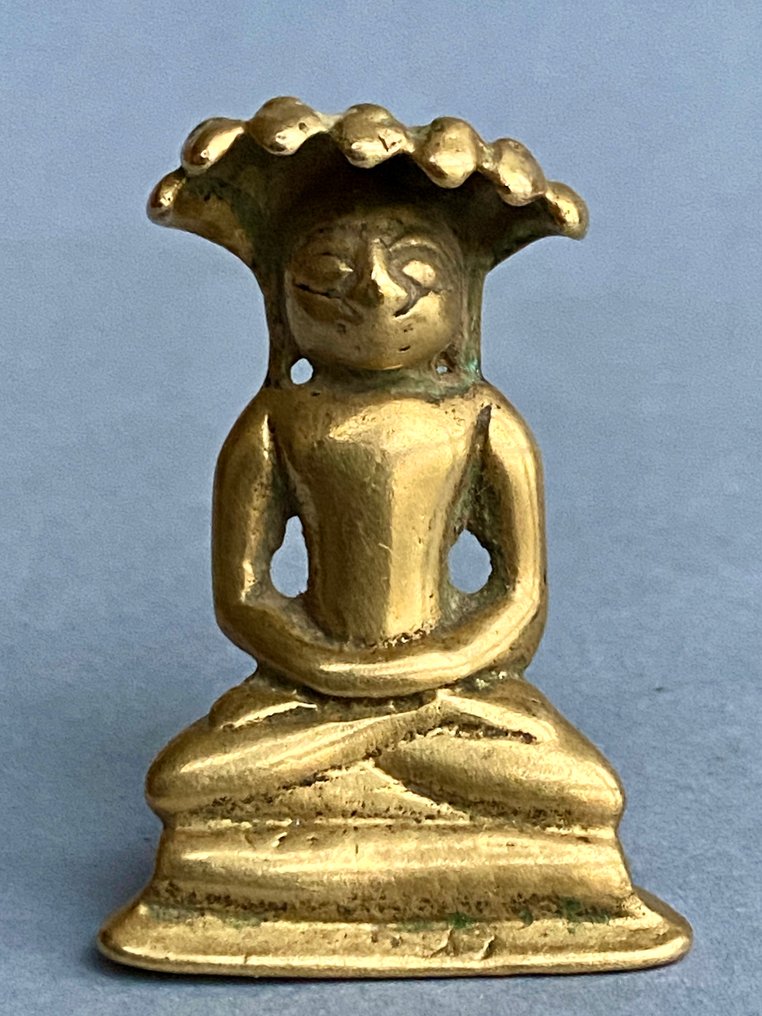
India, Pārśvanātha, 23rd Tīrthaṅkara, a rare 17th‑century bronze votive sculpture in the Mughal Empire style, 6 cm high, original with minor age-related marks and stains.
AI-assisted summary
Description from the seller
Rare votive bronze Jain depicting Pārśvanātha with devotional inscription at the base, 17th century, India.
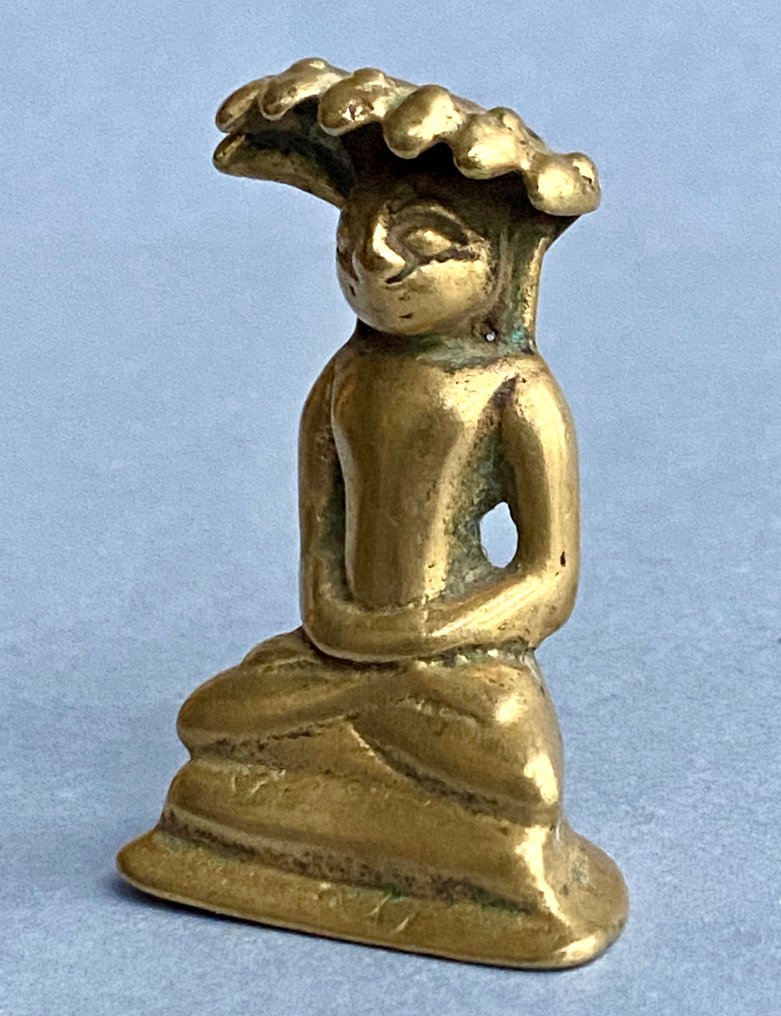
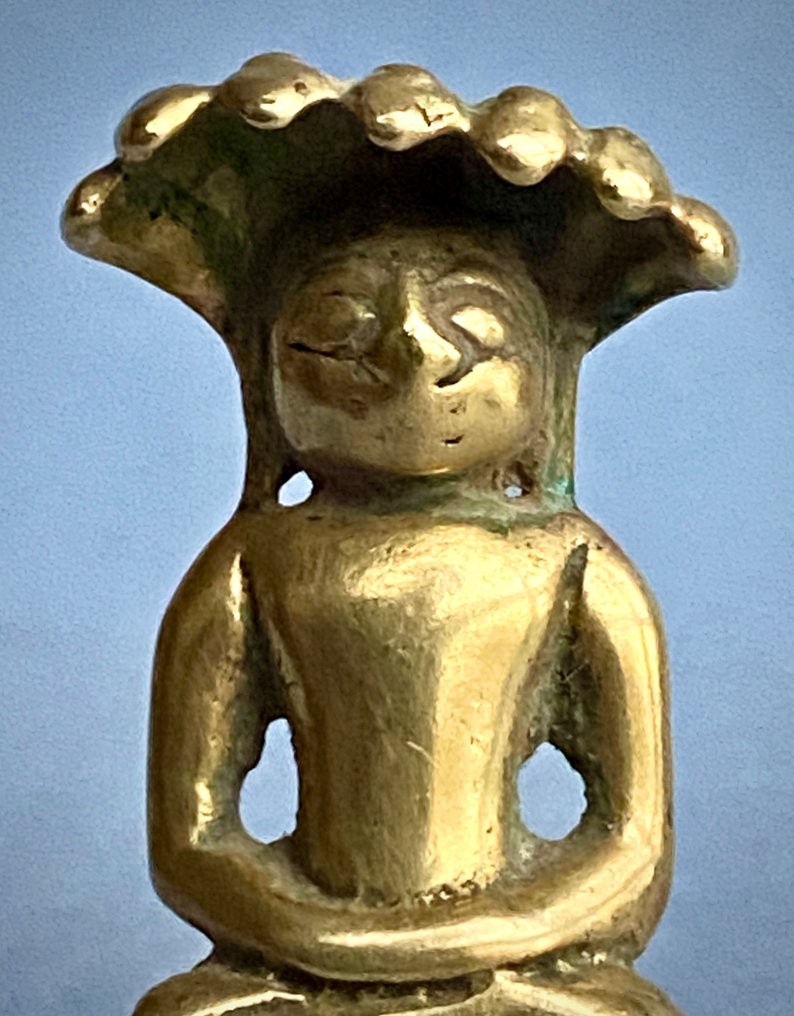
Rare votive bronze in copper alloy depicting the Tīrthaṅkara Pārśvanātha, recognizable by the characteristic multi-headed nāga forming the protective canopy above the figure's head. The Tīrthaṅkara is depicted in yogic meditation, seated cross-legged with hands in dhyānamudrā, following an archaic and stylized iconographic model typical of religious productions from central India. On the back of the base, a short devotional inscription is engraved in an extremely simplified and popular form of Devanāgarī script: despite irregular handwriting and some areas of abrasion, the initial signs श्री (śrī) and the sequence पार (pār) are clearly recognizable, likely referencing Pārśvanātha explicitly. The formula, although not entirely legible, most probably corresponds to the abbreviated dedication श्री पार्श्व / śrī pārśva, or the slightly extended form श्री पार्श्वनाथ / śrī pārśvanātha, common in votive inscriptions related to Jain worship. The presence of the inscription confirms the original devotional function of the figure, likely intended for private use or small local shrines. The piece belongs to the craft tradition of central-western India, probably originating from tribal regions of Madhya Pradesh or Chhattisgarh in the 17th century, where Jain repertoire was reinterpreted in simplified and spontaneous forms.
Object of particular archaic charm, it combines the symbolic power of the 23rd Tīrthaṅkara with the devout simplicity of local votive productions.
Transliteration (most probable epigraphic reconstruction)
Shri Parshva / Shri Parshvanatha
Translation
Venerable Pārśva / Homage to the Venerable Lord Pārśvanātha.
N.B.
For administrative reasons, Italian buyers are required to provide their tax code, which is essential for the proper issuance of the electronic invoice.
For administrative reasons related to current Italian regulations, foreign customers are kindly requested to provide their place and date of birth via email message using the appropriate Catawiki form at the time of purchase.
Seller's Story
Ethnologica was born from the love and passion for the ancient culture of Oriental, Islamic and Indian art. Refined works of art make up a constantly evolving collection capable of satisfying the needs of admirers, enthusiasts and collectors.
Ethnologica has also contributed as a lender to sector cultural exhibitions alongside prestigious public and private cultural associations and foundations.
Translated by Google TranslateRare votive bronze Jain depicting Pārśvanātha with devotional inscription at the base, 17th century, India.
Rare votive bronze in copper alloy depicting the Tīrthaṅkara Pārśvanātha, recognizable by the characteristic multi-headed nāga forming the protective canopy above the figure's head. The Tīrthaṅkara is depicted in yogic meditation, seated cross-legged with hands in dhyānamudrā, following an archaic and stylized iconographic model typical of religious productions from central India. On the back of the base, a short devotional inscription is engraved in an extremely simplified and popular form of Devanāgarī script: despite irregular handwriting and some areas of abrasion, the initial signs श्री (śrī) and the sequence पार (pār) are clearly recognizable, likely referencing Pārśvanātha explicitly. The formula, although not entirely legible, most probably corresponds to the abbreviated dedication श्री पार्श्व / śrī pārśva, or the slightly extended form श्री पार्श्वनाथ / śrī pārśvanātha, common in votive inscriptions related to Jain worship. The presence of the inscription confirms the original devotional function of the figure, likely intended for private use or small local shrines. The piece belongs to the craft tradition of central-western India, probably originating from tribal regions of Madhya Pradesh or Chhattisgarh in the 17th century, where Jain repertoire was reinterpreted in simplified and spontaneous forms.
Object of particular archaic charm, it combines the symbolic power of the 23rd Tīrthaṅkara with the devout simplicity of local votive productions.
Transliteration (most probable epigraphic reconstruction)
Shri Parshva / Shri Parshvanatha
Translation
Venerable Pārśva / Homage to the Venerable Lord Pārśvanātha.
N.B.
For administrative reasons, Italian buyers are required to provide their tax code, which is essential for the proper issuance of the electronic invoice.
For administrative reasons related to current Italian regulations, foreign customers are kindly requested to provide their place and date of birth via email message using the appropriate Catawiki form at the time of purchase.
Seller's Story
Ethnologica was born from the love and passion for the ancient culture of Oriental, Islamic and Indian art. Refined works of art make up a constantly evolving collection capable of satisfying the needs of admirers, enthusiasts and collectors.
Ethnologica has also contributed as a lender to sector cultural exhibitions alongside prestigious public and private cultural associations and foundations.
Translated by Google TranslateDetails
Era
1400-1900
Object name
Pārśvanātha, 23° Tīrthaṅkara
Specific region of origin
Gujarat o Rajasthan
Title additional information
Pārśvanātha
No. of items
1
Material
Rare Jain votive bronze depicting Pārśvanātha with devotional inscription at the base, 17th century.
Country of Origin
India
Height
6 cm
Dynastic Style/Period
Mughal Empire (1526-1857)
Width
0 cm
Depth
0 cm
Condition
Good condition - used with small signs of aging & blemishes
Attribution
Original
Style
Antique
Sold with stand
No
Estimated period
1650-1700
Sold by