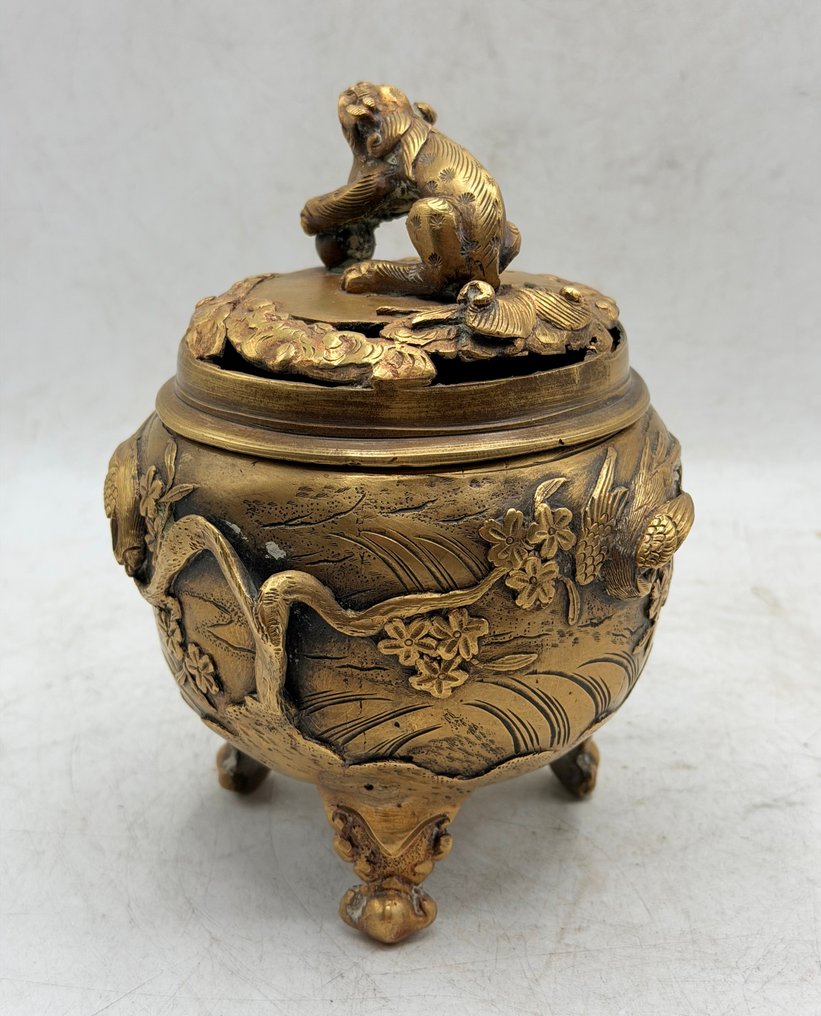
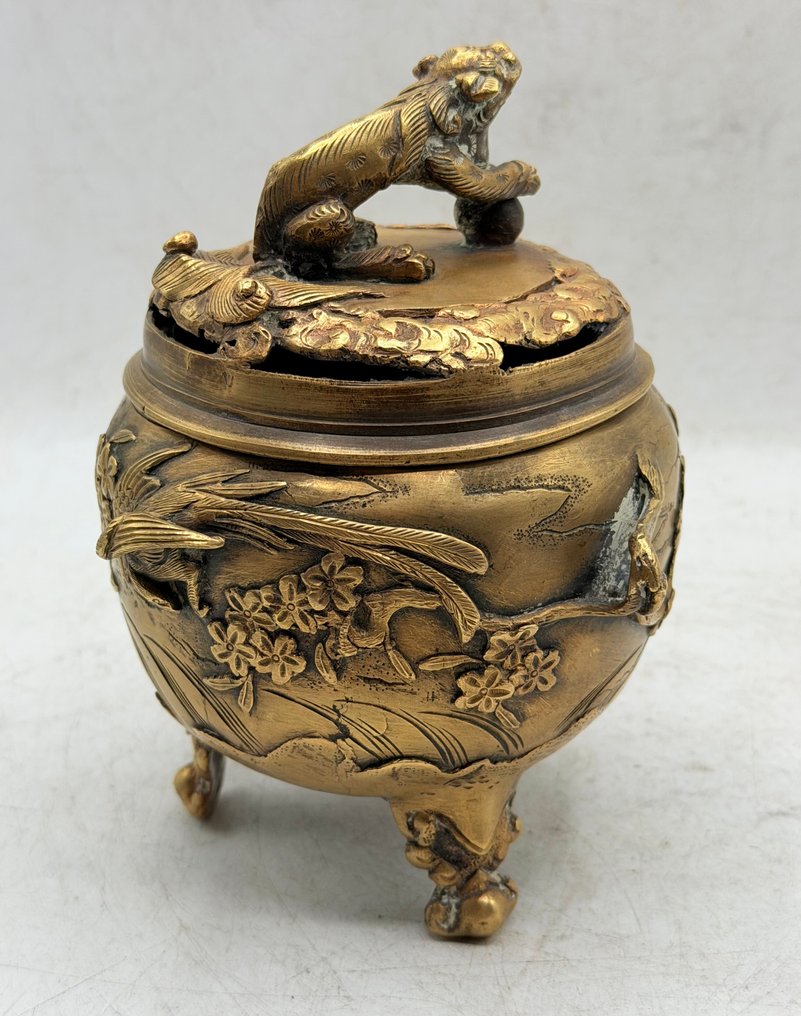
Censer - Koro - Bronze - Chimera and Bird Relief


00
days
06
hours
18
minutes
07
seconds
Current bid
€ 60
Reserve price not met

Expert
Selected by Marion Oliviero
Holds a master's in Chinese archaeology with extensive expertise in Japanese art.
Estimate € 220 - € 250
22 other people are watching this object
 Bidder 7334 Bidder 7334 | €60 | |
|---|---|---|
| Bidder 7334 | €55 | |
| Bidder 7334 | €50 | |
Catawiki Buyer Protection
Your payment’s safe with us until you receive your object.View details
Trustpilot 4.4 | 122813 reviews
Rated Excellent on Trustpilot.
Antique Japanese bronze koro incense burner from the Meiji period (late 19th–early 20th century), with a top quimera and side bird reliefs, height 18 cm, base 12 × 12 cm, in good used condition and from a private collection.
AI-assisted summary
Description from the seller
Old Japanese Incense Burner (Kōro) from the Meiji period, late 19th to early 20th century
Object: This is a kōro, a Japanese term for an incensario. These pieces were used in temples, noble houses, and private collections, both in religious rituals and tea ceremonies, or as decorative objects.
• Era: Meiji Period (1868–1912), a time of great cultural and artistic opening of Japan towards the West. Artisans produced works with strong symbolic significance and exquisite technique, many intended for export.
Materials and technique: Made of patinated or gilded bronze, with finely chiseled reliefs.
Main decoration: A chimera (shishi or komainu) at the top, a mythological figure similar to a guardian lion, symbolizing protection against evil spirits.
Bird reliefs on the sides, representing freedom, spirituality, and connection with the sky.
• Symbolic function: The smoke from the incense, as it exits the interior of the kōro, mingles with the presence of the chimera and the birds, creating a dialogue between the earthly and the spiritual. The piece served a practical, aesthetic, and spiritual purpose.
Meiji Style: A fusion of Japanese tradition with Western influences, with great attention to detail and the quality of the reliefs, aiming to impress both the Japanese audience and foreign collectors.
Certified shipping and good packaging.
Seller's Story
Translated by Google TranslateOld Japanese Incense Burner (Kōro) from the Meiji period, late 19th to early 20th century
Object: This is a kōro, a Japanese term for an incensario. These pieces were used in temples, noble houses, and private collections, both in religious rituals and tea ceremonies, or as decorative objects.
• Era: Meiji Period (1868–1912), a time of great cultural and artistic opening of Japan towards the West. Artisans produced works with strong symbolic significance and exquisite technique, many intended for export.
Materials and technique: Made of patinated or gilded bronze, with finely chiseled reliefs.
Main decoration: A chimera (shishi or komainu) at the top, a mythological figure similar to a guardian lion, symbolizing protection against evil spirits.
Bird reliefs on the sides, representing freedom, spirituality, and connection with the sky.
• Symbolic function: The smoke from the incense, as it exits the interior of the kōro, mingles with the presence of the chimera and the birds, creating a dialogue between the earthly and the spiritual. The piece served a practical, aesthetic, and spiritual purpose.
Meiji Style: A fusion of Japanese tradition with Western influences, with great attention to detail and the quality of the reliefs, aiming to impress both the Japanese audience and foreign collectors.
Certified shipping and good packaging.
Seller's Story
Translated by Google TranslateDetails
Era
1400-1900
Specific region of origin
Kioto
Model
Koro
Title additional information
Chimera and Bird Relief
Style
Antique
Material
Bronze
Country of Origin
Japan
Dynastic Style/Period
Meiji period (1868-1912)
Colour
Gold
Condition
Good condition - used with small signs of aging & blemishes
Provenance
Private collection
Height
18 cm
Width
12 cm
Depth
12 cm
Estimated period
1850-1900
Sold by
