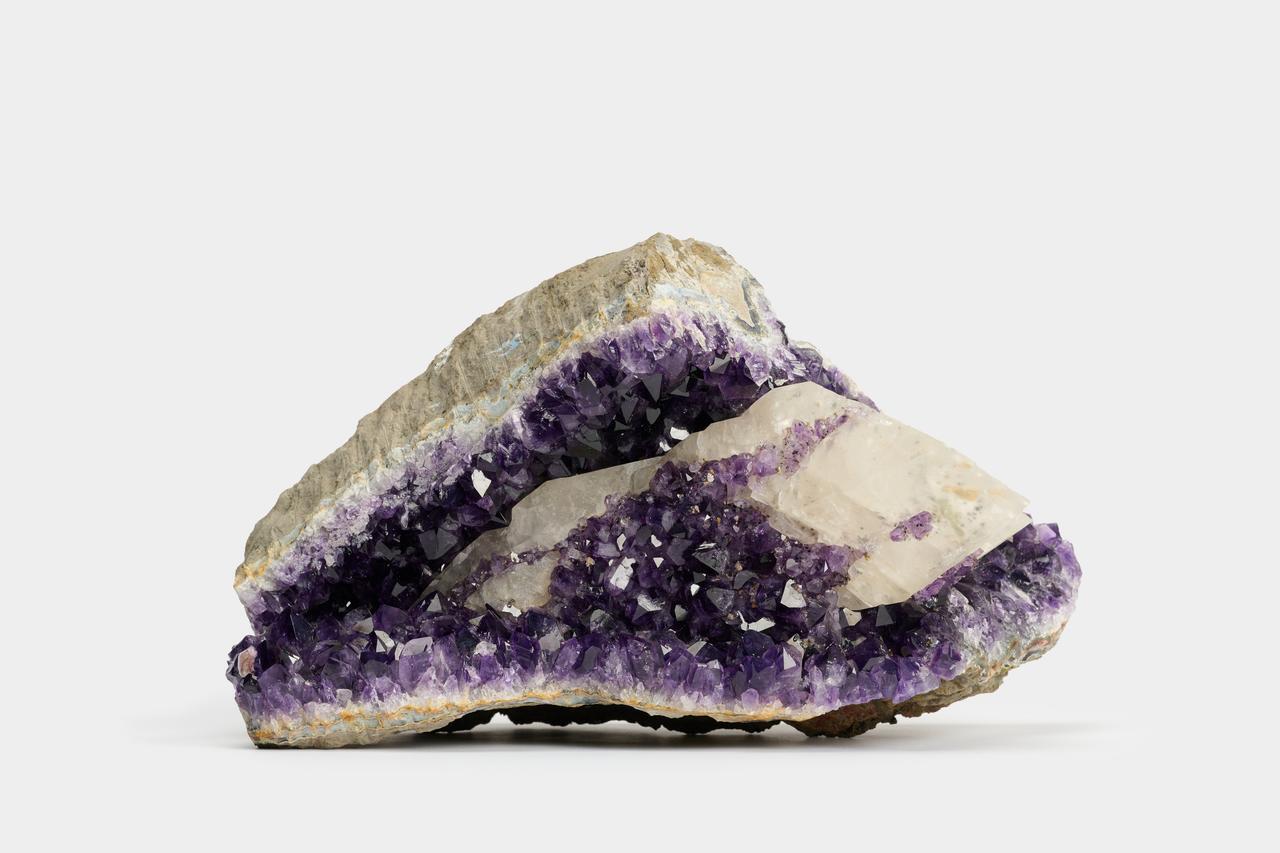
Star Ruby cabochon with asterism - 6 Rays - 20mm 48 carat natural - South India Cabochon- 9.6 g - (1)


06
days
05
hours
50
minutes
15
seconds
Starting bid
€ 1
No reserve price

Expert
Selected by Georgia Foteinou
Holds BSc in geology and post-graduate qualifications in geochemistry.
Estimate € 190 - € 230
No bids placed
Catawiki Buyer Protection
Your payment’s safe with us until you receive your object.View details
Trustpilot 4.4 | 122473 reviews
Rated Excellent on Trustpilot.
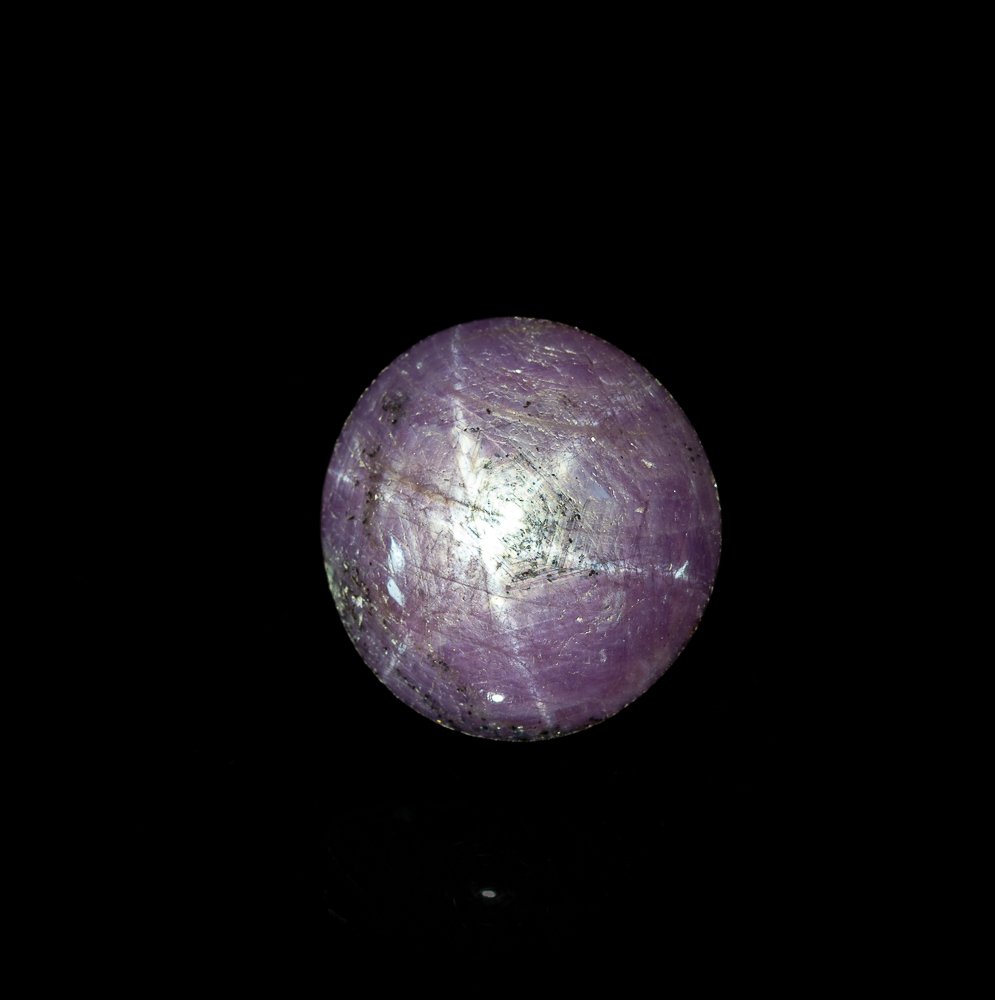
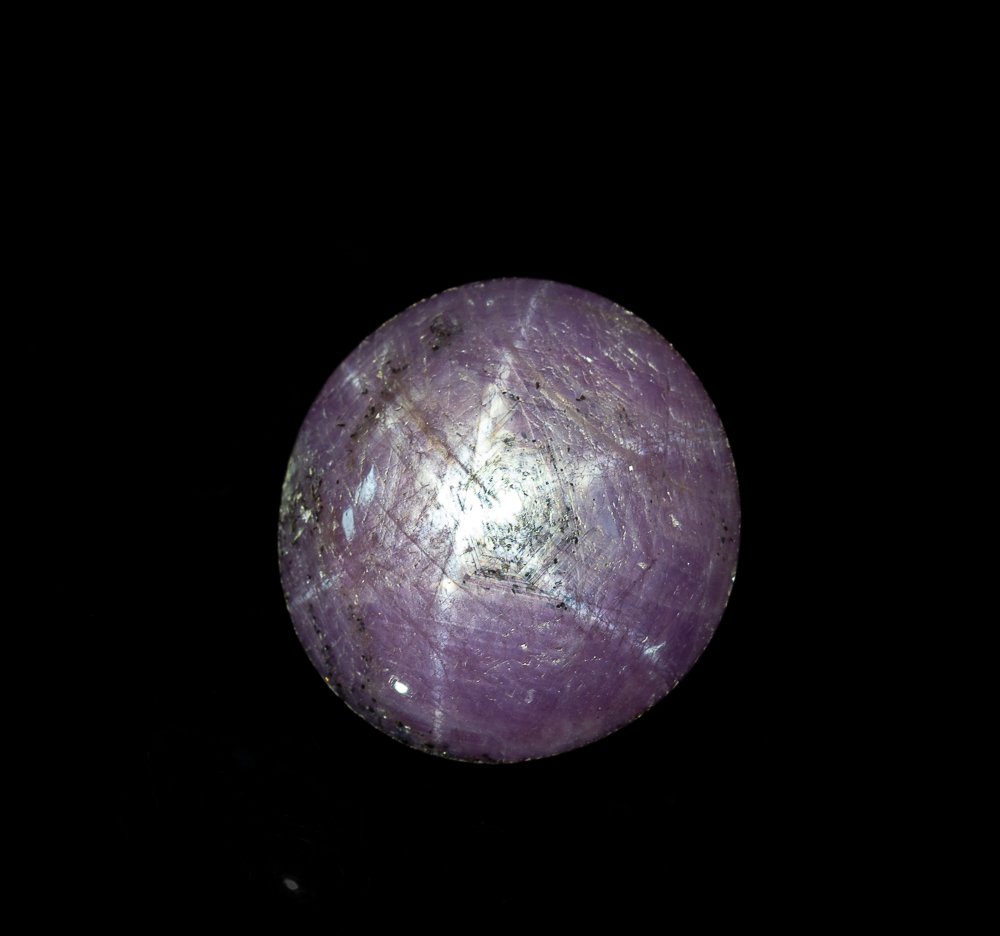
Natural star ruby cabochon with asterism (six-ray), 20 mm diameter, 48 carats, untreated, from Lokkanahalli, Kollegala, Chamarajanagar District, Karnataka, India.
AI-assisted summary
Description from the seller
20mm 48 carat untreated round Star Ruby cabochon with asterism - 6 Rays - South India
Lokkanahalli, Kollegala, Chamarajanagar District, Karnataka, India
Size : 20 x 10 mm. First three photos show six rayed asterim , photo 4 and 5 in diffused natural light
Star Ruby is a variety of Ruby exhibiting a star pattern, so-called asterism, which is caused by oriented microscopic inclusions, best exhibited in a cabochon cut perpendicular to the c-axis of the crystal.
Asterism is explained by the dispersion and diffraction of inclined beams of light on these oriented acicular inclusions. The sharpness of the star image depends largely on the thinness of inclusions; thinner inclusions produce sharper asterism. It is also possible for inclusions of boehmite, titanite or hematite to cause asterism.
The chatoyance is due to oriented microscopic inclusions (nanorods) of diaspore (Nadin, 2007).
20mm 48 carat untreated round Star Ruby cabochon with asterism - 6 Rays - South India
Lokkanahalli, Kollegala, Chamarajanagar District, Karnataka, India
Size : 20 x 10 mm. First three photos show six rayed asterim , photo 4 and 5 in diffused natural light
Star Ruby is a variety of Ruby exhibiting a star pattern, so-called asterism, which is caused by oriented microscopic inclusions, best exhibited in a cabochon cut perpendicular to the c-axis of the crystal.
Asterism is explained by the dispersion and diffraction of inclined beams of light on these oriented acicular inclusions. The sharpness of the star image depends largely on the thinness of inclusions; thinner inclusions produce sharper asterism. It is also possible for inclusions of boehmite, titanite or hematite to cause asterism.
The chatoyance is due to oriented microscopic inclusions (nanorods) of diaspore (Nadin, 2007).
Details
Sold by
Disclaimer
It is believed that certain gemstones and minerals have beneficial health and spiritual properties. However, using or wearing gemstones or minerals does not mean that you can treat, cure or prevent any disease. Please consult your health care professional for information on health care issues and do not stop any medications or courses of treatment, without first consulting your health care professional. The use of gemstones or minerals as a wellness therapy is one of personal choice. While stones or crystals have been used historically to relieve or prevent symptoms, the objects sold on our website offer no guarantee of results. Therefore, Catawiki cannot guarantee or be held liable for the effectiveness of these objects sold herein.
It is believed that certain gemstones and minerals have beneficial health and spiritual properties. However, using or wearing gemstones or minerals does not mean that you can treat, cure or prevent any disease. Please consult your health care professional for information on health care issues and do not stop any medications or courses of treatment, without first consulting your health care professional. The use of gemstones or minerals as a wellness therapy is one of personal choice. While stones or crystals have been used historically to relieve or prevent symptoms, the objects sold on our website offer no guarantee of results. Therefore, Catawiki cannot guarantee or be held liable for the effectiveness of these objects sold herein.