Comte de Boulainvilliers - La Vie de Mahomed - 1731-1731



02
days
13
hours
45
minutes
47
seconds
Current bid
€ 64
No reserve price

Expert
Selected by Ilaria Colombo
Specialist in old books, specialising in theological disputes since 1999.
Estimate € 150 - € 200
17 other people are watching this object
 Bidder 6515 Bidder 6515 | €64 | |
|---|---|---|
 Bidder 8081 Bidder 8081 | €57 | |
| Bidder 6515 | €52 | |
Catawiki Buyer Protection
Your payment’s safe with us until you receive your object.View details
Trustpilot 4.4 | 123113 reviews
Rated Excellent on Trustpilot.
La Vie de Mahomed by Comte de Boulainvilliers, a three-part work in one volume, in French, edition Autre édition, published in 1731 by François Changuion in Amsterdam, leather binding, 442 pages, 15.5 × 10.5 cm, original language French, in reasonably good condition.
AI-assisted summary
Description from the seller
Henri Comte de Boulainvilliers
The life of Mahomet, with reflections on the Muslim religion, and the customs of Muslims. Second edition. Amsterdam, Pierre Humbert, 1731.
3 parties in one volume in-12.
442 pages + 2 pages (catalogue).
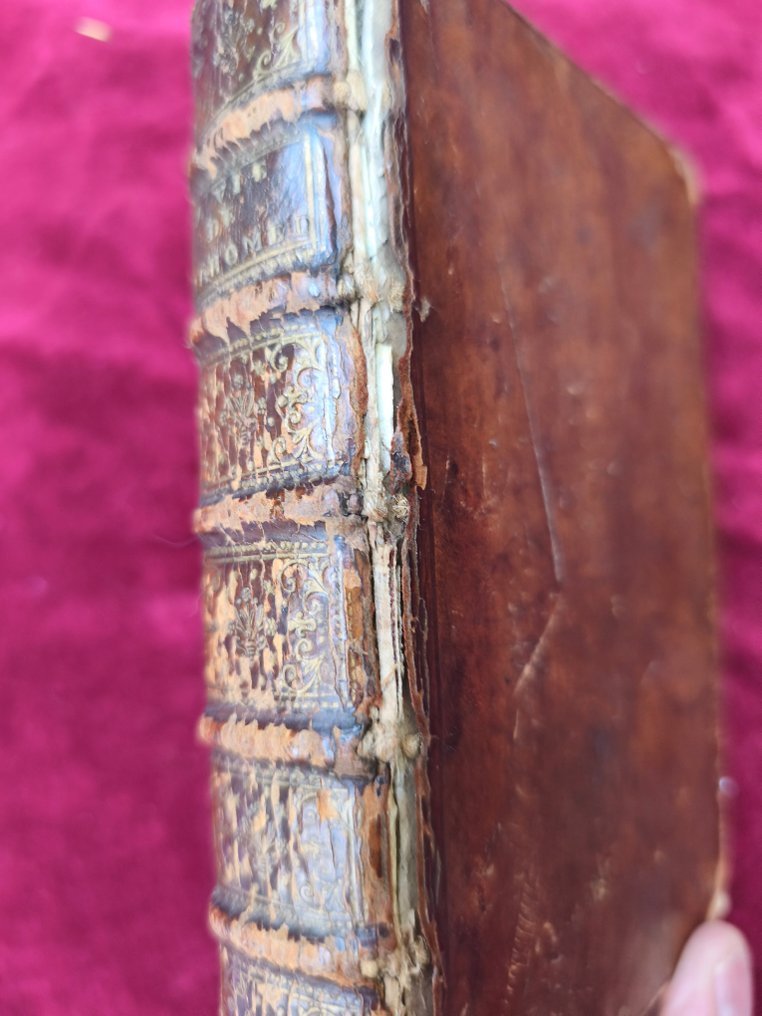
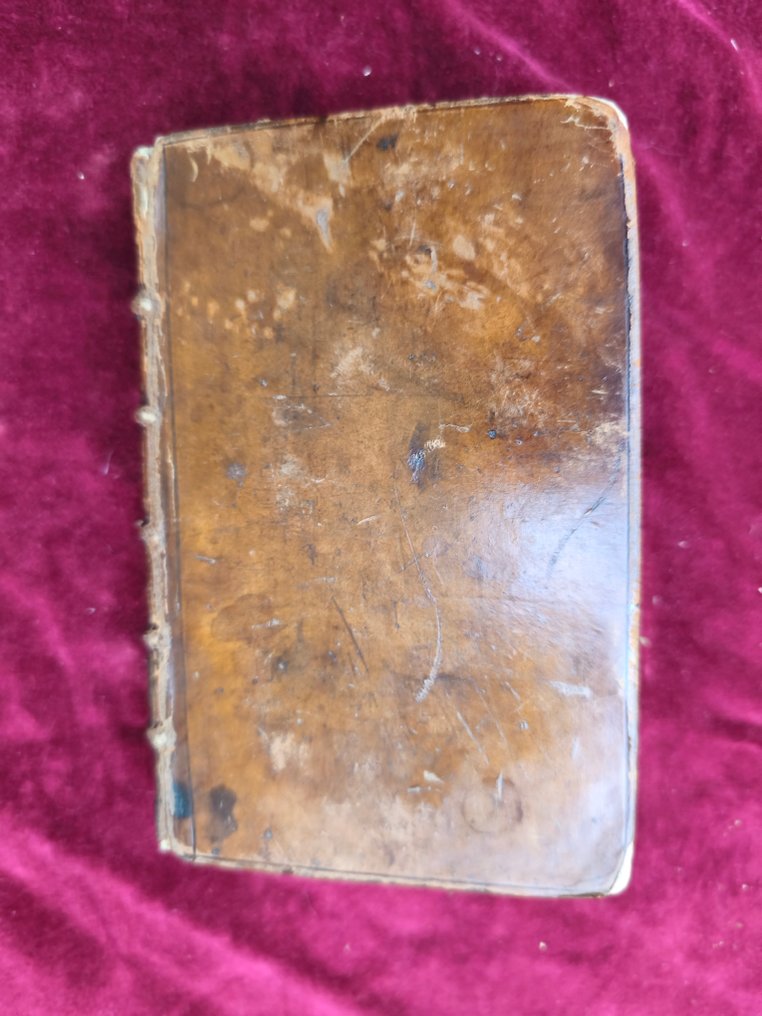
Good used condition with binding imperfections (fissured spine/flat binding), central stains on some pages without impact on readability.
Boulainvilliers sought historical accuracy in his biography.
It offers a positive view both of Mahomet, whom he describes as a man of genius, a great legislator, conqueror, and monarch, and of his religion, which he characterizes as just and tolerant.
He distinguished himself radically from his contemporaries, for whom Mahomet remains and will remain for a long time a symbol of fanaticism rather than an example of tolerance; his work caused scandal and was immediately refuted by Garnier and Voltaire.
Description of Arabia, Arab customs, the cities of Mecca and Medina, history, reflections on the Mahometan religion and customs, genealogy and life of Muhammad, life of the false prophet.
The author (1658-1722), born in Saire, a renowned historian, worked on writing the life of Mahomed from 1718 to 1721. This work ceased upon his death. The posthumous work was published in London in 1730. Boulainvilliers only wrote the first two parts; the third was authored by an anonymous writer. The knowledge and information about the Islamic world contained in the works of Pocock, d'Herbelot, and others formed the basis that allowed Boulainvilliers to present his own vision of Islam and Mahomed. Based on known sources, this work on the customs and history of the Arabs before and after the Prophet's birth helped better understand the circumstances in which he appeared, the difficulties he had to face, and the dispositions that the providence of nature had prepared so that the great change brought about by a single man in the history of the Arab world could be realized.
Reference work
Henri Comte de Boulainvilliers
The life of Mahomet, with reflections on the Muslim religion, and the customs of Muslims. Second edition. Amsterdam, Pierre Humbert, 1731.
3 parties in one volume in-12.
442 pages + 2 pages (catalogue).
Good used condition with binding imperfections (fissured spine/flat binding), central stains on some pages without impact on readability.
Boulainvilliers sought historical accuracy in his biography.
It offers a positive view both of Mahomet, whom he describes as a man of genius, a great legislator, conqueror, and monarch, and of his religion, which he characterizes as just and tolerant.
He distinguished himself radically from his contemporaries, for whom Mahomet remains and will remain for a long time a symbol of fanaticism rather than an example of tolerance; his work caused scandal and was immediately refuted by Garnier and Voltaire.
Description of Arabia, Arab customs, the cities of Mecca and Medina, history, reflections on the Mahometan religion and customs, genealogy and life of Muhammad, life of the false prophet.
The author (1658-1722), born in Saire, a renowned historian, worked on writing the life of Mahomed from 1718 to 1721. This work ceased upon his death. The posthumous work was published in London in 1730. Boulainvilliers only wrote the first two parts; the third was authored by an anonymous writer. The knowledge and information about the Islamic world contained in the works of Pocock, d'Herbelot, and others formed the basis that allowed Boulainvilliers to present his own vision of Islam and Mahomed. Based on known sources, this work on the customs and history of the Arabs before and after the Prophet's birth helped better understand the circumstances in which he appeared, the difficulties he had to face, and the dispositions that the providence of nature had prepared so that the great change brought about by a single man in the history of the Arab world could be realized.
Reference work
Details
Number of Books
1
Subject
Biographies and memoirs, History, Reference, Religion
Book Title
La Vie de Mahomed
Author/ Illustrator
Comte de Boulainvilliers
Condition
Fair
Publication year oldest item
1731
Publication year youngest item
1731
Height
15.5 cm
Edition
Other edition
Width
10.5 cm
Language
French
Original language
Yes
Publisher
François Changuion, Amsterdam
Binding/ Material
Leather
Number of pages
442
Sold by
