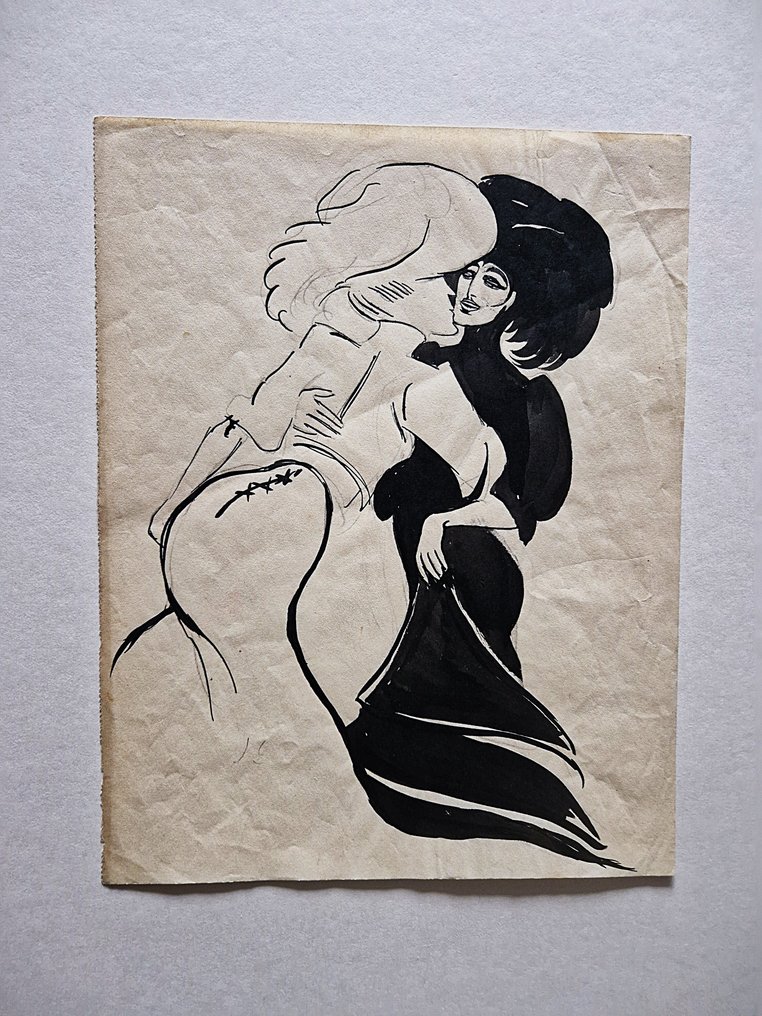
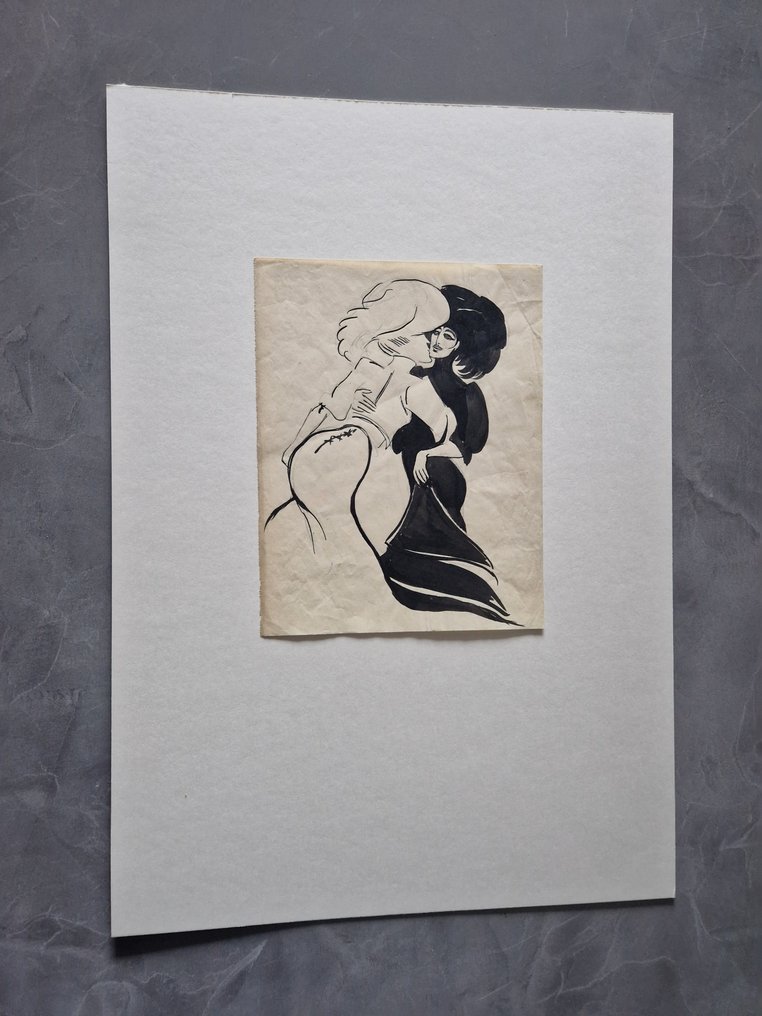
Jan Sluijters (1881 - 1957) - "2 voorname dames"



03
days
07
hours
05
minutes
44
seconds
Current bid
€ 4
Reserve price not met

Expert
Selected by Leo Setz
Over 30 years’ experience as art dealer, appraiser and restorer.
Estimate € 180 - € 200
18 other people are watching this object
 Bidder 6778 Bidder 6778 | €4 | |
|---|---|---|
| Bidder 1158 | €3 | |
| Bidder 1766 | €2 | |
Catawiki Buyer Protection
Your payment’s safe with us until you receive your object.View details
Trustpilot 4.4 | 122630 reviews
Rated Excellent on Trustpilot.
Artwork title "2 voorname dames", period 1910–1920, technique mixed media, country of origin Netherlands.
AI-assisted summary
Description from the seller
Medium: mixed media (watercolor, pencil, ink)
Dating: 1910/1920
Numbered
Signed: (vague) monogram 'JS' in pencil.
In good condition, nice fresh colors - paper slightly yellowed and some creases (see photo).
Your order
Provenance: from a private collection. A.M. van den Broek ('Ton') 1979-10-29 - 2023-01-25.
One of the most popular artists in the Netherlands
Jan Sluijters began his career as an illustrator and printmaker, but he wanted to become a visual artist. He won the renowned Prix de Rome and was allowed to travel through Europe to study the great masters. He stayed in Paris, where he met the avant-garde. Like these modern artists, he started working with bright colors applied with expressive brushstrokes. His new work was described by critics as 'frivolous,' and a few even called his work 'sick.' The jury stopped his grant. Sluijters paid no attention. He continued to follow his own path and grew into one of the most popular modern artists in the Netherlands. He mainly painted many portraits of women, often nudes. 'I also find it almost obvious that you paint more women than men. They are so much nicer to look at,' said Sluijters.
Medium: mixed media (watercolor, pencil, ink)
Dating: 1910/1920
Numbered
Signed: (vague) monogram 'JS' in pencil.
In good condition, nice fresh colors - paper slightly yellowed and some creases (see photo).
Your order
Provenance: from a private collection. A.M. van den Broek ('Ton') 1979-10-29 - 2023-01-25.
One of the most popular artists in the Netherlands
Jan Sluijters began his career as an illustrator and printmaker, but he wanted to become a visual artist. He won the renowned Prix de Rome and was allowed to travel through Europe to study the great masters. He stayed in Paris, where he met the avant-garde. Like these modern artists, he started working with bright colors applied with expressive brushstrokes. His new work was described by critics as 'frivolous,' and a few even called his work 'sick.' The jury stopped his grant. Sluijters paid no attention. He continued to follow his own path and grew into one of the most popular modern artists in the Netherlands. He mainly painted many portraits of women, often nudes. 'I also find it almost obvious that you paint more women than men. They are so much nicer to look at,' said Sluijters.
Details
Artist
Jan Sluijters (1881 - 1957)
Sold by
Owner or reseller
Edition
Original
Title of artwork
"2 voorname dames"
Technique
Mixed technique
Signature
Hand signed
Country of Origin
Netherlands
Condition
Good condition
Height
25 cm
Width
21 cm
Weight
100 g
Style
Expressionism
Period
1910-1920
Sold by
