AA.VV. - L’impianto Stabilizzatore “Sperry” della T. N. “Conte di Savoia” - 1932



08
days
03
hours
43
minutes
04
seconds
Starting bid
€ 1
Reserve price not met

Expert
Selected by Zena Chiara Masud
Holds a master’s degree in bibliography, with seven years of experience specialising in incunabula and Arabic manuscripts.
Estimate € 380 - € 450
No bids placed
Catawiki Buyer Protection
Your payment’s safe with us until you receive your object.View details
Trustpilot 4.4 | 122529 reviews
Rated Excellent on Trustpilot.
Description from the seller
The 'Sperrry' Stabilizer System of the T. N. 'Conte di Savoia'
accompanied by a discussion of the Principles of operation and safety factors.
by various authors
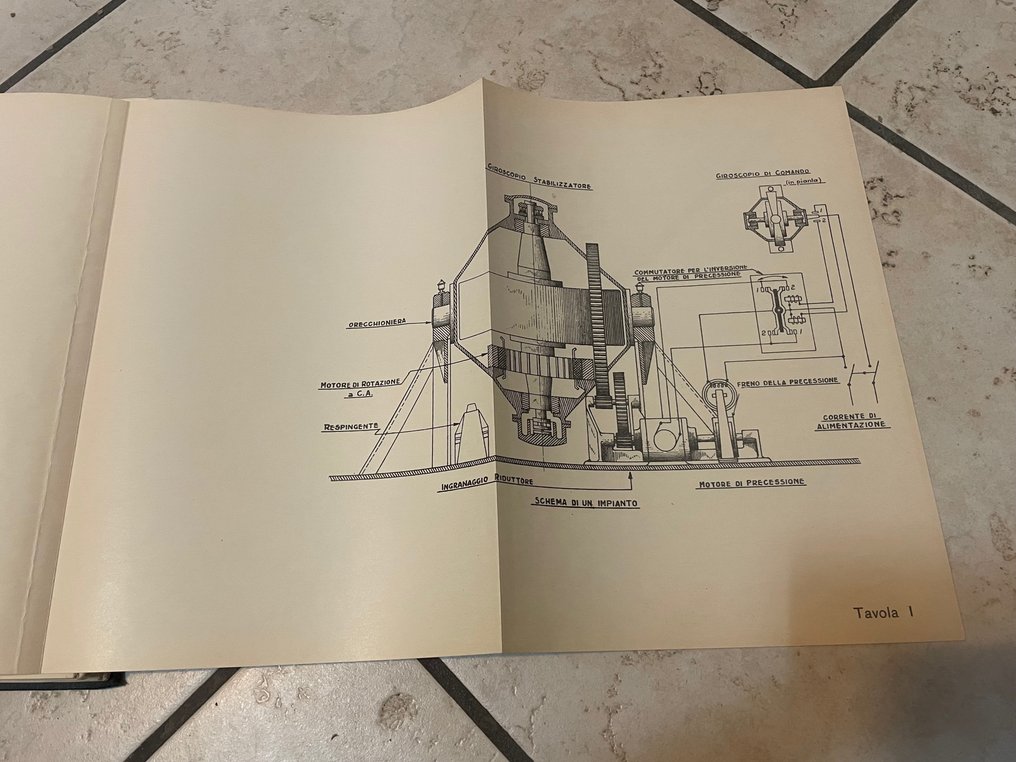
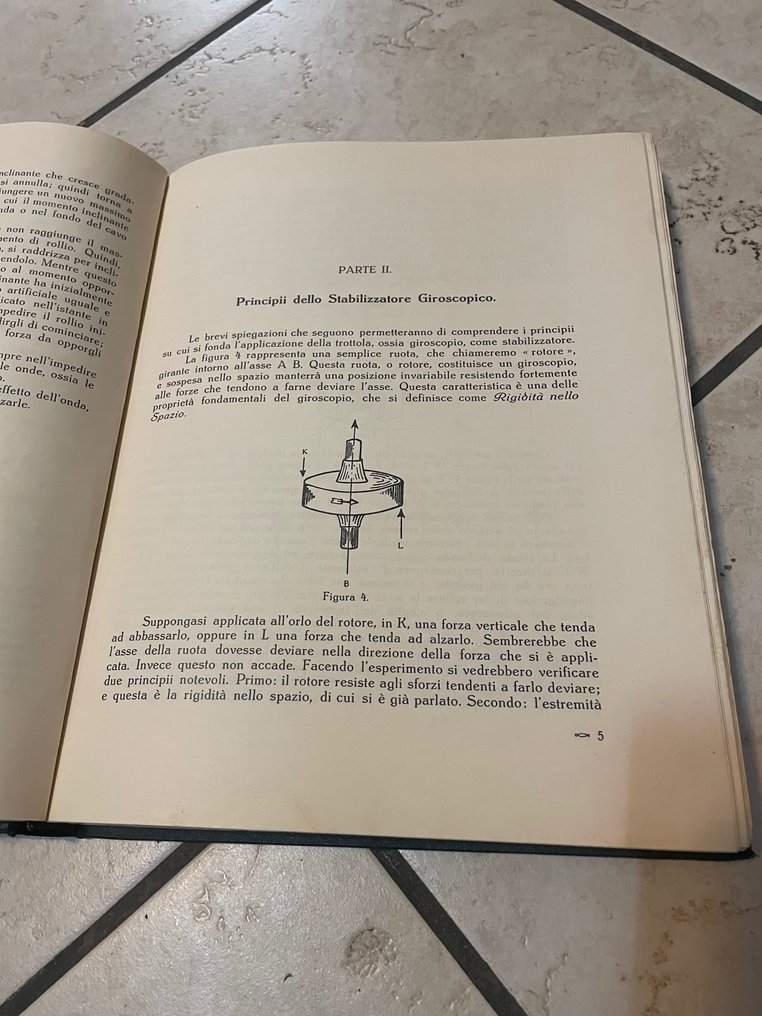
pp. XII + 76 with 38 very interesting tables, often folded, in the front - a printed dedication (see photo) from Admiral Filippo Camperio, addressed to Commander Renzo Durand de la Penne, and naval engineer Gen. Luigi Gusmani, who were the first in the world to apply a major invention on a large transatlantic.
Elegant and sturdy editorial brochure with the 'Sperry' title and logo in gold on the cover - numbered edition.
Dimensions in cm 28.5 x 22
The Sperry Gyroscope Company
New York - London - Tokyo - Milan 1932
Excellent condition
N.B. The Conte di Savoia was a famous Italian transatlantic ocean liner built in 1932 by Riuniti shipyards in the Adriatic, in Trieste, for Lloyd Sabaudo of Genoa. It was the first transatlantic liner equipped with a system to reduce rolling in rough weather, consisting of three large gyroscopic stabilizers produced by the American company Sperry Corporation.
That expedient proved effective only in cases of not excessively rough seas and regular rolling, and it also subjected the ship to very high structural stresses. This book opens a discussion on how the ship behaves in rough seas, the application of the stabilizer, and the principles of its operation. The Conte di Savoia was nonetheless marketed as 'the first ship that does not roll,' and a special elevator at the bow allowed passengers to descend into the area where the large mechanisms were located, to see them in action. It represented a true revolution also in the field of naval furnishings, with its salons in a straightforward Novecento style. The ship was an aesthetic masterpiece thanks to the perfect combination of the naval engineer who designed it (Nicolò Costanzi, a skilled artist and aesthete) and the architect responsible for its interiors, Gustavo Pulitzer Finali.
Its end occurred in a paradoxical way on September 11, 1943, just a few days after the Italian armistice: the German command had intercepted an encrypted message talking about the 'escape of the Savoia.' This message referred to the actual departure from Rome of the royal family but was misinterpreted, leading the Germans to bomb the ship, sinking it along with a vaporetto and causing hundreds of victims. In the 1950s, it arrived at the Monfalcone shipyard for demolition, and the entire dismantling was completed in 1951.
Seller's Story
We are looking for our bibliophile customers of ancient books concerning Italy and in particular Naples and Campania in general.
If you have books to offer us, please contact us at the following address: "Domus 19" by Luca Polito IV Traversa n. 3 Via liberty - 80055
Portici (NA)
Translated by Google TranslateThe 'Sperrry' Stabilizer System of the T. N. 'Conte di Savoia'
accompanied by a discussion of the Principles of operation and safety factors.
by various authors
pp. XII + 76 with 38 very interesting tables, often folded, in the front - a printed dedication (see photo) from Admiral Filippo Camperio, addressed to Commander Renzo Durand de la Penne, and naval engineer Gen. Luigi Gusmani, who were the first in the world to apply a major invention on a large transatlantic.
Elegant and sturdy editorial brochure with the 'Sperry' title and logo in gold on the cover - numbered edition.
Dimensions in cm 28.5 x 22
The Sperry Gyroscope Company
New York - London - Tokyo - Milan 1932
Excellent condition
N.B. The Conte di Savoia was a famous Italian transatlantic ocean liner built in 1932 by Riuniti shipyards in the Adriatic, in Trieste, for Lloyd Sabaudo of Genoa. It was the first transatlantic liner equipped with a system to reduce rolling in rough weather, consisting of three large gyroscopic stabilizers produced by the American company Sperry Corporation.
That expedient proved effective only in cases of not excessively rough seas and regular rolling, and it also subjected the ship to very high structural stresses. This book opens a discussion on how the ship behaves in rough seas, the application of the stabilizer, and the principles of its operation. The Conte di Savoia was nonetheless marketed as 'the first ship that does not roll,' and a special elevator at the bow allowed passengers to descend into the area where the large mechanisms were located, to see them in action. It represented a true revolution also in the field of naval furnishings, with its salons in a straightforward Novecento style. The ship was an aesthetic masterpiece thanks to the perfect combination of the naval engineer who designed it (Nicolò Costanzi, a skilled artist and aesthete) and the architect responsible for its interiors, Gustavo Pulitzer Finali.
Its end occurred in a paradoxical way on September 11, 1943, just a few days after the Italian armistice: the German command had intercepted an encrypted message talking about the 'escape of the Savoia.' This message referred to the actual departure from Rome of the royal family but was misinterpreted, leading the Germans to bomb the ship, sinking it along with a vaporetto and causing hundreds of victims. In the 1950s, it arrived at the Monfalcone shipyard for demolition, and the entire dismantling was completed in 1951.
Seller's Story
We are looking for our bibliophile customers of ancient books concerning Italy and in particular Naples and Campania in general.
If you have books to offer us, please contact us at the following address: "Domus 19" by Luca Polito IV Traversa n. 3 Via liberty - 80055
Portici (NA)
Translated by Google TranslateDetails
Number of Books
1
Subject
Science
Book Title
L’impianto Stabilizzatore “Sperry” della T. N. “Conte di Savoia”
Author/ Illustrator
AA.VV.
Condition
Fine
Publication year oldest item
1932
Height
28 cm
Edition
1st Edition
Width
22 cm
Language
Italian
Original language
Yes
Number of pages
88
Sold by
