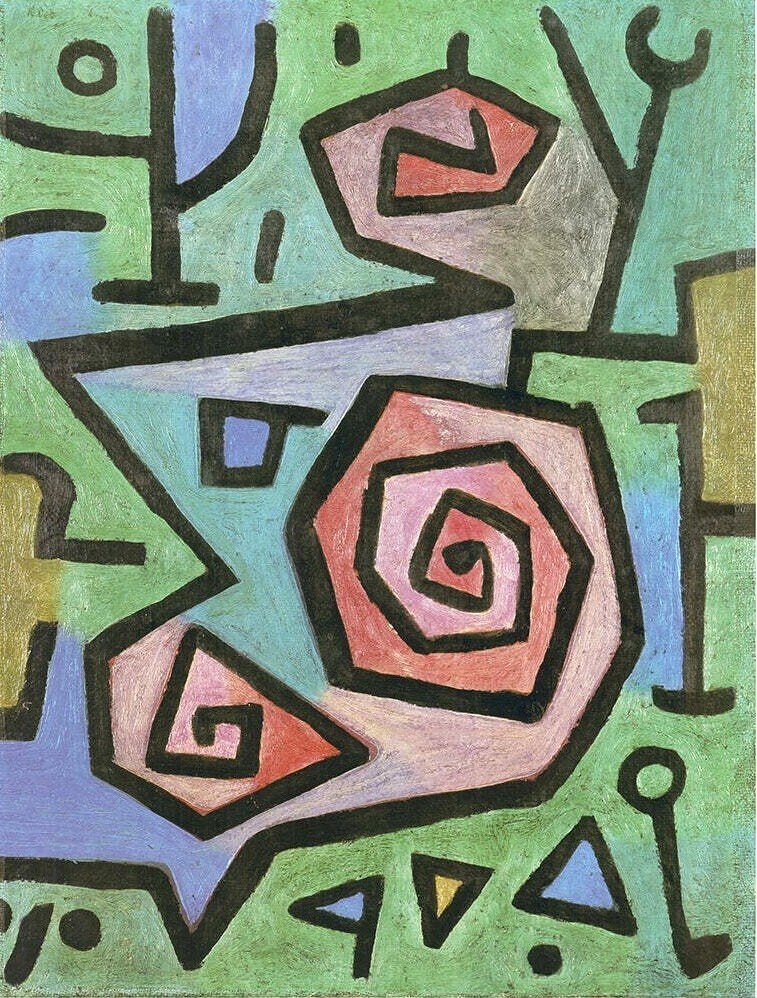
Paul Klee - Heroische Rosen



Opens 30 December
Starting bid
€ 1
Add to your favourites to get an alert when the auction starts.

Expert
Selected by Juan Antonio Rodríguez
Eight years experience valuing posters, previously valuer at Balclis, Barcelona.
Estimate € 150 - € 200
Catawiki Buyer Protection
Your payment’s safe with us until you receive your object.View details
Trustpilot 4.4 | 123294 reviews
Rated Excellent on Trustpilot.
Description from the seller
Paul Klee
Heroic roses
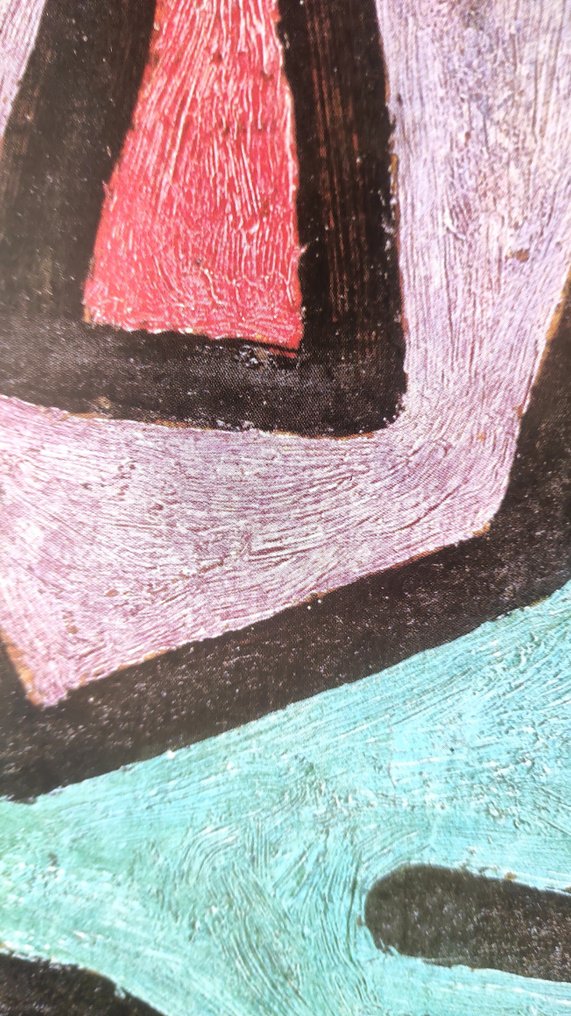
Art print on heavy paper, based on the original from 1938.
Offset lithography
Size 90.0 cm x 70 cm.
In good condition
Paul Klee (1879-1940) was an outstanding Swiss and German avant-gardist, graphic artist, and art theorist. His unique style was influenced by many movements, such as Expressionism, Cubism, and Surrealism. He began his artistic career in Munich, where he encountered the avant-garde. Klee's works are individual, combining bright colors, geometric shapes, and mysterious symbols like arrows, letters, and hieroglyphs. His images often reflect his subtle humor, musicality, and childlike immediacy. In 1911, he met Wassili Kandinsky in Munich and became a member of the Expressionist group 'Der Blaue Reiter.' In the 1920s, Klee taught alongside Kandinsky at the famous Bauhaus design school, where he developed his color theory. His lectures, published in Paul Klee's 'Heften,' are considered an important theoretical work for contemporary art. Paul Klee's work is regarded as one of the most original and innovative in 20th-century art.
Paul Klee
Heroic roses
Art print on heavy paper, based on the original from 1938.
Offset lithography
Size 90.0 cm x 70 cm.
In good condition
Paul Klee (1879-1940) was an outstanding Swiss and German avant-gardist, graphic artist, and art theorist. His unique style was influenced by many movements, such as Expressionism, Cubism, and Surrealism. He began his artistic career in Munich, where he encountered the avant-garde. Klee's works are individual, combining bright colors, geometric shapes, and mysterious symbols like arrows, letters, and hieroglyphs. His images often reflect his subtle humor, musicality, and childlike immediacy. In 1911, he met Wassili Kandinsky in Munich and became a member of the Expressionist group 'Der Blaue Reiter.' In the 1920s, Klee taught alongside Kandinsky at the famous Bauhaus design school, where he developed his color theory. His lectures, published in Paul Klee's 'Heften,' are considered an important theoretical work for contemporary art. Paul Klee's work is regarded as one of the most original and innovative in 20th-century art.
Details
Artist
Paul Klee
Sold by
Owner or reseller
Edition
Original
Title of artwork
Heroische Rosen
Technique
Lithograph, Offset print
Signature
Plate signed
Country of Origin
Switzerland
Year
1938
Condition
Good condition
Height
90 cm
Width
70 cm
Depiction/Theme
Plants and flowers
Style
Abstract
Period
1930-1940
Sold with frame
No
Sold by