Qajar qalamdan pencase - Papier-mache - Middle East - Qajar dynasty (1796–1925)



07
days
19
hours
28
minutes
11
seconds
Starting bid
€ 1
No reserve price

Expert
Selected by Surya Rutten
Has over 25 years' experience in Asian art and owned an art gallery.
Estimate € 400 - € 500
No bids placed
Catawiki Buyer Protection
Your payment’s safe with us until you receive your object.View details
Trustpilot 4.4 | 122473 reviews
Rated Excellent on Trustpilot.
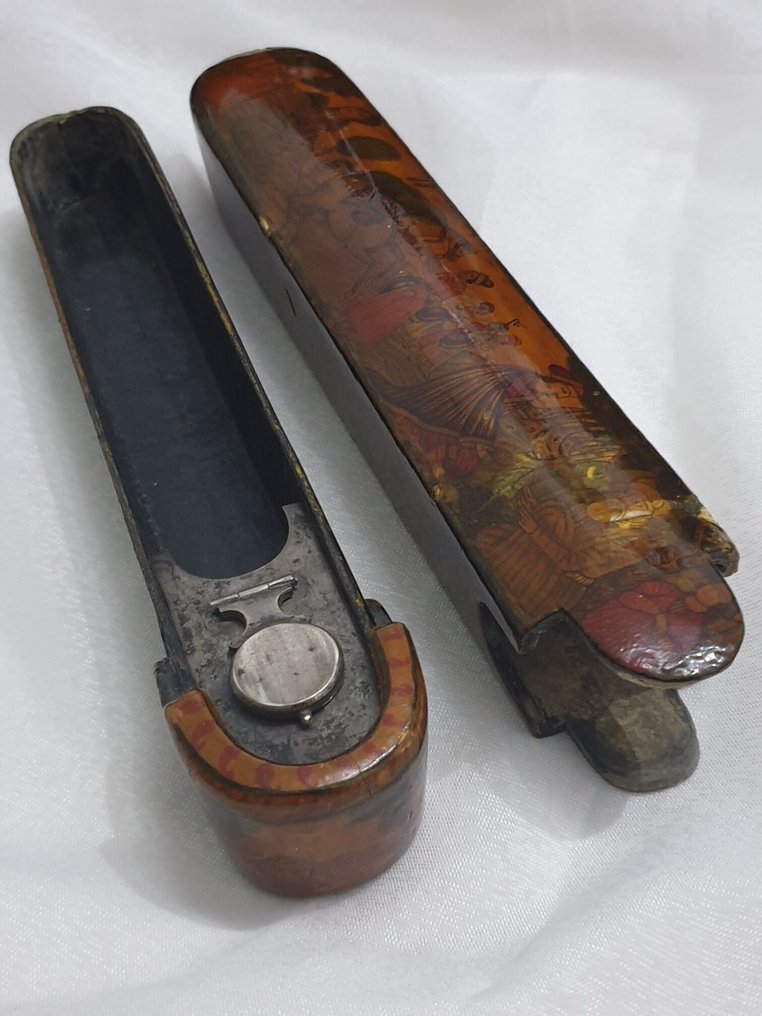
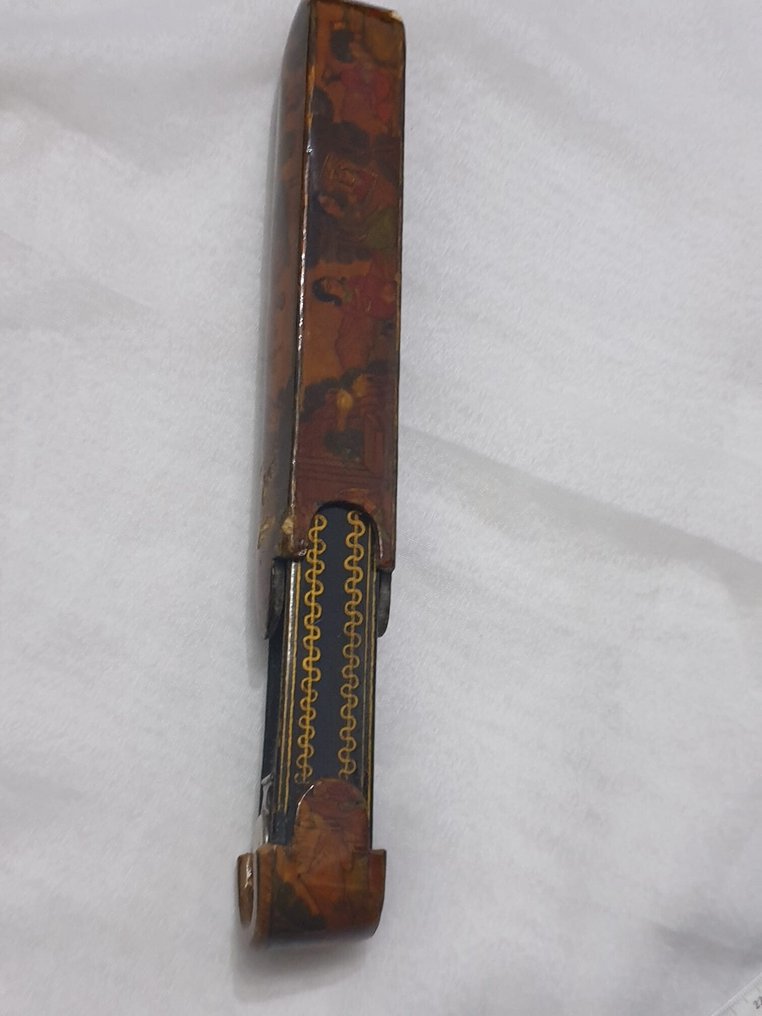
Qajar qalamdan pencase, made of papier-mâché, from the Qajar dynasty (1796–1925) in the Middle East, in good condition.
AI-assisted summary
Description from the seller
The primary function of a pen box (qalamdan) was as a writing instrument - made of papier-mâché, wood, or other materials, including precious metals - intended to contain a number of tools associated with the art and act of writing, including a reed pen, an inkwell, liqah (a cotton substance used to absorb excess ink), a penknife, a qat'zan (a flat horn support plate), a whetstone, a small spoon, and scissors. These accessories were considered essential items for a scribe. The box containing these items was considered, by association, as important as the person handling its contents, the quality of the box's decoration directly reflecting the status of the scribe or patron.
Pen boxes were carried by scribes of all ranks, often tucked into the shawls tied around their waists, symbolizing a badge of their craft. So prized was the pen case that even the Shahs commissioned them; these rare examples are attested by their inscriptions. The earliest examples of this type date from the reign of Shah Sulayman Safavi (1664–1695), but there are also later Qajar examples, commissioned by members of the high bureaucracy throughout the 19th century.
Although this pen case does not bear the artist's inscription Ya Shah-I Najaf ("O King of Najaf!"), the details of the decoration and its style strongly resemble those of the well-known Qajar artist or perhaps another artist in his circle. Aqa Najaf, as he is also known, was responsible for lacquer pieces produced sometime between 1810 and 1860, with a style that formed a bridge between the works of the late 18th century and the long reign of Nasir al-Din Shah Qajar (1848–1896), during which Najaf Ali's sons continued to play a leading role in lacquer production. Be careful, the box has some flaking lacquer!
The primary function of a pen box (qalamdan) was as a writing instrument - made of papier-mâché, wood, or other materials, including precious metals - intended to contain a number of tools associated with the art and act of writing, including a reed pen, an inkwell, liqah (a cotton substance used to absorb excess ink), a penknife, a qat'zan (a flat horn support plate), a whetstone, a small spoon, and scissors. These accessories were considered essential items for a scribe. The box containing these items was considered, by association, as important as the person handling its contents, the quality of the box's decoration directly reflecting the status of the scribe or patron.
Pen boxes were carried by scribes of all ranks, often tucked into the shawls tied around their waists, symbolizing a badge of their craft. So prized was the pen case that even the Shahs commissioned them; these rare examples are attested by their inscriptions. The earliest examples of this type date from the reign of Shah Sulayman Safavi (1664–1695), but there are also later Qajar examples, commissioned by members of the high bureaucracy throughout the 19th century.
Although this pen case does not bear the artist's inscription Ya Shah-I Najaf ("O King of Najaf!"), the details of the decoration and its style strongly resemble those of the well-known Qajar artist or perhaps another artist in his circle. Aqa Najaf, as he is also known, was responsible for lacquer pieces produced sometime between 1810 and 1860, with a style that formed a bridge between the works of the late 18th century and the long reign of Nasir al-Din Shah Qajar (1848–1896), during which Najaf Ali's sons continued to play a leading role in lacquer production. Be careful, the box has some flaking lacquer!
Details
Dynastic Style/Period
Qajar dynasty (1796–1925)
Country of Origin
Middle East
Material
Papier-mache
Height
0 cm
Width
0 cm
Title of artwork
Qajar qalamdan pencase
Depth
0 cm
Condition
Good condition
Sold by