Multi-lobed bronze box (pān-dān), India Mughal, late 17th–early 18th century (ca.) - Pān-dān - Mughal - India



01
day
21
hours
28
minutes
49
seconds
Current bid
€ 177
Reserve price not met

Expert
Selected by Surya Rutten
Has over 25 years' experience in Asian art and owned an art gallery.
Estimate € 550 - € 630
32 other people are watching this object
 Bidder 5316 Bidder 5316 | €177 | |
|---|---|---|
 Bidder 2767 Bidder 2767 | €5 |
Catawiki Buyer Protection
Your payment’s safe with us until you receive your object.View details
Trustpilot 4.4 | 122630 reviews
Rated Excellent on Trustpilot.
Description from the seller
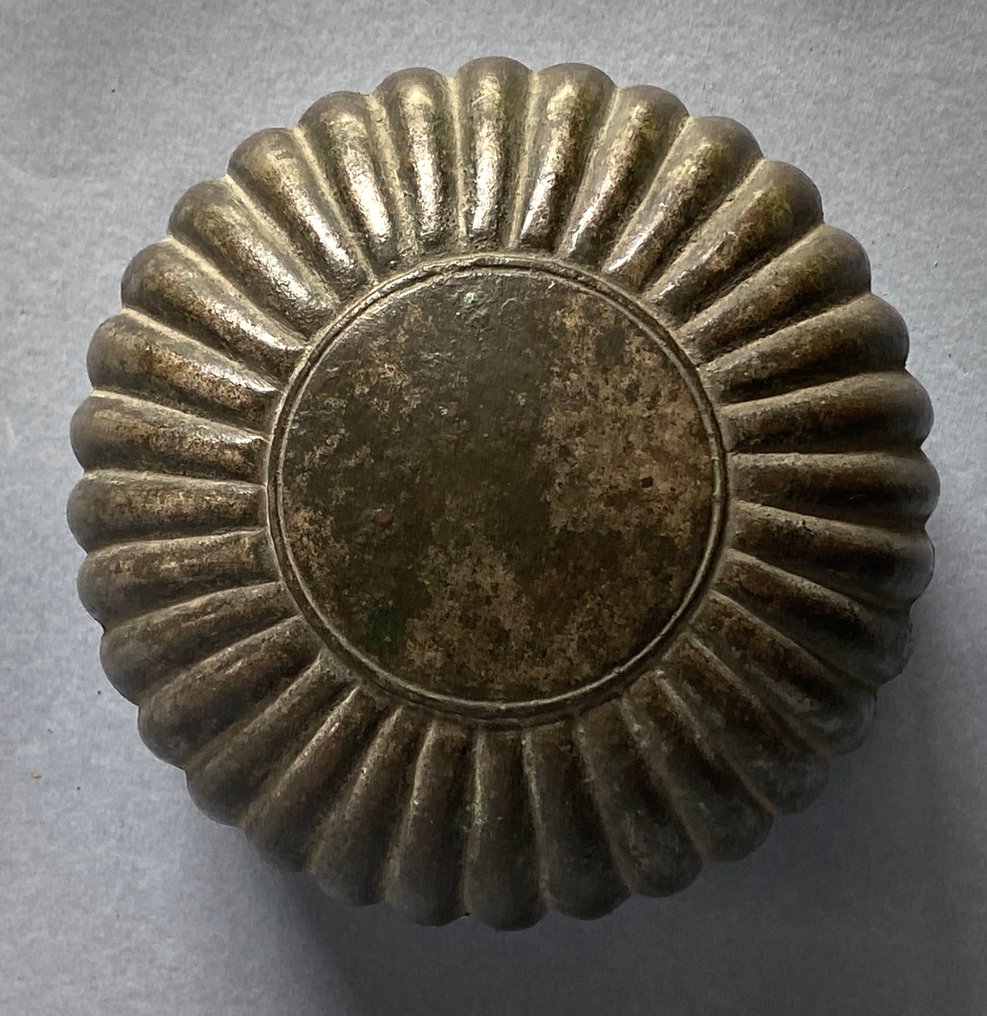
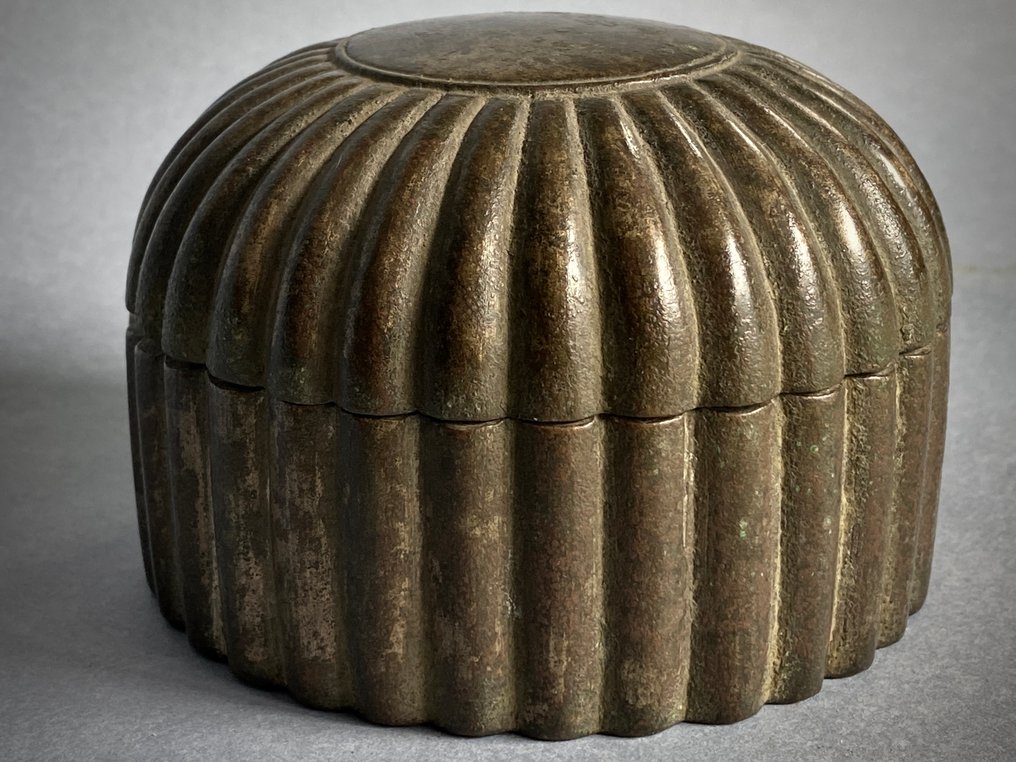
Multilobed bronze box (pān-dān), Mughal India, late 17th–early 18th century (ca. 1680–1720).
Solid betel box in cast bronze of substantial thickness, body and lid shaped like a flower with multiple lobes, clean internal walls, with an ancient, uniform bruno-olive patina showing natural oxidation.
The typology – polylobed shape, solid mass, sober finish without openwork – is fully consistent with the pān-dān from the Mughal court and Deccan tradition, used to contain and serve the ingredients of the pān; similar specimens with comparable volumes and continuous lobed profiles are known from public collections and the antique market.
Precise comparisons in the text by M. Zebrowski, 'Gold, Silver & Bronze from Mughal India' (Alexandria Press, 1997), a reference work for Mughal metals; in particular, see the pān boxes of 'flower-shaped' form with multiple lobes dated between the late 17th and 18th centuries, attributed to northern India and the Deccan.
The absence of ventilation holes, present in some variants, is not incompatible with the function, as older models could contain pre-assembled components or serve as an elegant presentation container; the interior without partitions supports this interpretation of use, without excluding its use as a small jewelry box.
Good condition: signs of use, light scratches and tiny oxidations consistent with the age; no significant structural deformation.
References:
M. Zebrowski, Gold, Silver & Bronze from Mughal India, Alexandria Press, 1997; comparisons in the British Museum collection (pandan sedici-lobato, 18th century); Freer|Sackler, Pandan box for betel nut and spices, 18th century; examples in the antique market and auction (Deccan/Mughal, late 17th–early 18th century).
N.B.
For administrative reasons, Italian buyers are required to provide their tax code, which is essential for the proper issuance of the electronic invoice.
For administrative reasons related to current Italian regulations, foreign customers are kindly requested to provide their place and date of birth via email message using the appropriate Catawiki form at the time of purchase.
Seller's Story
Ethnologica was born from the love and passion for the ancient culture of Oriental, Islamic and Indian art. Refined works of art make up a constantly evolving collection capable of satisfying the needs of admirers, enthusiasts and collectors.
Ethnologica has also contributed as a lender to sector cultural exhibitions alongside prestigious public and private cultural associations and foundations.
Translated by Google TranslateMultilobed bronze box (pān-dān), Mughal India, late 17th–early 18th century (ca. 1680–1720).
Solid betel box in cast bronze of substantial thickness, body and lid shaped like a flower with multiple lobes, clean internal walls, with an ancient, uniform bruno-olive patina showing natural oxidation.
The typology – polylobed shape, solid mass, sober finish without openwork – is fully consistent with the pān-dān from the Mughal court and Deccan tradition, used to contain and serve the ingredients of the pān; similar specimens with comparable volumes and continuous lobed profiles are known from public collections and the antique market.
Precise comparisons in the text by M. Zebrowski, 'Gold, Silver & Bronze from Mughal India' (Alexandria Press, 1997), a reference work for Mughal metals; in particular, see the pān boxes of 'flower-shaped' form with multiple lobes dated between the late 17th and 18th centuries, attributed to northern India and the Deccan.
The absence of ventilation holes, present in some variants, is not incompatible with the function, as older models could contain pre-assembled components or serve as an elegant presentation container; the interior without partitions supports this interpretation of use, without excluding its use as a small jewelry box.
Good condition: signs of use, light scratches and tiny oxidations consistent with the age; no significant structural deformation.
References:
M. Zebrowski, Gold, Silver & Bronze from Mughal India, Alexandria Press, 1997; comparisons in the British Museum collection (pandan sedici-lobato, 18th century); Freer|Sackler, Pandan box for betel nut and spices, 18th century; examples in the antique market and auction (Deccan/Mughal, late 17th–early 18th century).
N.B.
For administrative reasons, Italian buyers are required to provide their tax code, which is essential for the proper issuance of the electronic invoice.
For administrative reasons related to current Italian regulations, foreign customers are kindly requested to provide their place and date of birth via email message using the appropriate Catawiki form at the time of purchase.
Seller's Story
Ethnologica was born from the love and passion for the ancient culture of Oriental, Islamic and Indian art. Refined works of art make up a constantly evolving collection capable of satisfying the needs of admirers, enthusiasts and collectors.
Ethnologica has also contributed as a lender to sector cultural exhibitions alongside prestigious public and private cultural associations and foundations.
Translated by Google TranslateDetails
Indigenous object name
Pān-dān
No. of items
1
Ethnic group/ culture
Mughal
Country of Origin
India
Period
Late 18th century
Material
Lost wax bronze casting.
Sold with stand
No
Condition
Good condition
Title of artwork
Multi-lobed bronze box (pān-dān), India Mughal, late 17th–early 18th century (ca.)
Height
9 cm
Width
11 cm
Depth
11 cm
Sold by