L. de Lanzac de Laborie - Jean-Joseph Mounier - 1887



08
days
02
hours
53
minutes
34
seconds
Current bid
€ 1
No reserve price

Expert
Selected by Volker Riepenhausen
Specialist in travel literature and pre-1600 rare prints with 28 years experience.
Estimate € 150 - € 220
1 other person has their eye on this
 Bidder 5856 Bidder 5856 | €1 |
|---|
Catawiki Buyer Protection
Your payment’s safe with us until you receive your object.View details
Trustpilot 4.4 | 122473 reviews
Rated Excellent on Trustpilot.
Jean-Joseph Mounier by L. de Lanzac de Laborie, first edition from 1887 in French, bound in demi red morocco with corners, 341 pages, 24.5 × 16 cm, published by Librairie Plon, in good condition.
AI-assisted summary
Description from the seller
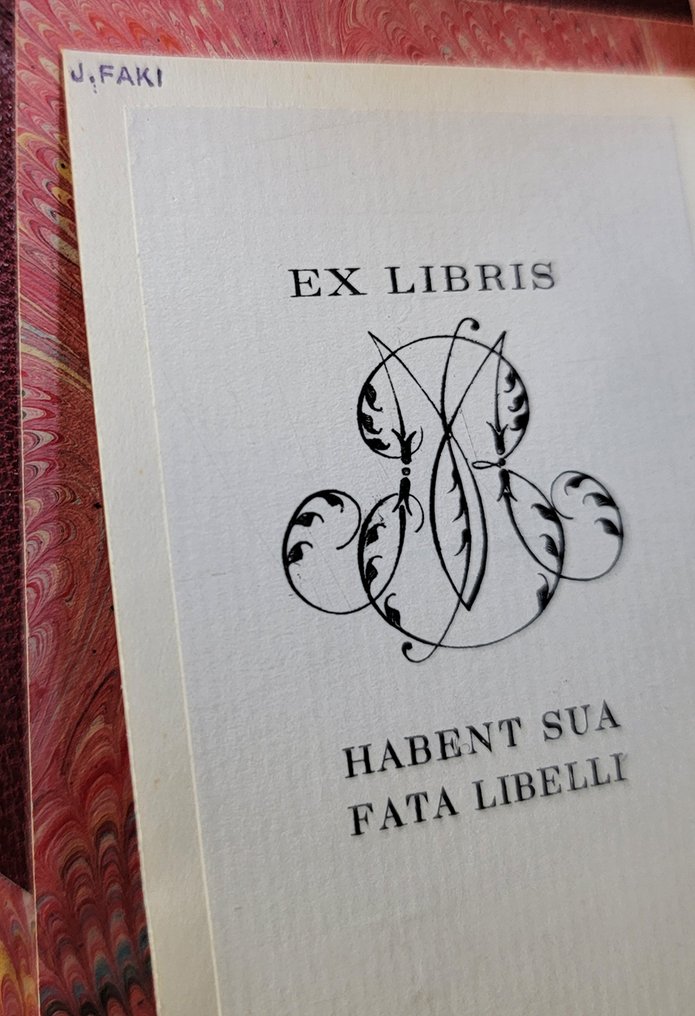
[Signed] in 1 volume, half red leather with corners, 8vo, 341 pages, covers and spine preserved.
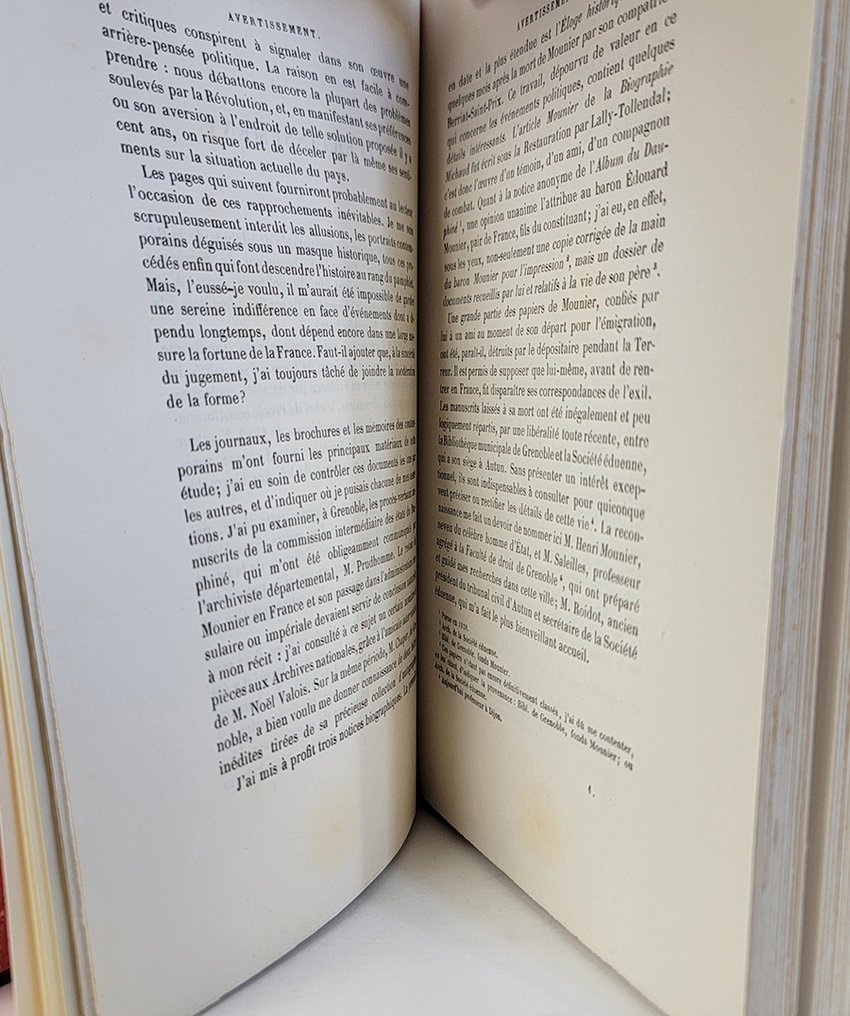
Well-maintained interior, a beautiful specimen.
Jean-Joseph Mounier (1758–1806)
Important moderation of the first phase of the French Revolution.
Grenoble lawyer, a major figure in the Day of the Tiles (1788).
Deputy of the Third Estate at the Estates-General of 1789, close to the monarchists.
Defender of a constitutional monarchy, inspired by the British model (separation of powers, bicameralism).
A member of the committee responsible for drafting the Declaration of the Rights of Man and of the Citizen, while criticizing some articles deemed too radical.
Forced into exile after revolutionary radicalization; returns to France under the Consulate.
Léonce de Lanzac de Laborie (1857–1933)
French historian and archivist, specializing in the Revolution and the early 19th century.
Rigorous editor of archival documents.
Known for his work on the Constitution of 1791, the debates of the Constituent Assembly, and institutional history.
Their publications are often cited for their accuracy and documentary value.
An entire chapter is dedicated to Mounier's work: 'On the influence attributed to philosophers, Freemasons, and the Illuminati'.
[Signed binding] in 1 volume, octavo, half red leather with corners, 341 pages, covers and backs preserved.
Fresh interior, beautiful copy.
Jean-Joseph Mounier (1758–1806)
Important moderate of the first phase of the French Revolution.
Grenoble lawyer, major player of the Day of the Tiles (1788).
Deputy of the Third Estate in the Estates General of 1789, close to the monarchs.
Defender of a constitutional monarchy, inspired by the British model (separation of powers, bicameralism).
Member of the committee responsible for drafting the Declaration of the Rights of Man and of the Citizen, while criticizing certain articles considered too radical.
Forced into exile after revolutionary radicalization; returned to France under the Consulate.
Léonce de Lanzac de Laborie (1857–1933)
French historian and archivist, specialist of the Revolution and the early nineteenth century.
Rigorous editor of archival documents.
Known for his work on the 1791 Constitution, the debates of the Constituent Assembly, and institutional history.
His publications are often cited for their accuracy and documentary value.
A whole chapter is devoted to Mounier's work: 'Of the influence attributed to philosophers, masons, and enlightened people'.
[Signed] in 1 volume, half red leather with corners, 8vo, 341 pages, covers and spine preserved.
Well-maintained interior, a beautiful specimen.
Jean-Joseph Mounier (1758–1806)
Important moderation of the first phase of the French Revolution.
Grenoble lawyer, a major figure in the Day of the Tiles (1788).
Deputy of the Third Estate at the Estates-General of 1789, close to the monarchists.
Defender of a constitutional monarchy, inspired by the British model (separation of powers, bicameralism).
A member of the committee responsible for drafting the Declaration of the Rights of Man and of the Citizen, while criticizing some articles deemed too radical.
Forced into exile after revolutionary radicalization; returns to France under the Consulate.
Léonce de Lanzac de Laborie (1857–1933)
French historian and archivist, specializing in the Revolution and the early 19th century.
Rigorous editor of archival documents.
Known for his work on the Constitution of 1791, the debates of the Constituent Assembly, and institutional history.
Their publications are often cited for their accuracy and documentary value.
An entire chapter is dedicated to Mounier's work: 'On the influence attributed to philosophers, Freemasons, and the Illuminati'.
[Signed binding] in 1 volume, octavo, half red leather with corners, 341 pages, covers and backs preserved.
Fresh interior, beautiful copy.
Jean-Joseph Mounier (1758–1806)
Important moderate of the first phase of the French Revolution.
Grenoble lawyer, major player of the Day of the Tiles (1788).
Deputy of the Third Estate in the Estates General of 1789, close to the monarchs.
Defender of a constitutional monarchy, inspired by the British model (separation of powers, bicameralism).
Member of the committee responsible for drafting the Declaration of the Rights of Man and of the Citizen, while criticizing certain articles considered too radical.
Forced into exile after revolutionary radicalization; returned to France under the Consulate.
Léonce de Lanzac de Laborie (1857–1933)
French historian and archivist, specialist of the Revolution and the early nineteenth century.
Rigorous editor of archival documents.
Known for his work on the 1791 Constitution, the debates of the Constituent Assembly, and institutional history.
His publications are often cited for their accuracy and documentary value.
A whole chapter is devoted to Mounier's work: 'Of the influence attributed to philosophers, masons, and enlightened people'.
Details
Number of Books
1
Subject
History
Book Title
Jean-Joseph Mounier
Author/ Illustrator
L. de Lanzac de Laborie
Condition
Good
Publication year oldest item
1887
Height
24.5 cm
Edition
1st Edition
Width
16 cm
Language
French
Original language
Yes
Publisher
Librairie Plon (E. Plon, Nourrit et Cie)
Binding/ Material
Half leather
Number of pages
341
Sold by
