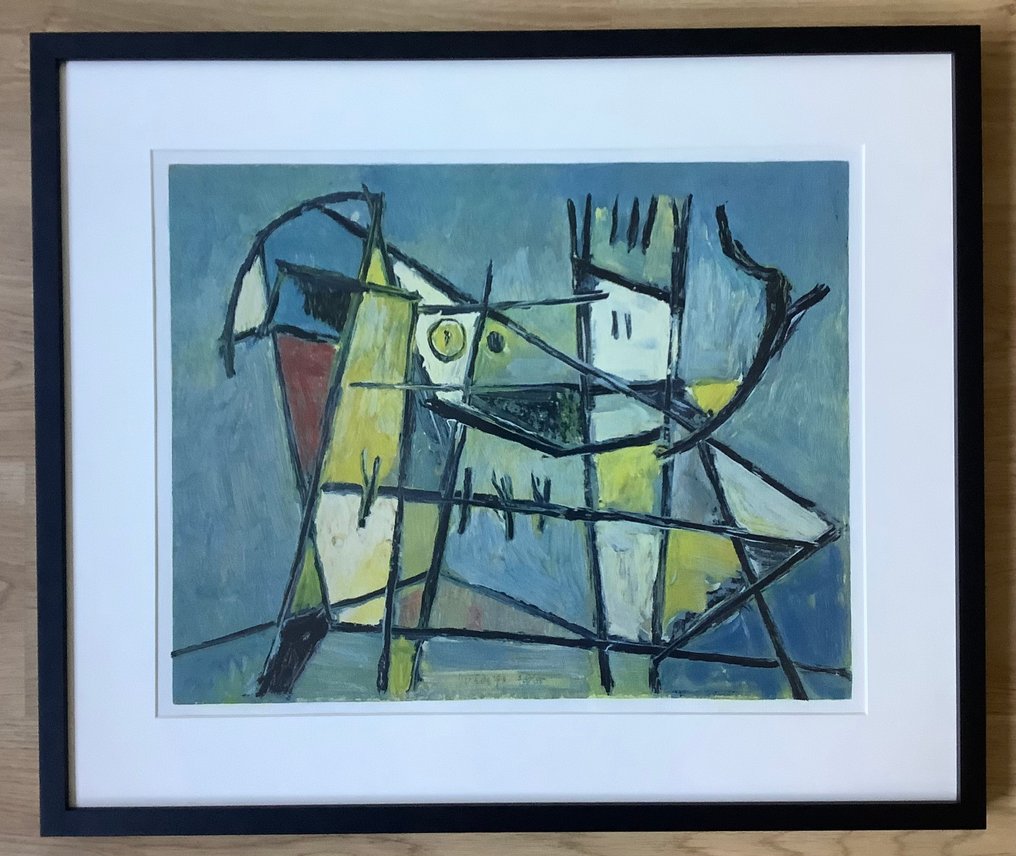
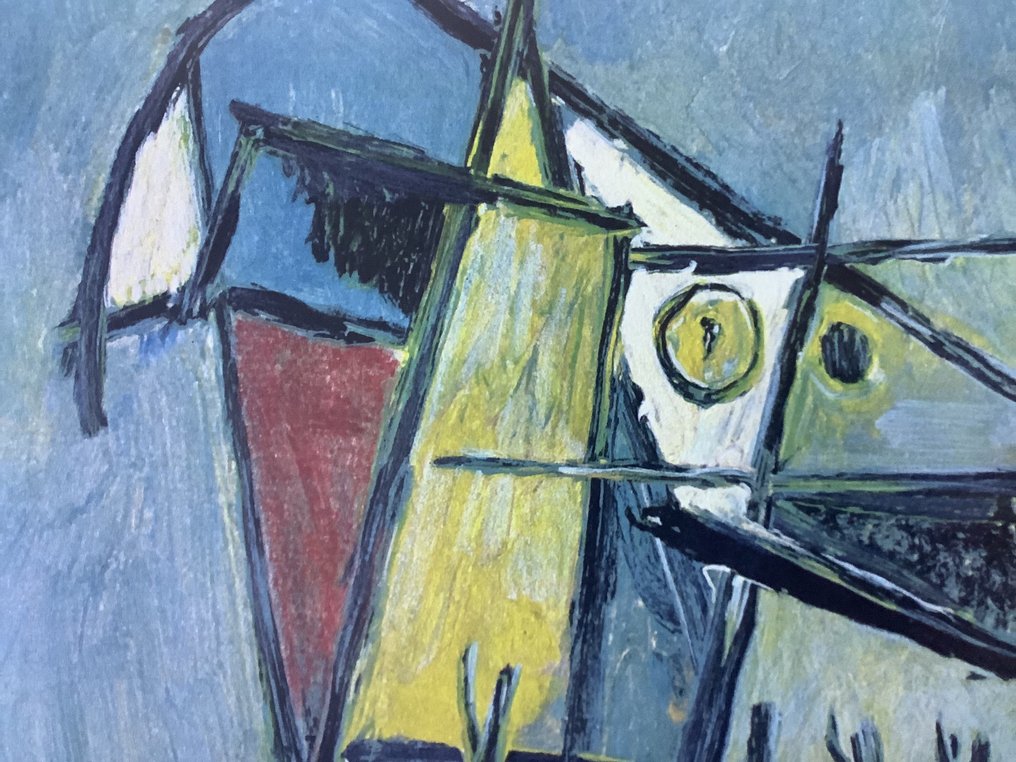
Jan Roede (1914-2007) - Abstracte compositie met geel, blauw en rood.


03
days
18
hours
30
minutes
52
seconds

No bids placed
Catawiki Buyer Protection
Your payment’s safe with us until you receive your object.View details
Trustpilot 4.4 | 122713 reviews
Rated Excellent on Trustpilot.
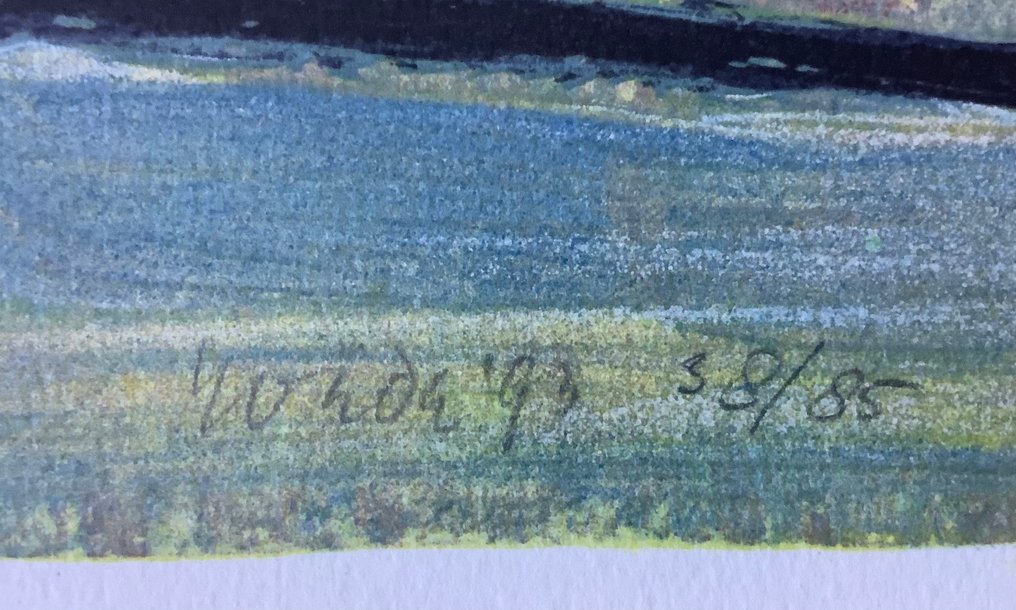
Jan Roede (1914–2007) titled Abstracte compositie met geel, blauw en rood, a 1993 screenprint, hand-signed, edition 38/85, sold with frame, image 50 × 40 cm in a 69 × 58 cm frame, in excellent condition, Netherlands.
AI-assisted summary
Description from the seller
Jan Roëde (1914-2007)
Title: Abstract composition with yellow, blue, and red.
Technique: Screen printing
Hand-signed: Signed by the artist
Year: 1993
Edition: 38 / 85
Condition: Excellent
Image dimensions: 50 x 40 cm (inner matting).
Dimensions of the list: 69 x 58 cm
Regarding a black wooden frame, 2 cm wide, 3 cm high. In excellent condition behind anti-reflective glass.
Jan Roëde, real name Jan Roede (Groningen, June 13, 1914 – The Hague, May 30, 2007), was a Dutch artist active in numerous disciplines. He wrote stories and poems and was also a painter, glass artist, illustrator, draftsman, and costume designer.
Life and work
Roëde grew up in The Hague from the age of four and pursued his education there at the Royal Academy of Visual Arts (from 1930 to 1932) and at the Free Academy (from 1934 to 1936). He was a student of, among others, Paul Schuitema and Gerard Kiljan.
During a stay in Paris in 1948, he anglicized his name to Jan Roëde and continued to call himself that even after returning to the Netherlands. Besides France, he also worked for some time in Sweden.
His abstract style, consisting of loose lines and shapes, gradually gave way to compositions of connected colored areas. In the 1950s, he developed his own style featuring simplified human and animal figures in exaggerated, unrealistic colors. He had a habit of painting very thinly.
Roëde, who drew inspiration from Buddhist Zen philosophy, was a fairly independent artist whose work somewhat leaned towards that of Cobra. The artists of Cobra asked him at the time to join them, but he declined because he found them too rough.
He was inspired by Maurice Estève's 'inverse color perspective,' with cool colors in the foreground and warm colors in the background. He would frequently apply this principle in his later work.
He was a member of art circles such as the Haagsche Kunstkring, the Posthoorngroep (from 1956 to 1962), and Pulchri Studio. In 1968, he won the Jacob Hartog Prize. He had exhibitions both domestically (at the Gemeentemuseum Den Haag and the Cobra Museum for Modern Art in Amstelveen) and abroad (Paris and Stockholm). His work is considered part of the art movement the Nieuwe Haagse School.
From his marriage to Maria Barbara Leewens, Roëde had two children, a son and a daughter. Jan Roëde died at the age of 92.
Exhibitions
1988 Gemeentemuseum Den Haag
1999 Cobra Museum for Modern Art Amstelveen
2010 Museum Rijswijk, Jan Roëde, a hidden dialogue
2013 Museum Jan van der Togt, Amstelveen, The colorful works of Jan Roëde
2014 Rijksbureau voor Kunsthistorische Documentatie, The Hague
2016 Pictura, Groningen, The comeback of Jan Roëde
2016 Drents Museum, Assen
Jan Roëde (1914-2007)
Title: Abstract composition with yellow, blue, and red.
Technique: Screen printing
Hand-signed: Signed by the artist
Year: 1993
Edition: 38 / 85
Condition: Excellent
Image dimensions: 50 x 40 cm (inner matting).
Dimensions of the list: 69 x 58 cm
Regarding a black wooden frame, 2 cm wide, 3 cm high. In excellent condition behind anti-reflective glass.
Jan Roëde, real name Jan Roede (Groningen, June 13, 1914 – The Hague, May 30, 2007), was a Dutch artist active in numerous disciplines. He wrote stories and poems and was also a painter, glass artist, illustrator, draftsman, and costume designer.
Life and work
Roëde grew up in The Hague from the age of four and pursued his education there at the Royal Academy of Visual Arts (from 1930 to 1932) and at the Free Academy (from 1934 to 1936). He was a student of, among others, Paul Schuitema and Gerard Kiljan.
During a stay in Paris in 1948, he anglicized his name to Jan Roëde and continued to call himself that even after returning to the Netherlands. Besides France, he also worked for some time in Sweden.
His abstract style, consisting of loose lines and shapes, gradually gave way to compositions of connected colored areas. In the 1950s, he developed his own style featuring simplified human and animal figures in exaggerated, unrealistic colors. He had a habit of painting very thinly.
Roëde, who drew inspiration from Buddhist Zen philosophy, was a fairly independent artist whose work somewhat leaned towards that of Cobra. The artists of Cobra asked him at the time to join them, but he declined because he found them too rough.
He was inspired by Maurice Estève's 'inverse color perspective,' with cool colors in the foreground and warm colors in the background. He would frequently apply this principle in his later work.
He was a member of art circles such as the Haagsche Kunstkring, the Posthoorngroep (from 1956 to 1962), and Pulchri Studio. In 1968, he won the Jacob Hartog Prize. He had exhibitions both domestically (at the Gemeentemuseum Den Haag and the Cobra Museum for Modern Art in Amstelveen) and abroad (Paris and Stockholm). His work is considered part of the art movement the Nieuwe Haagse School.
From his marriage to Maria Barbara Leewens, Roëde had two children, a son and a daughter. Jan Roëde died at the age of 92.
Exhibitions
1988 Gemeentemuseum Den Haag
1999 Cobra Museum for Modern Art Amstelveen
2010 Museum Rijswijk, Jan Roëde, a hidden dialogue
2013 Museum Jan van der Togt, Amstelveen, The colorful works of Jan Roëde
2014 Rijksbureau voor Kunsthistorische Documentatie, The Hague
2016 Pictura, Groningen, The comeback of Jan Roëde
2016 Drents Museum, Assen
Details
Artist
Jan Roede (1914-2007)
Sold by
Owner or reseller
Edition
Limited edition
Edition number
38 / 85
Title of artwork
Abstracte compositie met geel, blauw en rood.
Technique
Silkscreen
Signature
Hand signed
Country of Origin
Netherlands
Year
1993
Condition
Excellent condition
Height
58 cm
Width
69 cm
Style
Abstract
Period
1990-2000
Sold with frame
Yes